PulseAugur / Brief
EN
LIVE 20:42:34

Brief

last 24h
[50/63] 221 sources

Multi-source AI news clustered, deduplicated, and scored 0–100 across authority, cluster strength, headline signal, and time decay.

  1. Eigen Vectors & Spectral Decomposition

    This article explains spectral decomposition, a mathematical technique used in machine learning to simplify matrices. It breaks down a matrix into its fundamental components: directions (eigenvectors) and their corresponding strengths (eigenvalues). The text details three primary types of spectral decomposition: Eigen decomposition for square matrices, the Spectral Theorem for symmetric matrices, and Singular Value Decomposition (SVD) which is a more general method applicable to any matrix, including rectangular ones. AI
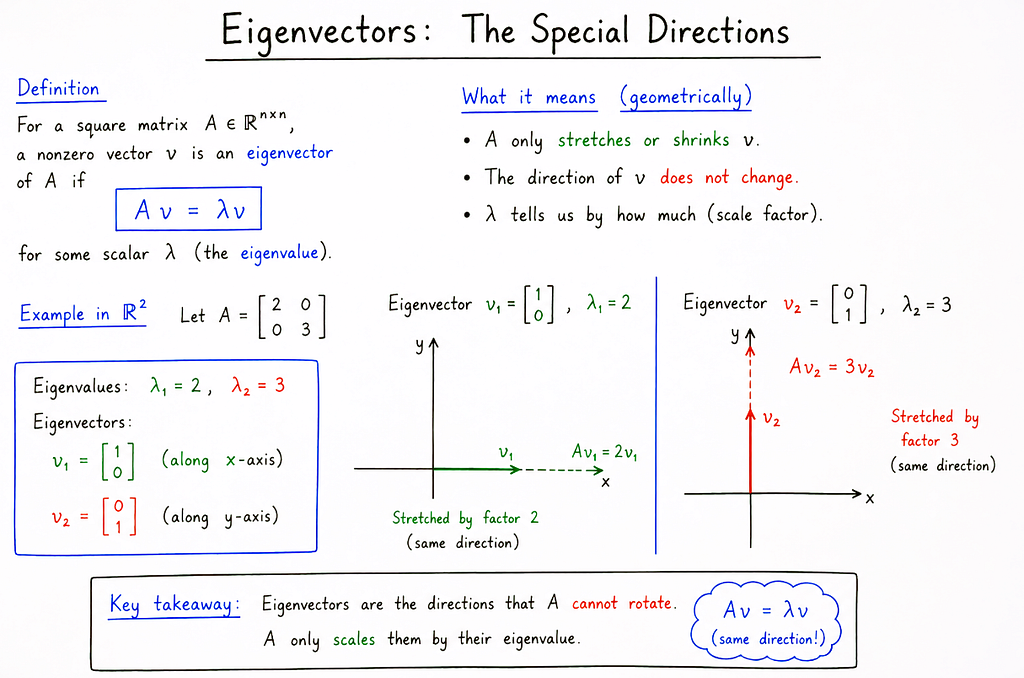
    Eigen Vectors & Spectral Decomposition

    IMPACT Explains fundamental mathematical concepts that underpin many AI algorithms.

  2. ⟦Barnhill et al.⟧ Machine Learning Detection of Scarring Events in Killer Whales https:// onlinelibrary.wiley.com/doi/10 .1111/mms.70207?af=R 🐬 # Cetaceans # Ma

    Researchers have developed a machine learning model to identify scarring events on killer whales. This AI-powered approach aims to automate the detection of injuries and other marks on the marine mammals. The study, published in Marine Mammal Science, focuses on improving the efficiency and accuracy of analyzing whale imagery for conservation and research purposes. AI

    IMPACT Automates ecological monitoring and research through advanced image analysis.

  3. Classification of IED-free EEG Responses for Assisted Epilepsy Diagnosis

    Researchers have developed a machine learning pipeline to classify EEG responses for epilepsy diagnosis, particularly in cases where standard EEGs lack key indicators. The system utilizes features from temporal, spectral, wavelet, and connectivity domains, combined through a stacked ensemble approach. This method demonstrated high accuracy, achieving up to 97.8% AUC on IED-free resting-state EEGs and 94.1% AUC on IED-free intermittent photic stimulation (IPS) data, suggesting that stimulation-evoked activity holds significant diagnostic information. AI

    IMPACT Enhances diagnostic accuracy for epilepsy by leveraging machine learning on EEG data, particularly in challenging IED-free cases.

  4. Accelerating Divisible Load Processing Through Machine Learning: A Practical Framework for Large-Scale Workloads

    Researchers have developed a machine learning framework to optimize processing times in distributed computing systems using Divisible Load Theory (DLT). Their feedforward neural network, trained on 100,000 configurations, achieved 97-99% accuracy in predicting optimal processing times, outperforming traditional DLT computations by 10-100x. This approach offers significant speedups for applications in real-time scheduling and cloud resource allocation. AI

    IMPACT Accelerates distributed computing optimization, enabling real-time scheduling and cloud resource allocation with significant speedups.

  5. DCC: Data-Centric Compilation of Machine Learning Kernels for Processing-In-Memory Architectures

    Researchers have developed DCC, a novel data-centric compiler designed to optimize machine learning kernels for Processing-In-Memory (PIM) architectures. This compiler addresses the challenges of data rearrangement and compute code optimization by jointly optimizing these interdependent processes. DCC supports multiple PIM backends through a multi-layer abstraction and has demonstrated significant speedups, achieving up to 7.68x on HBM-PIM and 13.17x on AttAcc PIM compared to GPU-only execution. For end-to-end LLM inference, DCC on AttAcc accelerated GPT-3 and LLaMA-2 by an average of 4.52x. AI

    IMPACT Enables significant acceleration for LLM inference and other ML workloads on specialized Processing-In-Memory hardware.

  6. Real-Time Earthquake Magnitude Classification from Initial P-Waves: Models, Dataset, and Comparative Analysis for South Asia

    Researchers have developed a new method for classifying earthquake magnitudes in real-time using initial P-wave data. Their study compares six machine learning approaches, finding that Transformer-based deep learning models significantly outperform traditional methods. The proposed Transformer architecture achieved 76.23% standard accuracy and 81.56% adaptive accuracy with a low inference latency, making it suitable for real-time deployment. AI

    IMPACT Enables faster and more accurate earthquake early warnings, potentially saving lives and reducing damage.

  7. 🧠 Purpose-built cloud infrastructure designed specifically for AI workloads offers optimized performance compared to general-purpose cloud systems. Organization

    Purpose-built cloud infrastructure tailored for AI workloads provides superior performance over general-purpose cloud systems. Organizations are increasingly turning to these specialized platforms to meet the significant computational needs of AI and machine learning applications. This shift indicates a growing trend towards dedicated solutions for the evolving demands of artificial intelligence. AI

    🧠 Purpose-built cloud infrastructure designed specifically for AI workloads offers optimized performance compared to general-purpose cloud systems. Organization

    IMPACT Specialized cloud infrastructure is becoming essential for AI development, promising enhanced performance and efficiency for demanding workloads.

  8. # AI # technology # jobs # socialmedia # society # machinelearning # finance # algorithmictrading # chatgpt # openai # chatbot # virtual # sustainability # comp

    This article explores the potential impact of AI on jobs within the quantitative trading sector. It discusses how AI is transforming trading systems and raises questions about whether AI itself poses a risk to existing jobs in the field. The piece also touches on broader societal and technological shifts driven by machine learning. AI

    # AI # technology # jobs # socialmedia # society # machinelearning # finance # algorithmictrading # chatgpt # openai # chatbot # virtual # sustainability # comp

    IMPACT This article discusses the potential impact of AI on jobs and trading systems, making it relevant to AI operators concerned with workforce and industry transformation.

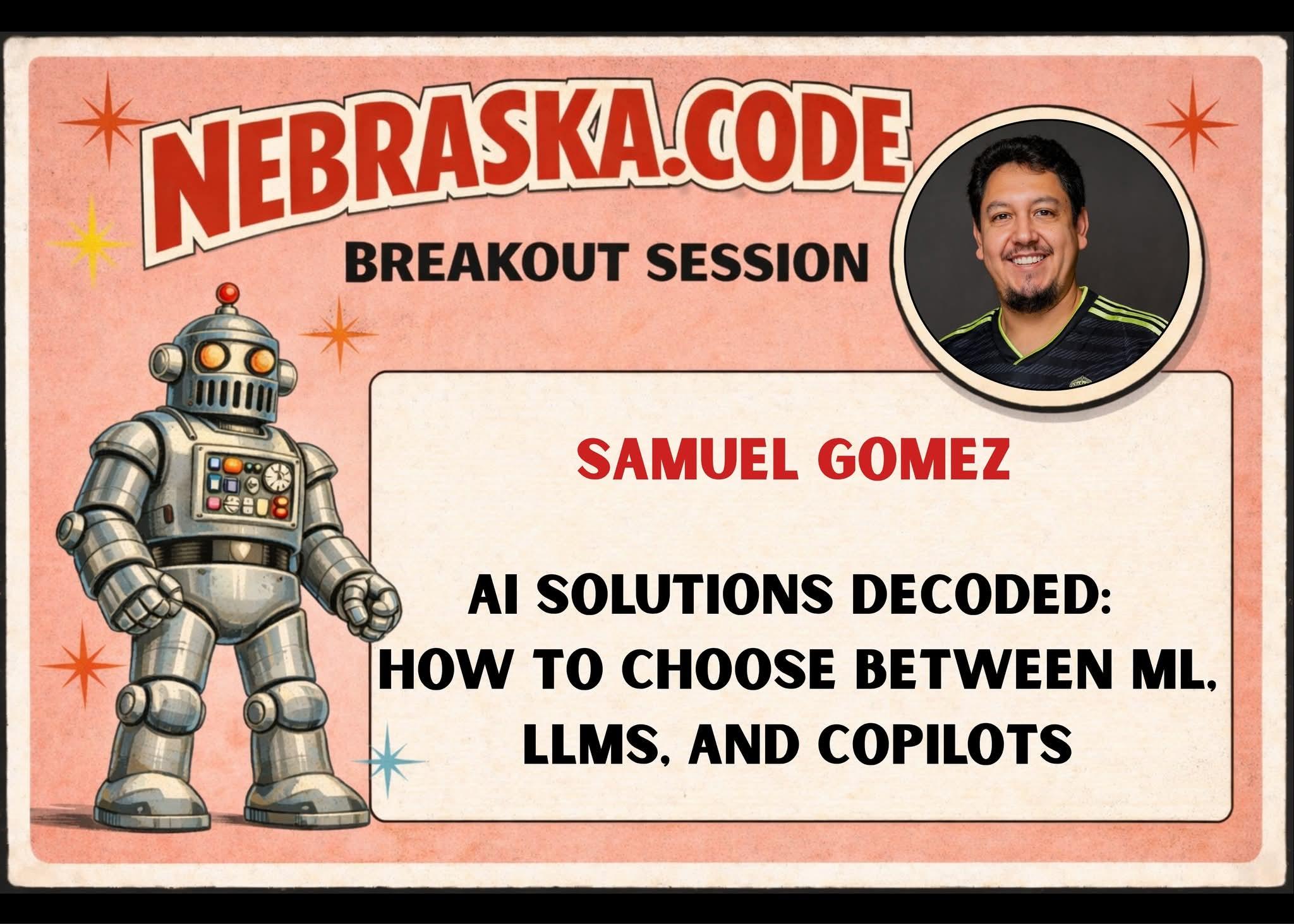
  9. Samuel Gomez presents 'AI Solutions Decoded: How to Choose Between ML, LLMs, and Copilots' this July at Nebraska.Code(). https:// nebraskacode.amegala.com/ # AI

    Samuel Gomez will present a session titled 'AI Solutions Decoded: How to Choose Between ML, LLMs, and Copilots' at the Nebraska.Code() conference this July. The presentation aims to clarify the distinctions and applications of various AI technologies for attendees. AI

    Samuel Gomez presents 'AI Solutions Decoded: How to Choose Between ML, LLMs, and Copilots' this July at Nebraska.Code(). https:// nebraskacode.amegala.com/ # AI

    IMPACT Clarifies distinctions between ML, LLMs, and Copilots for developers and tech professionals.

  10. Optimal Dimension-Free Sampling for Regularized Classification

    Researchers have developed new sampling bounds for regularized classification, achieving optimal $(1\pm\varepsilon)$-relative error for a wide range of Lipschitz continuous loss functions. The study presents improved sampling complexity bounds, specifically $k^2/\varepsilon^2$ for L2 regularization and $k/\varepsilon^2$ for L1 regularization. These findings rely on simple uniform or norm sampling and offer a significant improvement over previous sensitivity sampling bounds, utilizing refined arguments to avoid overcounting issues. AI

    IMPACT Establishes new theoretical benchmarks for sampling efficiency in classification algorithms, potentially impacting the design of future machine learning systems.

  11. Is Dimensionality a Barrier for Retrieval Models?

    Researchers have investigated why low-dimensional representations, typically around 1000 dimensions, do not hinder the scalability of modern embedding-based retrieval models to trillions of data points. Their study focuses on maximal-margin embeddings, establishing that a near-optimal margin can be achieved with a dimension dependent on the logarithm of the data size. The findings resolve a previous setup concerning k-sparse rows and suggest that sigmoid loss outperforms InfoNCE for generating large-margin embeddings. AI

    IMPACT This research provides theoretical insights into the scalability of retrieval models, potentially influencing future model design for large-scale AI applications.

  12. Radar Can Tell the Difference Between Insect Species

    Researchers have developed a novel radar system capable of distinguishing between insect species, including pollinators like bees and wasps. This system utilizes millimeter waves and analyzes micro-Doppler signatures generated by insect wingbeats to identify subtle differences in their movement patterns. A machine learning model trained on data from five species achieved 85% accuracy in species-level classification and 96% accuracy in differentiating between bees and wasps. AI

    Radar Can Tell the Difference Between Insect Species

    IMPACT Offers a non-invasive, automated method for ecological monitoring and species identification, potentially aiding conservation efforts.

  13. CI/CD for Machine Learning: Automating Model Testing, Evaluation, and Deployment

    This article discusses the implementation of Continuous Integration and Continuous Deployment (CI/CD) practices within Machine Learning (ML) workflows. It highlights the unique challenges of deploying ML models compared to traditional software, emphasizing the need for automated testing, evaluation, and deployment pipelines. The piece suggests that adopting CI/CD can streamline the ML lifecycle and improve model reliability. AI

    CI/CD for Machine Learning: Automating Model Testing, Evaluation, and Deployment

    IMPACT Streamlines the ML development lifecycle by automating testing, evaluation, and deployment processes.

  14. Complexity Analysis of Normalizing Constant Estimation: from Jarzynski Equality to Annealed Importance Sampling and beyond

    Researchers have developed a new theoretical framework for analyzing the complexity of estimating normalizing constants in probability distributions. This work focuses on annealed importance sampling methods, providing a non-asymptotic analysis with an oracle complexity of \(\\widetilde{O}(\frac{d\beta^2{\mathcal{A}}^2}{\varepsilon^4})\) for achieving a specified relative error. The analysis leverages Girsanov's theorem and optimal transport, avoiding explicit isoperimetric assumptions. Additionally, a novel algorithm using reverse diffusion samplers is proposed to handle large actions and multimodality, with empirical validation. AI

    Complexity Analysis of Normalizing Constant Estimation: from Jarzynski Equality to Annealed Importance Sampling and beyond

    IMPACT Provides a theoretical foundation for improving density estimation techniques in machine learning models.

  15. How Recommendation System Works on Youtube

    This paper delves into YouTube's sophisticated recommendation system, highlighting its use of machine learning to personalize content for over a billion users. The system operates in two stages: candidate generation, which quickly narrows down millions of videos to a few hundred likely interests using methods like content-based or collaborative filtering, and ranking, a more precise stage that sorts and selects the top recommendations. Key challenges include managing the immense scale of data, ensuring content freshness, and interpreting indirect user signals like watch time and engagement. AI

    How Recommendation System Works on Youtube

    IMPACT Provides insight into the complex AI techniques powering large-scale content personalization platforms.

  16. The Ultimate Guide to Feature Scaling in Machine Learning

    Feature scaling is a crucial preprocessing step in machine learning that addresses issues arising from features with vastly different magnitudes. Without scaling, algorithms like gradient descent can struggle to converge efficiently, taking a zig-zag path towards the minimum due to distorted cost function contours. This can lead to significantly more iterations or even divergence if the learning rate is not carefully tuned. Common techniques like Min-Max scaling transform features into a standardized range, ensuring that all features contribute more equally to the model's learning process and improving convergence speed and stability. AI

    The Ultimate Guide to Feature Scaling in Machine Learning

    IMPACT Ensures efficient and stable model training by standardizing feature magnitudes, preventing performance degradation.

  17. Ensemble learning is a machine learning technique where multiple models are combined to improve performance. Instead of relying on a single model, ensemble meth

    Ensemble learning is a machine learning approach that combines multiple models to enhance overall performance. This technique leverages the diversity of various models rather than relying on a single one. AI

    IMPACT This technique can lead to more robust and accurate AI systems by combining diverse models.

  18. 🎲🌲📊 Random Forest Classifier # AI Q: 🌳 Is the collective wisdom of many imperfect sources more reliable than the judgment of a single expert? 🧩 Ensemble Methods

    Random Forest classifiers leverage the collective intelligence of multiple decision trees to improve predictive accuracy. This ensemble method addresses the question of whether aggregated insights from numerous less-than-perfect sources can surpass the reliability of a single expert's judgment. Techniques like majority voting are employed to synthesize these diverse inputs. AI

    IMPACT Explains ensemble methods in machine learning, relevant for understanding AI model robustness and decision-making.

  19. The Powers of Precision: Structure-Informed Detection in Complex Systems -- From Customer Churn to Seizure Onset

    Researchers have developed a new machine learning method designed to detect emergent phenomena in complex systems by learning the system's latent causal structure. This approach uses a family of estimators based on powers of the covariance or precision matrix to tune into underlying structures that drive critical events. The method has demonstrated effectiveness in predicting customer churn and detecting epileptic seizures, achieving competitive results while also offering insights into interpretable statistical structure. AI

    The Powers of Precision: Structure-Informed Detection in Complex Systems -- From Customer Churn to Seizure Onset

    IMPACT Introduces a novel ML approach for early detection of critical events in complex systems, potentially improving prediction accuracy in fields like healthcare and business.

  20. Can AI predict the thermodynamics of complex liquid mixtures without breaking the laws of physics? Researchers developed HANNA, a machine learning model constra

    Researchers have developed a new machine learning model called HANNA, designed to predict the thermodynamics of complex liquid mixtures. This model is specifically constrained by the laws of physics, ensuring its predictions adhere to fundamental thermodynamic principles. HANNA aims to improve the accuracy of predicting phase equilibria and the overall behavior of such mixtures. AI

    IMPACT This AI model's adherence to physical laws could lead to more reliable predictions in chemical engineering and materials science.

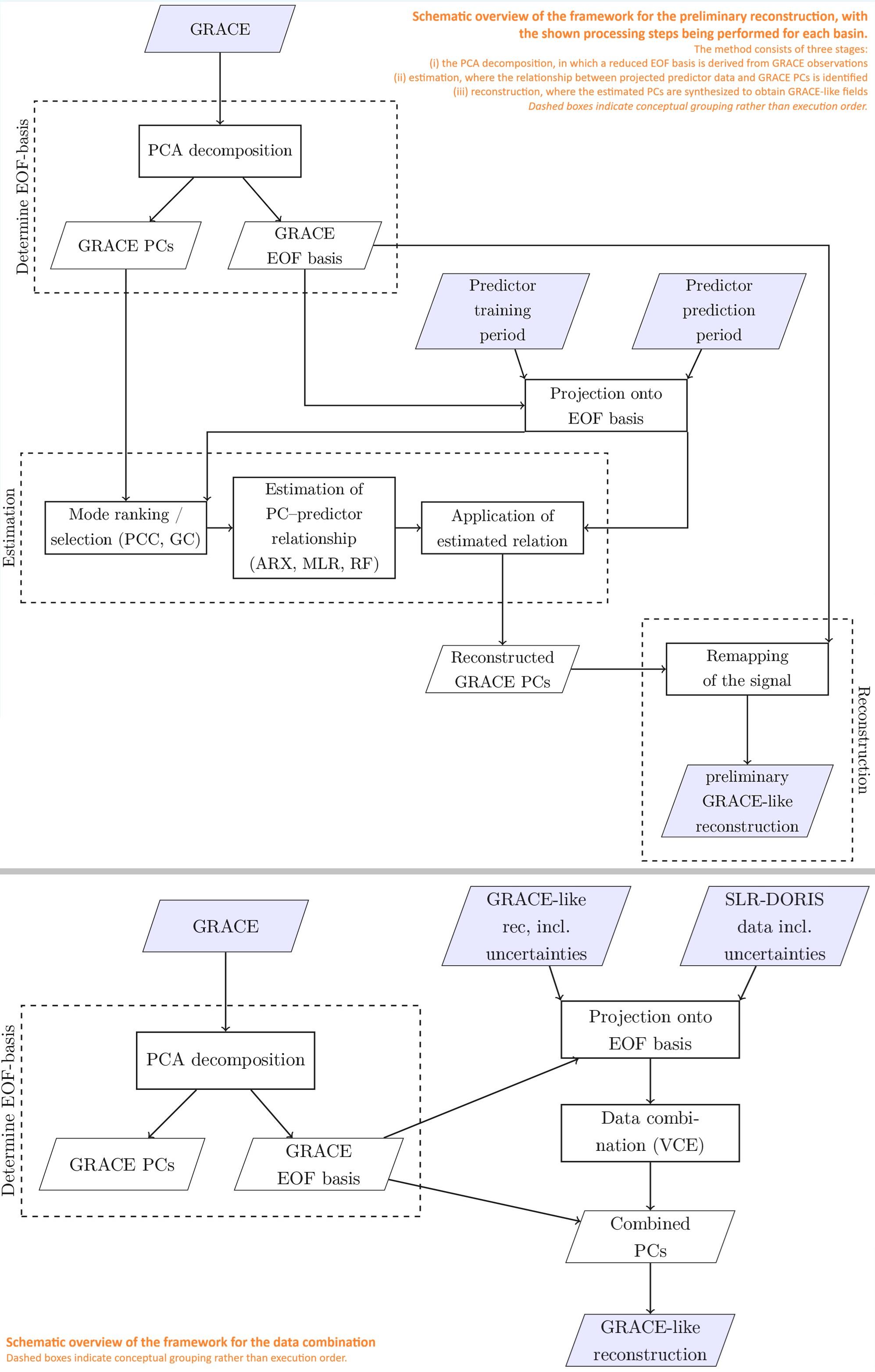
  21. Multidecadal Reconstruction Of Terrestrial Water Storage Changes By Combining Pre-GRACE Satellite Observations And Climate Data -- https:// doi.org/10.5194/essd

    Researchers have developed a method to reconstruct terrestrial water storage changes over several decades by integrating pre-GRACE satellite observations with climate data. This approach provides detailed datasets on reconstructed fields, their uncertainties, and corresponding time series. The study highlights limitations and potential use cases for this comprehensive reconstruction. AI

    Multidecadal Reconstruction Of Terrestrial Water Storage Changes By Combining Pre-GRACE Satellite Observations And Climate Data -- https:// doi.org/10.5194/essd

    IMPACT Provides a new method for reconstructing historical environmental data, potentially aiding climate change and water resource management research.

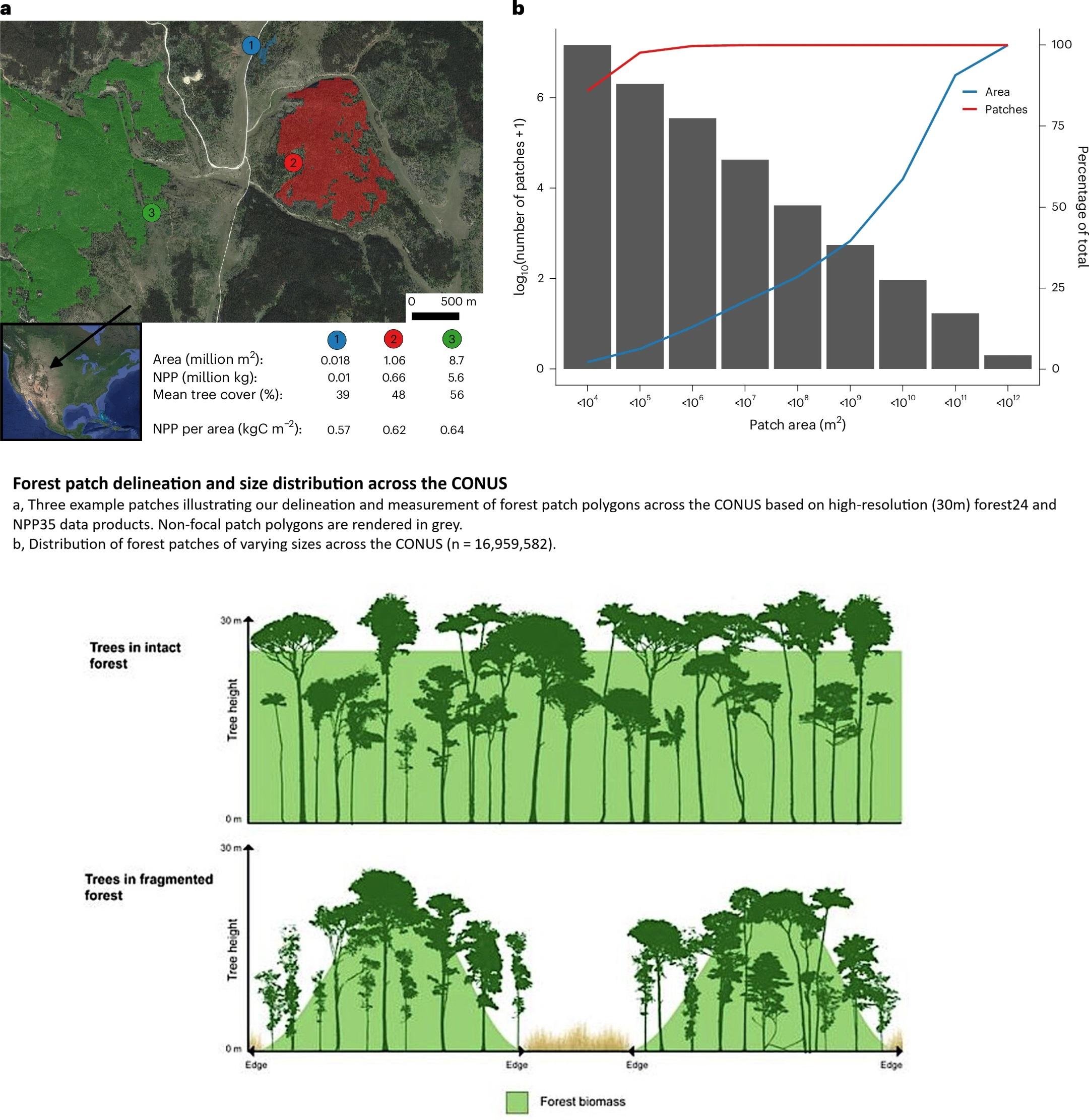
  22. Larger Forest Patches Have Greater Per-Area Productivity -- https:// doi.org/10.1038/s41559-026-030 75-5 <-- shared paper -- https:// doi.org/10.1038/s41586-025

    A new study published in Nature Ecology & Evolution reveals that larger forest patches exhibit greater per-area productivity. This finding challenges previous assumptions about habitat fragmentation and its impact on ecosystem functions like carbon storage. The research utilized advanced modeling and AI techniques to analyze spatial data, suggesting that contiguous forests are more efficient at capturing carbon and maintaining overall health. AI

    Larger Forest Patches Have Greater Per-Area Productivity -- https:// doi.org/10.1038/s41559-026-030 75-5 <-- shared paper -- https:// doi.org/10.1038/s41586-025

    IMPACT This research highlights the potential for AI and machine learning to enhance ecological modeling and our understanding of complex environmental systems.

  23. The 10 best AI voice assistants in 2026: A comprehensive guide

    AI voice assistants in 2026 are significantly more advanced, leveraging LLMs, ASR, ML, and NLP to understand natural speech, learn continuously, and personalize responses. These assistants are categorized into personal helpers for daily tasks and business agents for workflow automation and knowledge retrieval. The article emphasizes that the best assistant is determined by individual needs such as integrations, accuracy, security, and language support, rather than brand name alone. AI

    The 10 best AI voice assistants in 2026: A comprehensive guide

    IMPACT Provides a framework for evaluating and understanding the evolving landscape of AI voice assistants for both personal and professional applications.

  24. Accelerate your AI development with precision-guided training data! 🚀 From computer vision to NLP, high-quality data annotation is the secret to reducing algori

    Digi-Texx offers data annotation services to enhance AI development across various domains like computer vision and NLP. Their services aim to reduce algorithmic bias and improve the scalability of machine learning models. The company emphasizes the importance of high-quality training data for building robust AI systems. AI

    IMPACT Data annotation services are crucial for improving AI model performance and reducing bias, impacting the efficiency and reliability of AI applications.

  25. Divide and Calibrate: Multiclass Local Calibration via Vector Quantization

    Researchers have introduced "Divide et Calibra," a novel method for multiclass calibration in machine learning models. This approach addresses limitations of existing techniques by constructing region-specific calibration maps using vector quantization. The method aims to improve calibration accuracy in high-stakes applications by learning heterogeneous maps that generalize well, even in sparse data regions. AI

    Divide and Calibrate: Multiclass Local Calibration via Vector Quantization

    IMPACT Introduces a new technique to improve the reliability of machine learning models in critical applications.

  26. $L^2$ over Wasserstein: Statistical Analysis for Optimal Transport

    Researchers have introduced a new framework called $L^2$ over Wasserstein space to address statistical uncertainty in optimal transport. This framework extends the classical theory to random probability measures, preserving the Riemannian structure of Wasserstein space and enabling random gradient flow dynamics. The approach offers a unified method for random optimal transport, benefiting principled inference and generative modeling, and can incorporate theories like random token sampling in transformer models. AI

    IMPACT Provides a unified framework for principled inference and generative modeling under statistical uncertainty, potentially improving transformer model performance.

  27. Can machine learning for quantum-gas experiments be explainable?

    Researchers are exploring the application of machine learning (ML) to quantum-gas experiments, which are notoriously difficult due to experimental complexity and massive datasets. The study demonstrates ML's potential in denoising experimental images and identifying solitonic waves in Bose-Einstein condensates. A key focus is the balance between ML model performance, complexity, and the crucial aspect of interpretability in these advanced physics applications. AI

    Can machine learning for quantum-gas experiments be explainable?

    IMPACT Demonstrates ML's utility in complex scientific domains, potentially accelerating discovery in quantum physics.

  28. Prediction of Challenging Behaviors Associated with Profound Autism in a Classroom Setting Using Wearable Sensors

    Researchers have developed a system using wearable sensors and machine learning to predict challenging behaviors in children with profound autism within a classroom setting. The system analyzes multimodal data, including accelerometry, electrodermal activity, and skin temperature, to forecast such behaviors up to 10 minutes in advance. This technology holds promise for creating proactive intervention systems to enhance safety and learning in special education classrooms. AI

    IMPACT Enables proactive interventions for safety and learning in special education classrooms by predicting challenging behaviors.

  29. No Epoch Like the Present: Robust Climate Emulation Requires Out-of-Distribution Generalisation

    A new research paper highlights the critical need for out-of-distribution (OOD) generalization in climate emulation models. Current machine learning models, while performing well on present-day data, are prone to failure when faced with the inevitable shifts caused by climate change. The study proposes using seasonal variations as a proxy for these long-term shifts and introduces a new evaluation framework to test emulator robustness, finding significant degradation in state-of-the-art models. The paper suggests that compositional generalization, by decomposing physical systems, offers a path toward more reliable ML-driven climate emulators. AI

    IMPACT Highlights the limitations of current ML models in predicting future climate scenarios, emphasizing the need for OOD generalization to ensure reliability.

  30. Machine learning prediction of obstructive coronary artery disease using opportunistic coronary calcium and epicardial fat assessments from CT calcium scoring scans

    Researchers have developed a machine learning framework to predict obstructive coronary artery disease (CAD) using CT scans. The model analyzes features from coronary calcium and epicardial fat, identifying 14 key predictors from an initial set of 424. This approach achieved high accuracy, sensitivity, and specificity, showing promise for improving clinical decisions and potentially reducing the need for invasive procedures. AI

    IMPACT Offers a novel, non-invasive method for predicting heart disease, potentially improving patient outcomes and reducing healthcare costs.

  31. Multi-Modal Machine Learning for Population- and Subject-Specific lncRNA-Type 2 Diabetes Association Analysis

    Researchers have developed a novel multi-modal machine learning framework to analyze the association between long non-coding RNAs (lncRNAs) and Type 2 Diabetes (T2D). This approach integrates expression, secondary structure, and sequence features from ten different lncRNAs across two independent cohorts. The framework utilizes eight machine learning classifiers and SHAP analysis to provide population- and subject-specific disease association profiles, advancing the understanding of T2D mechanisms and supporting precision medicine. AI

    IMPACT Advances understanding of Type 2 Diabetes mechanisms and supports personalized medicine through novel lncRNA analysis.

  32. Benchmarking Machine Learning Architectures for Antimicrobial Stewardship in Pediatric ICUs

    Researchers have benchmarked various machine learning architectures for antimicrobial stewardship in pediatric intensive care units. The study compared tabular, sequence-based, and graph-based temporal models to identify opportunities for reducing antibiotic exposure. Findings indicate that model performance is more dependent on target prevalence and dataset characteristics than on model complexity, with sequence models offering a better precision-recall trade-off at a 24-hour resolution. AI

    IMPACT Provides practical guidance for developing reliable decision support systems for pediatric antimicrobial stewardship.

  33. Innovations in Cardless Artificial Intelligence Banking: A Comprehensive Framework for Cyber Secure and Fraud Mitigation using Machine Learning Algorithms

    A new research paper proposes a comprehensive framework for enhancing cybersecurity and mitigating fraud in cardless AI banking systems. The framework utilizes AI-powered data cryptography to generate secure virtual cards and employs AI-based authorization methodologies for transaction authentication and fraud detection. By integrating machine learning algorithms, the system aims to create a more secure and convenient banking experience, addressing concerns associated with traditional banking methods. AI

    IMPACT Proposes a new framework for AI-driven security and fraud prevention in the financial sector.

  34. Understanding Multimodal Failure in Action-Chunking Behavioral Cloning

    A new research paper explores the challenges of multimodal failure in action-chunking behavioral cloning. The study identifies distinct failure modes for latent-variable and action-space generative policies. For latent-variable policies, posterior-prior regularization can improve sampling reliability but may obscure mode information if applied excessively. Action-space generative policies are limited by the smoothness of their base-to-action mapping, requiring sharp transitions or off-support regions to cover multiple modes. AI

    IMPACT This research provides a deeper understanding of failure modes in behavioral cloning, which could inform the development of more robust AI agents for complex tasks.

  35. A Machine Learning Framework for Weighted Least Squares GNSS Positioning based on Activation Functions

    Researchers have developed a new machine learning framework to improve the accuracy of Global Navigation Satellite Systems (GNSS) positioning, particularly in challenging urban environments. The system uses activation functions to transform machine learning predictions about signal quality into weights for a weighted least squares algorithm. Experiments in Hong Kong and Tokyo showed that sigmoid activation functions consistently provided the most significant improvements in positioning accuracy across various machine learning models and GNSS configurations. AI

    IMPACT Improves location accuracy in challenging environments, potentially benefiting autonomous systems and location-based services.

  36. Mitigating Label Bias with Interpretable Rubric Embeddings

    Researchers have developed a new method called interpretable rubric embeddings to address label bias in AI models trained on historical human evaluations. This approach replaces standard black-box embeddings with features derived from expert-defined criteria, aiming to prevent models from inheriting biases present in past decisions. Empirical evaluations on a dataset of master's program applications demonstrated that this method reduces group disparities while enhancing cohort quality, offering a practical solution for learning with biased labels. AI

    IMPACT Offers a novel approach to mitigate bias in AI systems trained on historical data, potentially improving fairness in applications like hiring and admissions.

  37. Sample Complexity of Transfer Learning: An Optimal Transport Approach

    Researchers have theoretically analyzed the benefits of transfer learning using an optimal transport framework. Their findings suggest that for data dimensions greater than three, transfer learning offers improved sample efficiency compared to direct learning, particularly for complex models with non-smooth activation functions. This theoretical advantage was numerically demonstrated using image classification tasks, showing significant performance gains in data-scarce scenarios. AI

    Sample Complexity of Transfer Learning: An Optimal Transport Approach

    IMPACT Provides theoretical backing for transfer learning's effectiveness in data-hungry AI models.

  38. Causal Machine Learning Is Not a Panacea: A Roadmap for Observational Causal Inference in Health

    A new roadmap paper highlights the limitations of causal machine learning (ML) in health research, despite its growing use with large observational clinical datasets. The authors emphasize the need for careful assessment of validity assumptions and responsible application by both clinical experts and ML practitioners. Without these precautions, causal ML approaches risk producing biased or misleading results, potentially impacting clinical research and patient care. AI

    Causal Machine Learning Is Not a Panacea: A Roadmap for Observational Causal Inference in Health

    IMPACT Provides a framework for responsible application of causal ML in healthcare, aiming to improve the rigor and interpretability of clinical research.

  39. Self-Distillation is Optimal Among Spectral Shrinkage Estimators in Spiked Covariance Models

    Researchers have developed a statistical framework for self-distillation in machine learning, specifically within spiked covariance models. Their analysis shows that s-step self-distillation is the optimal spectral shrinkage estimator for matrices with s spikes, outperforming existing methods. The study also highlights that s steps are necessary for this optimality and explores federated learning approaches where self-distillation remains the best local strategy. AI

    Self-Distillation is Optimal Among Spectral Shrinkage Estimators in Spiked Covariance Models

    IMPACT Provides theoretical underpinnings for self-distillation, potentially guiding future model optimization strategies.

  40. Soviet AI: Forgotten Geniuses While work was underway across the ocean to turn the human neuron into a mathematical model, cybernetics was branded as bourgeois in the USSR

    This article explores the history of artificial intelligence research in the Soviet Union, highlighting forgotten pioneers. Despite cybernetics being labeled as bourgeois pseudoscience, Soviet scientists made significant contributions to machine learning. AI

    IMPACT Provides historical context on AI development, highlighting under-recognized contributions from the Soviet era.

  41. Factor Augmented High-Dimensional SGD

    Researchers have introduced Factor-Augmented SGD (FSGD), a novel optimization method designed for high-dimensional machine learning tasks. FSGD operates on streaming data, enabling scalability for large-scale problems without requiring full data storage. The method also establishes a theoretical framework for analyzing SGD that accounts for latent factor estimation error, providing moment convergence guarantees. AI

    Factor Augmented High-Dimensional SGD

    IMPACT Introduces a scalable optimization method for high-dimensional machine learning tasks, potentially improving performance on large datasets.

  42. Representation Gap: Explaining the Unreasonable Effectiveness of Neural Networks from a Geometric Perspective

    Researchers have introduced a new metric called the Representation Gap to better understand and predict the generalization error of neural networks. This metric, related to asymptotic dynamics, is governed by the task's intrinsic dimension. The study demonstrates the metric's accuracy on various datasets and links it to common neural network architectures. AI

    IMPACT Introduces a new metric to better predict neural network performance, potentially improving model design and reducing reliance on heuristics.

  43. Learning Interpretable Point-Based Clinical Risk Scores via Direct Optimization

    Researchers have developed new machine learning algorithms to directly optimize interpretable clinical risk scores. These algorithms use a flexible greedy optimization strategy to learn additive scoring rules with non-negative integer points. The method was applied to a large electronic health record cohort to create a comorbidity score for predicting post-discharge mortality. AI

    Learning Interpretable Point-Based Clinical Risk Scores via Direct Optimization

    IMPACT Introduces a novel machine learning approach for creating more accurate and interpretable clinical risk scores, potentially improving patient care and outcomes.

  44. Provably Data-driven Lagrangian Relaxation for Mixed Integer Linear Programming

    Researchers have developed a theoretically grounded method for using machine learning to improve Lagrangian Relaxation (LR) for Mixed Integer Linear Programming (MILP). The new approach, framed as Data-driven Algorithm Design, provides a generalization bound of O(s^1.5/sqrt(N)) for learned multipliers and establishes a minimax lower-bound of Omega(s/sqrt(N)). The paper demonstrates that Stochastic Gradient Ascent with averaging achieves this optimal rate, and further extends the framework to learning-to-warm-start settings with a minimax-optimal rate of Theta(s/N). AI

    Provably Data-driven Lagrangian Relaxation for Mixed Integer Linear Programming

    IMPACT Provides theoretical guarantees for applying machine learning to complex optimization problems, potentially improving efficiency in areas like logistics and energy.

  45. How to Select the Right GPU for AI Workloads: Inference, Fine-Tuning, and Training Explained

    Businesses can now access high-performance GPUs on demand through GPU as a Service (GPUaaS), eliminating the need for substantial upfront hardware investments. This service caters to various AI and data-intensive tasks, including machine learning, generative AI, deep learning training, and big data analytics. Additionally, selecting the right GPU for AI workloads involves more than just VRAM, as modern demands extend beyond memory capacity. AI

    IMPACT On-demand GPU access via GPUaaS lowers the barrier to entry for AI development and large-scale data processing.

  46. SMILE-UHURA Challenge -- Small Vessel Segmentation at Mesoscopic Scale from Ultra-High Resolution 7T Magnetic Resonance Angiograms

    Researchers have developed new methods for segmenting small blood vessels in the brain using ultra-high resolution 7T MRI scans. The SMILE-UHURA challenge provided a dataset and platform for developing machine learning algorithms, with submitted deep learning methods achieving reliable segmentation performance, reaching Dice scores up to 0.838. Separately, a new local-sensitive connectivity filter (LS-CF) was proposed to improve existing vessel segmentation techniques like the Frangi filter, showing competitive results across various multimodal datasets and outperforming state-of-the-art approaches on specific datasets. AI

    IMPACT Advances in AI-driven segmentation techniques can lead to more accurate medical diagnoses and treatment planning for vascular diseases.

  47. Hybrid Machine Learning Model for Forest Height Estimation from TanDEM-X and Landsat Data

    Researchers have developed a hybrid machine learning model that improves forest height estimation by integrating data from TanDEM-X and Landsat satellites. This enhanced model incorporates optical Landsat data to provide complementary information on forest structure, addressing ambiguities present in earlier models that relied solely on TanDEM-X interferometric coherence. Validation over Gabon's Lopé National Park demonstrated a significant reduction in errors, with RMSE decreasing by 13.5% and MAE by 16.6% compared to the original approach. AI

    Hybrid Machine Learning Model for Forest Height Estimation from TanDEM-X and Landsat Data

    IMPACT Enhances remote sensing capabilities for environmental monitoring and resource management.

  48. Automated ICD Classification of Psychiatric Diagnoses: From Classical NLP to Large Language Models

    Researchers have developed an automated system to classify psychiatric diagnoses using Natural Language Processing (NLP) and Machine Learning (ML). The study evaluated various text representation methods, including classical models and Large Language Models (LLMs) like e5_large, BioLORD, and Llama-3-8B, on a dataset of over 145,000 Spanish psychiatric descriptions. The findings indicate that transformer-based embeddings significantly outperform traditional methods, with the fine-tuned e5_large model achieving a top F1 score of 0.866. This work highlights the importance of adapting LLMs to specialized clinical language for accurate diagnosis coding. AI

    Automated ICD Classification of Psychiatric Diagnoses: From Classical NLP to Large Language Models

    IMPACT Demonstrates LLMs' potential to reduce administrative burden in healthcare by automating complex diagnostic coding.

  49. Efficient and Noise-Tolerant PAC Learning of Multiclass Linear Classifiers

    Two new research papers published on arXiv introduce novel algorithms for multiclass linear classification under Gaussian distributions. The first paper focuses on achieving polynomial-time robust learning with dimension-independent error guarantees, addressing limitations in prior work for three or more classes. The second paper presents an efficient and noise-tolerant PAC learning algorithm for multiclass linear classifiers, even with maliciously corrupted data, offering improvements over existing methods. AI

    Efficient and Noise-Tolerant PAC Learning of Multiclass Linear Classifiers

    IMPACT These papers introduce theoretical advancements in machine learning algorithms for multiclass classification, potentially improving efficiency and robustness in future applications.

  50. Machine learning applied to emerald gemstone grading: framework proposal and creation of a public dataset

    Researchers have developed a novel machine learning framework to automate the grading of emerald gemstones, moving away from subjective human evaluation. This system integrates image acquisition with processing to categorize stones, achieving a 98% accuracy rate. The proposed method reportedly outperforms a deep learning approach and includes a newly created public dataset of 192 emerald images with extracted features. AI

    IMPACT Automates a subjective industry process, potentially setting a precedent for AI in specialized grading and authentication.