PulseAugur / Brief
EN
LIVE 06:35:48

Brief

last 24h
[6/6] 224 sources

Multi-source AI news clustered, deduplicated, and scored 0–100 across authority, cluster strength, headline signal, and time decay.

  1. Does preservation make sense before we know how to revive?

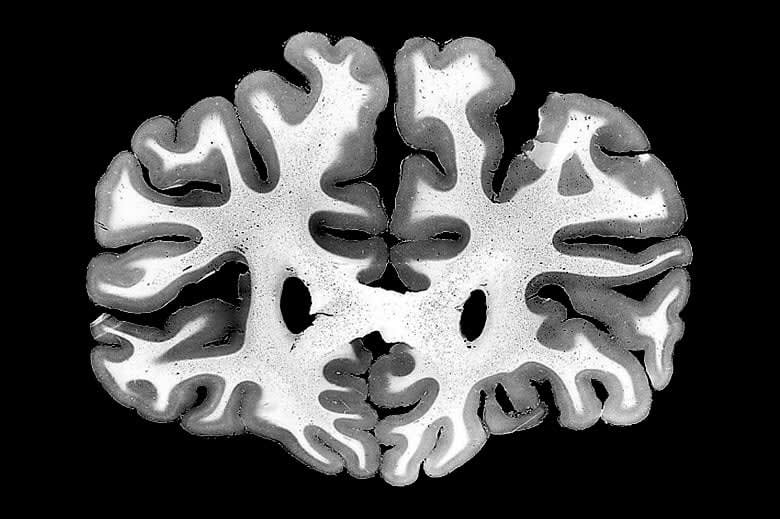
    Aurelia Song advocates for the practice of whole-body human preservation for future revival, arguing that the ability to revive is not a prerequisite for effective preservation. She draws a parallel to the San Diego Frozen Zoo, founded by Kurt Benirschke, which successfully preserved animal cells using liquid nitrogen decades ago with only basic knowledge of genetics. Song posits that current scientific understanding is sufficient to begin preserving humans, emphasizing that the knowledge required for preservation is often less than that needed for revival. AI

    Does preservation make sense before we know how to revive?
  2. openJiuwen Community's New Open Source Initiative: Grand Release of JiuwenSwarm, Kicking Off the "Bee Farming" Era of Swarm Intelligence

    The openJiuwen community has launched JiuwenSwarm, an open-source AI agent platform designed for multi-agent collaboration. This new system introduces "Coordination Engineering," a paradigm shift from single-agent focus to enabling multiple AI agents to work together efficiently, akin to a swarm. JiuwenSwarm includes features for dynamic task allocation, skill sharing through a hub, and self-evolution of agent capabilities based on performance, with options for human involvement as either a supervisor (HOTS) or a participant (HITS). AI

    openJiuwen Community's New Open Source Initiative: Grand Release of JiuwenSwarm, Kicking Off the "Bee Farming" Era of Swarm Intelligence

    IMPACT Enables more complex, multi-agent AI tasks by facilitating collaboration and skill sharing, potentially accelerating development in areas requiring teamwork.

  3. Decouple before Integration: Test-time Synthesis of SFT and RLVR Task Vectors

    Researchers have developed a novel post-hoc framework called Decoupled Test-time Synthesis (DoTS) to integrate Supervised Fine-Tuning (SFT) and Reinforcement Learning from Human Feedback (RLHF) for large language models. This method addresses the challenges of catastrophic forgetting and gradient conflicts that arise from sequential or joint training of these two paradigms. DoTS synthesizes the capabilities of independently trained SFT and RLHF checkpoints at inference time using task vector arithmetic, significantly reducing computational cost and avoiding parameter updates. AI

    Decouple before Integration: Test-time Synthesis of SFT and RLVR Task Vectors

    IMPACT Enables more efficient integration of SFT and RLHF, potentially improving LLM performance on diverse tasks without extensive retraining.

  4. India bans sugar exports until the end of September to ensure domestic supply

    India has banned sugar exports until September 30th to ensure domestic supply and stabilize prices, affecting both raw and refined sugar. This move by a major global sugar producer aims to manage internal market conditions. Meanwhile, in unrelated tech news, Zhejiang Humanoid Robot Innovation Center and Schneider Electric have launched a new solution for intelligent chemical experiment scenarios, featuring a humanoid robot. AI

    IMPACT Minimal direct impact on AI operators; the primary news is a commodity policy decision, with a secondary unrelated product launch.

  5. Why the Strongest "Grass Planting" Empire Suddenly Accelerated AI

    Xiaohongshu has established a dedicated AI division called Dots, signaling a strategic shift towards integrating artificial intelligence into its platform. This move comes as the company seeks new growth avenues beyond its core community and advertising business. Despite initial caution and a focus on balancing AI with its community ethos, Xiaohongshu is now accelerating its AI efforts, influenced by the rise of agent narratives and the competitive landscape. AI

    IMPACT Xiaohongshu's accelerated AI integration could redefine user experience and content discovery within its community-driven platform.

  6. Operational databases: How they work and when to use them

    Operational databases, also known as OLTP databases, are designed for rapid, real-time transaction processing essential for daily business operations. They excel at handling concurrent user interactions and ensuring data accuracy through ACID guarantees. However, traditional OLTP systems struggle with modern demands, particularly unstructured data and AI workloads, necessitating a new approach. Databricks proposes a 'Lakebase' architecture, combining transactional database strengths with data lake flexibility, to bridge this gap and support intelligent applications. AI

    Operational databases: How they work and when to use them

    IMPACT Highlights limitations of traditional databases for AI and proposes a new architecture to support intelligent applications.