PulseAugur / Brief
EN
LIVE 00:51:59

Brief

last 24h
[6/6] 221 sources

Multi-source AI news clustered, deduplicated, and scored 0–100 across authority, cluster strength, headline signal, and time decay.

  1. SVM : 40 Must Visit Interview Questions (Part 1)

    This article series delves into Support Vector Machines (SVMs), a popular machine learning algorithm, by presenting a comprehensive list of interview-style questions. Part 1 covers foundational concepts like decision boundaries, hyperplanes, and the intuition behind maximizing margins, along with distinctions between hard-margin and soft-margin classifiers. Part 2 builds on this by exploring the kernel trick, its power, different kernel types, and challenges, as well as how SVMs handle multi-class problems and compare to other algorithms like Logistic Regression. AI
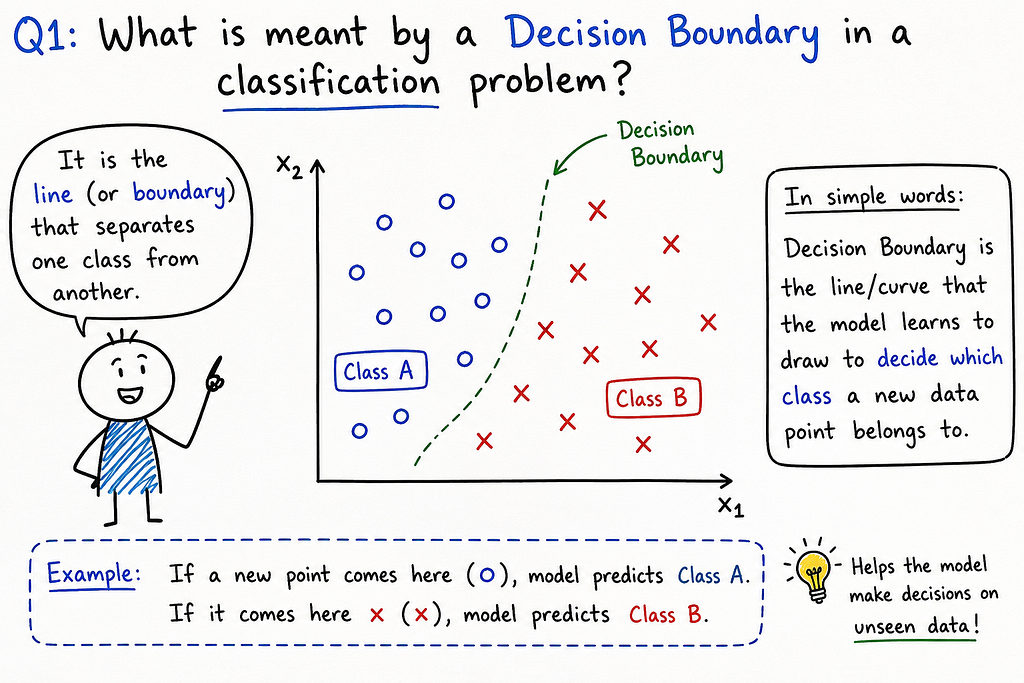
    SVM : 40 Must Visit Interview Questions (Part 1)

    IMPACT Provides foundational knowledge for machine learning practitioners and students preparing for interviews on core algorithms.
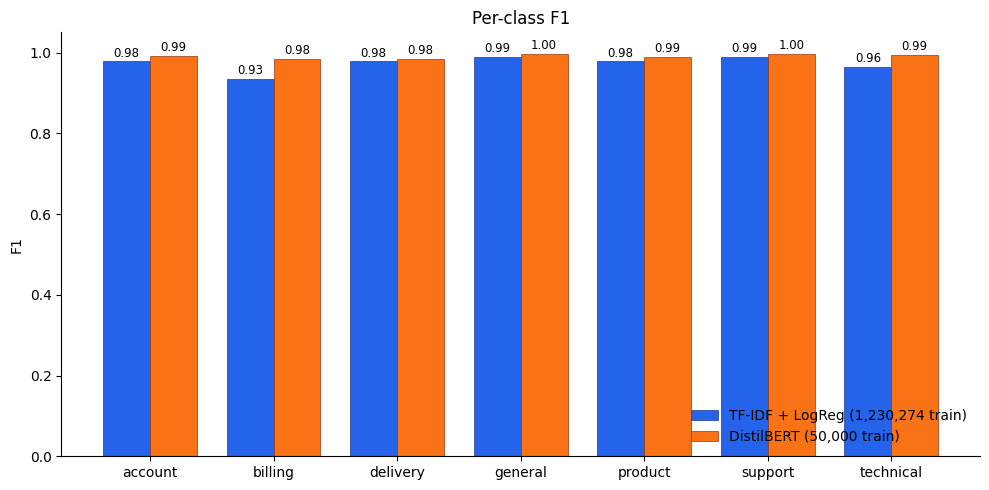
  2. A 1.9 MB Classifier Beat a 269 MB One. Sort Of.

    A smaller, 1.9 MB classifier model, utilizing TF-IDF and Logistic Regression, outperformed a larger, 269 MB fine-tuned model in classifying customer support tweets. The smaller model achieved this by focusing on efficiency and targeted feature engineering, demonstrating that model size does not always correlate with performance. AI

    A 1.9 MB Classifier Beat a 269 MB One. Sort Of.

    IMPACT Demonstrates that efficient, smaller models can outperform larger ones, suggesting potential for resource optimization in AI applications.

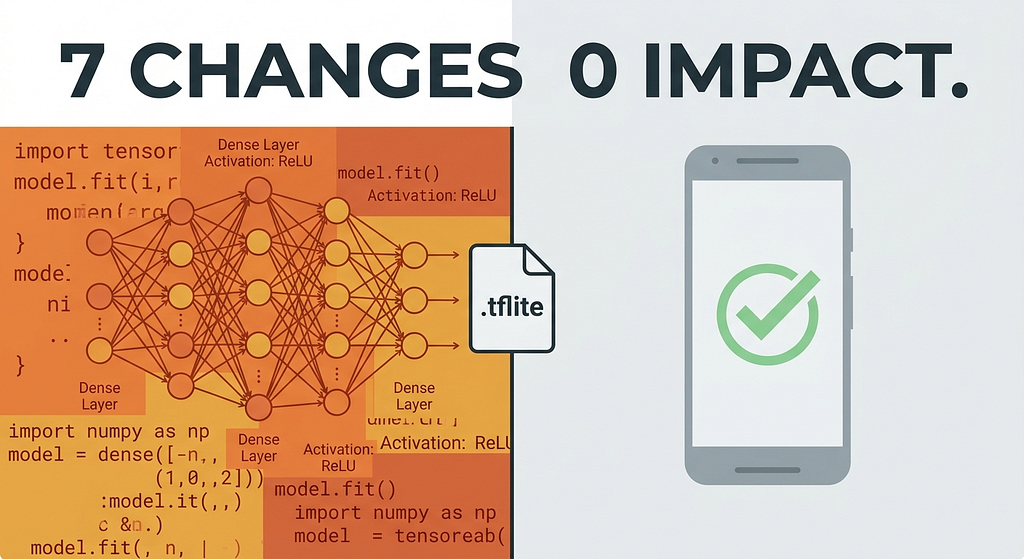
  3. I Swapped the ML Model in My Android App. The App Had No Idea.

    The author details how they successfully replaced the machine learning model in their Android application, FinRisk, without altering the existing codebase. This was achieved through an interface-driven design that allowed the new neural network model to seamlessly replace the old logistic regression model. The upgrade was prompted by the original model's inability to correctly classify a specific edge case involving high income and high debt, a limitation inherent in its architecture. AI

    I Swapped the ML Model in My Android App. The App Had No Idea.

    IMPACT Demonstrates how interface-driven design can abstract ML model complexity, enabling easier upgrades and maintenance in applications.

  4. Ensemble RL through Classifier Models: Enhancing Risk-Return Trade-offs in Trading Strategies

    Researchers have developed an ensemble reinforcement learning (RL) approach for financial trading, integrating RL algorithms like A2C, PPO, and SAC with traditional classifiers such as SVM, Decision Trees, and Logistic Regression. This hybrid method aims to improve risk-return trade-offs and reduce drawdowns compared to standalone RL models. The study found that ensemble strategies consistently outperformed individual models, though performance was sensitive to the variance threshold parameter \(\tau\), suggesting a need for dynamic adjustment. AI

    IMPACT Introduces a novel ensemble approach for financial trading that improves risk-adjusted returns and stability.

  5. Cyber-Physical Anomaly Detection in IoT-Enabled Smart Grids Using Machine Learning and Metaheuristic Feature Optimization

    Researchers have developed a machine learning approach to detect cyber-physical anomalies in smart grids, aiming to distinguish between physical faults and malicious cyber-attacks. The method utilizes genetic algorithms for feature selection, reducing the number of required measurements while improving detection accuracy. Tree-based ensemble models, particularly Extra Trees, demonstrated the highest effectiveness, achieving an increased macro-F1 score and ROC-AUC with a significantly reduced feature set. AI

    IMPACT This research could lead to more robust and efficient anomaly detection systems for smart grids, improving their resilience against cyber-physical threats.

  6. From TF-IDF to Transformers: A Comparative and Ensemble Approach to Sentiment Classification

    This paper explores sentiment classification using various machine learning models, including traditional methods like Naive Bayes and SVM, alongside transformer-based models such as RoBERTa and DistilBERT. The study evaluated these models on the IMDb dataset for categorizing movie reviews into positive and negative sentiments. RoBERTa achieved the highest accuracy at 93.02%, and an ensemble approach combining multiple models further enhanced classification performance. AI

    IMPACT This research highlights RoBERTa's effectiveness in sentiment analysis and demonstrates the benefits of model ensembling for improved accuracy.