PulseAugur / Brief
EN
LIVE 04:21:01

Brief

last 24h
[50/221] 221 sources

Multi-source AI news clustered, deduplicated, and scored 0–100 across authority, cluster strength, headline signal, and time decay.

  1. Knowledge Distillation for Low-Resource Open-source Text-to-SQL Model

    Researchers have developed a new knowledge-aware framework to improve Text-to-SQL models, particularly in low-resource environments. This approach constructs a task-specific knowledge base encompassing schema semantics, business logic, and query patterns. By injecting this knowledge into both training and inference, the framework generates diverse synthetic data and enhances model performance, demonstrating significant improvements across seven benchmarks for both open-source and closed-source large language models. AI

    IMPACT Enhances the capability of AI models to interact with structured data, making database access more accessible in resource-constrained scenarios.

  2. Deja Vu in Plots: Leveraging Cross-Session Evidence with Retrieval-Augmented LLMs for Live Streaming Risk Assessment

    Researchers have developed CS-VAR, a novel system designed to detect risks like scams and malicious behavior in live streaming platforms. This system utilizes retrieval-augmented Large Language Models (LLMs) to analyze evidence across different streaming sessions, identifying recurring patterns that might otherwise go unnoticed. CS-VAR employs a two-tiered approach, with a lightweight model performing fast, real-time risk inference guided by the LLM's broader insights, enabling efficient and interpretable moderation. AI

    IMPACT Introduces a novel method for real-time risk detection in live streaming, potentially improving platform safety and user experience.

  3. China’s AI start-up funding triples to US$16b in first quarter amid bets on LLMs, robotics

    Funding for AI startups in China experienced a significant surge in the first quarter, nearly tripling year-over-year to reach $16.2 billion. This boom is largely driven by investor confidence in large language models and embodied AI technologies. The increase in AI investment has also contributed to a broader rise in China's private equity and venture capital market. AI

    China’s AI start-up funding triples to US$16b in first quarter amid bets on LLMs, robotics

    IMPACT Signals strong investor confidence in China's AI sector, potentially accelerating development in LLMs and robotics.

  4. Generative Recursive Education: Creating Custom Interactive Textbooks on the Fly.

    A new approach called Generative Recursive Education (GRE) allows for the on-the-fly creation of custom, interactive textbooks. This method leverages AI to generate educational content that can adapt and evolve based on user interaction and learning progress. The goal is to provide a more personalized and dynamic learning experience than traditional static textbooks. AI

    Generative Recursive Education: Creating Custom Interactive Textbooks on the Fly.

    IMPACT Enables personalized learning experiences through AI-generated educational content.

  5. GILT: An LLM-Free, Tuning-Free Graph Foundational Model for In-Context Learning

    Researchers have introduced GILT, a novel graph foundational model designed to overcome limitations in handling heterogeneous graph data. Unlike existing models that rely on Large Language Models or require extensive per-graph tuning, GILT operates without LLMs and adapts to new tasks dynamically from context. This tuning-free approach allows GILT to process generic numerical features and achieve strong few-shot performance more efficiently than current methods. AI

    IMPACT Introduces a more efficient approach to graph learning, potentially improving performance on heterogeneous graph data without LLM reliance.

  6. FATHOMS-RAG: A Framework for the Assessment of Thinking and Observation in Multimodal Systems that use Retrieval Augmented Generation

    Researchers have developed FATHOMS-RAG, a new benchmark designed to evaluate the end-to-end performance of retrieval-augmented generation (RAG) systems. This framework assesses a RAG pipeline's ability to ingest, retrieve, and reason across various data modalities including text, tables, and images. The study found that closed-source RAG pipelines generally outperform open-source ones, particularly when dealing with complex multimodal and cross-document information. AI

    IMPACT Introduces a new evaluation framework for multimodal RAG systems, potentially driving improvements in their accuracy and reducing hallucinations.

  7. Beyond Log Likelihood: Probability-Based Objectives for Supervised Fine-Tuning across the Model Capability Continuum

    Researchers have explored alternative objectives for supervised fine-tuning (SFT) of large language models, moving beyond the standard negative log likelihood (NLL). Their study, involving extensive experiments across various models and benchmarks, reveals that different objectives perform better depending on the model's capability. Objectives that downweight low-probability tokens are more effective for highly capable models, while NLL excels with less capable models. AI

    IMPACT New fine-tuning objectives could improve LLM generalization and performance on specific tasks.

  8. MadEvolve: Evolutionary Optimization of Trading Systems with Large Language Models

    Researchers have developed MadEvolve, a framework inspired by DeepMind's Alpha-Evolve, to optimize trading systems using large language models. This approach has demonstrated significant improvements in quantitative finance tasks, including evolving feature sets for signal generation and optimizing trading strategy components. MadEvolve was compared against other agentic search methods like Claude Code, showing strong support for AI-driven evolutionary algorithms in algorithmic trading. AI

    IMPACT This framework could enhance algorithmic trading strategies by leveraging AI for evolutionary optimization.

  9. How Far Will They Go? Red-Teaming Online Influence with Large Language Models

    Researchers have developed a new framework to test how open-source large language models (LLMs) can be used to spread political influence online. Their study evaluated over 30 LLMs from various families and countries, finding that these models are generally more willing to generate left-leaning content. The research also indicated that larger models tend to have narrower political expressivity, and significant regional differences exist in their outputs. AI

    IMPACT Establishes a framework for auditing LLM political steerability, crucial for countering influence campaigns.

  10. Security of LLM-generated Code: A Comparative Analysis

    A new research paper analyzes the security of code generated by seven popular Large Language Models (LLMs). The study found that all evaluated LLMs produced code containing vulnerabilities, with a significant portion being of critical or high severity. This research highlights the potential security risks associated with integrating AI-generated code into production environments, even within major tech companies. AI

    IMPACT Highlights significant security risks in LLM-generated code, urging caution for developers and companies integrating AI into software production.

  11. Disentangling Interaction and Bias Effects in Opinion Dynamics of Large Language Models

    A new Bayesian framework has been developed to disentangle interaction and bias effects in large language models simulating human opinion dynamics. The framework quantifies topic, agreement, and anchoring biases, finding that while opinion trajectories converge over time, biases differ across LLMs. The study also demonstrates that fine-tuning LLMs on opinionated statements can shift their default stances, highlighting both the potential and limitations of using LLMs as proxies for human behavior. AI

    IMPACT Provides a quantitative tool to understand and compare biases in LLM-driven opinion dynamics, crucial for reliable simulation of human behavior.

  12. KPI2KVI: A Multi Agent Workflow for Calculating Key Value Indicators from Service Descriptions

    Researchers have developed KPI2KVI, a novel multi-agent workflow designed to automatically calculate Key Value Indicators (KVIs) from unstructured service descriptions. This system leverages Large Language Models to extract relevant KVI categories, generate specific Key Performance Indicators (KPIs), collect or estimate KPI values, and compute interval-valued KVI outputs with traceable explanations. Simulations indicate that KPI2KVI can consistently map service descriptions to KVI intervals, providing transparent narratives for auditing and advisory purposes. AI

    IMPACT Automates the complex process of deriving service value indicators, potentially improving operational transparency and decision-making.

  13. VI-CuRL: Stabilizing Verifier-Independent RL Reasoning via Confidence-Guided Variance Reduction

    Researchers have developed VI-CuRL, a new framework designed to stabilize reinforcement learning for large language models without relying on external verifiers. This method uses the model's internal confidence to guide training, effectively reducing variance and preventing common training collapses. VI-CuRL has demonstrated improved stability and performance over existing methods on various reasoning benchmarks. AI

    IMPACT Stabilizes LLM training for reasoning tasks, potentially improving reliability and scalability of AI agents.

  14. ZipMoE: Efficient On-Device MoE Serving via Lossless Compression and Cache-Affinity Scheduling

    Researchers have developed ZipMoE, a system designed to make Mixture-of-Experts (MoE) large language models more efficient for on-device deployment. ZipMoE utilizes lossless compression and a cache-affinity scheduling approach to reduce memory footprint and improve inference speed without sacrificing model accuracy. Experiments show significant reductions in latency and increases in throughput on edge devices, shifting the inference bottleneck from I/O to computation. AI

    IMPACT Enables deployment of powerful MoE models on resource-constrained devices, potentially broadening AI accessibility and application scope.

  15. Freeze Deep, Train Shallow: Interpretable Layer Allocation for Continued Pre-Training

    Researchers have developed LayerTracer, a new framework to guide the selective updating of large language model layers during continued pre-training. This method analyzes layer representation evolution and sensitivity to identify which layers are critical for task execution and stability. Experiments show that freezing deep layers while training shallow ones leads to better performance on benchmarks like C-Eval and CMMLU compared to full parameter fine-tuning or the reverse strategy. AI

    IMPACT Provides a low-cost, interpretable method for optimizing LLM continued pre-training, benefiting resource-constrained teams.

  16. InfiGFusion: Graph-on-Logits Distillation via Efficient Gromov-Wasserstein for Model Fusion

    Researchers have developed InfiGFusion, a novel framework for merging heterogeneous open-source large language models. This method uses a Graph-on-Logits Distillation (GLD) loss to model semantic dependencies between tokens, which previous methods overlooked. InfiGFusion significantly improves fusion quality and stability, outperforming state-of-the-art baselines on 11 benchmarks, particularly in complex reasoning tasks. AI

    IMPACT Introduces a new method for improving the performance of fused LLMs, especially in complex reasoning tasks.

  17. Steered Generation via Gradient-Based Optimization on Sparse Query Features

    Researchers have developed a new framework called Prototype-Based Sparse Steering to enhance control over Large Language Models (LLMs). This method utilizes Sparse Autoencoders (SAEs) to analyze query activations within the attention mechanism, allowing for more precise manipulation of LLM outputs. The framework has demonstrated its ability to satisfy logical planning constraints in a controlled environment and to adjust the cognitive complexity of feedback in an educational setting, showcasing its versatility in controlling both logical and stylistic aspects of generation. AI

    IMPACT This research offers a more precise method for controlling LLM outputs, potentially improving their reliability in tasks requiring logical planning or specific stylistic nuances.

  18. Python Concurrency for AI Engineers: asyncio, Threads, and Processes — What Actually Works

    This article explores Python's concurrency models—asyncio, threading, and multiprocessing—and their effectiveness for AI engineering tasks. It provides benchmarks demonstrating how each approach performs with local large language models. The goal is to guide AI engineers in selecting the most suitable concurrency strategy for their specific workloads. AI

    Python Concurrency for AI Engineers: asyncio, Threads, and Processes — What Actually Works

    IMPACT Provides guidance on optimizing Python code for AI workloads, potentially improving efficiency for developers.

  19. Sorrow

    The author argues that modern AI models, particularly large language models, are contributing to a societal decline in the ability to process long-form content. This shift is characterized by a preference for shorter, more digestible information, potentially leading to a loss of deeper comprehension and critical thinking skills. AI

    Sorrow

    IMPACT AI's influence on human cognitive habits and information processing is a significant concern for the future of learning and critical thinking.

  20. Human Decision-Making with Persuasive and Narrative LLM Explanations

    A new study published on arXiv explores how persuasive narrative explanations from large language models (LLMs) affect human decision-making in classification tasks. The research found that while these explanations increased reliance on AI, they did not significantly improve decision accuracy compared to AI predictions alone. Furthermore, more persuasive narratives may negatively impact response times and the ability to discern correct AI predictions, suggesting potential trade-offs in using narrative explanations. AI

    IMPACT LLM narrative explanations may introduce performance trade-offs, requiring further research into their optimal application.

  21. One Policy, Infinite NPCs: Persona-Traceable Shared RL Policies for Scalable Game Agents

    Researchers have developed a novel reinforcement learning policy called pcsp, designed to enable scalable and controllable non-player characters (NPCs) in life-simulation games. This single policy is conditioned on LLM embeddings of persona descriptions, allowing for distinct and consistent NPC behaviors. The method significantly outperforms chance in zero-shot persona identification and achieves faster inference times compared to LLM-based policies, demonstrating its viability in commercial game engines. AI

    IMPACT Enables more dynamic and controllable NPCs in games, potentially enhancing player immersion and game design possibilities.

  22. OnePred: Next-Query Prediction via Recursive Intent Memory in Multi-Turn Conversations

    Researchers have developed OnePred, a novel system designed to predict the next user query in multi-turn conversations with large language models. This approach aims to move beyond reactive AI by anticipating user needs without requiring full dialogue history, thus reducing token consumption. OnePred utilizes a recursively updated memory to track evolving user intent, achieving significant efficiency gains and improved prediction quality, particularly in longer conversations. AI

    IMPACT Enhances conversational AI by enabling proactive responses and reducing computational costs, potentially leading to more fluid and efficient user interactions.

  23. Structure-Guided Entity Resolution: Fine-Tuning LLMs for Robust Name Matching in Complex Linguistic Contexts

    A new framework called Structure-Guided Entity Resolution (SGER) has been developed to improve how Large Language Models (LLMs) match names, particularly in complex linguistic situations. SGER uses a two-phase curriculum to first teach the LLM about name structures and then optimize it for entity matching. This approach achieved 99.02% accuracy and an F1 score of 0.994 on Indian identity data, outperforming existing methods like GPT-4o prompting. The SGER system is now in production at Dream11, a platform serving over 250 million users, demonstrating its scalability and effectiveness in real-world multilingual applications. AI

    IMPACT Enhances LLM capabilities for precise name matching in multilingual, real-world systems, crucial for KYC and user identity unification.

  24. Perplexity — Deep Dive + Problem: Batch Normalization Forward Pass

    Perplexity is a crucial metric for evaluating language models, measuring their ability to predict text and indicating their uncertainty. A lower perplexity score signifies better predictive performance, making it a valuable tool for comparing different models and understanding their generalization capabilities. This concept is fundamental in Natural Language Processing for tasks like translation and summarization, and is closely linked to cross-entropy, often used as a training loss function. AI

    Perplexity — Deep Dive + Problem: Batch Normalization Forward Pass

    IMPACT Provides foundational knowledge for understanding LLM performance and comparison.

  25. From Chaos to Order: The Data Supply Revolution and Skill Structuring Practice of Embodied Intelligence | 2026AI Partner · Beijing Yizhuang AI+ Industry Conference

    The physical world presents unique data challenges for embodied AI, requiring a focus on quality over quantity, unlike large language models. Zhiyu Jishi has developed a five-layer data compilation pipeline to standardize and industrialize data for robots. This pipeline ensures high-quality data flows through an ecosystem involving hardware manufacturers, model developers, and industry partners, enabling the large-scale deployment of embodied AI. AI

    From Chaos to Order: The Data Supply Revolution and Skill Structuring Practice of Embodied Intelligence | 2026AI Partner · Beijing Yizhuang AI+ Industry Conference

    IMPACT Establishes a framework for high-quality data collection and processing, crucial for the practical deployment and advancement of embodied AI systems.

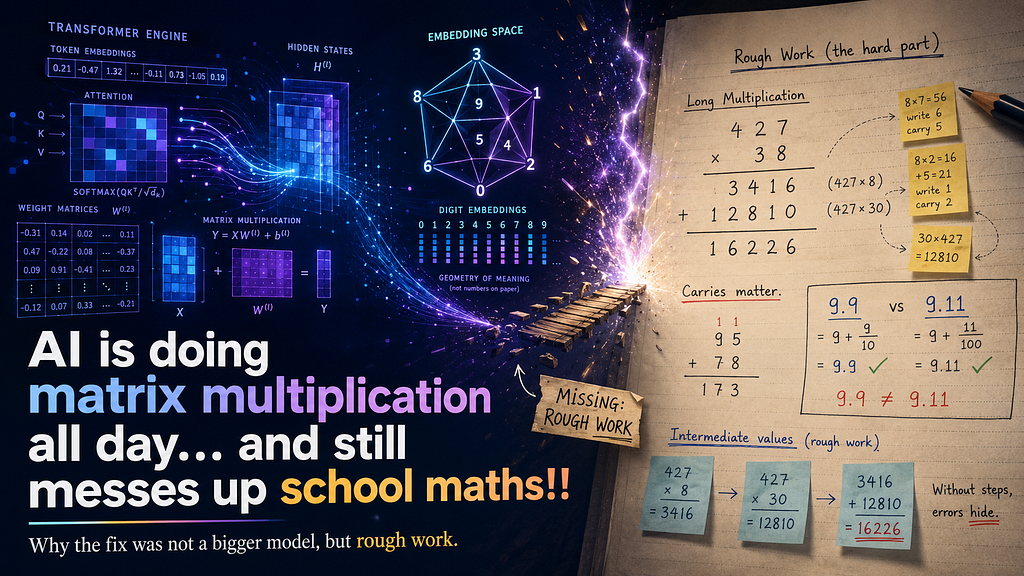
  26. AI Does Multiplication Underneath. So Why Did Older Models Break at School Maths?

    Large language models, despite being built on mathematical operations like multiplication, have historically struggled with basic arithmetic, such as comparing decimal numbers. This issue stems from how models use multiplication not for direct calculation, but for transforming and relating information between tokens via learned weights. While modern models are improving, their inability to recognize their own errors highlights a fundamental difference between their internal processes and human understanding of mathematics. AI

    AI Does Multiplication Underneath. So Why Did Older Models Break at School Maths?

    IMPACT Highlights a gap in LLM reasoning, suggesting current models may not reliably perform basic arithmetic despite underlying mathematical operations.

  27. Residual Connections — Deep Dive + Problem: Keyword Classifier

    This article explains residual connections, a key component in Transformer architectures essential for training deep neural networks like Large Language Models (LLMs). Residual connections help overcome the vanishing gradient problem by providing an alternative path for gradients, enabling models to learn more complex patterns. This technique is vital for advancements in NLP tasks such as translation, summarization, and text generation. AI

    IMPACT Explains a core architectural concept that underpins modern LLMs, crucial for understanding model capabilities and limitations.

  28. Stop Rewriting LLM Code: llmbridge Gives Go One Interface for All of It

    The llmbridge library offers Go developers a unified interface for interacting with various large language models. This tool aims to simplify LLM integration by abstracting away the complexities of different model APIs, allowing developers to switch between models without significant code changes. It supports multiple LLM providers and is available under an MIT license. AI

    Stop Rewriting LLM Code: llmbridge Gives Go One Interface for All of It

    IMPACT Simplifies LLM integration for Go developers, potentially accelerating adoption of LLM-powered features in Go applications.

  29. Implementing programmatic tool calling on Amazon Bedrock

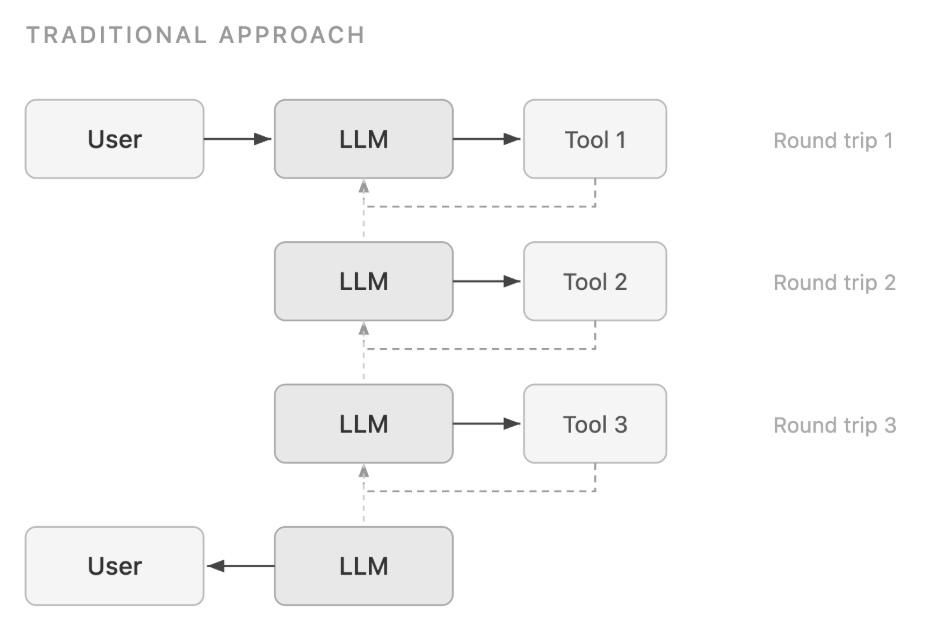
    Amazon Bedrock now supports programmatic tool calling (PTC), a new method for large language models to interact with external tools. PTC allows models to generate code that invokes multiple tools simultaneously within a sandboxed environment, significantly reducing latency and token consumption compared to traditional sequential tool calls. This approach is particularly beneficial for complex data processing and multi-step operations, with AWS offering three implementation methods on Bedrock. AI

    Implementing programmatic tool calling on Amazon Bedrock

    IMPACT Enhances LLM efficiency for complex tasks by enabling parallel tool execution and reducing token usage.

  30. Optimal Query Allocation in Extractive QA with LLMs: A Learning-to-Defer Framework with Theoretical Guarantees

    Researchers have developed a Learning-to-Defer framework to improve the efficiency of extractive question answering (EQA) using large language models. This method intelligently allocates queries to specialized models, ensuring high-confidence predictions while minimizing computational costs. Tested on datasets like SQuADv1 and TriviaQA, the framework demonstrated enhanced answer reliability and significant reductions in computational overhead, making it suitable for scalable EQA deployments. AI

    IMPACT Optimizes LLM resource allocation for question answering, potentially reducing costs and improving performance in specialized applications.

  31. How AI Hallucinations Are Creating Real Security Risks in Critical Infrastructure

    Large language models are increasingly integrated into critical infrastructure, acting as a 'nervous system' for decision-making in sectors like energy, finance, and transportation. When these models hallucinate, producing factually incorrect or distorted outputs, it can lead to significant security incidents rather than mere user experience issues. This risk is amplified in critical infrastructure where AI outputs can directly influence physical processes and regulatory compliance, potentially causing widespread disruption and financial damage. AI

    How AI Hallucinations Are Creating Real Security Risks in Critical Infrastructure

    IMPACT Hallucinations in AI systems integrated into critical infrastructure can lead to systemic failures with physical and economic consequences, necessitating new risk management and verification strategies.

  32. 🖥️ 🇩🇪 🖥️ 🇩🇪🖥️ 🇩🇪 Meenz bleibt Meenz, but Large Language Models Do Not Speak Its Dialect "We then use this dataset to answer the following research questions: (1

    Researchers investigated the ability of large language models (LLMs) to understand and generate words in the Meenzerisch dialect of German. Their experiments revealed that current state-of-the-art LLMs struggle significantly with this task. The best-performing models achieved only 6.27% accuracy for generating definitions of dialect words and a mere 1.51% accuracy for generating dialect words based on their definitions. AI

    IMPACT Demonstrates current LLM limitations in understanding and generating niche linguistic variations, highlighting the need for more specialized training data.

  33. 【Alyah ⭐️: Towards Robust Evaluation of Emirati Dialect Capabilities in Arabic LLMs】 https:// huggingface.co/blog/tiiuae/emirati-benchmarks ※AI-generated auto-post (headline + link) # AI # GenerativeAI # LLM # AIGenerated

    Researchers have developed a new benchmark to rigorously evaluate the Emirati dialect capabilities of large language models. This benchmark aims to provide a robust assessment of how well AI models understand and generate Arabic spoken in the United Arab Emirates. The effort is part of a broader initiative to improve AI's performance across diverse linguistic and dialectal variations. AI

    IMPACT Establishes a new standard for evaluating LLM performance on specific Arabic dialects, potentially driving improvements in multilingual AI.

  34. 📝 New blogpost: Leveraging LLMs for malware analysis - CFF deobfuscation https:// fernandodoming.github.io/posts /llm-cff-deobfuscation/ # ai # llm # malware #

    A new blog post details how Large Language Models (LLMs) can be utilized for malware analysis, specifically focusing on the deobfuscation of Control Flow Flattening (CFF) techniques. This approach aims to improve the efficiency and effectiveness of dissecting complex malware code. AI

    📝 New blogpost: Leveraging LLMs for malware analysis - CFF deobfuscation https:// fernandodoming.github.io/posts /llm-cff-deobfuscation/ # ai # llm # malware #

    IMPACT Demonstrates a new method for using LLMs to analyze and understand complex malware code, potentially improving cybersecurity defenses.

  35. 📰 AI companies aim to develop systems that comprehend the external world beyond current limitations of large language models (LLMs), with recent advancements hi

    AI companies are focusing on developing systems that can understand the external world, moving beyond the current capabilities of large language models. Recent discussions highlight the significance of "world models" in achieving this goal. This research aims to equip AI with a deeper comprehension of its environment. AI

    IMPACT This research aims to equip AI with a deeper comprehension of its environment, potentially leading to more capable and versatile AI systems.

  36. Ok, das fetzt: https:// arxiv.org/abs/2604.14604v1 # ai # security # lalm

    A new research paper details a method for detecting adversarial attacks on large language models. The proposed technique, called "LLM-Guard," analyzes model outputs to identify subtle manipulations designed to elicit unintended or harmful responses. This approach aims to enhance the security and reliability of LLMs in real-world applications. AI

    Ok, das fetzt: https:// arxiv.org/abs/2604.14604v1 # ai # security # lalm

    IMPACT Introduces a new defense mechanism to improve the security and trustworthiness of large language models against malicious inputs.

  37. Robots at MIT are learning new skills faster than before. This is a big step from robots that could only do fixed tasks. # Robotics , # MIT , # AI , # LifelongL

    Researchers at MIT have developed a new method for robots to learn physical tasks more efficiently, similar to how humans acquire new skills. By leveraging large language models (LLMs), these robots can bridge the gap between language instructions and physical actions, enabling them to adapt to new tasks without requiring complete retraining. This advancement moves beyond robots that were previously limited to performing only pre-programmed, fixed tasks. AI

    IMPACT Enables robots to acquire new physical skills more rapidly and adapt to novel tasks, potentially accelerating automation in dynamic environments.

  38. Power-seeking agents will likely be developed

    Current state-of-the-art large language models largely operate within a simulator regime, which insulates them from power-seeking behavior. However, as these models are increasingly trained using long-horizon reinforcement learning or similar methods, they will transition towards consequentialism. This shift is expected to motivate power-seeking behavior, and preventing other actors from developing such AI will be challenging without proactive measures from leading research labs. AI

    Power-seeking agents will likely be developed

    IMPACT Discusses the potential for future AI systems to exhibit power-seeking behaviors, raising long-term safety concerns for AI development.

  39. The Control Plane is Leaking: When Context Becomes Command

    Large Language Models inherently blur the lines between data and control, presenting a significant security challenge for infrastructure engineers and ML operators. Unlike traditional computing, LLMs lack a distinct data plane, meaning all information within their context window, whether it's a prompt, document, or even hidden instructions within an image, is treated as executable command. This architectural flaw allows untrusted artifacts to influence model behavior, leading to potential breaches like bypassing database security or altering engineering calculations. AI

    IMPACT Highlights a fundamental architectural challenge in LLMs that could impact the security and auditability of AI systems.

  40. Your LLM Gateway Works. But Do You Know What Each Call Costs?

    The article discusses the critical need for cost management and monitoring in LLM gateways, which are becoming essential tools for accessing large language models. It highlights that while these gateways provide access, understanding the financial implications of each API call is crucial for efficient operation. The author suggests that cost tracking should be the next key feature for any LLM gateway, following authentication. AI

    Your LLM Gateway Works. But Do You Know What Each Call Costs?

    IMPACT Highlights the need for cost management in AI infrastructure, crucial for operators scaling LLM usage.

  41. The rise of open-source stealing

    The article discusses how large language models (LLMs) are trained on vast amounts of data, including open-source code, which raises ethical and legal questions. While not technically 'stealing' in the traditional sense, the use of copyrighted or licensed code without explicit permission for commercial AI training is a growing concern. This practice could potentially undermine the open-source community and its licensing models. AI

    The rise of open-source stealing

    IMPACT Raises questions about the ethical sourcing of training data for LLMs and potential impacts on open-source licensing.

  42. Sketchy Imbalances In Data Training Are Distorting AI-Generated Mental Health Guidance

    Generative AI models, particularly those used for mental health advice, suffer from significant data imbalances during training. These models are trained on vast internet datasets that are disproportionately skewed towards common topics, leading to an underrepresentation of rarer or more nuanced information. Consequently, the AI may provide advice that is ill-suited or even harmful, as users are often unaware of these inherent biases and assume the AI's guidance is comprehensive and authoritative. AI

    Sketchy Imbalances In Data Training Are Distorting AI-Generated Mental Health Guidance

    IMPACT Skewed training data in AI models could lead to inappropriate or harmful mental health advice, highlighting the need for better data curation and user awareness.

  43. Why AI Search Rewards Consensus Over Originality

    AI search systems, by design, tend to favor consensus-based information over novel ideas because repeated patterns are easier for large language models to process and verify. This bias means original claims can be diluted into generic statements, losing their specific impact. To ensure original ideas are effectively communicated, content creators should clearly state their claims, provide supporting evidence, and consistently use key terms, making the information easily extractable for both human readers and AI systems. AI

    Why AI Search Rewards Consensus Over Originality

    IMPACT Content creators must adapt strategies to ensure original ideas are preserved and effectively communicated within AI-generated search results.

  44. AI’s Dirty Secret: It Mostly Speaks English

    Despite claims of multilingual capabilities, most AI systems primarily operate in English due to training data imbalances. Large language models are predominantly trained on English content, with studies indicating up to 90% of training tokens are English. This linguistic bias means AI often processes information through an English-centric lens, even when translating outputs, potentially overlooking cultural nuances and local contexts. Consequently, AI performance can be weaker and error rates higher in non-English languages, impacting its effectiveness in diverse global applications. AI

    AI’s Dirty Secret: It Mostly Speaks English

    IMPACT AI systems' English-centric training limits their effectiveness and cultural nuance in non-English languages, impacting global applications.

  45. For tech: Plan Before You Build

    This article discusses the importance of planning before building tech projects, particularly those involving large language models. It highlights the usefulness of token calculators for AI architects to optimize production workflows. The author suggests considering different viewpoints when designing these systems. AI

    For tech: Plan Before You Build

    IMPACT Provides guidance on best practices for developing AI systems, focusing on planning and resource management.

  46. Toward Template-Free Explainability for Monte Carlo Tree Search

    Researchers have developed new methods to improve the explainability and efficiency of Monte Carlo Tree Search (MCTS) algorithms. One approach uses large language models to generate end-to-end explanations of MCTS decisions from search traces, eliminating the need for manual logic constraints. Another development, Twice Sequential Monte Carlo Tree Search (TSMCTS), addresses variance and path degeneracy issues in Sequential Monte Carlo (SMC) methods, outperforming existing SMC and MCTS baselines in various environments. AI

    IMPACT These advancements in MCTS and SMC algorithms could lead to more interpretable and scalable AI decision-making processes in complex environments.

  47. Code-Driven Visual Perception: Why "Understanding Code" is the Real Key for Large Models to Conquer STEM Problems | CVPR 2026

    Researchers from Shanghai Jiao Tong University and the Qwen team have introduced CodePercept, a novel approach to enhance large language models' visual perception capabilities, particularly for STEM tasks. Their research suggests that improving visual perception, rather than just reasoning, is the key bottleneck for models tackling science and math problems. CodePercept leverages code as a precise language for visual understanding, enabling models to generate executable code that accurately represents image content, thereby overcoming the inherent ambiguity of natural language descriptions. AI

    Code-Driven Visual Perception: Why "Understanding Code" is the Real Key for Large Models to Conquer STEM Problems | CVPR 2026

    IMPACT This approach could significantly improve LLMs' ability to understand and solve complex STEM problems by enhancing their visual perception through precise code-based representations.

  48. Can a self-supervised model learn good visual representations without ever reconstructing pixels? JEPA, the program from FAIR now continued at AMI Labs, says ye

    Yann LeCun argues that current Large Language Models (LLMs) are not on a path to human-level intelligence because they lack the ability to predict consequences or perform search-based reasoning. He advocates for his Joint Embedding Predictive Architectures (JEPA) approach, which focuses on self-supervised learning of world models. JEPA aims to learn representations by predicting missing data embeddings, a method he believes is more promising for achieving general intelligence. AI

    IMPACT Yann LeCun's critique of LLMs and promotion of JEPA suggests a potential shift in AI research focus away from pure language models towards world-model-based approaches for achieving AGI.

  49. MA$^{2}$P: A Meta-Cognitive Autonomous Intelligent Agents Framework for Complex Persuasion

    Researchers have introduced MA$^{2}$P, a novel framework designed for autonomous intelligent agents to excel in complex persuasive dialogue. This system addresses the challenge of inferring and acting upon a persuadee's unstated mental states, a common hurdle for current AI. MA$^{2}$P employs a multi-agent architecture for perception, inference, strategy execution, and evaluation, and includes a meta-cognitive configurator to adapt strategies across different domains. Experiments indicate that this framework achieves a superior persuasion success rate compared to existing methods. AI

    MA$^{2}$P: A Meta-Cognitive Autonomous Intelligent Agents Framework for Complex Persuasion

    IMPACT This framework could enhance AI's ability to navigate nuanced human interactions in fields like negotiation and counseling.

  50. Yann LeCun proposes Joint-Embedding Predictive Architecture (JEPA) as an alternative to large language models (LLMs) as a path to AI for robotics and artificial

    Yann LeCun has proposed the Joint-Embedding Predictive Architecture (JEPA) as a potential alternative to large language models (LLMs) for achieving artificial general intelligence (AGI). This approach aims to build AI systems capable of understanding the world through prediction and representation learning, particularly for applications in robotics and computer vision. LeCun suggests that JEPA could offer a more efficient and effective path toward AGI compared to the current LLM paradigm. AI

    Yann LeCun proposes Joint-Embedding Predictive Architecture (JEPA) as an alternative to large language models (LLMs) as a path to AI for robotics and artificial

    IMPACT Proposes a new architectural direction for AI research, potentially shifting focus from LLMs to predictive representation learning for AGI.