PulseAugur / Brief
EN
LIVE 03:04:43

Brief

last 24h
[14/14] 221 sources

Multi-source AI news clustered, deduplicated, and scored 0–100 across authority, cluster strength, headline signal, and time decay.

  1. Build an AI Contract Intelligence System: OCR + Hybrid RAG + LangGraph to Extract Key Terms…

    This article details how to build an AI-powered system for contract intelligence, automating the extraction of key terms from various document formats. The system utilizes a combination of Optical Character Recognition (OCR) with PaddleOCR, hybrid retrieval methods like FAISS and BM25, and the GPT-4o model within a LangGraph pipeline. This approach aims to transform unstructured contract data into structured reports, addressing issues like missed deadlines, financial leakage, and compliance risks. AI
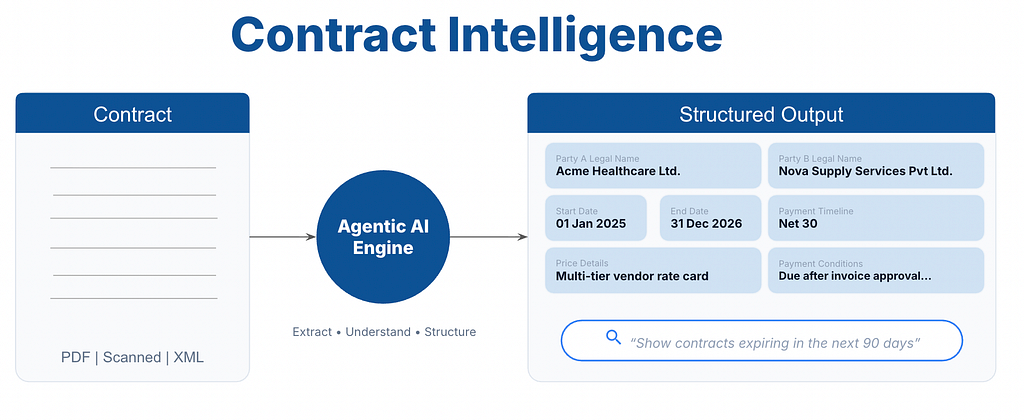
    Build an AI Contract Intelligence System: OCR + Hybrid RAG + LangGraph to Extract Key Terms…

    IMPACT Enables automated extraction of critical information from contracts, improving efficiency and reducing risks for legal, finance, and operations teams.
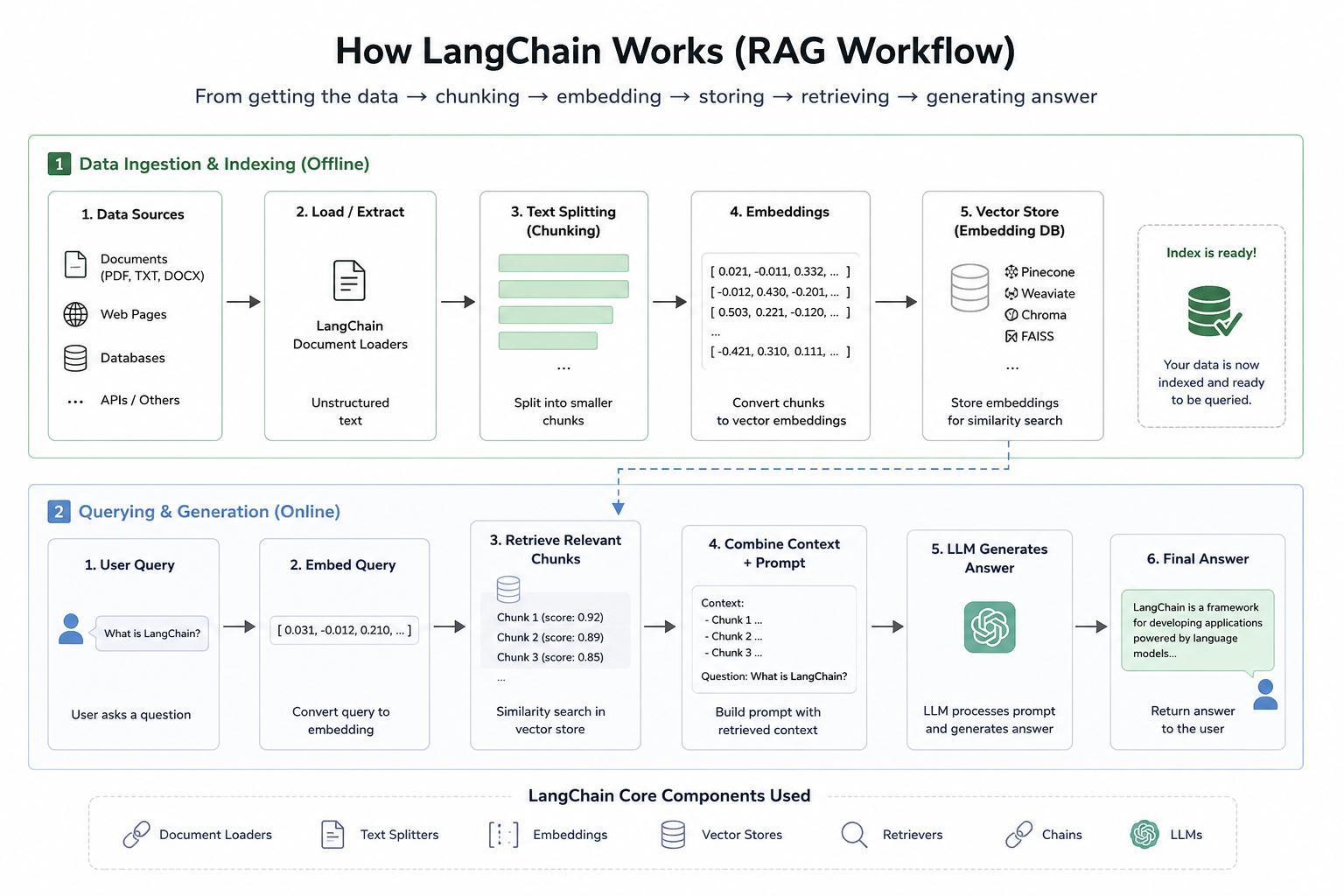
  2. Understanding LangChain, LangGraph, RAG, and MCP

    Multiple dev.to articles detail how to build AI agents using LangGraph, a workflow system from LangChain. The posts provide templates for common agent patterns, including Retrieval-Augmented Generation (RAG) for document querying, multi-tool agents that can plan and execute tasks, and human-in-the-loop workflows requiring user review. These templates illustrate LangGraph's architecture with nodes, edges, and state management for creating complex, stateful AI applications. AI

    Understanding LangChain, LangGraph, RAG, and MCP

    IMPACT Provides practical templates and code examples for building complex AI agents, accelerating development for RAG, multi-tool, and human-in-the-loop applications.

  3. # Python Friday #332: Long-Term Memory in # LangGraph - # ai https:// pythonfriday.dev/2026/05/332-l ong-term-memory-in-langgraph/

    This article explores the implementation of long-term memory within LangGraph, a framework for building stateful, multi-agent applications. It details how to leverage LangGraph's capabilities to manage and utilize memory effectively across different agents and states in an AI system. The discussion focuses on practical techniques and considerations for integrating memory into complex LangGraph workflows. AI

    IMPACT Provides insights into enhancing AI agent capabilities through effective memory management in LangGraph.

  4. Precision RAG: Fixing Citations & Hallucinations for Stronger Developer OKRs

    A developer detailed a sophisticated Parent-Child RAG pipeline on GitHub, which, despite its advanced components like hybrid vector stores and LangGraph, suffered from inaccurate citations and hallucinations. The core issue identified was a misalignment between the retrieval units (child chunks), generation units (parent documents), and citation units, leading to incorrect page references. The proposed solution involves pre-capturing granular page references from child chunks and associating them with the expanded parent documents used for generation to ensure citation accuracy. AI

    Precision RAG: Fixing Citations & Hallucinations for Stronger Developer OKRs

    IMPACT Addresses a common challenge in RAG systems, improving the reliability of AI-generated citations and reducing hallucinations.

  5. Most developers overcomplicate AI agents. My production stack 👇 🔀 LangGraph — agent flow control 🔍 RAG + Pinecone — searches your docs 🐍 FastMCP — runs Python c

    A developer shared their simplified AI agent stack, highlighting LangGraph for flow control, RAG with Pinecone for document search, FastMCP for Python code execution, and PostgreSQL for memory. This open-source project is available on GitHub and can be customized for specific needs. AI

    IMPACT Provides a streamlined approach to building AI agents, potentially reducing complexity for developers.

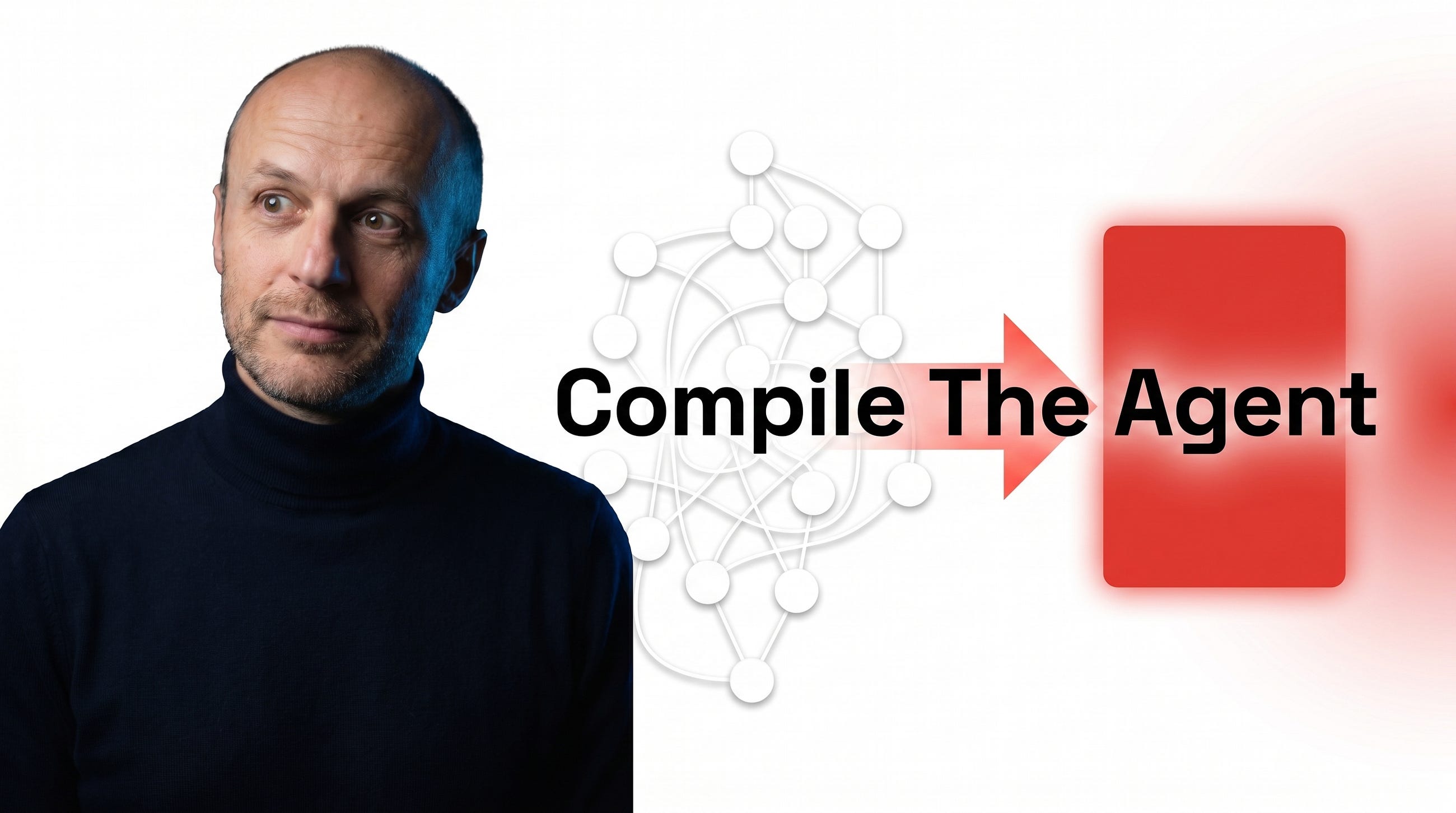
  6. Compiler vs Interpreter — Why LangGraph Is Becoming Your Hot Path Cost Center

    The article discusses the trade-offs between compiling agentic workflows and interpreting them at runtime, focusing on LangGraph's role in this process. It explores how distilling multi-step agent processes into smaller model weights can offer advantages, but also highlights potential breaking points and cost implications. AI

    Compiler vs Interpreter — Why LangGraph Is Becoming Your Hot Path Cost Center

    IMPACT Explores cost-optimization strategies for AI agent development, offering insights for operators on efficient workflow implementation.

  7. Cloud LLM on 16GB VRAM - Part 2: LangGraph Server, LangSmith, and SDK Hello friends! I'm back with a continuation. In the first part, we figured out how to set up...

    This article details the second part of a series on cloud-based LLMs, focusing on integrating them into products. It explains how to build a graph infrastructure using local or any OpenAI-compatible models. The process involves creating a graph that automatically generates a REST API, a testing interface, and monitoring tools. AI

    IMPACT Provides a framework for integrating LLMs into applications, streamlining development with automated API generation and monitoring.

  8. DART: Semantic Recoverability for Structured Tool Agents

    Researchers have introduced DART, a new runtime system designed to improve the reliability of structured tool agents, particularly in commitment-sensitive scenarios. DART addresses the challenge of recovering from agent failures when downstream systems have already acted on the agent's output. It achieves this by certifying semantically recoverable boundaries, aligning checkpoints, and selecting admissible restore points to preserve downstream work, thereby preventing data inconsistencies that simpler rollback methods might miss. AI

    IMPACT Enhances the robustness of LLM-driven agents, making them more reliable for complex, multi-step tasks with downstream dependencies.

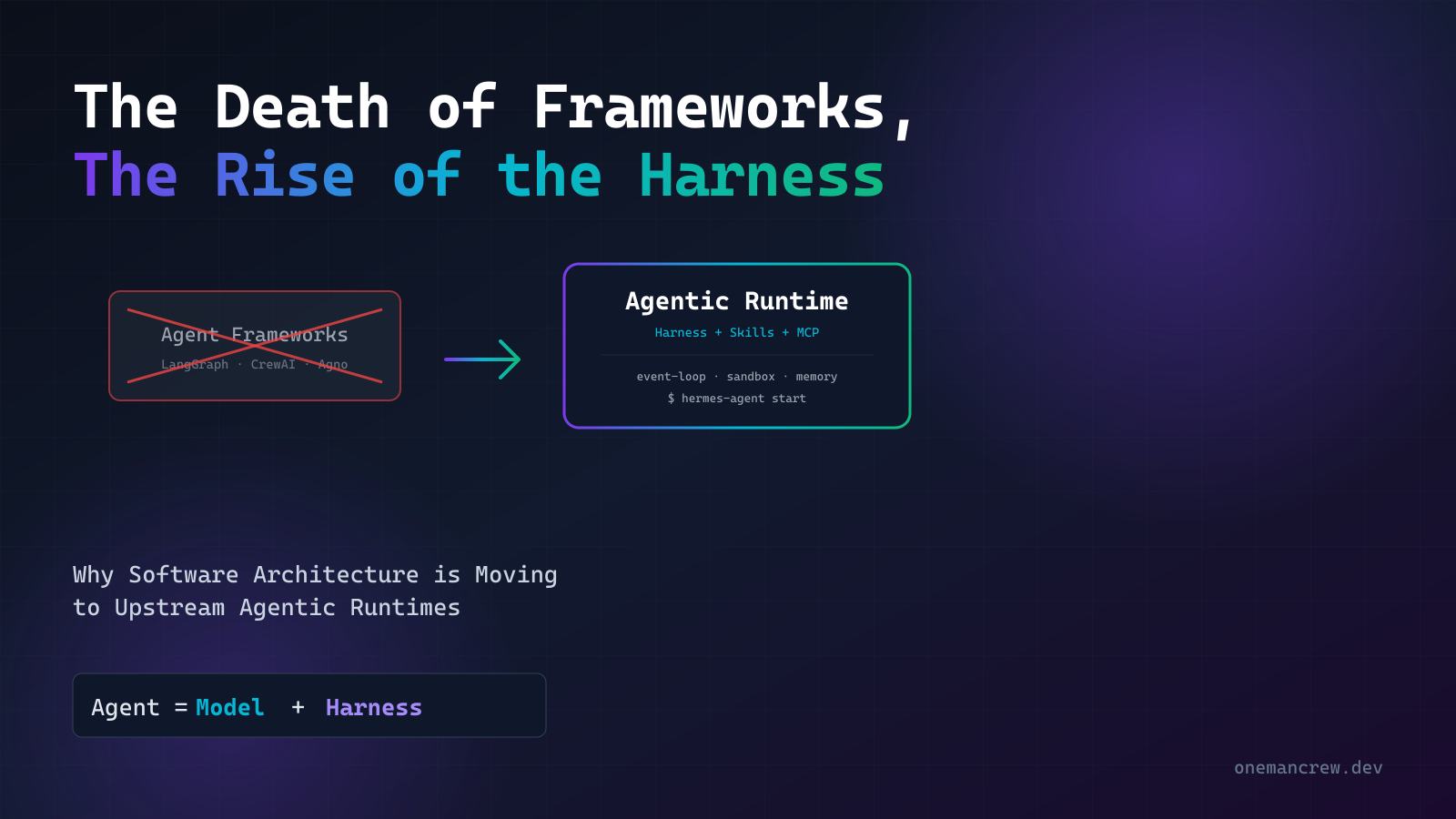
  9. The Death of Frameworks, The Rise of the Harness: Why Software Architecture is Moving to Upstream…

    The article argues that current AI agent development is hampered by reliance on frameworks like CrewAI and LangGraph. It suggests a shift towards a "harness" approach, where developers build custom solutions rather than adapting pre-built frameworks. This new paradigm emphasizes upstream integration and flexibility, moving away from the rigid structures of traditional frameworks. AI

    The Death of Frameworks, The Rise of the Harness: Why Software Architecture is Moving to Upstream…

    IMPACT Suggests a move towards more flexible and custom AI agent architectures, potentially improving development efficiency and capability.

  10. Want Built a React-style looping agent with small LLMs (Qwen 3.5 9B / Gemma4) + LangGraph?

    A user is experimenting with building a React-style looping agent system using smaller LLMs like Qwen 3.5 9B and Gemma 4, integrated with LangGraph. The agent is designed to handle instructions and images, with tools whose outputs can feed into subsequent tool inputs. The primary challenges encountered include excessive reasoning token generation from Qwen 9B, unstable recursive loops, and truncated or improperly returned outputs after several iterations. AI

  11. How We Solved the Hidden Problem of Cheap LLMs

    Two developers describe building sophisticated AI systems using Cascadeflow and Hindsight to overcome limitations of basic LLM applications. One created an auditable product intelligence pipeline for synthesizing customer feedback, using Cascadeflow for a structured, multi-stage evaluation and Hindsight for tracking sentiment over time. The other built a creator relationship memory system, employing Cascadeflow for intelligent model routing based on comment complexity and intent, and Hindsight for personalized follower memory. AI

    How We Solved the Hidden Problem of Cheap LLMs

    IMPACT These systems demonstrate advanced techniques for managing LLM interactions, improving reliability and cost-effectiveness in AI applications.

  12. Overcoming Situational Depression Via Generative AI Including Tapping Into ChatGPT

    Generative AI, including models like ChatGPT, Gemini, and Claude, is increasingly being explored for mental health support, particularly for situational depression. While these tools offer accessible, 24/7 assistance, they are not a replacement for human therapists and carry risks of dispensing inappropriate advice. Concurrently, the technical underpinnings of AI agents are being scrutinized, focusing on how they process information, potential biases, and the mechanisms behind brand mentions in their outputs. Developers are advised to understand core AI concepts like LLMs, tokens, and RAG before building agent frameworks, while new infrastructure is emerging to enable AI agents to interact with regulated financial markets. AI

    Overcoming Situational Depression Via Generative AI Including Tapping Into ChatGPT

    IMPACT Explores diverse applications of AI agents and LLMs, from mental health support to financial trading, highlighting technical considerations and potential risks.

  13. AI Agents Are Quietly Taking Over Your Industry — Here's What's Happening [03:31:29]

    AI agents are rapidly moving from experimental concepts to production systems, automating complex tasks and workflows across various industries. Companies like DBS Bank and Visa are testing agents for autonomous commerce, while fintech firms like BridgeWise are using them for personalized investment portfolios. Microsoft is deploying over 100 agents in its supply chain, and solopreneurs are leveraging agent frameworks to perform the work of larger teams. Developers are advised to familiarize themselves with agent frameworks like LangGraph, CrewAI, and AutoGen to stay relevant in this evolving landscape. AI

    IMPACT AI agents are automating complex business processes and workflows, signaling a major shift in how tasks are performed across industries and impacting developer skill requirements.

  14. The 7 Skills You Need to Build AI Agents That Actually Work in Production

    Building effective AI agents requires a broader skill set than traditional prompt engineering, encompassing system design, data flow, and component isolation. The shift towards agent engineering acknowledges that these systems perform actions with real-world consequences, necessitating expertise in areas like distributed systems and API design. Frameworks are accelerating adoption, but a strong foundation in system architecture remains crucial for creating robust and reliable AI agents. AI

    The 7 Skills You Need to Build AI Agents That Actually Work in Production

    IMPACT Highlights the evolving skill requirements for developing sophisticated AI agents capable of real-world action.