PulseAugur / Brief
EN
LIVE 09:26:09

Brief

last 24h
[3/3] 224 sources

Multi-source AI news clustered, deduplicated, and scored 0–100 across authority, cluster strength, headline signal, and time decay.

  1. Civil society coalition warns AI warfare erodes humanitarian law safeguards – JURIST https://www. byteseu.com/2111297/ # AI # ArtificialIntelligence

    A coalition of civil society organizations has issued a warning that the integration of artificial intelligence into warfare poses a significant threat to existing humanitarian law safeguards. They express concern that the increasing autonomy and complexity of AI-driven military systems could undermine established legal and ethical frameworks governing armed conflict. AI

    Civil society coalition warns AI warfare erodes humanitarian law safeguards – JURIST https://www. byteseu.com/2111297/ # AI # ArtificialIntelligence

    IMPACT Concerns are mounting that AI in warfare could weaken international humanitarian law, necessitating urgent policy discussions and ethical guidelines.
  2. It doesn't reassure me at all that lawyers see a certain protection against AI-generated murder and manslaughter through product liability. https://www. lto.de/r

    Legal experts are exploring the concept of product liability as a means to protect against AI-generated violence and harm. This approach aims to hold developers accountable for the misuse of their AI systems, particularly in cases involving severe consequences like murder. However, the effectiveness and implications of this legal framework remain a subject of concern and debate. AI

    IMPACT Raises questions about accountability for AI systems and potential legal frameworks to mitigate harm.

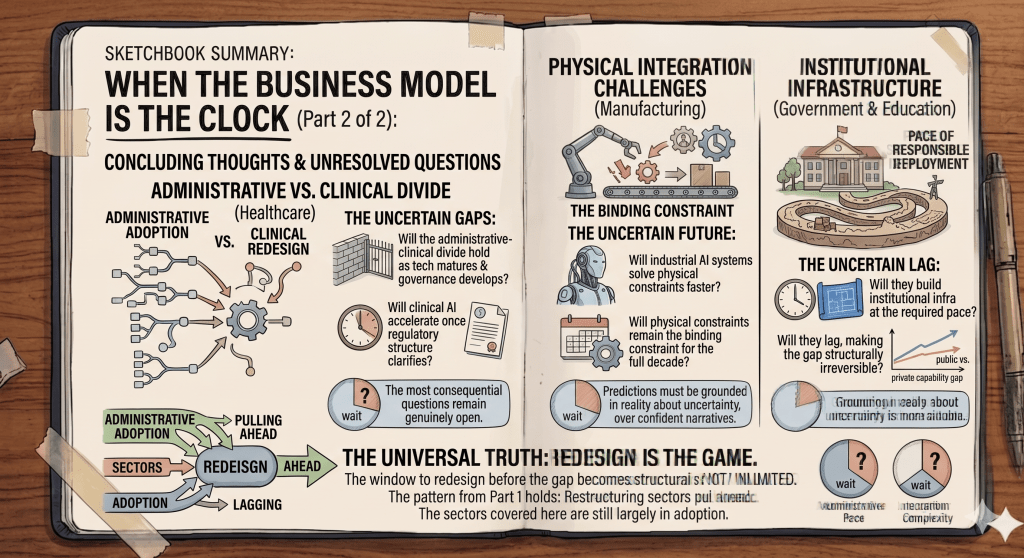
  3. Understanding Sector Change: The Role of Business Models in AI Adoption, Part 2 Part 1 of the sector clock established that the sectors restructuring fastest sh

    The adoption of AI is progressing at different rates across economic sectors, with financial and legal services leading due to their digital-native workflows and lower regulatory hurdles. In contrast, sectors like healthcare, manufacturing, and the public sector are adopting AI more slowly because of significant physical, regulatory, or accountability constraints that AI cannot easily bypass. Healthcare, for instance, is seeing rapid adoption of administrative AI for tasks like scheduling and billing, but clinical AI applications for diagnosis and treatment face much larger obstacles due to the high stakes and complex judgment involved. AI

    Understanding Sector Change: The Role of Business Models in AI Adoption, Part 2 Part 1 of the sector clock established that the sectors restructuring fastest sh

    IMPACT AI adoption will continue to be uneven across industries, with significant challenges remaining for sectors with high regulatory and physical constraints.