PulseAugur / Brief
EN
LIVE 17:32:53

Brief

last 24h
[2/2] 222 sources

Multi-source AI news clustered, deduplicated, and scored 0–100 across authority, cluster strength, headline signal, and time decay.

  1. Ministry of Commerce: National actual use of foreign capital reached 287.69 billion yuan from January to April

    China saw a 10.3% decrease in foreign direct investment during the first four months of the year, totaling 287.69 billion yuan. Despite the overall decline, the high-tech sector experienced significant growth, with investment increasing by 20.3% to 116.33 billion yuan. This surge in high-tech investment, which now accounts for 40.4% of the total, was particularly driven by growth in research and development services, and the manufacturing of computer, electronic, and communication equipment. AI

    IMPACT While not directly about AI, the growth in high-tech investment, including R&D services, may indicate increased investment in AI-related fields.
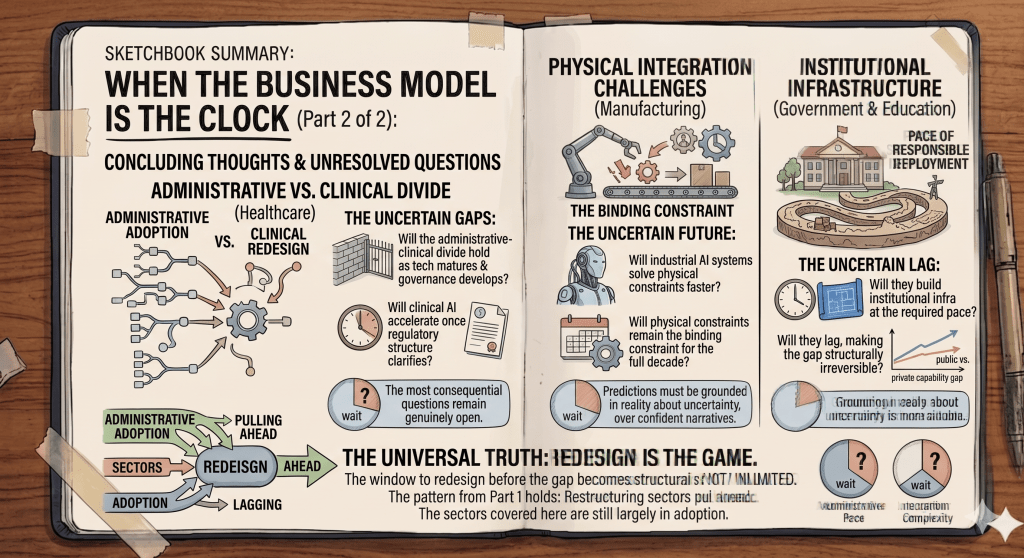
  2. Understanding Sector Change: The Role of Business Models in AI Adoption, Part 2 Part 1 of the sector clock established that the sectors restructuring fastest sh

    The adoption of AI is progressing at different rates across economic sectors, with financial and legal services leading due to their digital-native workflows and lower regulatory hurdles. In contrast, sectors like healthcare, manufacturing, and the public sector are adopting AI more slowly because of significant physical, regulatory, or accountability constraints that AI cannot easily bypass. Healthcare, for instance, is seeing rapid adoption of administrative AI for tasks like scheduling and billing, but clinical AI applications for diagnosis and treatment face much larger obstacles due to the high stakes and complex judgment involved. AI

    Understanding Sector Change: The Role of Business Models in AI Adoption, Part 2 Part 1 of the sector clock established that the sectors restructuring fastest sh

    IMPACT AI adoption will continue to be uneven across industries, with significant challenges remaining for sectors with high regulatory and physical constraints.