PulseAugur / Brief
EN
LIVE 09:54:17

Brief

last 24h
[9/9] 221 sources

Multi-source AI news clustered, deduplicated, and scored 0–100 across authority, cluster strength, headline signal, and time decay.

  1. Backend, Model Update, and Fleet Management in Image Processing Systems

    This article discusses the backend, model updating, and fleet management aspects of image processing systems. It highlights the widespread use of these systems across various sectors, including security, autonomous vehicles, healthcare, and industrial automation. The piece emphasizes the technical challenges and solutions involved in deploying and maintaining these complex systems. AI
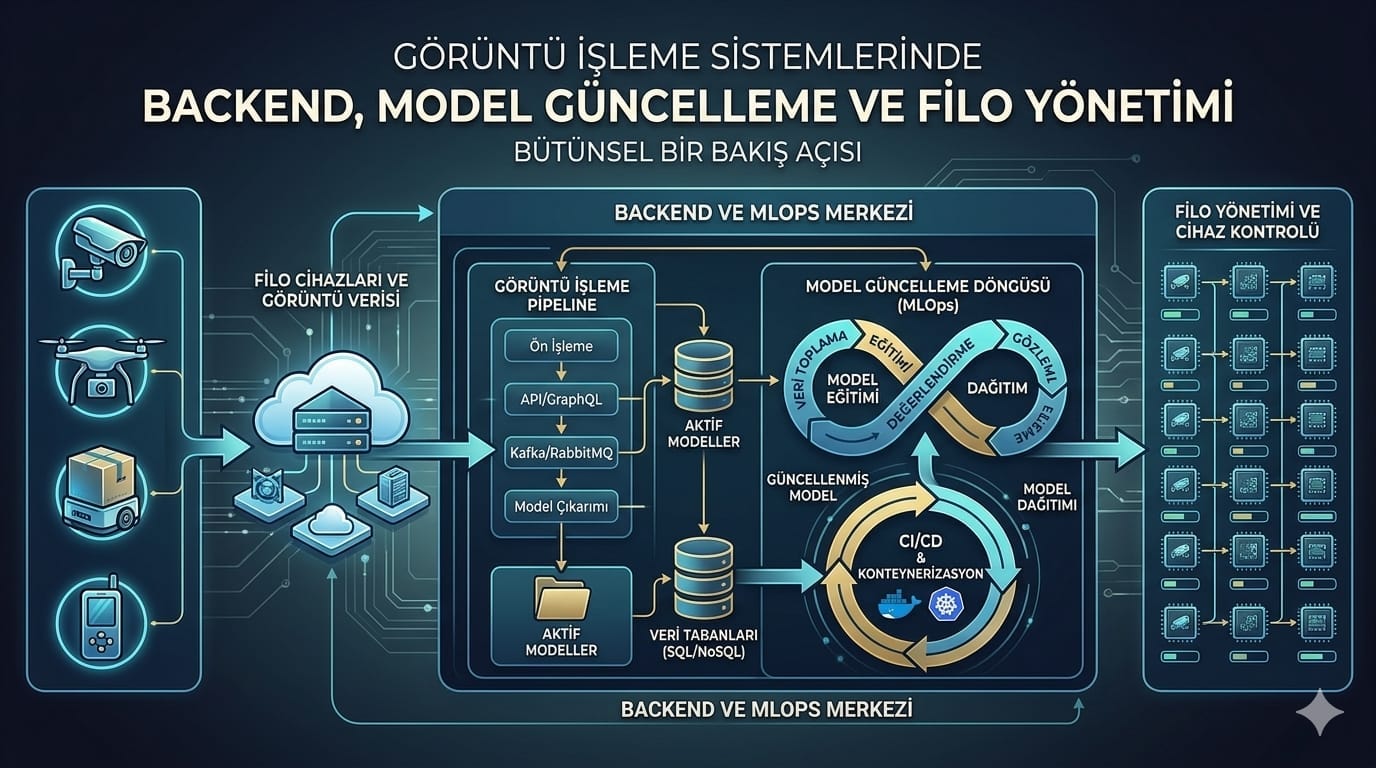
    Backend, Model Update, and Fleet Management in Image Processing Systems

    IMPACT Discusses technical challenges and solutions in deploying and maintaining complex image processing systems, relevant for operators in the field.


  2. Why Small Language Models Might Win in Healthcare

    Small language models (SLMs) may offer significant advantages in healthcare due to their efficiency and accessibility. These compact models, potentially under 400MB, can achieve reasoning capabilities comparable to much larger models and can even run on personal devices like smartphones. This makes them ideal for specialized healthcare applications where data privacy and on-device processing are crucial. AI

    Why Small Language Models Might Win in Healthcare

    IMPACT SLMs could enable more accessible and private AI solutions within the healthcare sector.

  3. Roundtable Dialogue: Seeing Effectiveness: From Technology to Prescription, AI + Healthcare Scenario Implementation and Value Closed Loop | 2026 AI Partner · Beijing Yizhuang AI+ Industry Conference

    AI in healthcare is shifting from technical demonstrations to practical problem-solving, focusing on assisting doctors rather than replacing them. The initial step for AI adoption in hospitals involves gaining trust from department heads and key physicians, rather than solely focusing on administrative buy-in or system integration. Successful implementation requires a closed-loop system that connects various data points, such as pre-visit triage, in-visit medical record generation, and post-visit follow-ups, to create a seamless workflow for healthcare professionals. AI

    Roundtable Dialogue: Seeing Effectiveness: From Technology to Prescription, AI + Healthcare Scenario Implementation and Value Closed Loop | 2026 AI Partner · Beijing Yizhuang AI+ Industry Conference

    IMPACT AI adoption in healthcare is shifting towards practical tools that assist doctors with routine tasks, improving efficiency and patient care.

  4. JPMorgan Investment Bank Executive: Hong Kong and Mainland China IPO Activity Expected to Increase Significantly

    JPMorgan's global co-head of investment banking, Kevin Foley, anticipates a strong year for IPOs, with Hong Kong and mainland China expected to lead the growth. Key sectors driving this trend include AI, robotics, and healthcare. Separately, China's enterprise credit index rose in April, indicating a continued positive trend in business creditworthiness, with the financial, energy, education, manufacturing, and utilities sectors showing the highest credit levels. AI

    IMPACT JPMorgan's outlook suggests AI is a key driver for future IPOs, indicating its growing importance in capital markets.

  5. The Day Will Come When You Can Understand Your Future with Medical AI: Kenichiro Mogi, Neuroscientist, Focuses on the Forefront of AI Utilization in Healthcare / Cutting-edge Information on Intractable Diseases and Liver Cancer Prediction Also Possible with AI / Why Patient-Centered Healthcare is Finally Becoming a Reality https://www.aiandemily.com/%e3%80%90%e5%8c%bb%e7%99%82ai%e3%81%a7%ef

    Neuroscientist Kenichiro Mogi is highlighting the forefront of AI applications in healthcare, with advancements enabling access to cutting-edge information on intractable diseases and even predicting liver cancer. These developments are paving the way for a future where AI can offer insights into personal health trajectories, making patient-centered medicine a tangible reality. AI

    The Day Will Come When You Can Understand Your Future with Medical AI: Kenichiro Mogi, Neuroscientist, Focuses on the Forefront of AI Utilization in Healthcare / Cutting-edge Information on Intractable Diseases and Liver Cancer Prediction Also Possible with AI / Why Patient-Centered Healthcare is Finally Becoming a Reality https://www.aiandemily.com/%e3%80%90%e5%8c%bb%e7%99%82ai%e3%81%a7%ef

    IMPACT AI is poised to transform healthcare by enabling personalized diagnostics and treatment insights, moving towards a more patient-centric medical future.

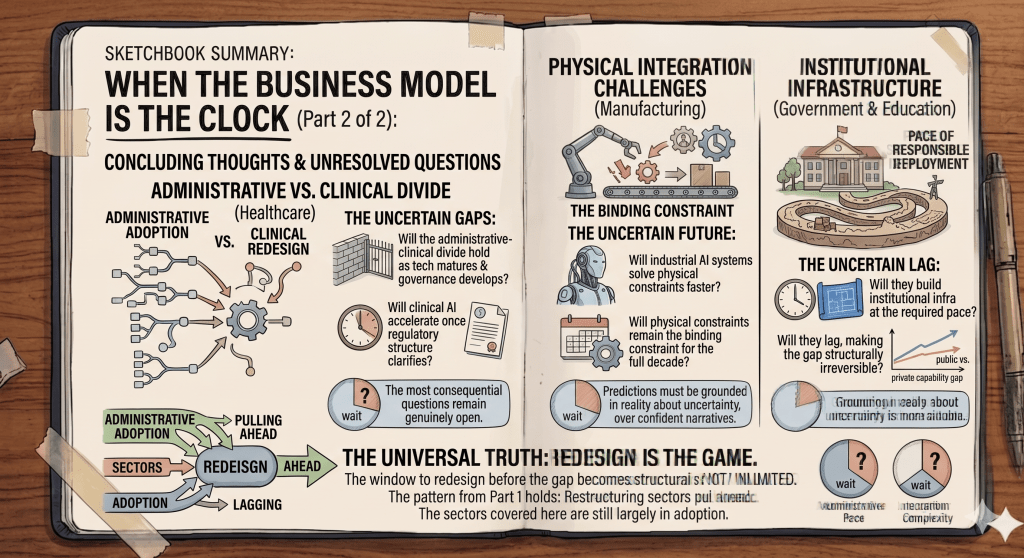
  6. Understanding Sector Change: The Role of Business Models in AI Adoption, Part 2 Part 1 of the sector clock established that the sectors restructuring fastest sh

    The adoption of AI is progressing at different rates across economic sectors, with financial and legal services leading due to their digital-native workflows and lower regulatory hurdles. In contrast, sectors like healthcare, manufacturing, and the public sector are adopting AI more slowly because of significant physical, regulatory, or accountability constraints that AI cannot easily bypass. Healthcare, for instance, is seeing rapid adoption of administrative AI for tasks like scheduling and billing, but clinical AI applications for diagnosis and treatment face much larger obstacles due to the high stakes and complex judgment involved. AI

    Understanding Sector Change: The Role of Business Models in AI Adoption, Part 2 Part 1 of the sector clock established that the sectors restructuring fastest sh

    IMPACT AI adoption will continue to be uneven across industries, with significant challenges remaining for sectors with high regulatory and physical constraints.

  7. African researchers push multilingual AI to improve health access and local innovation A University of Pretoria lecture highlighted progress on African-language

    African researchers are developing AI models to support over 40 languages across the continent, aiming to improve access to essential services like healthcare. This initiative includes advancements in speech recognition and the creation of a pan-African large language model. The goal is to bridge language barriers and enhance digital health access, patient communication, and public service delivery for underserved communities. AI

    African researchers push multilingual AI to improve health access and local innovation A University of Pretoria lecture highlighted progress on African-language

    IMPACT Multilingual AI models can significantly improve access to healthcare and public services across Africa by overcoming language barriers.

  8. AI-Enabled Serious Games: Integrating Intelligence and Adaptivity in Training Systems

    A new chapter explores the integration of artificial intelligence into serious games, aiming to overcome limitations like static scenarios and authoring bottlenecks. It discusses how AI, including LLMs and reinforcement learning, can enable dynamic scenario variation, adaptive pacing, and better learner modeling. The chapter also addresses the challenges of implementing AI in these systems, such as ensuring validity, transparency, and learner trust, while acknowledging the limited empirical evidence on long-term learning outcomes. AI

    IMPACT AI integration in serious games could lead to more effective and personalized training across various sectors.

  9. Future reasoning will consume 70% of computing power, leaving 30% for training | Silicon Valley investor Zhang Lu @AIGC2026

    Fusion Fund's Lucy Zhang predicts a significant shift in AI infrastructure, with inference computing demands set to surpass training by a 70/30 split. She highlights that communication within data centers consumes vastly more energy than computation itself, suggesting a critical need for advancements in optical communication. Zhang also emphasizes that the primary bottleneck for physical AI is the lack of high-quality, real-world data, rather than model size or compute power, pointing to sectors like healthcare as rich sources for this data. AI

    IMPACT Shifts focus to inference and data quality, potentially altering infrastructure investment and R&D priorities.