PulseAugur / Brief
EN
LIVE 02:19:08

Brief

last 24h
[5/5] 224 sources

Multi-source AI news clustered, deduplicated, and scored 0–100 across authority, cluster strength, headline signal, and time decay.

  1. Your agent's memory should compute confidence, not store it

    A new approach to AI agent memory proposes computing confidence dynamically rather than storing it statically. This method, termed Recall, recalculates a claim's confidence based on its relationships within a graph database, factoring in corroboration and contradiction. Unlike traditional methods that store a fixed confidence score, Recall's formula adjusts a claim's value based on its support and challenge edges, as well as the author's track record, ensuring that new information or contradictions immediately impact the perceived reliability of a memory. AI

    Your agent's memory should compute confidence, not store it

    IMPACT This approach could lead to more robust and adaptable AI agents by ensuring their knowledge base dynamically reflects new information and contradictions.

  2. Why Retrieval-Augmented Generation Fails: A Graph Perspective

    Researchers are developing advanced techniques to improve Retrieval-Augmented Generation (RAG) systems, which ground language models in external data. One approach, ContextRAG, constructs a graph index without relying on costly LLM-based entity extraction, significantly reducing token usage and indexing time while maintaining competitive performance. Another study uses circuit tracing to build attribution graphs, revealing that successful RAG relies on deeper reasoning paths and more structured information flow, leading to a framework for error detection and targeted interventions to improve grounding. Additionally, a preprocessing step called Contextual Retrieval aims to enrich raw text chunks with surrounding semantic understanding before indexing, creating "self-explained chunks" to enhance retrieval accuracy and create more robust RAG pipelines, often employing hybrid search methods. AI

    Why Retrieval-Augmented Generation Fails: A Graph Perspective

    IMPACT New RAG techniques promise more accurate and efficient AI responses by improving how models access and process external information, reducing costs and hallucinations.

  3. Work IQ MCP | Microsoft 365 Becomes Developer Context | Rahsi Framework™ Analysis

    Microsoft is evolving its Microsoft 365 suite into a programmable context layer for developer tools and AI assistants. The new Work IQ feature aims to make enterprise data, such as emails, documents, and meeting notes, accessible within development environments like VS Code. This integration allows AI assistants to reason over project discussions and requirements, potentially reducing manual searching and improving code generation by grounding it in the broader work context. Microsoft is also introducing governance features through MCP tools to manage access and ensure compliance for these agentic workflows. AI

    Work IQ MCP | Microsoft 365 Becomes Developer Context | Rahsi Framework™ Analysis

    IMPACT Enhances developer productivity by integrating enterprise context into AI-assisted coding workflows.

  4. Stop Picking Between Vector and Graph. Real Production AI Needs Three Databases.

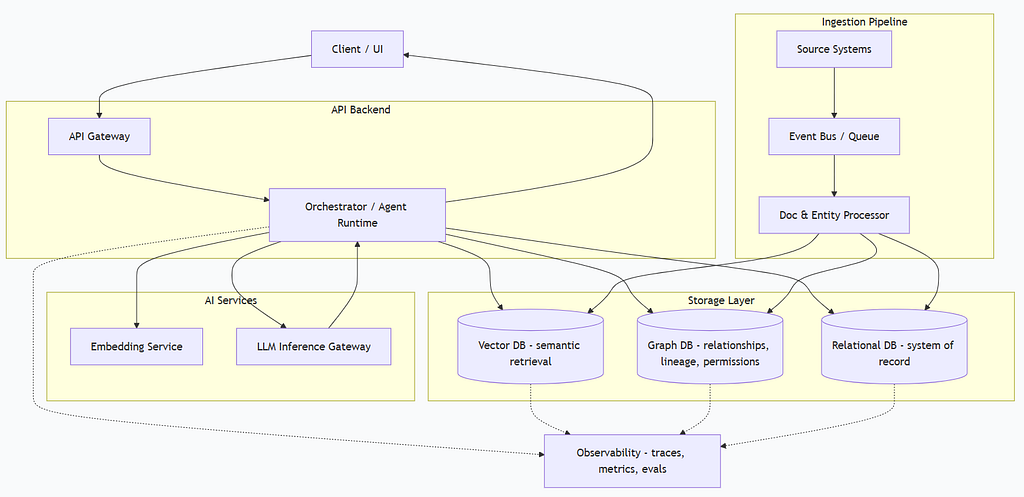
    Production AI systems, particularly those using Retrieval-Augmented Generation (RAG), often fail when a single database is forced to handle diverse data types and functions. Vector databases excel at semantic search but lack robust transactional guarantees and struggle with updates, leading to 'drift' where outdated information is presented as fact. Graph databases are effective for structured relationships but inefficient for bulk text retrieval, while relational databases offer reliability but lack semantic search capabilities. The author advocates for a multi-database architecture, leveraging each database type for its specific strengths to build more resilient and accurate AI systems. AI

    Stop Picking Between Vector and Graph. Real Production AI Needs Three Databases.

    IMPACT Recommends a multi-database architecture to improve the accuracy and reliability of AI systems, particularly RAG, by avoiding single points of failure.

  5. DataScience SG Meetup - RecSys, Beyond the Baseline

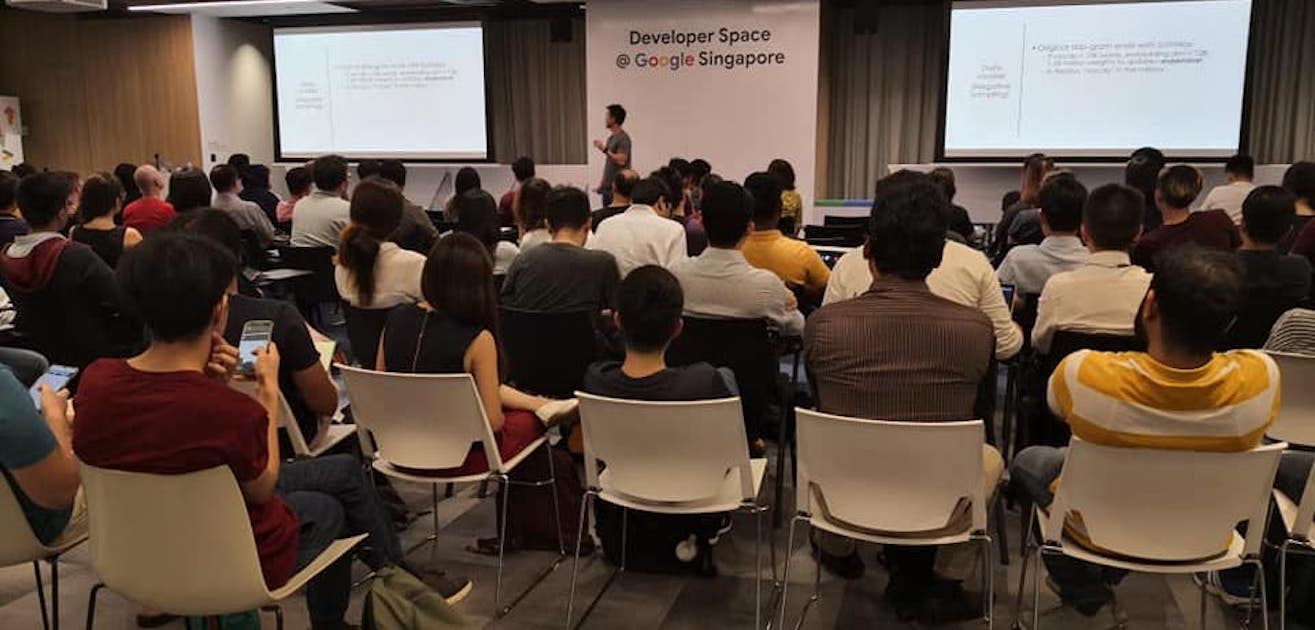
    Eugene Yan shared insights from two DataScience SG meetups, one focusing on recommender systems and another on various roles within the data field. The recommender systems talk explored baseline approaches and novel graph and NLP techniques, detailing the end-to-end process from data acquisition to result comparison. The panel discussion on data roles highlighted essential skills like logical thinking and programming, emphasizing the importance of curiosity, persistence, and humility for career success. Both events underscored the necessity of continuous self-learning in the rapidly advancing data industry. AI

    DataScience SG Meetup - RecSys, Beyond the Baseline