PulseAugur / Brief
EN
LIVE 04:28:04

Brief

last 24h
[14/14] 221 sources

Multi-source AI news clustered, deduplicated, and scored 0–100 across authority, cluster strength, headline signal, and time decay.

  1. How Far Are We from Generating Missing Modalities with Foundation Models?

    Researchers have explored the potential of foundation models for reconstructing missing modalities, such as generating images from text or vice versa. Their comprehensive evaluation of 42 model variants revealed that current models struggle with detailed semantic extraction and robust validation of generated content. To address these limitations, the team developed an agentic framework that employs dynamic, modality-aware mining strategies and a self-refinement mechanism to improve generation quality, showing significant reductions in FID and MER scores. AI

    IMPACT This research could lead to more robust multimodal AI systems capable of filling in gaps in data, improving applications that rely on cross-modal understanding.

  2. ComPose: When to Trust Hands for Object Pose Tracking

    Researchers have developed ComPose, a new framework for 6DoF object tracking from RGB video that uniquely leverages hand movements as a complementary cue. Instead of solely treating hands as occluders, ComPose integrates hand joint information with object cues from foundation models to estimate motion. This approach enhances accuracy and robustness, particularly in scenarios with severe hand occlusion and geometric ambiguity, and can transfer to downstream robot manipulation tasks. AI

    IMPACT This new tracking method could improve embodied AI and robot manipulation by enabling more robust object pose estimation, even with hand occlusions.

  3. Foundation Models Do Not Understand Biology

    Foundation models, while capable of generating polished medical reports, lack true biological understanding and operate by predicting likely word sequences rather than reasoning from first principles. This can lead to dangerous AI

    Foundation Models Do Not Understand Biology

    IMPACT Current AI models may produce convincing but biologically impossible medical diagnoses, necessitating constrained systems for safety.

  4. "Out of Tune: Fine-Tuning Foundation Models Leads to Unpredictable Safety Drift" Benign fine-tuning unpredictably shifts # AI safety. Small updates compromise s

    A new paper titled "Out of Tune: Fine-Tuning Foundation Models Leads to Unpredictable Safety Drift" highlights a critical issue in AI development. The research indicates that even minor adjustments to pre-trained models can unexpectedly degrade their safety features. This safety drift occurs irrespective of the model's original size, posing a significant challenge for maintaining AI alignment. AI

    "Out of Tune: Fine-Tuning Foundation Models Leads to Unpredictable Safety Drift" Benign fine-tuning unpredictably shifts # AI safety. Small updates compromise s

    IMPACT Minor model updates can compromise AI safety, necessitating new methods for evaluating and ensuring alignment post-fine-tuning.

  5. TONIC: Token-Centric Semantic Communication for Task-Oriented Wireless Systems

    Researchers have introduced TONIC, a novel framework for semantic communication in wireless systems that prioritizes token-level relevance for foundation models. This approach moves beyond traditional bit-level fidelity by dynamically allocating protection based on a token's importance to the task. At the receiver, a confidence-aware gating mechanism handles unreliable decisions, allowing a completion model to restore missing information for accurate inference. Experiments demonstrate TONIC's superior performance in image classification tasks compared to existing methods across various channel conditions. AI

    IMPACT Optimizes data transmission for AI models, potentially improving efficiency and accuracy in AI-powered wireless applications.

  6. Exploring Deep Learning and Ultra-Widefield Imaging for Diabetic Retinopathy and Macular Edema

    Researchers have explored the use of deep learning models, including convolutional neural networks, vision transformers, and foundation models, for analyzing ultra-widefield (UWF) retinal images. The study focused on three tasks: assessing UWF image quality, identifying referable diabetic retinopathy (RDR), and detecting diabetic macular edema (DME). By utilizing the UWF4DR Challenge dataset, the team benchmarked various architectures in both spatial and frequency domains, incorporating feature-level fusion for enhanced robustness and employing Grad-CAM for model explainability. AI

    IMPACT Deep learning models show promise in improving the detection and analysis of eye conditions from retinal images.

  7. Robotics-Inspired Guardrails for Foundation Models in Socially Sensitive Domains

    Researchers have developed a new framework called Grounded Observer to improve the safety of foundation models in sensitive areas like education and mental health. This approach draws inspiration from robotics to enforce behavioral controls over interaction trajectories, rather than just individual outputs. The framework has been tested in real-world scenarios including small talk, autism therapy, and de-escalation in schools, demonstrating its ability to adapt to social contexts and prevent undesirable interaction patterns. AI

    Robotics-Inspired Guardrails for Foundation Models in Socially Sensitive Domains

    IMPACT Introduces a novel safety framework for AI, potentially improving reliability in critical applications.

  8. FAST-ME: Foundation-aware Adaptive Stopping for Motion Estimation for Efficient IoT Video Analysis

    Researchers have developed FAST-ME, a novel algorithm for efficient motion estimation in video analysis, particularly for resource-constrained IoT devices. This method integrates Optimal Stopping Theory with Foundation Models like Vision Transformers and SAM to create a semantic-aware framework. By prioritizing motion in semantically important regions, FAST-ME significantly reduces computational costs with minimal impact on accuracy, enhancing video understanding in smart systems. AI

    IMPACT Enables more efficient video processing on edge devices by integrating AI for motion estimation.

  9. RADAR: Relative Angular Divergence Across Representations

    Researchers have developed RADAR, a new metric designed to estimate the transferability of foundation models across different domains. This method analyzes the geometric evolution of representations within a model's layers to predict how well it will perform on new, unseen data. RADAR has shown competitive performance against existing metrics in both text and image classification tasks, particularly when domain shifts are clear. AI

    IMPACT Provides a new tool for evaluating how well foundation models will adapt to new data, potentially guiding model selection and fine-tuning efforts.

  10. Robotics-Inspired Guardrails for Foundation Models in Socially Sensitive Domains

    Researchers have developed a new framework called Grounded Observer, inspired by robotics, to create more robust guardrails for foundation models. This approach treats safety not as a property of individual outputs but as a continuous behavioral control over interaction trajectories. The framework has been successfully applied in real-world scenarios including small talk, autism therapy, and de-escalation in schools, demonstrating its ability to intervene at runtime and prevent undesirable interaction patterns. AI

    IMPACT Introduces a new method for ensuring AI safety in sensitive applications by treating guardrails as runtime behavioral control.

  11. Meta-Black-Box Optimization Can Do Search Guidance for Expensive Constrained Multi-Objective Optimization

    Researchers have introduced BBO-Pile, a novel open-source dataset containing over 500,000 optimization trajectories across nearly 3,100 black-boxes. This dataset aims to address the limitations of previous work, which relied on non-public or synthetic data, thereby hindering reproducibility and real-world generalization. By using BBO-Pile, foundation models for black-box optimization have been trained at various scales, demonstrating the effectiveness of large-scale pre-training for imitating optimization methods. AI

    IMPACT Enables more reproducible and generalizable research in black-box optimization by providing a large-scale, open-source dataset.

  12. LoREnc: Low-Rank Encryption for Securing Foundation Models and LoRA Adapters

    Researchers have developed LoREnc, a novel framework designed to protect foundation models and their associated low-rank adapters from unauthorized recovery and intellectual property leakage. This training-free method employs spectral truncation and compensation techniques to obscure the foundation model's weights while preserving performance for authorized users. LoREnc achieves this by suppressing dominant low-rank components of the model weights and compensating for the lost information within the adapter, resulting in minimal computational overhead and strong protection against model extraction. AI

    IMPACT Introduces a novel method for securing foundation models and adapters against unauthorized recovery, potentially impacting intellectual property protection in generative AI.

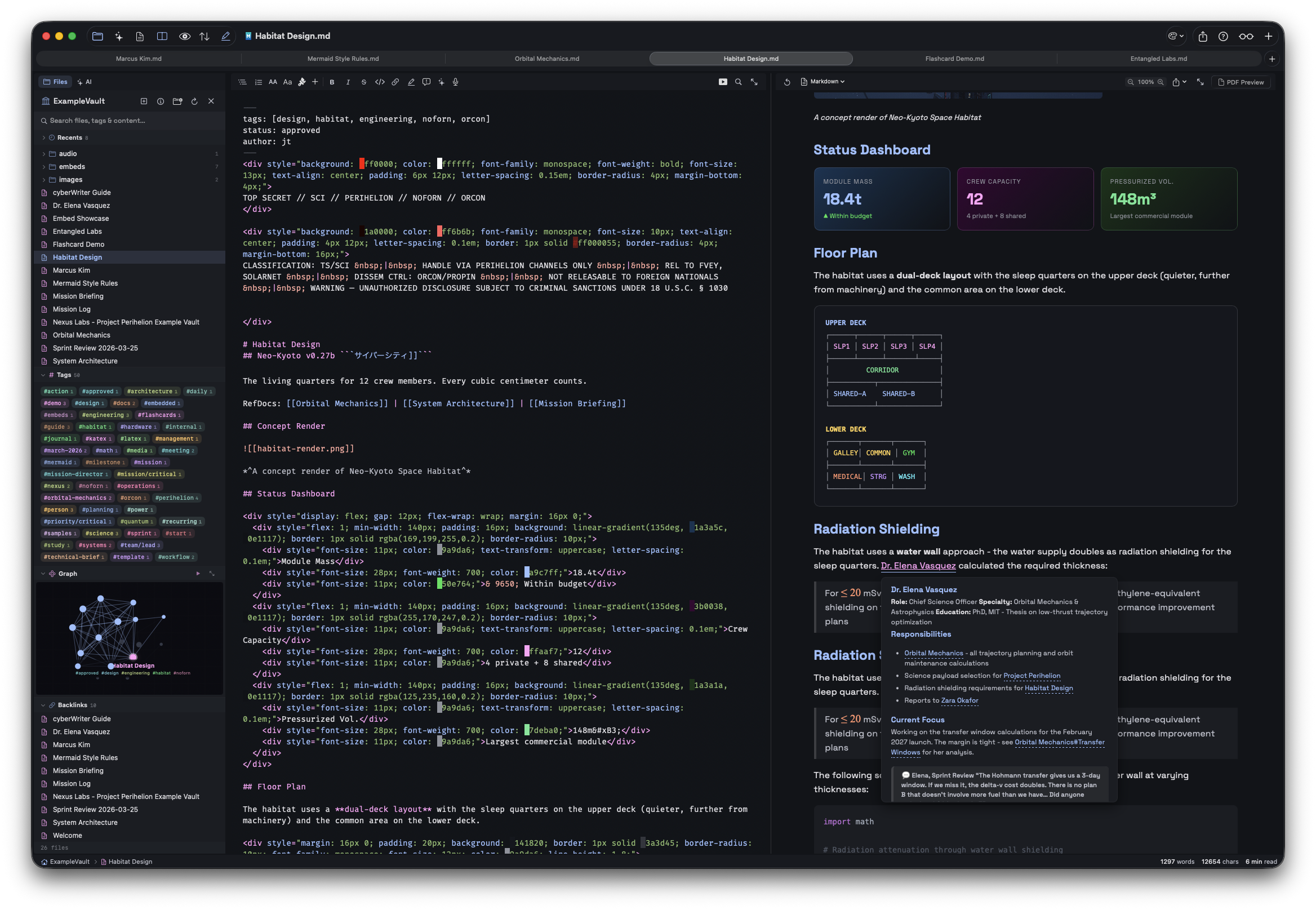
  13. Show HN: CyberWriter – a .md editor built on Apple's (barely-used) on-device AI

    Two open-source projects aim to provide better interfaces for on-device AI, specifically Apple's Foundation Models. CyberWriter is a native macOS Markdown editor that integrates AI for writing assistance and knowledge base querying. Perspective Intelligence Web offers a browser-based chat interface accessible from any device, connecting to Apple's on-device AI running on a Mac. AI

    Show HN: CyberWriter – a .md editor built on Apple's (barely-used) on-device AI

    IMPACT These projects offer new ways for users to interact with on-device AI, potentially increasing its adoption and utility.

  14. Inside multi-node training: How to scale model training across GPU clusters

    Training large foundation models necessitates distributing the workload across numerous GPUs housed in multiple interconnected machines, a process known as multi-node training. This approach is essential for handling models with billions or trillions of parameters that exceed the memory capacity of single servers and would otherwise take months to train. Effective multi-node training relies on sophisticated parallelism strategies, high-speed network interconnects, and robust fault tolerance mechanisms to ensure efficient computation and progress. AI

    IMPACT Explains the critical infrastructure and techniques required to train massive AI models, enabling faster iteration and development.