PulseAugur / Brief
EN
LIVE 14:25:38

Brief

last 24h
[15/15] 221 sources

Multi-source AI news clustered, deduplicated, and scored 0–100 across authority, cluster strength, headline signal, and time decay.

  1. Catching MRI outliers: unsupervised detection and localization of MRI artefacts and clinical anomalies using deep learning

    Researchers have developed an unsupervised deep learning framework to detect and localize anomalies in MRI scans, aiming to improve radiotherapy workflows. The two-stage system first tokenizes MRI slices and then models the distribution of normal tokens to identify deviations. This approach demonstrated high accuracy, with AUCs of 0.97 for pelvic MRI and 0.81 for brain MRI, and showed strong spatial agreement for anomaly localization. AI

    IMPACT Enhances AI reliability in medical imaging by providing a quality control layer for radiotherapy workflows.
  2. LAPLEX: The FFT of Learnable Laplace Kernels

    Researchers have introduced LAPLEX, a novel class of learnable Laplace-kernel operators designed to enable efficient, high-dimensional linear algebra in deep learning. LAPLEX layers act like full-rank dense matrices but are implicitly defined by a small set of learnable parameters, allowing for matrix-vector operations at scales up to $10^9$ dimensions on GPUs. This approach separates the expressivity of dense matrices from their storage cost, facilitating data-adaptive global interactions and enabling compact projections and interpretable soft routing models. AI

    IMPACT Introduces a method to handle high-dimensional data and complex interactions efficiently in deep learning models.

  3. Making Deep Learning Go Brrrr from First Principles https:// horace.io/brrr_intro.html # HackerNews # DeepLearning # FirstPrinciples # AI # Innovation # TechTre

    Horace He's "Making Deep Learning Go Brrrr from First Principles" is a blog post that delves into the foundational aspects of deep learning. It aims to explain the core concepts and mechanics behind deep learning models, likely targeting an audience interested in understanding the underlying technology rather than just its applications. The post emphasizes a first-principles approach, suggesting a detailed breakdown of how these systems function. AI

    IMPACT Explains core deep learning concepts, aiding understanding for practitioners and researchers.

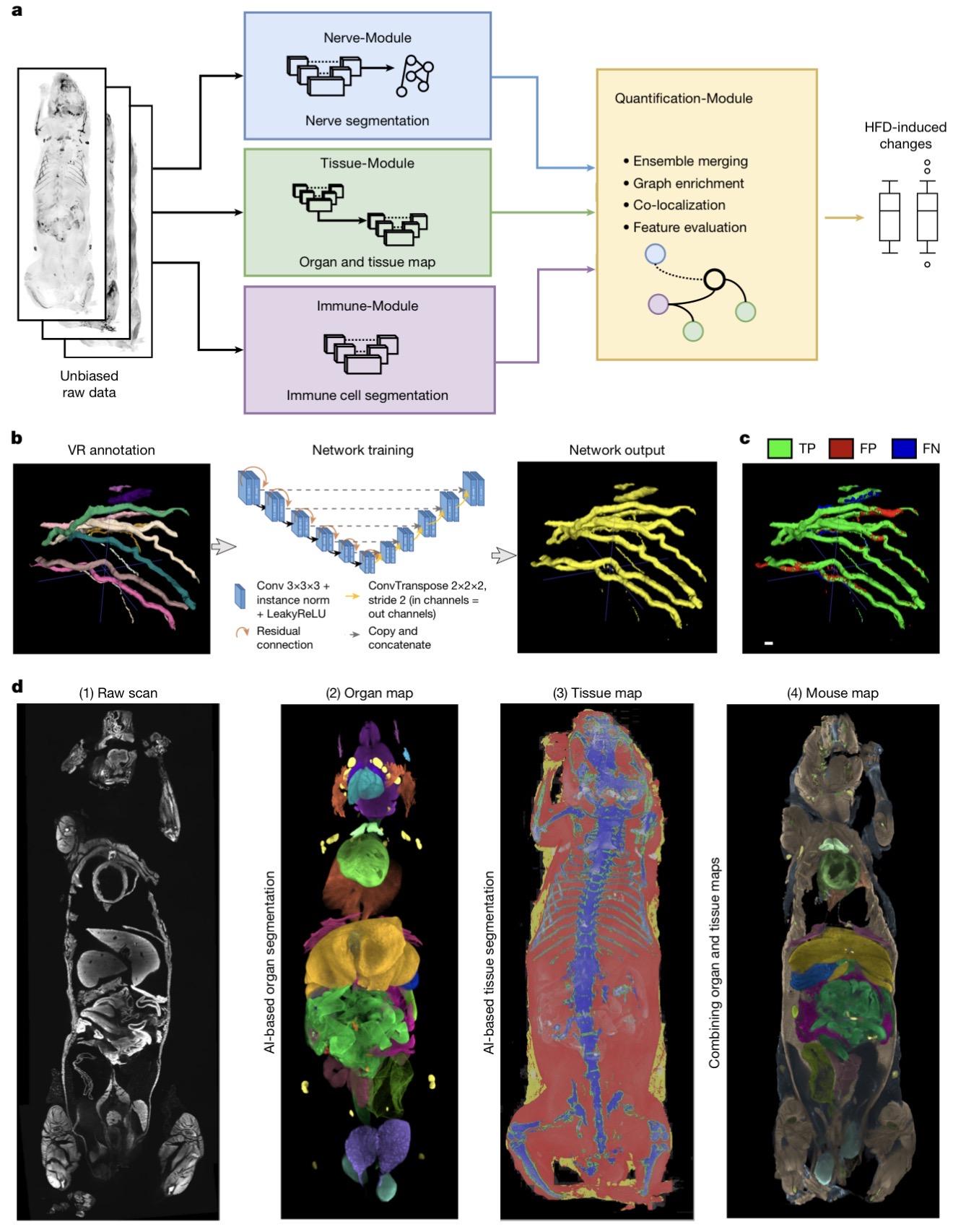
  4. 🧠📐 Kaltenecker et al present # MouseMapper , that combines whole-body tissue clearing, # lightsheet # imaging and foundation-model-based # DeepLearning to quant

    Researchers have developed MouseMapper, a novel system that integrates whole-body tissue clearing, lightsheet imaging, and deep learning to map cellular structures across entire mouse bodies. This technique was applied to study diet-induced obesity, revealing significant reductions in nerve density and defects in whisker-sensing nerves. The study also identified widespread inflammatory immune cell clustering in obese mice. AI

    🧠📐 Kaltenecker et al present # MouseMapper , that combines whole-body tissue clearing, # lightsheet # imaging and foundation-model-based # DeepLearning to quant

    IMPACT This new imaging and AI-driven analysis technique could accelerate biological research by providing unprecedented detail on cellular structures and their relation to disease.

  5. Exploring Deep Learning and Ultra-Widefield Imaging for Diabetic Retinopathy and Macular Edema

    Researchers have explored the use of deep learning models, including convolutional neural networks, vision transformers, and foundation models, for analyzing ultra-widefield (UWF) retinal images. The study focused on three tasks: assessing UWF image quality, identifying referable diabetic retinopathy (RDR), and detecting diabetic macular edema (DME). By utilizing the UWF4DR Challenge dataset, the team benchmarked various architectures in both spatial and frequency domains, incorporating feature-level fusion for enhanced robustness and employing Grad-CAM for model explainability. AI

    IMPACT Deep learning models show promise in improving the detection and analysis of eye conditions from retinal images.

  6. Prototype-Grounded Concept Models for Verifiable Concept Alignment

    Researchers have developed Prototype-Grounded Concept Models (PGCMs) to enhance the interpretability of deep learning models. Unlike previous Concept Bottleneck Models, PGCMs ground concepts in visual prototypes, allowing for direct inspection and human intervention to correct concept alignment. This approach maintains competitive predictive performance while significantly improving transparency and intervenability in AI systems. AI

    IMPACT Enhances AI interpretability by grounding concepts in visual prototypes, enabling better human oversight and correction.

  7. Case-Aware Medical Image Classification with Multimodal Knowledge Graphs and Reliability-Guided Refinement

    Researchers have developed a new framework for medical image classification that integrates multimodal knowledge graphs and a reliability-guided refinement process. This approach aims to mimic clinical diagnosis by leveraging historical similar cases and external knowledge, moving beyond isolated visual evidence. The system constructs knowledge graphs from retrieved cases, uses graph attention networks for knowledge propagation, and employs cross-modal attention for alignment, ultimately refining predictions based on case reliability. AI

    IMPACT This research introduces a novel approach to medical image classification by incorporating case-based reasoning and knowledge graphs, potentially leading to more explainable and accurate diagnoses.

  8. How to Select the Right GPU for AI Workloads: Inference, Fine-Tuning, and Training Explained

    Businesses can now access high-performance GPUs on demand through GPU as a Service (GPUaaS), eliminating the need for substantial upfront hardware investments. This service caters to various AI and data-intensive tasks, including machine learning, generative AI, deep learning training, and big data analytics. Additionally, selecting the right GPU for AI workloads involves more than just VRAM, as modern demands extend beyond memory capacity. AI

    IMPACT On-demand GPU access via GPUaaS lowers the barrier to entry for AI development and large-scale data processing.

  9. SMILE-UHURA Challenge -- Small Vessel Segmentation at Mesoscopic Scale from Ultra-High Resolution 7T Magnetic Resonance Angiograms

    Researchers have developed new methods for segmenting small blood vessels in the brain using ultra-high resolution 7T MRI scans. The SMILE-UHURA challenge provided a dataset and platform for developing machine learning algorithms, with submitted deep learning methods achieving reliable segmentation performance, reaching Dice scores up to 0.838. Separately, a new local-sensitive connectivity filter (LS-CF) was proposed to improve existing vessel segmentation techniques like the Frangi filter, showing competitive results across various multimodal datasets and outperforming state-of-the-art approaches on specific datasets. AI

    IMPACT Advances in AI-driven segmentation techniques can lead to more accurate medical diagnoses and treatment planning for vascular diseases.

  10. Machine learning applied to emerald gemstone grading: framework proposal and creation of a public dataset

    Researchers have developed a novel machine learning framework to automate the grading of emerald gemstones, moving away from subjective human evaluation. This system integrates image acquisition with processing to categorize stones, achieving a 98% accuracy rate. The proposed method reportedly outperforms a deep learning approach and includes a newly created public dataset of 192 emerald images with extracted features. AI

    IMPACT Automates a subjective industry process, potentially setting a precedent for AI in specialized grading and authentication.

  11. A Comparative Study of Machine Learning and Deep Learning for Out-of-Distribution Detection

    Researchers have developed a new method called ConjNorm for out-of-distribution (OOD) detection, which reframes density function design as optimizing a norm coefficient. This approach has demonstrated state-of-the-art performance on OOD detection benchmarks, significantly outperforming previous methods. In parallel, a comparative study found that traditional machine learning approaches can achieve comparable OOD detection performance to deep learning methods, particularly in visually less complex domains like medical imaging, while offering greater computational efficiency and lower latency. AI

    IMPACT New methods for out-of-distribution detection improve AI reliability and efficiency, potentially accelerating real-world deployment.

  12. Provable Fairness Repair for Deep Neural Networks

    Researchers have developed a new "fairness layer" that can be integrated into deep learning models to ensure specific fairness criteria are met. This layer works by appending to the model's output and uses a differentiable optimization approach. An accompanying online primal-dual inference algorithm provides aggregate fairness guarantees even for streaming predictions with very small batch sizes. AI

    Provable Fairness Repair for Deep Neural Networks

    IMPACT Introduces a novel method for embedding fairness constraints directly into deep learning models, potentially improving ethical AI development.

  13. On the Stability of Growth in Structural Plasticity

    Researchers have identified a key challenge in structural plasticity for deep learning models, specifically when new units are added during training. These "newborn" units often receive significantly weaker gradient signals compared to existing units, hindering their integration and effectiveness, particularly in complex image classification tasks. While interventions can improve the adaptive performance of these growing networks, they do not automatically guarantee better final subnetworks. The study suggests that the success of structural growth in deep learning is highly dependent on the stability of how new units are integrated into the ongoing training process. AI

    IMPACT Identifies a core challenge in adaptive AI systems, suggesting improvements are needed for continual learning and dynamic network architectures.

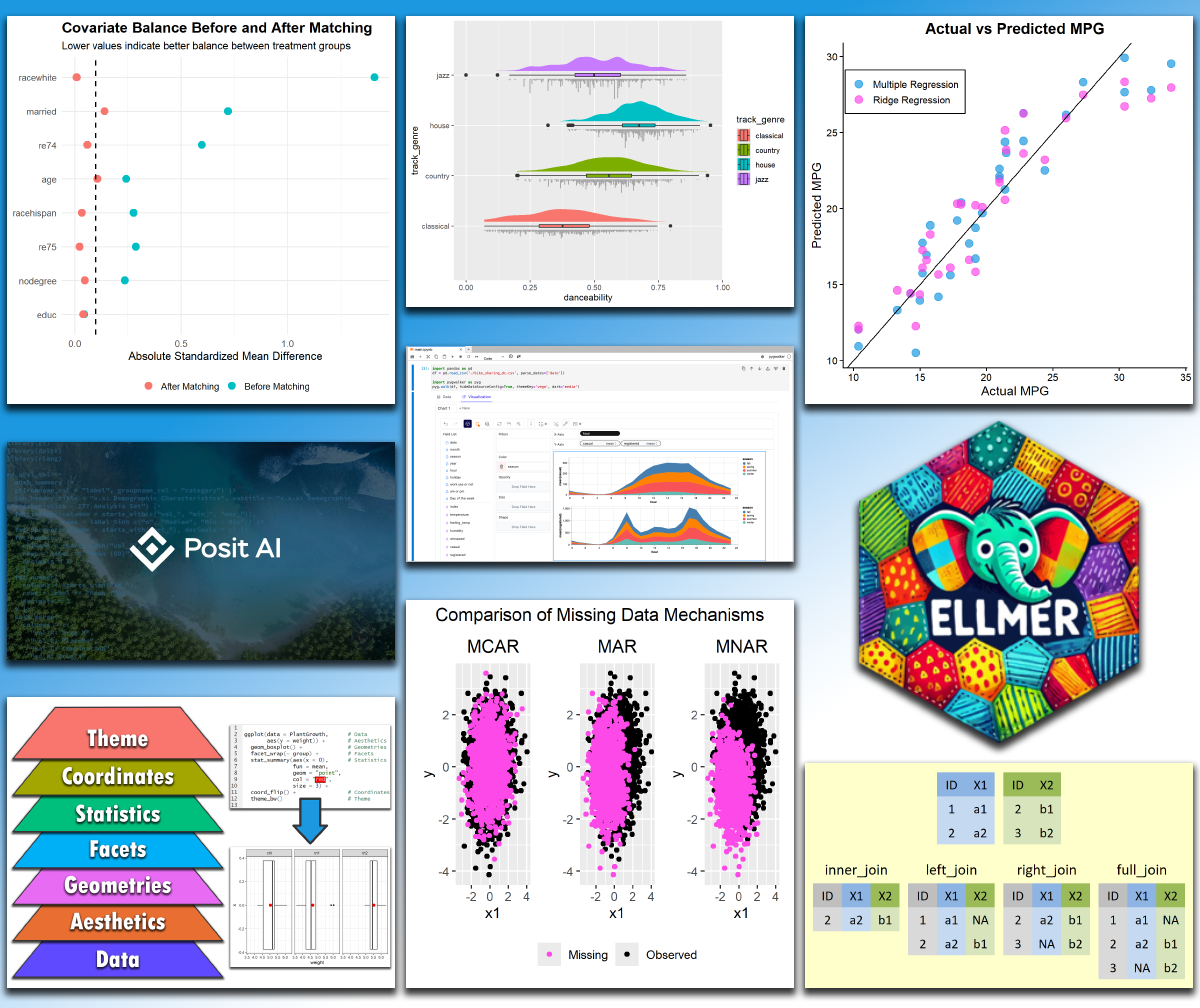
  14. A new batch of modules in the Statistics Globe Hub is about to start. You can find more information about the Statistics Globe Hub, along with the full list of

    Two recent surveys explore the application of AI and deep learning in distinct fields. One paper focuses on explainable AI for detecting mental disorders through social media, emphasizing the need for transparency in healthcare AI. Another survey reviews deep learning techniques for crops, fisheries, and livestock, highlighting challenges and future directions like multimodal data integration and edge-device deployment. Additionally, several articles discuss the distinctions between AI, Machine Learning, and Deep Learning, often with practical Python examples, while others highlight AI's role in agriculture and data science education. AI

    A new batch of modules in the Statistics Globe Hub is about to start. You can find more information about the Statistics Globe Hub, along with the full list of

    IMPACT Clarifies distinctions between AI, ML, and DL, and surveys their applications in mental health and agriculture.

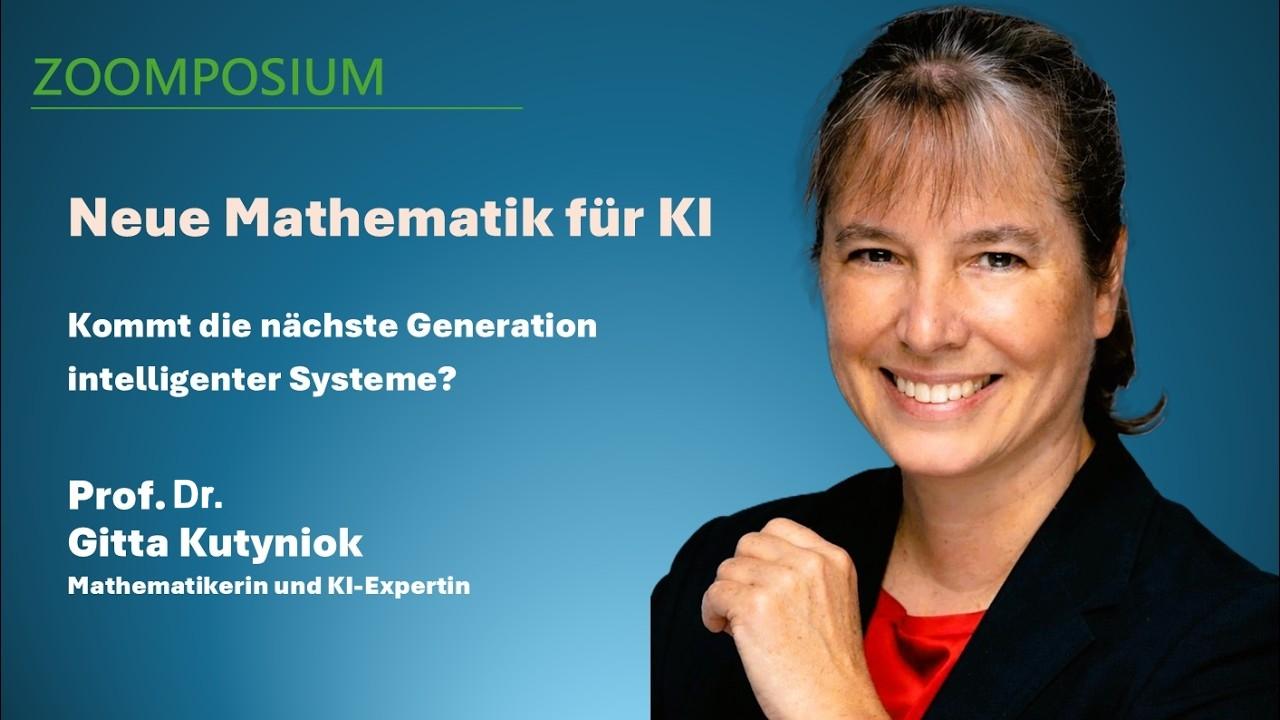
  15. 🧠 “Is # Intelligence a mathematical structure?”🔢 – # Zoomposium with # GittaKutyniok The key to the next generation of intelligent systems – On computability, l

    This cluster explores the fundamental nature of artificial intelligence, questioning if intelligence itself is a mathematical structure. One item delves into the "essence" of AI, suggesting that understanding it reveals its frightening aspects, while another discusses the historical trajectory of connectionist AI before the rise of deep learning. The discussions touch upon computability, limitations, and the future of AI research, particularly in relation to mathematics and neural networks. AI

    🧠 “Is # Intelligence a mathematical structure?”🔢 – # Zoomposium with # GittaKutyniok The key to the next generation of intelligent systems – On computability, l

    IMPACT Explores foundational questions about AI's nature and history, prompting reflection on its future direction.