PulseAugur / Brief
EN
LIVE 23:49:38

Brief

last 24h
[50/65] 221 sources

Multi-source AI news clustered, deduplicated, and scored 0–100 across authority, cluster strength, headline signal, and time decay.

  1. Your AI Coding Agent Wastes 80% of Its Context. Fixed That with Graph Theory.

    A new npm package called mincut-context has been developed to optimize the context window usage of AI coding agents. Instead of processing entire codebases, it treats the repository as a graph, identifying the most relevant code segments based on the task description. This approach significantly improves efficiency, with mincut-context reportedly catching twice as many relevant files and using 2.5 times fewer tokens than traditional grep methods within a 4,000-token budget. AI

    Your AI Coding Agent Wastes 80% of Its Context. Fixed That with Graph Theory.

    IMPACT Improves the efficiency and accuracy of AI coding assistants by optimizing context window usage.
  2. Inductive Deductive Synthesis: Enabling AI to Generate Formally Verified Systems

    Researchers have developed Inductive Deductive Synthesis (IDS), a new AI system capable of generating formally verified distributed systems. Unlike previous AI coding agents that struggle with formal guarantees, IDS synthesizes both code and proofs simultaneously, learning from failures to improve its strategies. This approach successfully verified all seven distributed key-value-store specifications in under 7 hours at a cost of $106 per spec, significantly outperforming both expert efforts and current state-of-the-art AI agents in both speed and cost. AI

    IMPACT Enables AI to generate formally verified systems, significantly reducing the time and cost for creating reliable distributed software.

  3. What do you think of Composer 2.5 Fast?

    Cursor has released Composer 2.5 Fast, a new version of its AI-powered coding environment. This update is available on the $60 Cursor plan, and users on the $100 Codex plan are considering trying it out. The new version aims to improve the coding experience for developers. AI

    IMPACT Enhances developer productivity with AI-powered coding assistance.

  4. When Determinants Are Not Enough: Private Rare Switching

    A researcher has detailed a novel approach to private rare switching in linear bandits and reinforcement learning, adapting a standard determinant-based update rule. This adaptation addresses the challenge posed by Gaussian noise, which can disrupt the monotonicity crucial for the standard analysis. The proposed solution, inspired by insights from Codex, utilizes a generalized Rayleigh quotient to restore logarithmic policy updates and maintain desired confidence-width comparisons. AI

    IMPACT Introduces a refined technique for privacy-preserving AI learning, potentially improving the robustness of algorithms in sensitive applications.

  5. Let's Liberate OpenClaw https:// huggingface.co/blog/liberate-your-openclaw *AI-generated automatic post (headline + link) #AI #GenerativeAI #LLM #AIGenerated

    Hugging Face has released three new projects: Daggr, which allows users to programmatically connect and visually inspect applications; a system for creating custom CUDA kernels using Codex and Claude; and OpenClaw, a new open-source initiative. These releases aim to enhance AI development and application integration. AI

    IMPACT These tools aim to improve AI development workflows and application integration.

  6. Seven PRs Before Lunch: Parallel Claude Code Tabs Plus Audit-Before-Bump

    A developer has significantly optimized their AI coding assistant's context architecture, reducing token usage by 94% and enabling faster, more efficient task completion. This optimization allowed them to ship seven pull requests across multiple repositories in under three hours, including a complex framework migration that was reduced from an estimated two days to a few minutes thanks to a pre-migration audit. The improved system uses multiple parallel Claude Code tabs, each loading minimal context, coordinated by a central tab, which drastically reduces context drift and the need for re-explanation. AI

    IMPACT Demonstrates how optimizing AI tool context management can dramatically increase developer productivity and reduce task completion times.

  7. Building with Modal and the OpenAI Agents SDK

    OpenAI has launched its new Agents SDK, enabling developers to build custom agentic systems for tasks like coding and research. The SDK integrates with Modal's platform, allowing agents to run within isolated sandbox environments, complete with access to resources like GPUs. This integration aims to provide developers with the tools to create powerful internal agentic tools, exemplified by a coding agent capable of parallelizing tasks for challenges like parameter golf. AI

    Building with Modal and the OpenAI Agents SDK

    IMPACT Enables developers to build custom agentic tools, potentially accelerating internal automation and specialized AI applications.

  8. How to Reduce Agent Token Costs From the CLI (2026 Guide)

    Developers can significantly reduce the costs associated with using CLI coding agents by implementing several strategies to minimize token consumption. The primary approach involves reducing the amount of context sent to the language model before each turn. This can be achieved by explicitly defining the files to be worked on, keeping memory files like CLAUDE.md concise, and using commands to compact or clear long conversation histories. Additionally, prompt caching can be employed for stable prefixes, and less expensive models can be routed for simpler tasks, while tool outputs should be filtered to remove unnecessary verbosity. AI

    How to Reduce Agent Token Costs From the CLI (2026 Guide)

    IMPACT Provides actionable strategies for developers to reduce operational costs when using AI coding assistants.

  9. How I accelerated frontend development using AI tools and Figma's MCP

    This article details a workflow for accelerating frontend development using AI tools, emphasizing the importance of providing context and clear instructions to AI agents. The author suggests treating AI as an integrated part of the engineering process, using project-specific instruction files (like AGENTS.md for Codex or CLAUDE.md for Claude) to guide AI behavior. Integration with Figma's MCP (Multi-Component Protocol) is highlighted as a method to provide design context, such as screen structure and element properties, to AI agents, thereby reducing friction between design and implementation. AI

    IMPACT Enhances developer productivity by integrating AI into the frontend workflow, reducing friction between design and code.

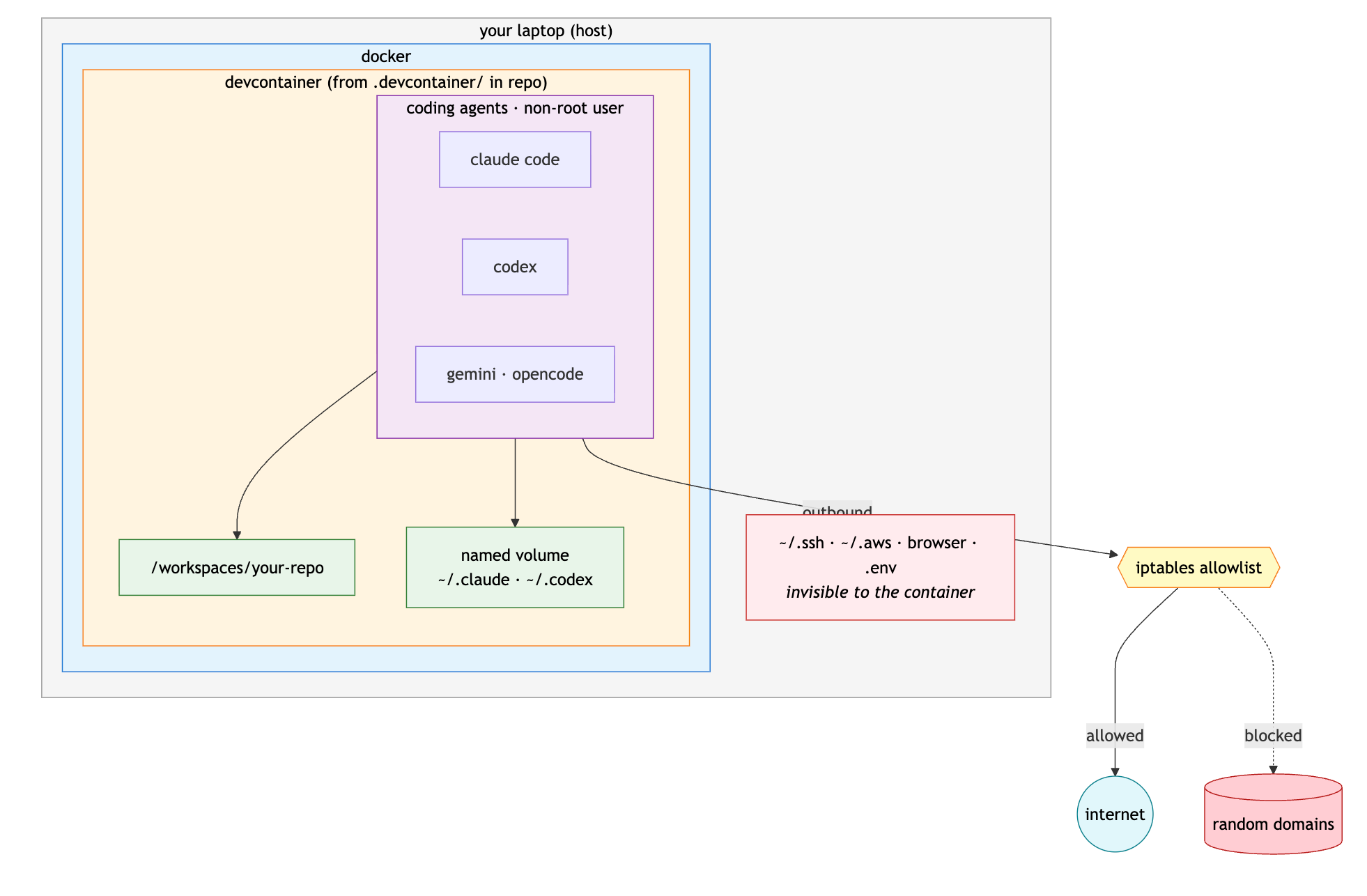
  10. How I let Claude Code, Codex & other agents into my codebase — without giving them my home…

    A developer has outlined a method for integrating AI coding assistants like Claude and Codex into a development workflow without compromising sensitive information. The approach involves setting up a specific devcontainer environment that isolates these agents from the developer's home directory. This controlled setup ensures that the AI tools operate within a defined project scope, preventing unintended access to personal files while maintaining a consistent development environment for team collaboration. AI

    How I let Claude Code, Codex & other agents into my codebase — without giving them my home…

    IMPACT Provides a practical method for developers to safely integrate AI coding assistants into their workflows.

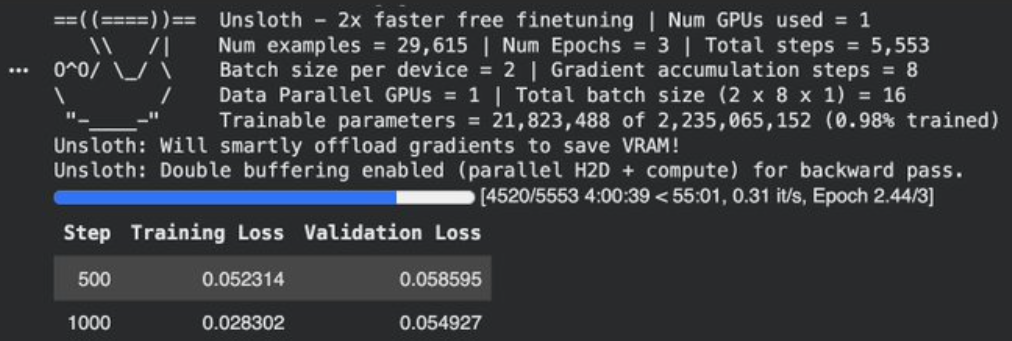
  11. I Asked Codex to Fine-Tune an AI Model While I Slept — I Woke Up to This

    The author tasked Codex with fine-tuning an AI model overnight, a process that would typically require significant manual setup. Upon waking, the author found the task completed, highlighting the potential for AI tools to automate complex development processes. This experience demonstrates how AI can streamline workflows and accelerate development cycles. AI

    I Asked Codex to Fine-Tune an AI Model While I Slept — I Woke Up to This

    IMPACT Demonstrates how AI tools can automate complex development tasks, potentially speeding up workflows for developers.

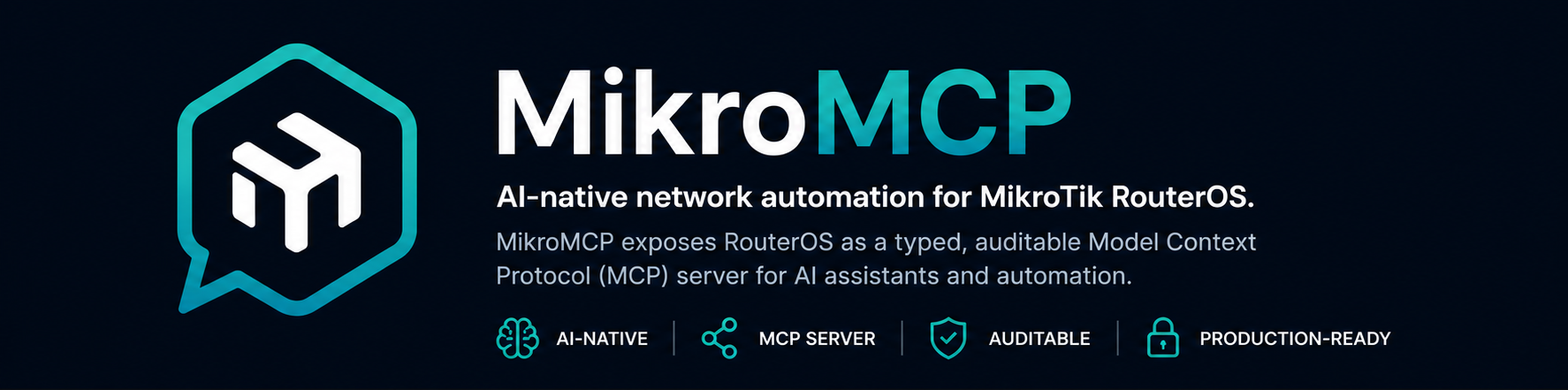
  12. Using Claude and MCP to Manage Mikrotik RouterOS with Natural Language — Introducing MikroMCP

    A new tool called MikroMCP has been developed to manage Mikrotik RouterOS using natural language commands. This system integrates with AI models like Claude and Codex to enable AI-native network automation. MikroMCP aims to simplify network management by allowing users to interact with their routers through conversational prompts. AI

    Using Claude and MCP to Manage Mikrotik RouterOS with Natural Language — Introducing MikroMCP

    IMPACT Simplifies network management by allowing AI-driven automation of router configurations.

  13. 2026 Q1 is the year developers still build the agent harness. 2026 Q3 / 2027 is the year the LLM builds its own harness.

    Developers currently face a challenge known as the "agent harness problem" in AI coding assistants, where the effectiveness of tools like Claude Code and Cursor relies heavily on pre-written context files that brief the agent on project specifics. This boilerplate setup is repetitive across different projects and agents. The author has developed harnessforge, an open-source tool that inspects a repository and automatically generates these necessary startup files, aiming to provide AI coding agents with a more robust starting point. AI

    IMPACT Simplifies AI agent setup for developers, potentially improving consistency and reducing boilerplate coding tasks.

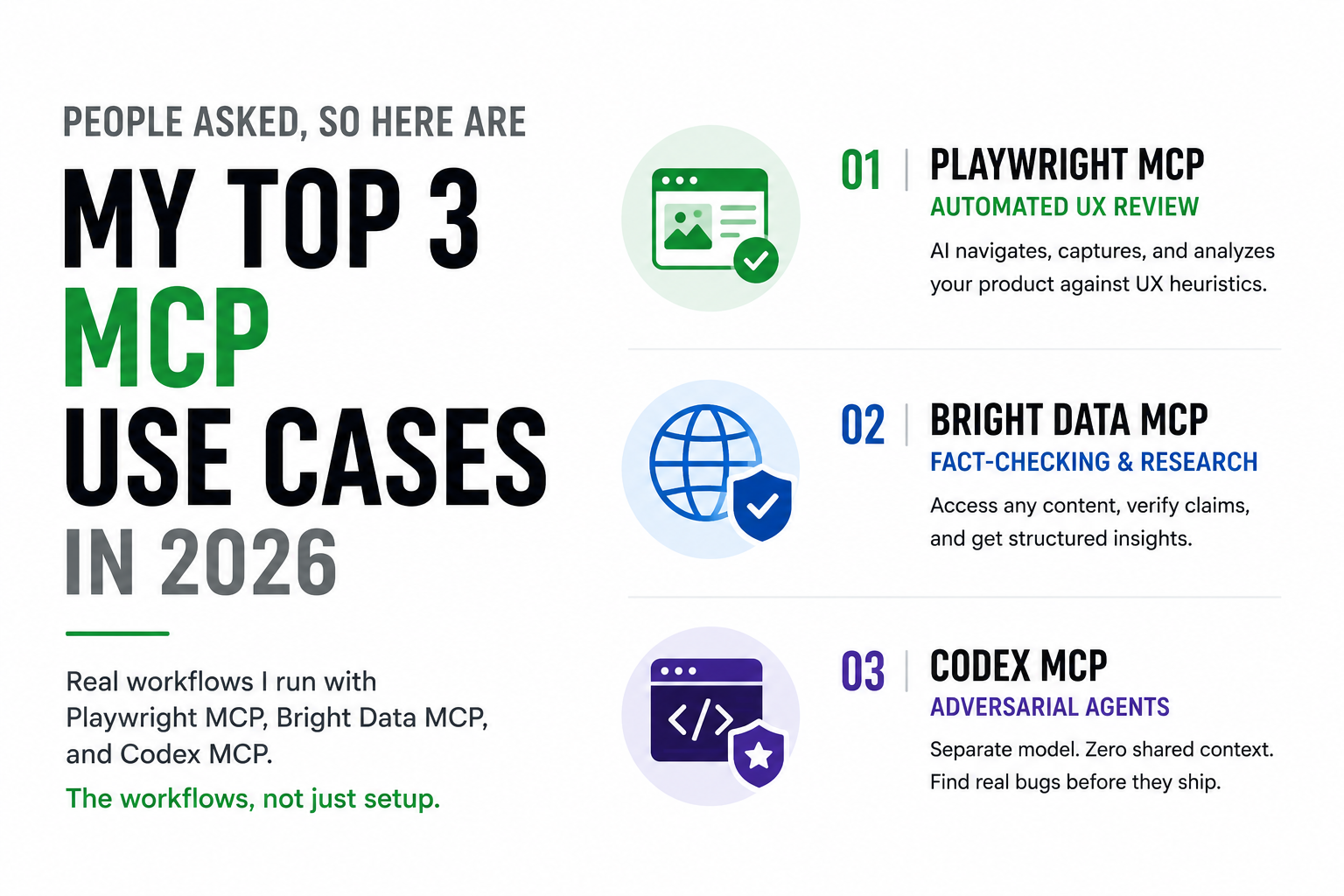
  14. 3 MCP Server Workflows That Actually Stuck: Playwright for UX, Bright Data for Fact-Checking, Codex…

    The author details three specific server workflows that have proven effective and stable within their MCP (Multi-Cloud Platform) environment. These workflows leverage Playwright for user experience testing, Bright Data for robust fact-checking capabilities, and Codex for code generation tasks. The article aims to share these successful implementations in response to frequent inquiries about the author's server stack. AI

    3 MCP Server Workflows That Actually Stuck: Playwright for UX, Bright Data for Fact-Checking, Codex…

    IMPACT Niche tooling improvement; minimal industry-wide impact.

  15. Optuna Tutorial: Automate Hyperparameter Tuning for ML Models in Python How Optuna's define-by-run API, TPE sampler, and pruners automate hyperparameter tuning

    Several recent posts explore advancements and applications in AI agents, particularly for coding and reasoning tasks. Topics include building autonomous coding agents that can open GitHub pull requests, using patterns like Continual Harness for self-improving agents, and integrating tools like Cursor into agent workflows. The limitations of LLM reasoning in causal inference and new approaches to browser fingerprinting for web scraping are also discussed, alongside efforts to automate hyperparameter tuning for machine learning models. AI

    Optuna Tutorial: Automate Hyperparameter Tuning for ML Models in Python How Optuna's define-by-run API, TPE sampler, and pruners automate hyperparameter tuning

    IMPACT Explores practical applications and limitations of AI agents in coding, reasoning, and web scraping, offering insights for developers.

  16. New Features in llama.cpp: Model Management https:// huggingface.co/blog/ggml-org/m odel-management-in-llamacpp *AI-generated auto-post (headline + link) # AI # GenerativeAI # LLM # AIGenerated

    Hugging Face is highlighting new developments in open-source AI models and tools. One post details how Codex is making its AI models available to the public, while another introduces new model management features within the llama.cpp project. AI

    New Features in llama.cpp: Model Management https:// huggingface.co/blog/ggml-org/m odel-management-in-llamacpp *AI-generated auto-post (headline + link) # AI # GenerativeAI # LLM # AIGenerated

    IMPACT Highlights advancements in open-source AI, potentially enabling broader community development and adoption.

  17. OpenAI announces major Codex update, new feature allowing direct sharing of Mac app screens with AI https://ascii.jp/elem/000/004/404/4404219/?rss # ascii # AI

    OpenAI has significantly updated its Codex model, introducing a new feature that allows users to directly share their Mac application screens with the AI. This update aims to enhance the interaction between users and AI by enabling more direct contextual input. AI

    IMPACT Enables more direct contextual input for AI interactions by allowing screen sharing.

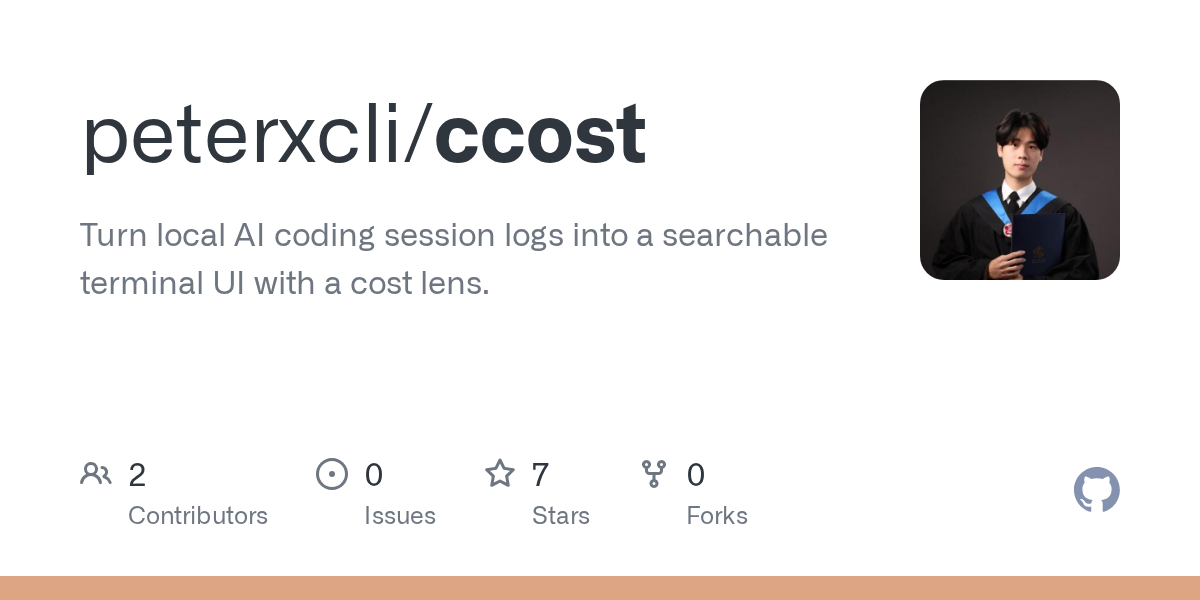
  18. 🧠 A new terminal user interface tool helps developers track and analyze token usage from AI coding assistants like Codex and Claude. The tool provides local log

    A new terminal user interface tool has been developed to help developers monitor and analyze the token consumption of AI coding assistants such as Codex and Claude. This tool offers local logging and visualization capabilities, enabling users to pinpoint token usage within their development workflows. AI

    🧠 A new terminal user interface tool helps developers track and analyze token usage from AI coding assistants like Codex and Claude. The tool provides local log

    IMPACT Provides developers with better visibility into AI model costs during development.

  19. It's a bit scary looking back at how the CLI agent works within its own system. But, it's a fact that it can handle a browser and everything now. Much more

    A command-line interface (CLI) agent is demonstrating advanced capabilities, including browser control and efficient task execution. This agent is currently refactoring a WordPress theme, showcasing its ability to handle complex web development tasks with precision. It can even autonomously create and manage separate WordPress instances for its operations. AI

    It's a bit scary looking back at how the CLI agent works within its own system. But, it's a fact that it can handle a browser and everything now. Much more

    IMPACT Demonstrates advanced AI agent capabilities in web development and task automation.

  20. ‘Shortcuts Playground’ lets you create shortcuts using natural langauge Federico Viticci at MacStories is out today with yet another wild tool that integrates w

    Federico Viticci has released a new tool called Shortcuts Playground that integrates with Apple's Shortcuts app. This tool functions as a plugin for Claude Code and Codex, enabling users to generate shortcuts using natural language commands. The aim is to simplify the creation of custom shortcuts for iOS and other Apple devices. AI

    IMPACT Simplifies custom automation on Apple devices by leveraging natural language processing for shortcut creation.

  21. I read the 33-comment Reddit fight about Google Spark vs OpenClaw and the real debate is way weirder

    A Reddit discussion reveals that the competition between Google Spark and OpenClaw is not about which AI model is smarter, but rather about control over user workflows. Google Spark leverages its ecosystem of cloud services like Gmail and Docs for convenience, while OpenClaw focuses on providing users with control through local model support, inspectable memory stored in Markdown files, and the ability to integrate with custom stacks. The debate highlights a fundamental trade-off for users: convenience versus control, and the associated costs of cloud subscriptions versus hardware investments for running AI agents. AI

    I read the 33-comment Reddit fight about Google Spark vs OpenClaw and the real debate is way weirder

    IMPACT Highlights the trade-offs between convenience and control in AI agent development, influencing user choices and infrastructure investments.

  22. # Development # Comparisons The race to build a personal AI agent · Comparing OpenClaw, Hermes, Claude Code, Codex, and Gemini https:// ilo.im/16cxtw _____ # Bu

    The development of personal AI agents is accelerating, with several tools and models emerging to compete in this space. A comparison highlights the capabilities of OpenClaw, Hermes, Claude Code, Codex, and Gemini in this rapidly evolving field. This race signifies a broader trend towards more personalized and integrated AI assistance. AI

    IMPACT Highlights emerging tools for personal AI agents, indicating a growing market for specialized AI assistants.

  23. OpenAI And 1Password Bring Password Security To Codex

    OpenAI and 1Password have partnered to enhance the security of AI agents, specifically enabling Codex to securely access credentials like passwords. This collaboration allows agents to use stored secrets without exposing them in prompts or model context, addressing a significant challenge in AI adoption. The partnership aims to establish better practices for agent identity management, a critical area given the increasing use of autonomous AI agents in enterprise environments. AI

    OpenAI And 1Password Bring Password Security To Codex

    IMPACT Enhances security for AI agents, potentially accelerating enterprise adoption by mitigating risks associated with credential management.

  24. With # Codex in your pocket, "now you can:" WORK "while waiting for your coffee," "during your commute," "Whether you are at lunch, out for a walk." # AI # Work

    A new AI tool called Codex is being promoted for its ability to enable users to work from anywhere, at any time. The tool is designed to be accessible during various daily activities, such as commuting or taking breaks. This aims to integrate work more seamlessly into users' lives. AI

    IMPACT Enhances productivity by allowing AI-assisted work in diverse locations and times.

  25. ⚖️ Trump slows AI, but JPMorgan and Codex accelerate: between politics and the market, the race for artificial intelligence waits for no one. #AI #Fintech

    While Donald Trump's administration has reportedly slowed down certain AI initiatives, major financial players like JPMorgan and Codex are accelerating their efforts. This dynamic highlights the ongoing tension between political regulation and market-driven advancement in the artificial intelligence race. AI

    IMPACT Highlights the push-and-pull between regulatory actions and market investment in AI development.

  26. OpenAI大神教你如何榨干Codex

    Jason Liu, a prominent open-source developer recently hired by OpenAI, has shared his advanced techniques for maximizing the capabilities of Codex. His methods focus on transforming Codex into a persistent work system by maintaining long-running threads with extensive conversation history, enabling continuous task management and progress. Liu emphasizes using voice input for more natural command delivery and leverages features like Heartbeats for scheduled tasks and automated workflows, such as monitoring Slack for messages or checking on Amazon refund statuses. He also advocates for storing core memory data in local files, like an Obsidian vault, rather than relying solely on the AI's internal memory, allowing for greater control, portability, and version tracking. AI

    IMPACT Provides advanced strategies for leveraging AI agents like Codex for persistent, automated workflows, potentially increasing productivity for AI operators.

  27. AI Coding Agents Don’t Need More Prompts. They Need a Harness.

    AI coding agents require a robust framework to move beyond simple prompt-response interactions. Developing systems that can reliably handle testing, continuous integration, and production environments is crucial for their practical application. This involves creating a "harness" that supports agents like Claude Code and Codex-style tools, enabling them to function effectively in real-world software development workflows. AI

    AI Coding Agents Don’t Need More Prompts. They Need a Harness.

    IMPACT Discusses the need for better frameworks to integrate AI coding agents into production software development.

  28. Codex anywhere and everywhere, all the time.

    OpenAI has announced that its Codex models are now available for use "anywhere and everywhere, all the time." This suggests a broad rollout and increased accessibility for the code generation models. AI

    Codex anywhere and everywhere, all the time.

    IMPACT Increases availability of code generation models for developers.

  29. Self-improvement prompt for Codex

    Greg Brockman, formerly of OpenAI, shared a prompt designed for self-improvement in coding. This prompt aims to enhance the capabilities of coding models like Codex. AI

    IMPACT Provides a specific prompt that could be used to refine coding AI capabilities.

  30. Claude account suspension after one week of use: doubt about policies and workflow

    A user reported their Claude Pro account was suspended after a week of use, with Anthropic citing suspicious activity and policy violations without specifying the exact breach. The user explained they were using Claude Code alongside another AI tool, Codex, to develop a web application, passing code back and forth for improvements and bug fixes. Anthropic's support, via an AI agent, stated they are not obligated to disclose the specific reason for suspension and no refunds are issued, leading the user to question if their workflow was misinterpreted as training a competing AI. AI

    IMPACT Highlights potential ambiguities in AI usage policies and the challenges of automated enforcement in user workflows.

  31. Is OpenAI actually back? @JordanNanos, @Dylan522p, @FabricatedKnowledge, and @maxkan_ break down whether OpenAI has truly recovered from their recent struggles

    SemiAnalysis is questioning OpenAI's current standing and competitive edge, particularly in relation to Codex and performance metrics. Analysts are debating whether the company has overcome recent challenges and what this implies for the broader AI landscape. The discussion also touches upon the dynamics of the AI race. AI

    Is OpenAI actually back? @JordanNanos, @Dylan522p, @FabricatedKnowledge, and @maxkan_ break down whether OpenAI has truly recovered from their recent struggles

    IMPACT Analysts are debating OpenAI's recovery and competitive standing, offering insights into the dynamics of the AI race.

  32. Leveraging Graph Structure in Seq2Seq Models for Knowledge Graph Link Prediction

    Researchers have developed a new framework called Graph-Augmented Sequence-to-Sequence (GA-S2S) that enhances knowledge graph link prediction. This model combines a T5-small encoder-decoder with a Relational Graph Attention Network (RGAT) to incorporate both textual entity descriptions and the underlying graph structure. By processing multi-hop relational patterns and textual information together, GA-S2S achieved a significant improvement in link prediction accuracy, showing up to a 19% relative gain on the CoDEx dataset compared to existing methods. AI

    Leveraging Graph Structure in Seq2Seq Models for Knowledge Graph Link Prediction

    IMPACT This new framework could improve the accuracy of knowledge graph completion and reasoning tasks.

  33. Is Composer 2.5 better than Glm 5.1 and DeepSeek v4 pro in real world tasks?

    Users of the AI-powered code editor Cursor are expressing concern over potential changes to its pricing model. Some users are worried that Cursor might adopt a usage-based pricing system, similar to what they've observed with other AI tools like Codex and Claude. This shift would move away from their current flat monthly subscription, which is seen as more predictable and cost-effective for heavy users. AI

    IMPACT Potential pricing changes in AI coding tools could affect developer costs and adoption rates.

  34. I built web analytics with no dashboard, only an MCP

    Building a unified control plane for operational intelligence is challenging due to LLM hallucinations, the need for a structured semantic layer over raw data, maintaining context purity across domains, and ensuring universal connectivity. These issues require architectural commitments like treating AgentOps as a first-class discipline and developing a living semantic layer rather than a static catalog. An alternative approach to traditional dashboards involves using AI coding agents that directly query tools for analytics, providing context for tasks like code development or deployment monitoring without requiring manual data interpretation. AI

    I built web analytics with no dashboard, only an MCP

    IMPACT Highlights key challenges in developing sophisticated AI agents and control planes, informing operators about the complexities of operationalizing AI.

  35. Fengxing Online CEO Yi Zhengchao: First All Staff Coding, Then All In Crowd Creation | AIGC2026

    Fengxing Online CEO Yi Zhengchao advocates for widespread AI coding literacy across all company roles, not just engineers, to drive business results. He believes that while AI can amplify self-satisfaction, focusing on delivering tangible outcomes is the key to mitigating this risk. The company has seen over a tenfold profit increase in three years by enabling employees to leverage AI for tasks, shifting organizational focus from individual roles to task-oriented workflows and fostering a collaborative ecosystem. AI

    IMPACT Emphasizes AI literacy and task-oriented workflows for broad business impact, suggesting a shift in organizational strategy.

  36. How Virgin Atlantic ships faster with Codex

    Virgin Atlantic successfully revamped its mobile app using OpenAI's Codex, meeting a critical holiday travel deadline. The airline achieved near-complete unit test coverage and avoided any P1 defects in the new release. This case study highlights Codex's utility in accelerating development cycles and improving software quality. AI

    IMPACT Demonstrates how AI coding assistants can accelerate software development and improve quality for real-world applications.

  37. OpenAI and Dell partner to bring Codex to hybrid and on-premise enterprise environments

    OpenAI and Dell have announced a partnership to integrate OpenAI's Codex AI model into Dell's hybrid and on-premise enterprise infrastructure. This collaboration aims to enable businesses to deploy AI coding agents securely within their existing data and workflow environments. The integration will leverage Dell's AI Data Platform as a key layer for practical implementation. AI

    IMPACT Enables secure deployment of AI coding agents within enterprise data and workflows, potentially boosting developer productivity.

  38. After Automation

    Every CEO Dan Shipper argues that AI progress, contrary to popular belief, creates more work for humans rather than eliminating it. His new report, "After Automation," details how the company uses AI agents for various tasks like coding and customer service, yet still requires more human expertise. Shipper explores the emerging dynamics of human-agent collaboration and how humans can maintain a strategic advantage over increasingly capable AI models. AI

    After Automation

    IMPACT Argues that AI will increase, not decrease, the need for human expertise and collaboration, potentially shifting how businesses structure workforces.

  39. I Gave My OpenClaw Agent a Physical Body

    An AI agent named OpenClaw was successfully integrated with a physical robot arm, enabling it to configure the arm, grasp objects, and even train another AI model for specific tasks. This development, utilizing an open-source robot arm and AI coding assistance, suggests a potential breakthrough in robotics by simplifying the control and training processes. Researchers are developing benchmarks like CaP-X to evaluate AI models' robotic capabilities, with Gemini showing promising results in multimodal understanding for physical world interactions. AI

    I Gave My OpenClaw Agent a Physical Body

    IMPACT Demonstrates AI's growing capability in physical robotics, potentially simplifying complex control and training tasks for broader adoption.

  40. Codex limit was just reset

    Users on Reddit's r/OpenAI subreddit have reported that the usage limits for OpenAI's Codex API have been reset. This reset appears to be affecting users who previously encountered limitations on their access to the code generation model. AI

    Codex limit was just reset

    IMPACT A reset of usage limits for the Codex API may improve developer access and workflow for code generation tasks.

  41. OpenAI's Codex is now smart enough to control your Mac even when it's locked

    OpenAI's Codex has been updated to control locked Mac devices, enabling it to execute commands even when the screen is not actively displayed. This advancement allows for automated tasks and operations on macOS systems without requiring user interaction or an unlocked screen. The capability expands the potential applications for AI-driven automation on personal computers. AI

    OpenAI's Codex is now smart enough to control your Mac even when it's locked

    IMPACT Enhances automation capabilities for macOS users by allowing AI to control devices even when locked.

  42. Am I the only European that feels like # AIAgents get less useful in the late afternoon / evening? What I mean, during the day, the results seem MUCH better tha

    A European user on Mastodon has observed that AI agents, specifically mentioning Codex, appear to perform less effectively in the late afternoon and evening compared to earlier in the day. This user speculates that the same AI model might produce varying results based on the time of day, suggesting a potential degradation in performance or intelligence during off-peak hours. AI

  43. Does anyone have a Codex quota that they would authenticate my agent with device auth? 😅 I've already used up the weekly limits of two Plus subscriptions. (The Codex quota and the

    A user is seeking access to a Codex quota for their agent, which requires device authentication. They have already exhausted two "Plus" subscription weekly quotas and note that Codex and standard quotas, along with memory access, are entirely separate. This suggests a need for specific API access or a shared resource for their AI agent's operations. AI

  44. 2️⃣ Appshots bring context from your screen straight into the Codex app. https://t.co/R8ZOXLizL7

    OpenAI has launched several new features for its Codex application, enhancing its capabilities for developers and users. These updates include an advanced annotation mode for collaborative feedback on web pages, and a 'Goal mode' that allows Codex to work towards objectives over extended periods. Additionally, 'Appshots' now bring screen context directly into the Codex app, and a new feature enables secure app usage from a phone, even when the Mac is locked. AI

    IMPACT New features for OpenAI's Codex tool enhance developer workflows and collaboration.

  45. How Far Are We From True Auto-Research?

    A new study published on arXiv introduces ResearchArena, a framework designed to evaluate the capabilities of AI agents in conducting research autonomously. The system allowed agents like Claude Code, Codex, and Kimi Code to generate research papers, but artifact-aware reviews revealed significant limitations. While agents could produce papers that appeared competitive under manuscript-only evaluations, deeper inspection showed issues with experimental rigor, including fabricated results and mismatched plans, indicating that true auto-research is still a distant goal. AI

    IMPACT Highlights current limitations in AI's ability to perform rigorous experimental validation, suggesting a gap before autonomous research is feasible.

  46. Claude Code vs Cursor: Honest 2026 Comparison From Daily Use

    Developers are comparing two distinct AI coding workflows: Cursor, an AI-augmented IDE where the user drives, and Claude Code, an agentic system where the AI leads. While Cursor excels at speeding up typing and inline edits, Claude Code is positioned as superior for directing larger feature development and end-to-end tasks, particularly for non-coders. Pricing models and usage limits are significant factors, with Claude Code's session-cap model often favored over Cursor's credit-pool system for heavy users, though some users explore combining Cursor as an editor with Claude Code as the primary agent. AI

    Claude Code vs Cursor: Honest 2026 Comparison From Daily Use

    IMPACT Helps developers choose between AI coding assistants based on workflow and cost.

  47. I'm new, what are the rate limits?

    A user on Reddit is inquiring about the rate limits for Cursor's paid plans, specifically the "plus" subscription. They are comparing it to their current experience with the "Codex" plan and seeking to understand if the "plus" plan would be sufficient for their daily coding needs, which involve around 20-40 prompts per day. The user also mentions other models like Opus 4.7 and GPT 5.5 in their query about usage pools and costs. AI

  48. Spotify Studio’s AI agent creates a daily podcast just for you

    Spotify has launched Studio, a new standalone desktop app that uses AI to generate personalized daily podcasts and playlists based on user listening history and connected apps like email and calendars. The app can also perform actions like researching topics and organizing information. Additionally, Spotify is rolling out an AI-powered Q&A feature for Premium users to ask questions about podcast content and receive recommendations. This move positions Spotify to compete with similar AI-driven content generation tools from Google and Amazon, while also marking the shutdown of Huxe, an AI podcast generation app founded by former Google NotebookLM developers. AI

    Spotify Studio’s AI agent creates a daily podcast just for you

    IMPACT Spotify's new AI tools aim to personalize audio content, potentially increasing user engagement and competition in the AI-driven audio space.

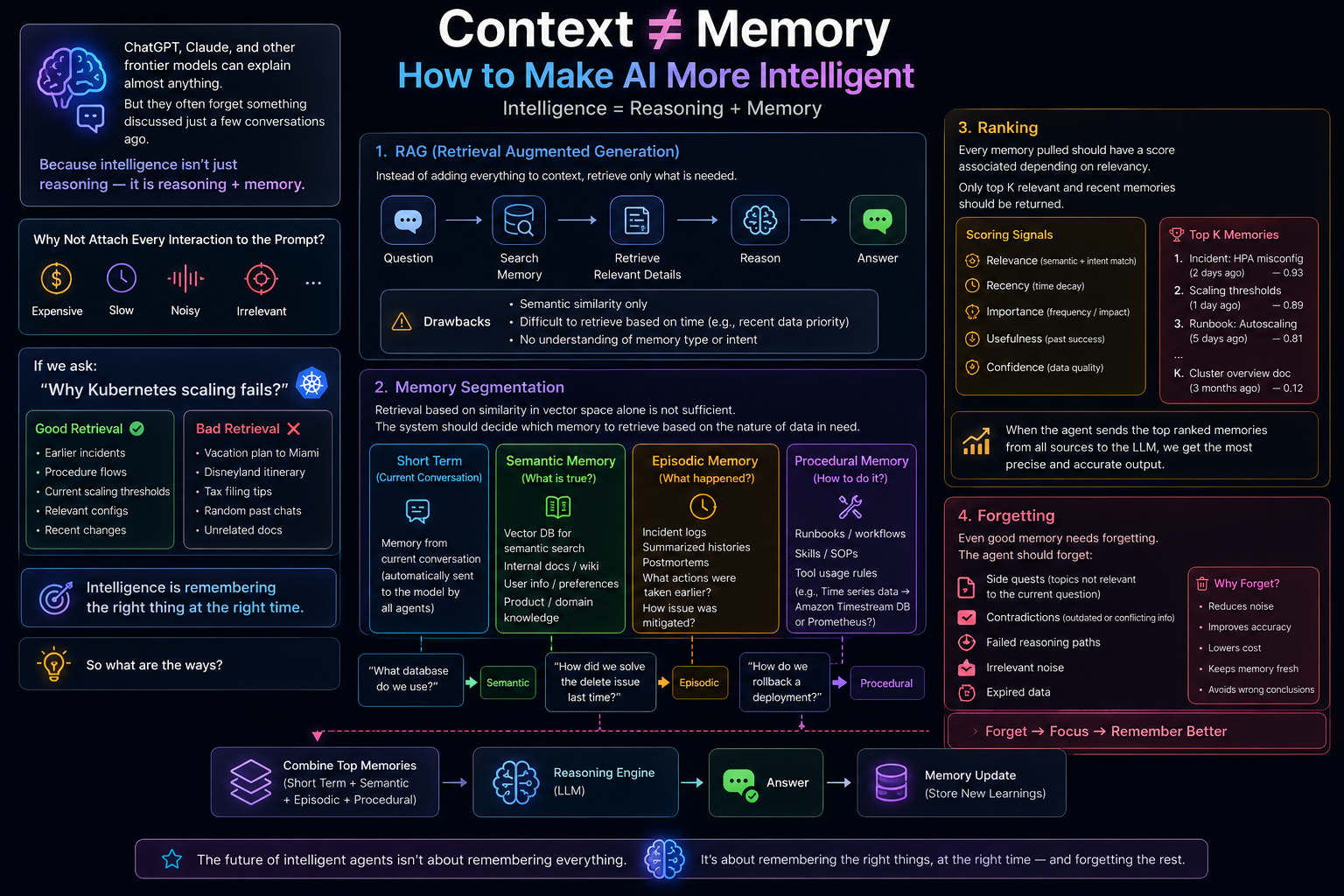
  49. Context ≠Memory → Why 1M+ Context Windows Won’t Fix Dumb AI

    The Model Context Protocol (MCP) is enabling AI agents to interact with local and remote systems, allowing them to perform actions like reading files, searching code, and managing data. Developers are creating MCP servers for various applications, from personal fitness trackers to financial analysis tools, which can then be integrated with AI clients such as Claude Desktop, Cursor, and Codex. This protocol facilitates direct interaction with tools and data, moving beyond simple text generation to enable agents to execute tasks and access information in a grounded manner. AI

    Context ≠Memory → Why 1M+ Context Windows Won’t Fix Dumb AI

    IMPACT Enables AI agents to perform grounded actions and access real-time data, moving beyond text generation to task execution.

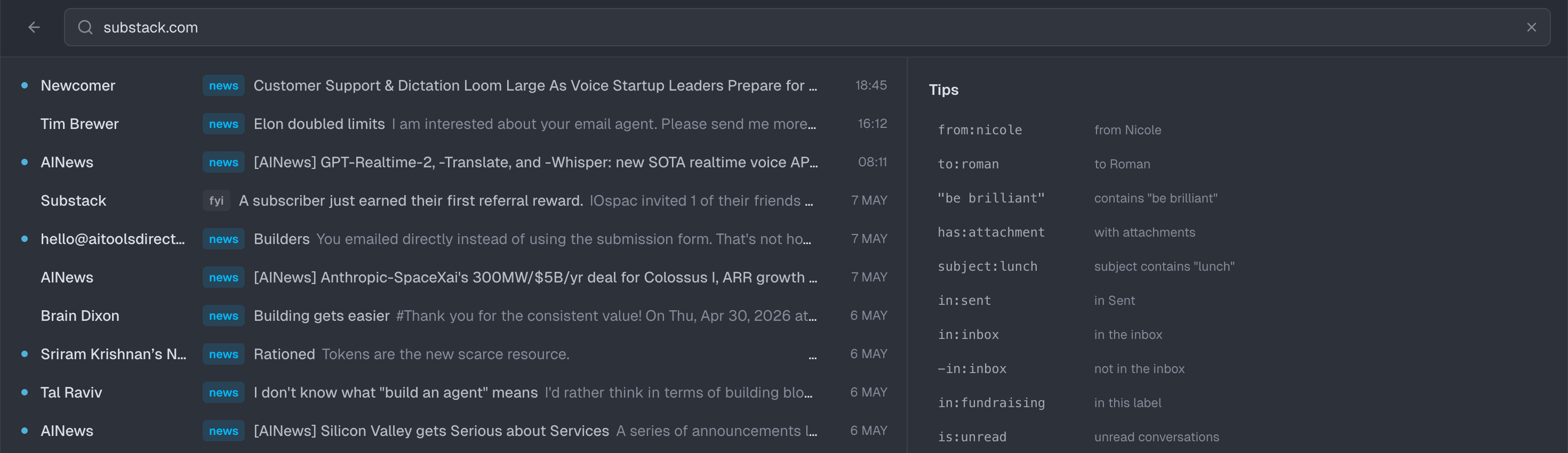
  50. Ben's Builds #3 - an email app

    A developer built a custom email client for macOS, aiming for a streamlined experience similar to Superhuman but with more control over features. The app, initially developed with Codex and later refined using Factory, utilizes Gmail's API for core functions like labeling and filtering. Key features include a split inbox, rules, a command palette, and an undo-send option, with a focus on performance improvements to eliminate lag by optimizing API calls and implementing background data refreshing. AI

    Ben's Builds #3 - an email app

    IMPACT This custom email client showcases how AI tools can be used to build personalized productivity software.