PulseAugur / Brief
EN
LIVE 07:35:20

Brief

last 24h
[4/4] 221 sources

Multi-source AI news clustered, deduplicated, and scored 0–100 across authority, cluster strength, headline signal, and time decay.

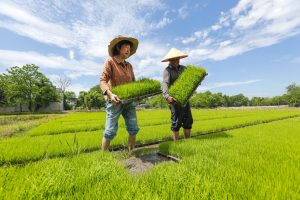
  1. Rice feeds more than half the world. It’s also the climate equivalent of 239 million cars

    A recent study indicates that greenhouse gas emissions from rice paddies have nearly doubled since the 1960s, now averaging approximately 1.1 billion tons of CO2-equivalent annually. This makes rice cultivation the largest agricultural source of emissions outside of livestock, comparable to the yearly output of 239 million cars. While farmers can reduce emissions by 10% using current climate-smart practices, more advanced strategies are needed to meet climate goals. AI
    Rice feeds more than half the world. It’s also the climate equivalent of 239 million cars

    IMPACT Rice cultivation's emissions are a significant environmental concern, and AI is being used to model and potentially reduce them.

  2. AgroTools: A Benchmark for Tool-Augmented Multimodal Agents in Agriculture

    Researchers have introduced AgroTools, a new benchmark designed to evaluate how well multimodal AI agents can utilize external tools for agricultural decision-making. The benchmark includes over 500 question-answer pairs with nearly 1,100 images, covering five task families and an environment with 14 agricultural tools. Initial testing of 13 different large language models revealed significant limitations in their ability to plan, execute, and synthesize information for precision agriculture tasks. AI

    IMPACT This benchmark highlights current AI limitations in applying tools for complex, real-world tasks, indicating a need for improved agent planning and execution capabilities in specialized domains.

  3. "The start of the next large scale transformation of society has begun. If AI is a normal technology, it’s normal in the sense of agriculture, industrialisation

    AI represents a societal transformation comparable to agriculture or industrialization, with the potential for a prolonged negative phase. Experts caution against over-reliance on predictions, suggesting a comparison to evolutionary transitions rather than solely technological revolutions. The duration and severity of AI's disruptive impact remain significant unknowns, potentially leading to widespread societal upheaval. AI

    "The start of the next large scale transformation of society has begun. If AI is a normal technology, it’s normal in the sense of agriculture, industrialisation

    IMPACT AI's transformative potential could reshape society, with significant but uncertain negative consequences.

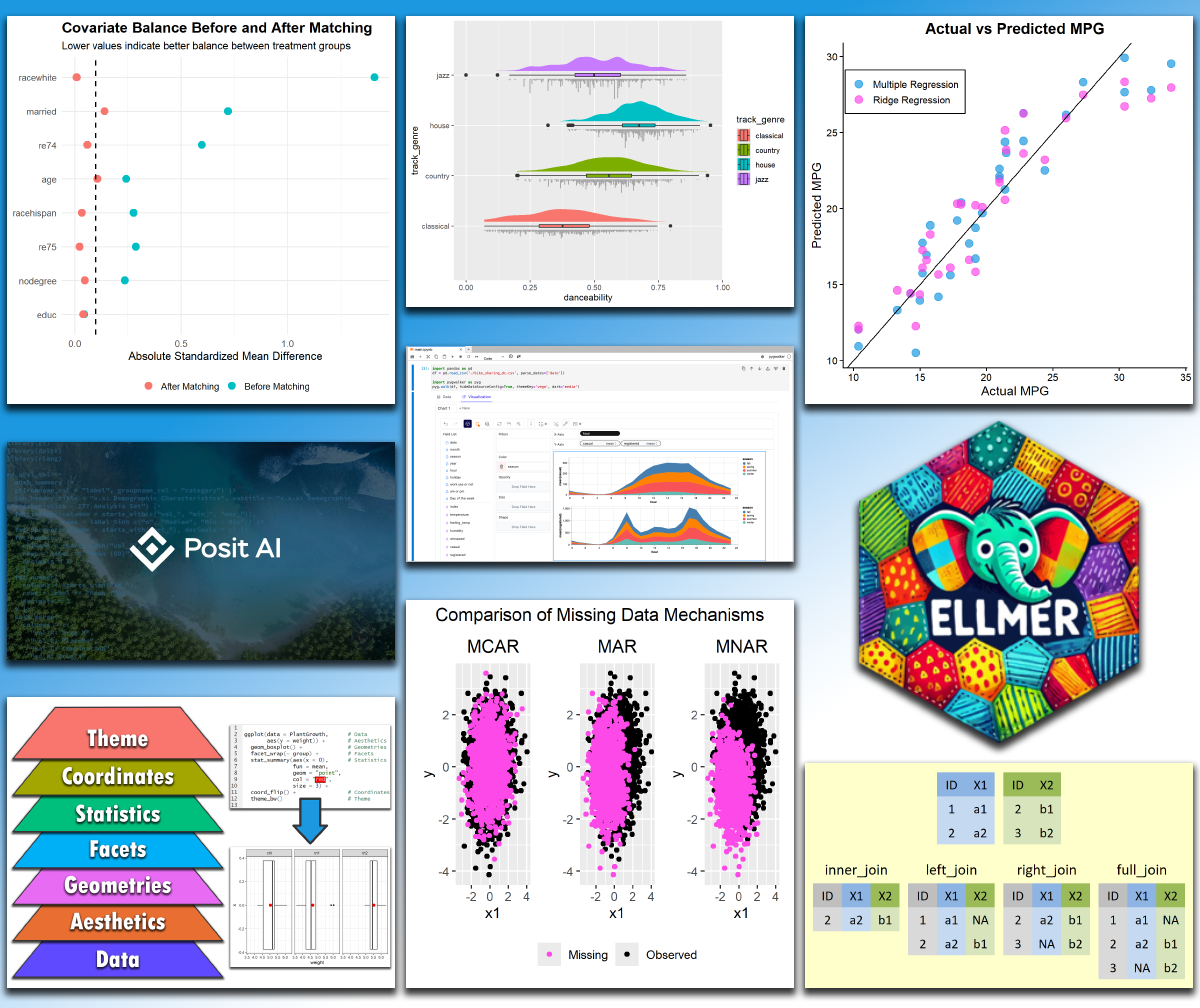
  4. A new batch of modules in the Statistics Globe Hub is about to start. You can find more information about the Statistics Globe Hub, along with the full list of

    Two recent surveys explore the application of AI and deep learning in distinct fields. One paper focuses on explainable AI for detecting mental disorders through social media, emphasizing the need for transparency in healthcare AI. Another survey reviews deep learning techniques for crops, fisheries, and livestock, highlighting challenges and future directions like multimodal data integration and edge-device deployment. Additionally, several articles discuss the distinctions between AI, Machine Learning, and Deep Learning, often with practical Python examples, while others highlight AI's role in agriculture and data science education. AI

    A new batch of modules in the Statistics Globe Hub is about to start. You can find more information about the Statistics Globe Hub, along with the full list of

    IMPACT Clarifies distinctions between AI, ML, and DL, and surveys their applications in mental health and agriculture.