PulseAugur / Brief
EN
LIVE 07:16:11

Brief

last 24h
[17/17] 224 sources

Multi-source AI news clustered, deduplicated, and scored 0–100 across authority, cluster strength, headline signal, and time decay.

  1. How to use SD Ultimate Upscale with Ideogram 4?

    A user is seeking guidance on integrating Ideogram 4, an image generation model with a unique architecture, with the Ultimate SD Upscale tool. They have encountered issues achieving satisfactory results, noting a lack of sharpness and detail compared to previous experiences with other models. The user is specifically interested in latent-based tile upscaling methods and has found alternative upscalers like PiD and SeedVR to be inferior. AI

    IMPACT Users may find solutions for combining Ideogram 4 with advanced upscaling techniques.

  2. Training Ideogram or ZIT with 30,000 images Q

    A user on Reddit is seeking advice on training image generation models, specifically Ideogram and ZIT, with a dataset of 30,000 high-quality, realistic photographic images. They are experimenting with various configurations, including different resolutions, learning rates, optimizers, batch sizes, and training methods like full fine-tune versus LoRA. The user reports struggling with convergence for ZIT and poor output quality for Ideogram, despite trying numerous settings. AI

    IMPACT Guidance sought on optimizing training parameters for image generation models.

  3. Flux.2 Dev & ZIT

    A user on Reddit shared their positive experience using FLUX.2 Dev, an AI model, in conjunction with a Zittau refiner step. They found the combination to be effective and noted that it seemed to be under-discussed within the community. AI

    Flux.2 Dev & ZIT
  4. Is Ideogram 4 worth for photorealistic?

    A user on Reddit is inquiring about the effectiveness of Ideogram 4 for generating photorealistic images, specifically characters. They are seeking opinions on whether Ideogram 4 is worth testing or if other models like Flux Klein and Z-Image (ZIT) are superior for this purpose. The user has observed that most photorealistic character images they've seen from Ideogram 4 are not particularly impressive. AI

    IMPACT Users are seeking to understand the practical photorealistic image generation capabilities of Ideogram 4 compared to other models.

  5. Ideogram 4 isn't overhyped, it's underrated

    A user on Reddit argues that Ideogram 4, an open-source image generation model, is significantly underrated and comparable to closed-source alternatives like NB or GPT Image. The user highlights its impressive quality even in its initial version, without community optimizations or fine-tunes. They also address concerns about its safety filter, generation times, and the use of JSON prompting, asserting that these aspects are manageable and offer greater control. AI

    IMPACT Praises Ideogram 4 as a strong open-source alternative, potentially driving competition and adoption.

  6. tested IdG4 against ZiT's strong suit (realistic portrait)

    A user compared Ideogram 4 (IdG4) with ZiT for realistic portrait generation, finding ZiT to be faster and more natural-looking. While IdG4's generation time was significantly longer, its control over characters and objects was noted as impressive, suggesting it might be better suited as an editing model. AI

    tested IdG4 against ZiT's strong suit (realistic portrait)

    IMPACT Provides a comparative analysis of image generation models, highlighting trade-offs in speed and control for realistic portraiture.

  7. You just can't hate ideogram4

    Ideogram AI has released its latest image generation model, Ideogram 4. Users on Reddit are expressing positive sentiment, highlighting its impressive control over image aesthetics and its ability to generate true 2K resolution images. Notably, the model appears to have fewer censorship restrictions compared to others, with users reporting no encounters with safety filters even when making problematic requests. AI

    You just can't hate ideogram4

    IMPACT New image generation model offers high quality and fewer content restrictions, potentially influencing user expectations and competition.

  8. ZIT better then QWEN?

    A user on Reddit is asking for opinions on the ZIT image generation model, comparing it to Qwen. They praise ZIT for its size, speed, and quality, sharing an example image they created. The user is seeking feedback on ZIT and wants to know if Qwen is considered superior. AI

    ZIT better then QWEN?

    IMPACT User discussion on model performance and preference, offering insights into community sentiment.

  9. Character creation/ design/ manipulation with ZIT and Klein 9B.

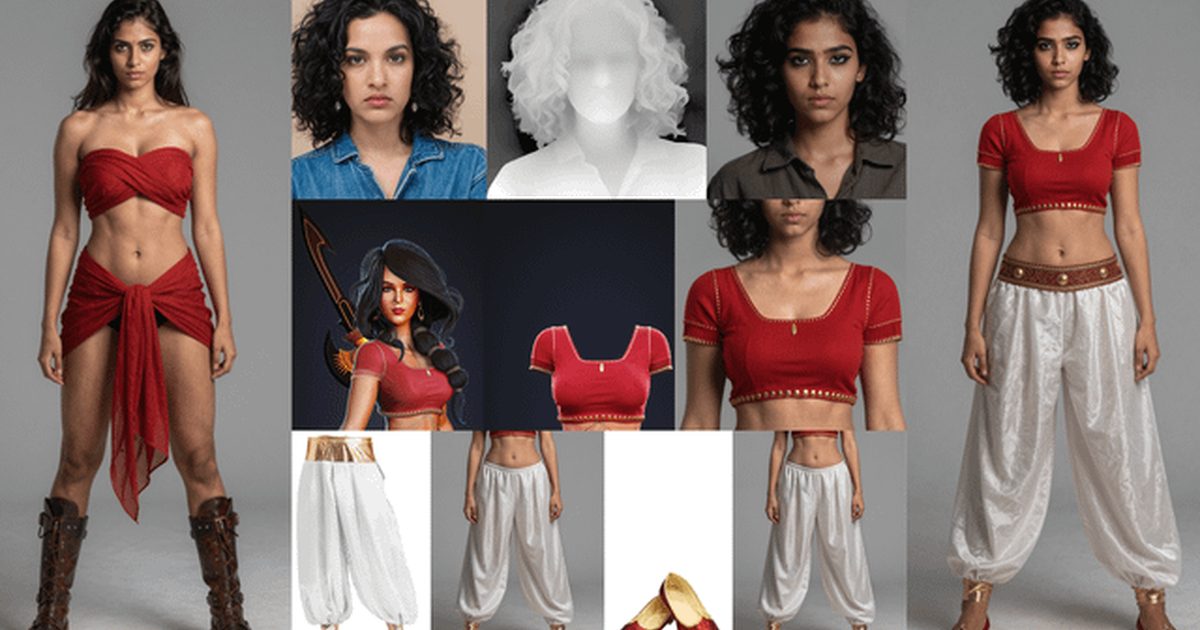
    A Reddit user shared a detailed process for character creation and manipulation using a combination of AI tools. The workflow involved generating a base character with ZIT, extracting and refining clothing textures with Klein, and further modifications using Klein's inpainting features and reference images via the Lanpaint node. Minor touch-ups were also performed in Photoshop. AI

    Character creation/ design/ manipulation with ZIT and Klein 9B.

    IMPACT Demonstrates a practical, multi-tool workflow for AI-assisted character design, potentially inspiring new creative pipelines.

  10. Maybe I'm bad at prompting them but both Klein 9B and ZiT seem really lacking in facial expressions

    Users are reporting difficulties in generating specific facial expressions with the Klein 9B and ZiT AI models. While basic emotions are achievable, more nuanced expressions like subtle smirks or faint smiles prove challenging, with Klein 9B often overdoing the effect and ZiT frequently ignoring instructions. Attempts to use example images and detailed prompts have yielded limited success, leading to frustration with the models' output. AI

    IMPACT Users report limitations in generating nuanced facial expressions with current AI image models, suggesting a gap in fine-grained control.

  11. A fully character-driven Fantasy story made entirely with LTX 2.3, ZiT, Klein, VibeVoice, and other local open source models | Process & info about my experience in the comments

    A user has created a fantasy story using a suite of local, open-source AI models, including LTX 2.3, ZiT, Klein, and VibeVoice. The project demonstrates the capability of these models to generate a character-driven narrative. The creator shared details about their process and experience in the comments section of the Reddit post. AI

    A fully character-driven Fantasy story made entirely with LTX 2.3, ZiT, Klein, VibeVoice, and other local open source models | Process & info about my experience in the comments

    IMPACT Demonstrates the creative potential of combining various open-source AI tools for narrative generation.

  12. Every WF of Zit and SDXL failed me!

    A user on Reddit's r/StableDiffusion subreddit is experiencing significant difficulties in combining the NSFW capabilities of Zit with the photorealism of SDXL, particularly when using character LoRAs. Despite trying various popular workflows like Zit-to-Sdxl and Gonzalomo WF, the user reports that faces become distorted when character LoRAs are applied, while non-NSFW generations work fine. The user is seeking a solution to achieve the desired NSFW output with character LoRAs, citing speed and hardware limitations as reasons for choosing this specific combination. AI

  13. How do you solve the hair and micro detail issues during Klein upscale?

    A user on Reddit is seeking solutions for artifacts appearing in hair and micro-details when using the Klein upscale model. They describe the issue as unnatural duplication or pixel shifting and are looking for ways to improve the output, potentially by integrating other tools like ZIT for refinement. The user aims to maintain an efficient workflow within a single model if possible. AI

    How do you solve the hair and micro detail issues during Klein upscale?
  14. What image model should I use as somebody who likes the aesthetic of Midjourney and diverse outputs? 16 GB VRAM, 64 GB RAM

    A user on Reddit is seeking recommendations for an image generation model that balances high quality with diverse outputs, similar to Midjourney's aesthetic. They have specific hardware constraints, including 16 GB of VRAM and 64 GB of RAM, and are looking for models that avoid the perceived instability of SDXL and the biases or plastic-like results of other models they've tried. The user is particularly interested in artistic styles over generic outputs. AI

    IMPACT Niche tooling improvement; minimal industry-wide impact.

  15. The best model for openpose / depth adherence

    A user on Reddit is seeking advice on achieving better results with Stable Diffusion's ControlNet for depth and OpenPose adherence, particularly for complex or non-upright poses. They have found that models like Zit and Flux2 Klein perform poorly with rotations and unusual orientations, leading them to question if all models share this limitation. The user is looking for recommendations on models, workflows, or setups that can handle a wider range of poses. AI

    IMPACT Users are discussing limitations and seeking improvements for existing AI image generation tools.

  16. Creating Average-Looking People with ZIT?

    A user on Reddit is seeking advice on how to generate more realistic and average-looking people using the ZIT AI model. They are struggling to achieve "no makeup" or "plain face" results, as the model tends to produce images resembling studio models. Additionally, the user finds it difficult to generate natural-looking hairstyles, with prompts for "disheveled" or "messy" hair often resulting in overly unkempt appearances. AI

    IMPACT Users are exploring methods to achieve more realistic and less idealized outputs from generative AI models.

  17. ComfyUI node for NVIDIA PiD pixel diffusion decoding

    NVIDIA's Pixel Diffusion Decoder (PiD) approach is being integrated into ComfyUI through custom nodes, enabling a combined decode and upscale process. This method treats latent-to-image decoding as conditional pixel diffusion, offering improved quality for higher resolutions. The experimental nodes support various NVIDIA checkpoints and include features for lower VRAM usage and text prompt assistance. AI

    ComfyUI node for NVIDIA PiD pixel diffusion decoding

    IMPACT Enables higher-resolution image generation and upscaling within a popular creative workflow.