PulseAugur / Brief
EN
LIVE 00:04:10

Brief

last 24h
[12/12] 221 sources

Multi-source AI news clustered, deduplicated, and scored 0–100 across authority, cluster strength, headline signal, and time decay.

  1. An Interpretable Closed-Loop Intelligent Tutoring System for Multimodal Affective Feedback in Asynchronous Presentation Training

    Researchers have developed an interpretable closed-loop Intelligent Tutoring System (ITS) designed to enhance public speaking skills through multimodal feedback. The system utilizes an XGBoost model to analyze facial, vocal, textual, and oculomotor features from video segments, providing feedback aligned with a seven-dimensional rating scale. Trained on over 10,000 MOOC video segments, the ITS demonstrated scoring accuracy comparable to expert ratings and led to significant skill improvements in adult learners over a 30-day practice period. AI

    IMPACT Demonstrates how AI can provide structured, interpretable feedback for skill development, potentially improving educational tools.

  2. Is TabPFN the Silver Bullet for Insurance Pricing?

    A new paper evaluates the Tabular Foundation Model (TabPFN) for motor insurance pricing, comparing it against traditional Generalized Linear Models (GLMs) and XGBoost. The study found that TabPFN did not consistently outperform these established methods. Furthermore, TabPFN demonstrated significantly longer inference times and sensitivity to the size of its in-context training set, suggesting it is not yet a viable replacement for current actuarial practices, especially in data-rich environments. AI

    IMPACT Tabular foundation models show limited practical advantage over established methods for insurance pricing, indicating current limitations for widespread adoption.

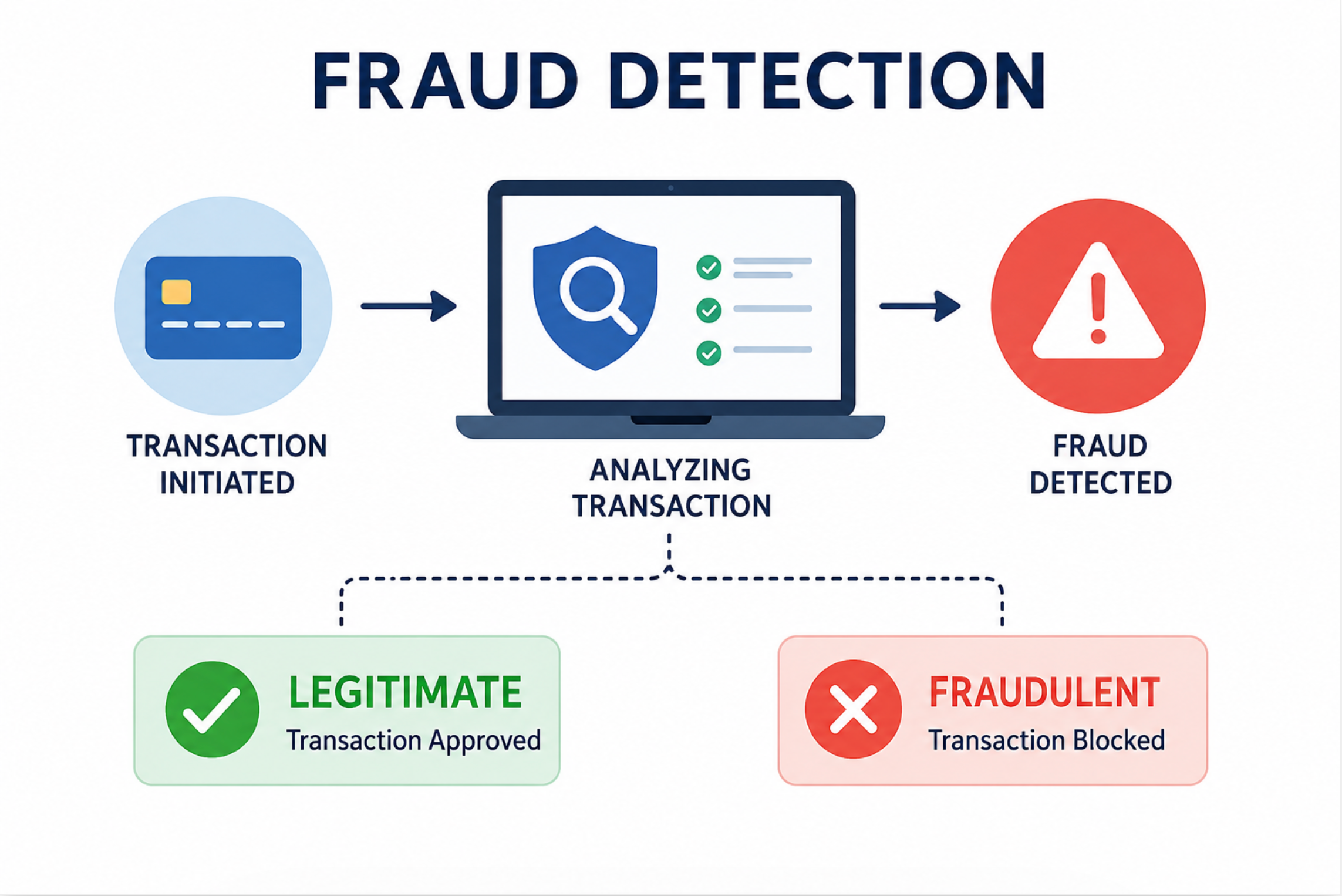
  3. Building an Enterprise Fraud Detection & Credit Risk Platform from Scratch

    This article details the creation of an enterprise-level platform for fraud detection and credit risk assessment. It outlines a modular system design incorporating graph features, BERT-style embeddings, and XGBoost ensembles for robust scoring. The approach emphasizes production readiness and scalability for financial applications. AI

    Building an Enterprise Fraud Detection & Credit Risk Platform from Scratch

    IMPACT Details a practical application of ML models like BERT and XGBoost in financial risk assessment, showcasing integration strategies.

  4. AI-based Prediction of Independent Construction Safety Outcomes from Universal Attributes

    Researchers have developed an AI-based system to predict construction safety outcomes using natural language processing on incident reports. The updated approach utilizes a larger dataset of over 90,000 reports and incorporates new machine learning models like XGBoost and linear SVM, along with model stacking. This method successfully predicts injury severity, type, body part impacted, and incident type, validating the original approach and significantly advancing the field by improving prediction accuracy for injury severity. AI

    IMPACT Enhances safety protocols in construction by providing predictive insights into potential incidents and their severity.

  5. Top 30 XGBoost Interview Questions and Answers (Part 1 of 2)

    This article presents the first half of a list of 30 common interview questions and answers related to XGBoost. It is intended as a resource for individuals preparing for machine learning interviews, specifically focusing on this popular gradient boosting algorithm. The content is part of a broader series on machine learning interview preparation. AI

    Top 30 XGBoost Interview Questions and Answers (Part 1 of 2)

    IMPACT Provides practical guidance for machine learning job seekers.

  6. HaorFloodAlert: Deseasonalized ML Ensemble for 72-Hour Flood Prediction in Bangladesh Haor Wetlands

    Researchers have developed HaorFloodAlert, a machine learning ensemble designed to predict flash floods in Bangladesh's haor wetlands up to 72 hours in advance. This system addresses limitations of existing flood prediction models that are ill-suited for the unique backwater dynamics of these flat basins. By employing a deseasonalized approach and integrating Sentinel-1 SAR data, HaorFloodAlert achieves high accuracy in forecasting flood probability and provides a tiered alert system. AI

    HaorFloodAlert: Deseasonalized ML Ensemble for 72-Hour Flood Prediction in Bangladesh Haor Wetlands

    IMPACT Enhances early warning systems for flash floods in vulnerable regions, potentially saving harvests and lives.

  7. Algebraic Machine Learning for Small-to-Medium Datasets Is Competitive against Strong Standard Baselines

    Researchers have developed a new framework called Algebraic Machine Learning (AML) that learns through algebraic structure decomposition, bypassing traditional numerical optimization. In evaluations, AML demonstrated competitive performance against established methods like Convolutional Neural Networks (CNNs) and XGBoost on small to medium-sized image and tabular datasets. Notably, AML achieved this without requiring validation or cross-validation, relying instead on a generic algebraic inductive bias rather than modality-specific biases. AI

    IMPACT This research introduces a novel approach to machine learning that could offer an alternative to traditional optimization methods, particularly for datasets with limited examples.

  8. Quantitative coronary calcification analysis for prediction of myocardial ischemia using non-contrast CT calcium scoring

    Researchers have developed a new machine learning framework to predict myocardial ischemia using standard non-contrast CT calcium scoring scans. The model incorporates the Agatston score, eight novel "calcium-omics" features, and patient age, demonstrating significant improvements in predictive performance over traditional methods. This approach could enable more accessible cardiovascular risk stratification by leveraging existing imaging data. AI

    IMPACT Enhances cardiovascular risk stratification by enabling prediction of myocardial ischemia from routine CT scans.

  9. Cyber-Physical Anomaly Detection in IoT-Enabled Smart Grids Using Machine Learning and Metaheuristic Feature Optimization

    Researchers have developed a machine learning approach to detect cyber-physical anomalies in smart grids, aiming to distinguish between physical faults and malicious cyber-attacks. The method utilizes genetic algorithms for feature selection, reducing the number of required measurements while improving detection accuracy. Tree-based ensemble models, particularly Extra Trees, demonstrated the highest effectiveness, achieving an increased macro-F1 score and ROC-AUC with a significantly reduced feature set. AI

    IMPACT This research could lead to more robust and efficient anomaly detection systems for smart grids, improving their resilience against cyber-physical threats.

  10. Hybrid Kolmogorov-Arnold Network and XGBoost Framework for Week-Ahead Price Forecasting in Australia's National Electricity Market

    Researchers have developed a new hybrid framework for forecasting electricity prices in Australia's National Electricity Market (NEM). This approach combines Kolmogorov-Arnold Networks (KAN) with XGBoost to better capture complex market dynamics, including volatility and price spikes, which are exacerbated by high renewable energy penetration. Experiments show this hybrid model significantly outperforms existing methods like LSTM and standalone KAN or XGBoost, reducing Mean Absolute Error (MAE) by approximately 12% compared to XGBoost alone. AI

    IMPACT Introduces a novel hybrid model that significantly enhances the accuracy of electricity price forecasting, potentially benefiting market participants and grid operators.

  11. Pocket Foundation Models: Distilling TFMs into CPU-Ready Gradient-Boosted Trees

    Researchers have developed a method to distill large tabular foundation models (TFMs) into smaller, faster gradient-boosted tree models that can run on CPUs. This technique addresses the latency issue of TFMs, which are too slow for real-time applications like fraud scoring. By using stratified out-of-fold teacher labeling to prevent label leakage, the distilled models achieve performance close to the original TFMs but with significantly reduced inference times. AI

    Pocket Foundation Models: Distilling TFMs into CPU-Ready Gradient-Boosted Trees

    IMPACT Enables real-time AI applications by significantly reducing inference latency for complex tabular models.

  12. Quantum Machine Learning for Cyber-Physical Anomaly Detection in Unmanned Aerial Vehicles: A Leakage-Free Evaluation with Proxy-Audited Feature Sets

    Researchers have developed a new method for detecting anomalies in unmanned aerial vehicles (UAVs) by combining quantum machine learning with classical techniques. This approach uses a leakage-free evaluation protocol on the TLM:UAV benchmark to distinguish between physical signals and contextual data. While a standalone quantum model did not consistently outperform classical methods, a hybrid XGBoost and Data Reuploading classifier showed promise by improving accuracy when relying solely on physical signals and achieving the lowest false alarm rate in proxy-free evaluations. AI

    IMPACT This research offers a potential pathway for enhancing cybersecurity in aerospace systems by improving anomaly detection capabilities.