PulseAugur / Brief
EN
LIVE 14:43:04

Brief

last 24h
[3/3] 224 sources

Multi-source AI news clustered, deduplicated, and scored 0–100 across authority, cluster strength, headline signal, and time decay.

  1. nothing is perfect # Mistral offers a good # AI service focus on # EU data protection - however I didn't like it this live report from # Vanta service: https://

    Mistral AI's AI service, while generally good and focused on EU data protection, has faced criticism regarding its infrastructure. A report from Vanta Security highlighted concerns that using US data centers within the EU does not align with true data sovereignty principles. AI

    IMPACT Highlights potential conflicts between AI providers' claims of data protection and actual infrastructure practices in the EU.
  2. 'Shadow AI' is real. Vanta wants to help manage it https://www.fastcompany.com/91551820/vanta-agent-for-risk # AI # Cybersecurity # Business

    Vanta has launched a new agent designed to help organizations identify and manage 'shadow AI.' This refers to the use of artificial intelligence tools by employees without explicit company approval or oversight. The agent aims to provide visibility and control over these unsanctioned AI applications to mitigate potential risks. AI

    IMPACT Helps organizations gain control over unsanctioned AI tool adoption, potentially reducing security and compliance risks.

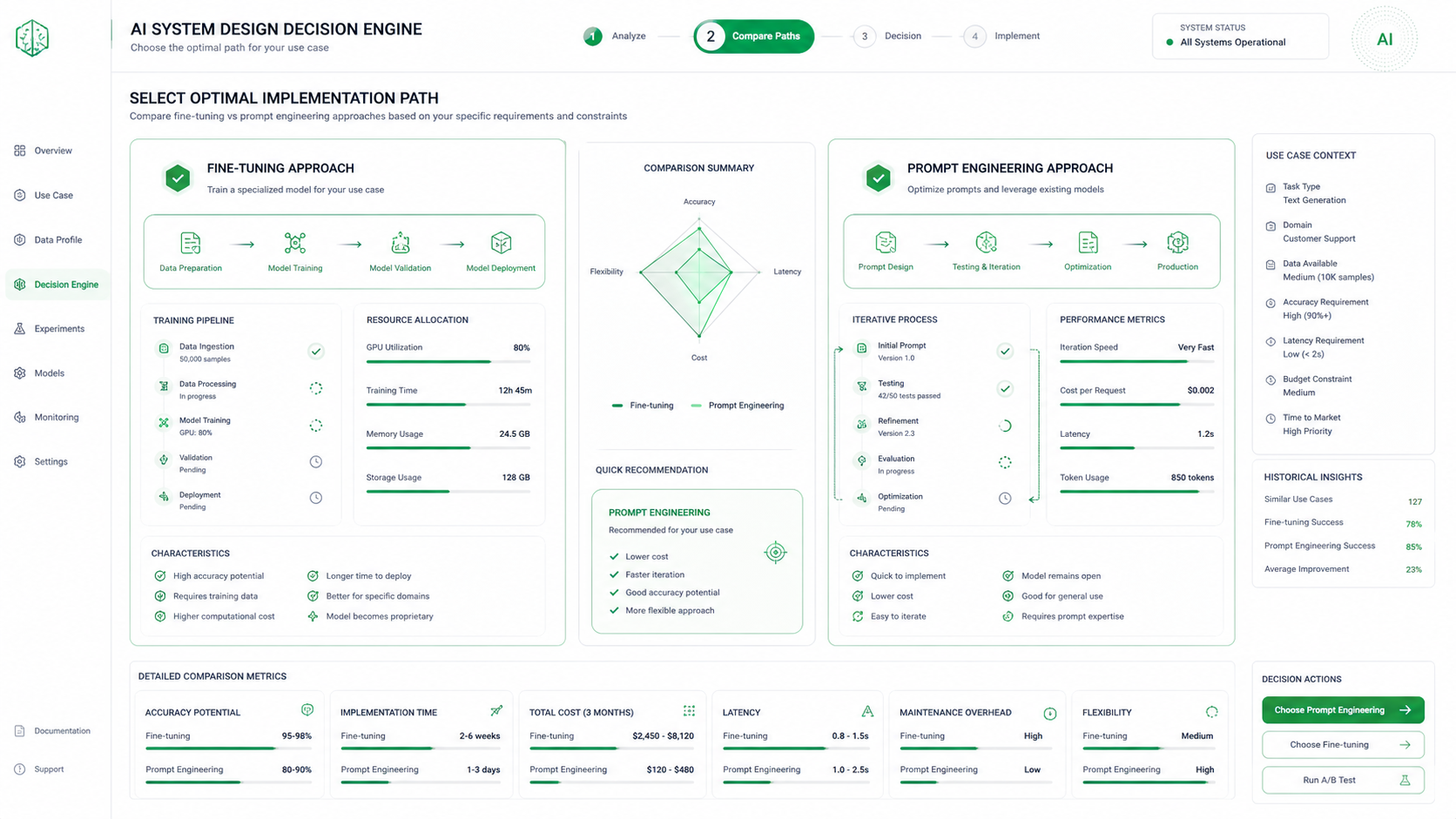
  3. Fine-Tuning vs Prompt Engineering: When Each Wins

    Relari has launched an auto prompt optimizer designed to improve LLM performance without the need for fine-tuning. This tool uses a dataset of inputs and expected outputs to iteratively refine prompts, aiming for better alignment with domain-specific tasks. The company positions it as a more accessible and transparent alternative to existing prompt engineering frameworks, capable of delivering high-quality results with relatively small datasets. AI

    Fine-Tuning vs Prompt Engineering: When Each Wins

    IMPACT Offers a potentially more efficient and accessible method for adapting LLMs to specific tasks, reducing reliance on costly fine-tuning.