PulseAugur / Brief
EN
LIVE 19:34:45

Brief

last 24h
[5/5] 222 sources

Multi-source AI news clustered, deduplicated, and scored 0–100 across authority, cluster strength, headline signal, and time decay.

  1. Ray is Joining The PyTorch Foundation

    Anyscale announced that its open-source distributed computing framework, Ray, is joining the PyTorch Foundation, which is part of the Linux Foundation. Ray has experienced significant growth, with downloads increasing nearly tenfold in the past year and powering AI workloads for numerous companies including xAI, Netflix, and JPMorgan. This move aims to foster a stronger open-source community around Ray to meet the evolving demands of AI infrastructure. AI
    Ray is Joining The PyTorch Foundation

    IMPACT Accelerates the development of open-source AI infrastructure by consolidating community efforts under a major foundation.
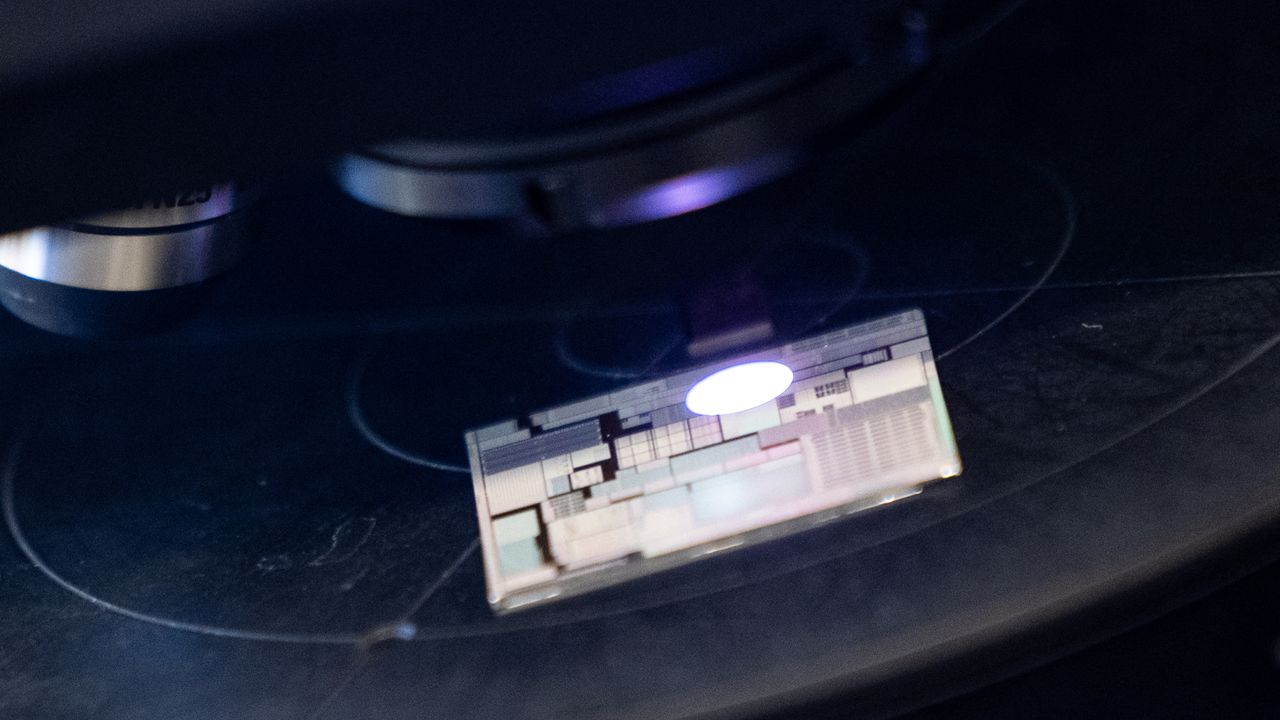
  2. AI is starting to out-design chip engineers in narrow areas as LLMs accelerate software chip design tool development — "There is still a lot of human guidance" says Berkley researcher

    Artificial intelligence is beginning to outperform human chip engineers in specific, well-defined areas of chip design. Large language models are accelerating the development of software tools used in this process, leading to significant productivity gains and power reductions for some companies. Researchers are exploring AI's potential not only for optimizing existing designs but also for discovering entirely new approaches, though human guidance remains crucial for high-level strategy and novel idea generation. AI

    AI is starting to out-design chip engineers in narrow areas as LLMs accelerate software chip design tool development — "There is still a lot of human guidance" says Berkley researcher

    IMPACT AI is enhancing chip design efficiency and potentially enabling novel architectures, though human oversight remains critical.

  3. I Gave My OpenClaw Agent a Physical Body

    An AI agent named OpenClaw was successfully integrated with a physical robot arm, enabling it to configure the arm, grasp objects, and even train another AI model for specific tasks. This development, utilizing an open-source robot arm and AI coding assistance, suggests a potential breakthrough in robotics by simplifying the control and training processes. Researchers are developing benchmarks like CaP-X to evaluate AI models' robotic capabilities, with Gemini showing promising results in multimodal understanding for physical world interactions. AI

    I Gave My OpenClaw Agent a Physical Body

    IMPACT Demonstrates AI's growing capability in physical robotics, potentially simplifying complex control and training tasks for broader adoption.

  4. Assessment of RAG and Fine-Tuning for Industrial Question-Answering-Applications

    Researchers are exploring advanced methods for grounding large language models (LLMs) in specific knowledge domains. One approach involves preprocessing LaTeX source code to create AI-friendly formats for retrieval-augmented generation (RAG), preserving structural and semantic information lost in PDF conversions. Concurrently, studies are assessing the cost-effectiveness of RAG versus fine-tuning for industrial question-answering systems, particularly in the automotive sector. Findings suggest that while premium models excel initially, open-source models can achieve comparable quality with RAG, making it a more efficient adaptation method overall. AI

    Assessment of RAG and Fine-Tuning for Industrial Question-Answering-Applications

    IMPACT RAG emerges as a cost-effective method for adapting LLMs to domain-specific knowledge, potentially accelerating enterprise adoption over fine-tuning.

  5. Zero to MVP

    Replit has launched a new feature called Replit Agent, designed to help non-technical users build applications. The Agent assists in coding, allowing individuals to describe their app idea and have the AI generate the necessary code. This empowers users without coding experience to create functional MVPs and bring their ideas to life more rapidly. AI

    Zero to MVP

    IMPACT Lowers the barrier to entry for software development, enabling more individuals to create applications.