PulseAugur / Brief
EN
LIVE 11:43:31

Brief

last 24h
[4/4] 222 sources

Multi-source AI news clustered, deduplicated, and scored 0–100 across authority, cluster strength, headline signal, and time decay.

  1. U.S. Exploring Small Modular Nuclear Reactors In Marine Transportation

    The U.S. Maritime Administration is exploring the integration of small modular nuclear reactors (SMRs) into the nation's marine transportation system. Transportation Secretary Sean Duffy announced the initiative, seeking industry input on developing commercially viable SMR concepts for vessels. This effort aims to reduce costs, enhance national security, and address a strategic disadvantage compared to global competitors advancing nuclear propulsion. AI

    U.S. Exploring Small Modular Nuclear Reactors In Marine Transportation
  2. Climate tech companies are pivoting to critical minerals

    Climate tech companies are shifting their focus from decarbonization to critical minerals and data centers to navigate a challenging political and funding environment. Boston Metal, known for its low-emission steel production, raised $75 million to bolster its critical metals business, aiming to generate cash flow for its climate goals. Similarly, Brimstone, a cement startup, now highlights its critical mineral production alongside its efforts to reduce emissions in the cement industry. This pivot reflects a broader trend of companies emphasizing politically favorable areas to ensure their survival and continued impact. AI

    IMPACT Climate tech companies are adapting business models to critical minerals and data centers, potentially impacting future resource allocation and technological development.

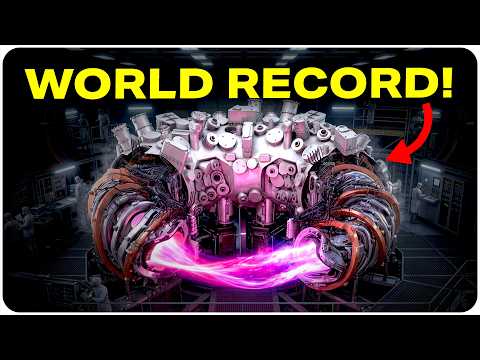
  3. Nuclear Fusion? It is still predicted that Nuclear Fusion won’t be powering entire cities for 30 years, but AI Datacenters will in less than 20. I mean, who do

    AI datacenters are predicted to power cities in under 20 years, significantly sooner than nuclear fusion. Recent breakthroughs at Germany's Wendelstein 7-X stellarator have achieved a world record for plasma confinement duration and demonstrated advanced steady-state fueling. Despite these advancements, the facility remains a research-only project and has not yet achieved net energy output, with significant capital investment still required for commercial viability. AI

    Nuclear Fusion? It is still predicted that Nuclear Fusion won’t be powering entire cities for 30 years, but AI Datacenters will in less than 20. I mean, who do

    IMPACT AI datacenters are projected to meet urban energy demands significantly sooner than nuclear fusion, highlighting the rapid growth and infrastructure demands of AI.

  4. ​Behind Vertical AI: What AI Is Already Demanding Of Energy And Utilities

    The increasing demand for AI, particularly from data centers, is placing significant strain on energy grids and utilities. This surge in electricity consumption, projected to more than double in the U.S. by 2028, necessitates substantial infrastructure investment. To address these challenges, the energy sector is exploring vertical AI solutions tailored to specific industry needs, aiming to optimize grid resilience, operational efficiency, and customer service. AI

    ​Behind Vertical AI: What AI Is Already Demanding Of Energy And Utilities

    IMPACT AI's escalating energy consumption is forcing utilities to invest heavily in infrastructure and explore specialized AI solutions for grid management.