PulseAugur / Brief
EN
LIVE 21:39:29

Brief

last 24h
[8/8] 221 sources

Multi-source AI news clustered, deduplicated, and scored 0–100 across authority, cluster strength, headline signal, and time decay.

  1. Meet Turbovec: A Rust Vector Index with Python Bindings, and Built on Google’s TurboQuant Algorithm

    Turbovec is a new open-source vector index library written in Rust with Python bindings, designed to reduce the memory footprint of vector embeddings for AI applications. It utilizes Google's TurboQuant algorithm, a data-oblivious quantizer that achieves significant compression without requiring a training phase. This approach allows for substantial memory savings, fitting 10 million document embeddings into 4 GB of RAM compared to the 31 GB typically needed for float32 storage, while maintaining competitive search speeds and recall rates. AI
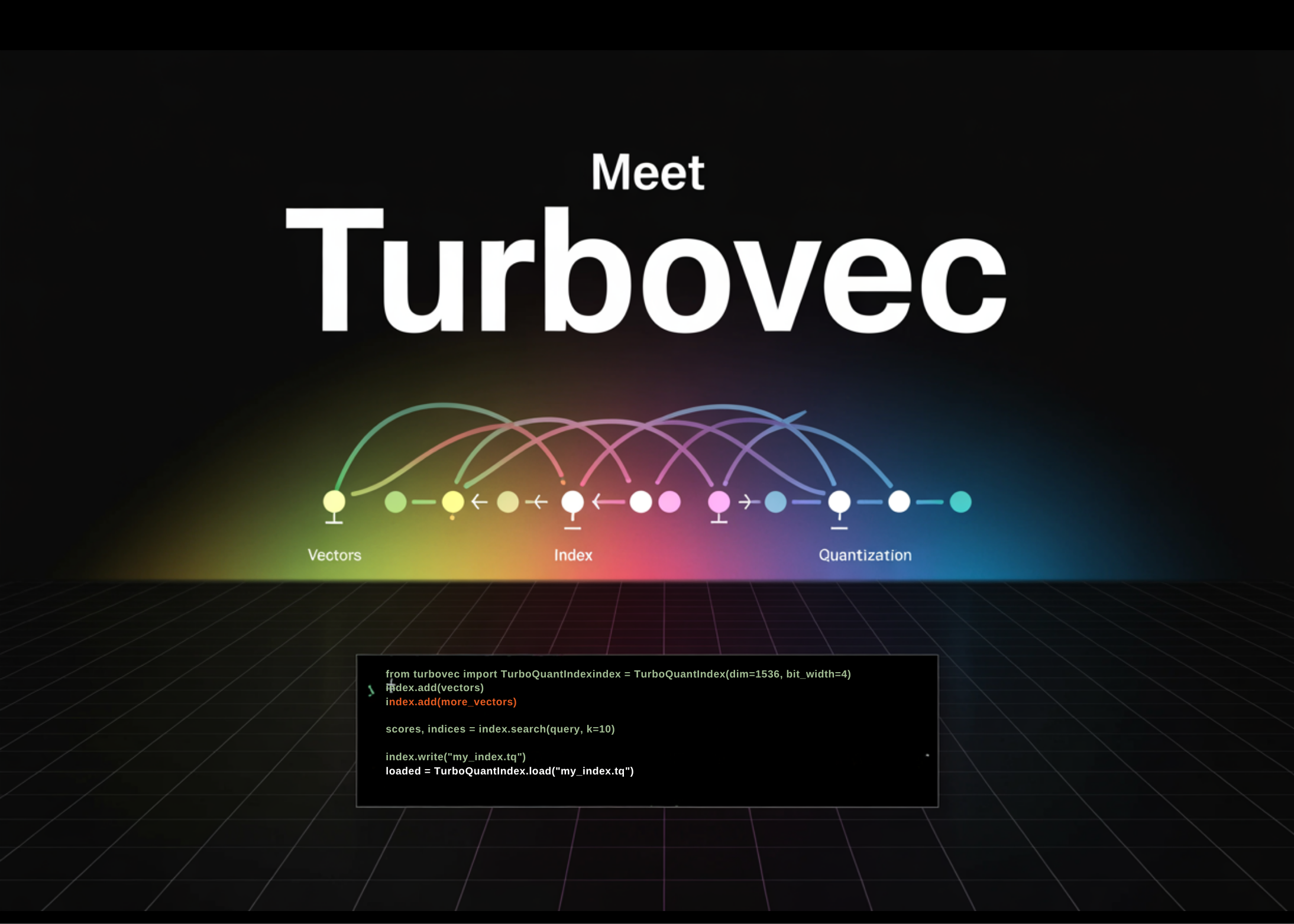
    Meet Turbovec: A Rust Vector Index with Python Bindings, and Built on Google’s TurboQuant Algorithm

    IMPACT Reduces memory requirements for vector embeddings, potentially lowering costs and enabling local inference for RAG applications.

  2. The Paper That Made Me Stop and Actually Think: Understanding TurboQuant and the KV Cache Problem

    A recent paper introduces TurboQuant, a novel method for optimizing the KV cache in large language models. This technique aims to significantly reduce memory usage and improve inference speed. The research explores the underlying principles of KV cache optimization and presents experimental findings on its effectiveness. AI

    The Paper That Made Me Stop and Actually Think: Understanding TurboQuant and the KV Cache Problem

    IMPACT TurboQuant's KV cache optimization could lead to more efficient and faster LLM inference, potentially lowering operational costs and enabling wider deployment.

  3. RT @coffeecup2020: TurboQuant - Qwopus3.6-27B-v2-TQ34S.gguf mehr auf Arint.info # AI # HuggingFace # MachineLearning # OpenSource # Qwopus # TurboQuant # arint_

    A new open-source model named Qwopus3.6-27B-v2-TQ34S has been released, available in the TurboQuant format. Further details and usage information can be found on Arint.info. AI

    IMPACT Provides a new open-source model for researchers and developers.

  4. I spent 31 hours on the math behind TurboQuant so you don't have to

    A technical deep dive explains the inner workings of TurboQuant, a novel method for compressing large language model KV caches. TurboQuant utilizes a technique called PolarQuant, which transforms KV embeddings into polar coordinates and quantizes the resulting angles. This approach aims to significantly reduce the memory footprint of the KV cache, a major bottleneck for long-context LLMs, by compressing it over 4.2x. AI

    I spent 31 hours on the math behind TurboQuant so you don't have to

    IMPACT Compressing LLM KV caches with methods like TurboQuant could enable longer context windows and more efficient inference, reducing memory bottlenecks.

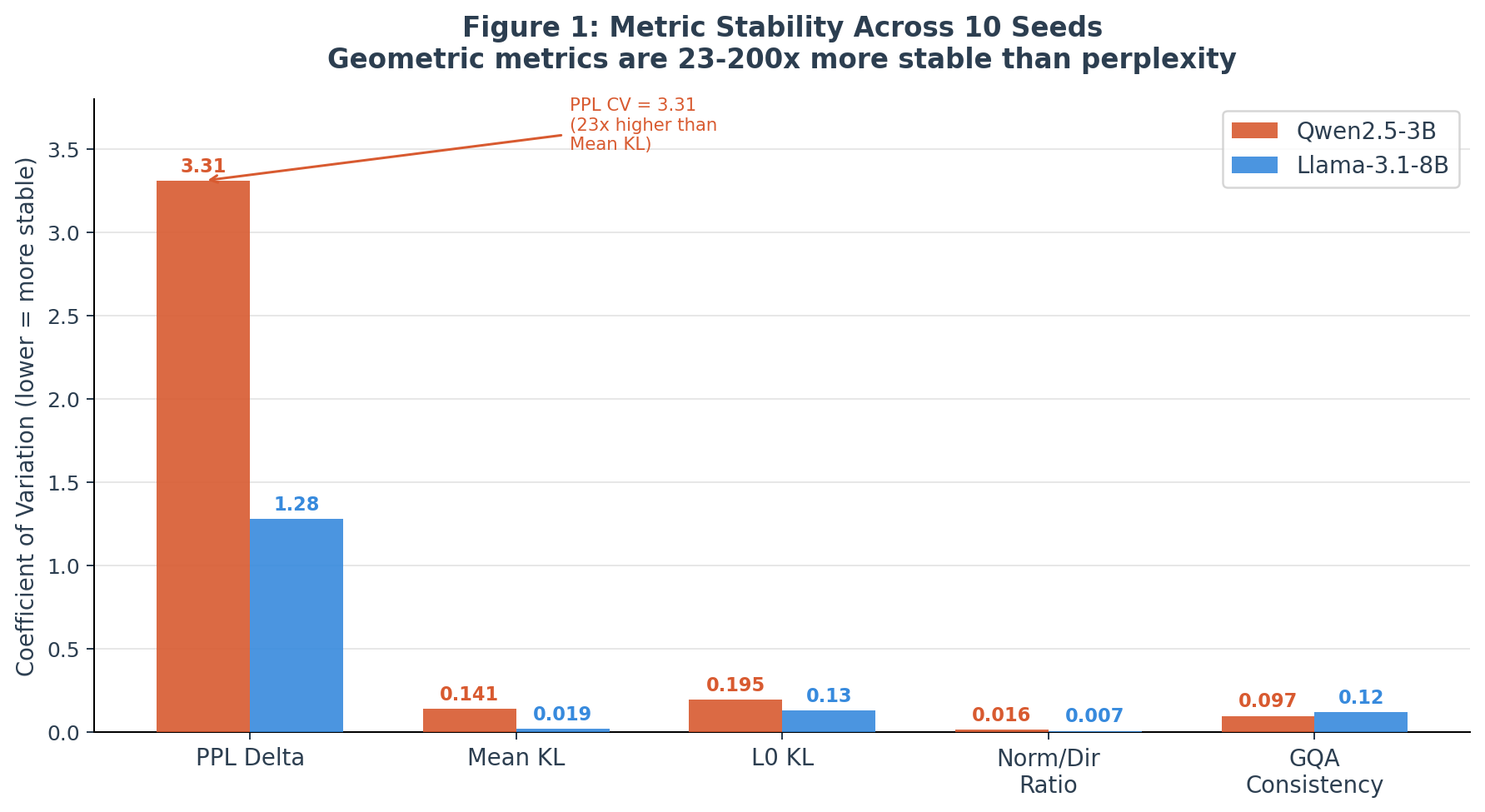
  5. I Ran the Same Algorithm Ten Times. The Results Were All Over the Place.

    The author encountered significant variability when running the same algorithm multiple times, indicating a lack of reproducibility. This issue is explored in the second part of a series, following a discussion on the KV cache problem and the TurboQuant method. The findings suggest potential challenges in the reliability of current AI algorithms. AI

    I Ran the Same Algorithm Ten Times. The Results Were All Over the Place.

    IMPACT Highlights potential issues with AI algorithm reproducibility, suggesting a need for further investigation into reliability.

  6. Block-Sphere Vector Quantization

    Researchers have introduced Block-Sphere Quantization (BlockQuant), a novel rotation-based algorithm for vector quantization. This new method is designed to better preserve the geometry of rotated embeddings by quantizing blocks on a sphere, outperforming existing techniques like EDEN, RabitQ, and TurboQuant. Experiments on embedding datasets and long-context LLM inference tasks demonstrate practical improvements consistent with theoretical gains. AI

    Block-Sphere Vector Quantization

    IMPACT Improves efficiency for LLM inference and memory-intensive machine learning tasks.

  7. Google's TurboQuant: The Memory Stock Crash Google's TurboQuant algorithm reduces LLM memory needs by 6x. Samsung, SK Hynix, and Micron got hammered. The trilli

    Google Research has developed an algorithm called TurboQuant that significantly reduces the memory requirements for large language models. This new method can decrease memory needs by up to six times, potentially impacting the memory chip industry. Companies like Samsung, SK Hynix, and Micron, which are major players in memory production, have seen their stock prices affected by this development. AI

    IMPACT Reduces memory demands for LLMs, potentially lowering hardware costs and enabling more efficient AI deployment.

  8. KVServe: Service-Aware KV Cache Compression for Communication-Efficient Disaggregated LLM Serving

    Multiple research papers published in May 2026 introduce novel techniques to optimize the Key-Value (KV) cache in large language models, addressing memory and latency bottlenecks. These methods include offloading KV cache to object storage like S3 (ObjectCache), employing advanced compression strategies like three-way token routing (VECTOR), and using auxiliary models for selective KV cache recomputation (CacheClip). Other approaches focus on hardware-aware quantization (InnerQ, OCTOPUS) and service-aware adaptive compression (KVServe) to improve efficiency and reduce decode latency, especially for long-context inference and retrieval-augmented generation (RAG) systems. AI

    IMPACT These advancements in KV cache optimization promise to significantly improve the efficiency and speed of long-context LLM inference, making advanced AI applications more practical and cost-effective.