PulseAugur / Brief
EN
LIVE 22:45:31

Brief

last 24h
[17/17] 221 sources

Multi-source AI news clustered, deduplicated, and scored 0–100 across authority, cluster strength, headline signal, and time decay.

  1. AI hallucinations are infiltrating expert work—and entering the permanent body of knowledge

    AI tools are increasingly inserting fabricated references into academic papers, a phenomenon that risks undermining the scientific process. A study of biomedical literature found over 4,000 fake citations across nearly 3,000 papers, with the rate of such errors rising sharply since 2024. These AI-generated inaccuracies can compromise evidence-based medical guidelines and patient treatment, as errors at the foundational level of research propagate through the entire knowledge chain. AI
    AI hallucinations are infiltrating expert work—and entering the permanent body of knowledge

    IMPACT Undermines the integrity of scientific literature and evidence-based decision-making in critical fields like medicine.


  2. I built a self-hosted RAG system for Journalism — What Production Retrieval Taught Me

    A developer built Atlas, a self-hosted Retrieval-Augmented Generation (RAG) system tailored for journalism, utilizing local models and PostgreSQL with pgvector. The system ingests RSS feeds, embeds content, and provides features like grounded Q&A, claim-level fact-checking, and story brief generation. Key lessons learned include the necessity of hybrid search combining vector and full-text search for news corpora, and the significant performance gains from batch embedding over individual article embedding. AI

    IMPACT Highlights the practical challenges and solutions in deploying RAG for specialized domains like journalism, emphasizing hybrid search and efficient embedding strategies.

  3. How To Fact Check AI, According To Tech Experts

    Artificial intelligence models frequently produce inaccurate information, with hallucination rates in some studies reaching as high as 94% across various models. These errors can range from sourcing problems and outdated details to entirely fabricated information, posing significant risks for high-impact queries in fields like medicine and law. Experts emphasize the need for robust AI fact-checking techniques, as AI outputs should not be treated as definitive sources, particularly when accuracy is critical. AI

    How To Fact Check AI, According To Tech Experts

    IMPACT Highlights the critical need for users to fact-check AI outputs, especially for high-stakes information, due to prevalent inaccuracies and hallucinations.

  4. Trump’s EEOC chair is suing The New York Times because ‘we should bring it on behalf of white workers too’

    The Equal Employment Opportunity Commission (EEOC) has filed a lawsuit against The New York Times, alleging racial and gender discrimination in a promotion decision. The agency claims the Times passed over a qualified white male editor for a less experienced multiracial woman, influenced by diversity hiring goals. EEOC Chair Andrea Lucas stated that civil rights protections should apply equally to all individuals, regardless of race or gender, asserting that the agency's role is to ensure equal opportunity, not equitable outcomes. AI

    Trump’s EEOC chair is suing The New York Times because ‘we should bring it on behalf of white workers too’
  5. A.I. Is a Job Creator A.I. will create more jobs than it will kill. Via @nytimes #AI #ArtificialIntelligence 💻 🧠 nytimes.com/2026/05/22/opi...

    Artificial intelligence is poised to generate more jobs than it displaces, according to an opinion piece in The New York Times. The article argues that while AI will automate certain tasks, it will also spur the creation of new roles and industries. This perspective suggests a net positive impact on employment in the long term. AI

    IMPACT Discusses the potential long-term employment effects of AI, offering a perspective on its net impact on job creation versus displacement.

  6. Who's Writing This? https://www.nytimes.com/2026/05/20/briefing/whos-writing-this.html # AI # Journalism # FutureOfWork

    The New York Times is exploring the increasing use of AI in content creation and its implications for journalism. The article questions the authorship of AI-generated text and discusses how AI tools are changing the landscape for writers and journalists. It delves into the ethical considerations and the future of human creativity in an AI-driven media environment. AI

    IMPACT Examines the ethical and practical challenges AI presents to the future of journalism and content creation.

  7. Trump Accounts have a bigger problem than billionaire stock donations

    The Trump Accounts program, designed to provide investment accounts for American children, faces a significant enrollment gap, with only 6.6 million of the 73 million eligible children having accounts. This low participation is attributed to the current opt-in system, which requires parents to navigate government websites or file tax forms. Research from Washington University in St. Louis suggests that automatic enrollment, as seen in the SEED for Oklahoma Kids experiment where participation reached 99.9%, is far more effective. The article argues that the government has the authority for automatic enrollment using Social Security numbers but lacks the will to implement it, and proposes channeling donor contributions into a pooled fund for equitable distribution. AI

    Trump Accounts have a bigger problem than billionaire stock donations
  8. Trump is cashing in on the presidency like no president ever has

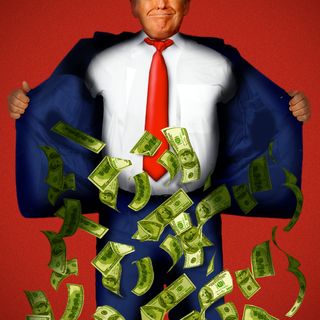
    Donald Trump has established an unprecedented precedent by leveraging his presidency to generate significant personal wealth and shield himself from tax scrutiny. This includes substantial profits from a cryptocurrency venture, which has yielded more in 16 months than his real estate empire did from 2010-2017. The article questions the ethical implications of presidents profiting from government decisions and maintaining active ownership of businesses, suggesting such practices would face low public support if put to a vote. AI

    Trump is cashing in on the presidency like no president ever has
  9. New York Times publisher A.G. Sulzberger makes a direct accusation against Trump: the US president is attacking press freedom and many American newspapers already

    A.G. Sulzberger, the publisher of The New York Times, has directly accused former U.S. President Trump of attacking press freedom. Sulzberger stated that many American newspapers have already yielded to Trump's pressure. This statement was made in the context of ongoing concerns about the relationship between political figures and the media. AI

    New York Times publisher A.G. Sulzberger makes a direct accusation against Trump: the US president is attacking press freedom and many American newspapers already
  10. ‘Obvious markers of AI’: doubts raised over winner of short story prize

    A short story titled "The Serpent in the Grove," which won the Commonwealth Prize for the Caribbean region, is under scrutiny due to suspicions that it was authored by AI. Internet sleuths and literary critics pointed to stylistic tics and an AI detection platform's verdict as evidence, prompting the prize foundation and Granta magazine to investigate. However, both organizations have stated they cannot definitively confirm or deny AI authorship, with Granta's publisher noting that "perhaps we never will know." AI

    ‘Obvious markers of AI’: doubts raised over winner of short story prize

    IMPACT Raises questions about the integrity of creative competitions and the ability to detect AI-generated content in artistic works.

  11. Book on Truth in the Age of A.I. Contains Quotes Made Up by A.I. Steven Rosenbaum, author of “The Future of Truth,” said he had started his own investigation af

    Steven Rosenbaum's new book, "The Future of Truth," reportedly contains over a half-dozen fabricated or misattributed quotes generated by AI. The author began investigating this issue after The New York Times inquired about the inaccuracies. This situation raises questions about the reliability of AI-generated content, particularly in works discussing truth and authenticity. AI

    Book on Truth in the Age of A.I. Contains Quotes Made Up by A.I. Steven Rosenbaum, author of “The Future of Truth,” said he had started his own investigation af

    IMPACT Highlights the potential for AI to generate misinformation, even within works intended to explore the nature of truth.

  12. A Family Feud at an Oregon Winery Turns to Vinegar Over A.I. Slop - NY Times exposes a bitter, Oregon/California family feud over a historic winery. If you’re a

    A legal dispute over a historic Oregon winery escalated when one sibling's lawyers used AI-generated case law, leading to a nearly $110,000 fine. The sister sought to claim her late mother's vineyard from her brothers, but her legal team's reliance on fabricated legal precedents resulted in sanctions. She has since appealed the judge's decision, continuing the contentious family feud. AI

  13. # AI # MedicalAdvice . . . **Doctors, This Is Why Our Patients Are Using ChatGPT** https://www. nytimes.com/2026/05/24/opinion /doctor-ai-chatgpt.html?unlocked_

    A physician author for The New York Times expresses understanding for why patients turn to AI tools like ChatGPT for medical information, even when it frustrates their doctors. The author notes that AI can explain complex conditions in ways that resonate with patients, providing context that may be missing from traditional medical consultations. However, this reliance on AI can lead to challenging interactions with healthcare providers, as exemplified by the author's own experience where AI-generated questions caused their primary care physician to terminate the patient relationship. AI

    IMPACT Patients are increasingly using AI tools like ChatGPT to understand their health, potentially leading to more informed discussions with doctors but also creating friction in the patient-provider relationship.

  14. Steven Rosenbaum, the author of a nonfiction book about the effects of AI on truth, acknowledged yesterday that his book includes numerous made-up or misattribu

    Steven Rosenbaum, author of "The Future of Truth: How AI Reshapes Reality," admitted that his book contains fabricated or misattributed quotes generated by AI. The New York Times uncovered these AI-generated inaccuracies, which ironically highlight the book's central theme about the flaws in AI-assisted research and the ongoing societal risk of inadequate verification. AI

    Steven Rosenbaum, the author of a nonfiction book about the effects of AI on truth, acknowledged yesterday that his book includes numerous made-up or misattribu

    IMPACT This incident highlights the potential for AI to introduce inaccuracies into published works, underscoring the need for rigorous human oversight and fact-checking.

  15. Memorial Day is 161 years old — and its true origin was buried almost immediately

    Memorial Day, observed on the last Monday of May, honors fallen U.S. service members and unofficially marks the start of summer. Its origins trace back to the Civil War, with early observances in places like Waterloo, New York, and Charleston, South Carolina, as early as 1865 and 1866. Over time, concerns arose that the holiday's solemn purpose was being overshadowed by leisure activities and commercialism, a trend amplified when Congress moved it to a three-day weekend in 1971. AI

    Memorial Day is 161 years old — and its true origin was buried almost immediately
  16. American donated US$5,000 to China farmer for tree planting decades ago invited to view forest

    An American man who donated US$5,000 decades ago to a Chinese farmer for tree planting has been invited to visit the forest that grew from that contribution. Yin Yuzhen, recognized for her anti-desertification work in Inner Mongolia, received the donation from Ronald Sakolsky in the late 1990s. Sakolsky, who was teaching in China at the time, was inspired by a media report on Yin's efforts. AI

    American donated US$5,000 to China farmer for tree planting decades ago invited to view forest
  17. US again avoids taking responsibility for Iran school attack that killed 155

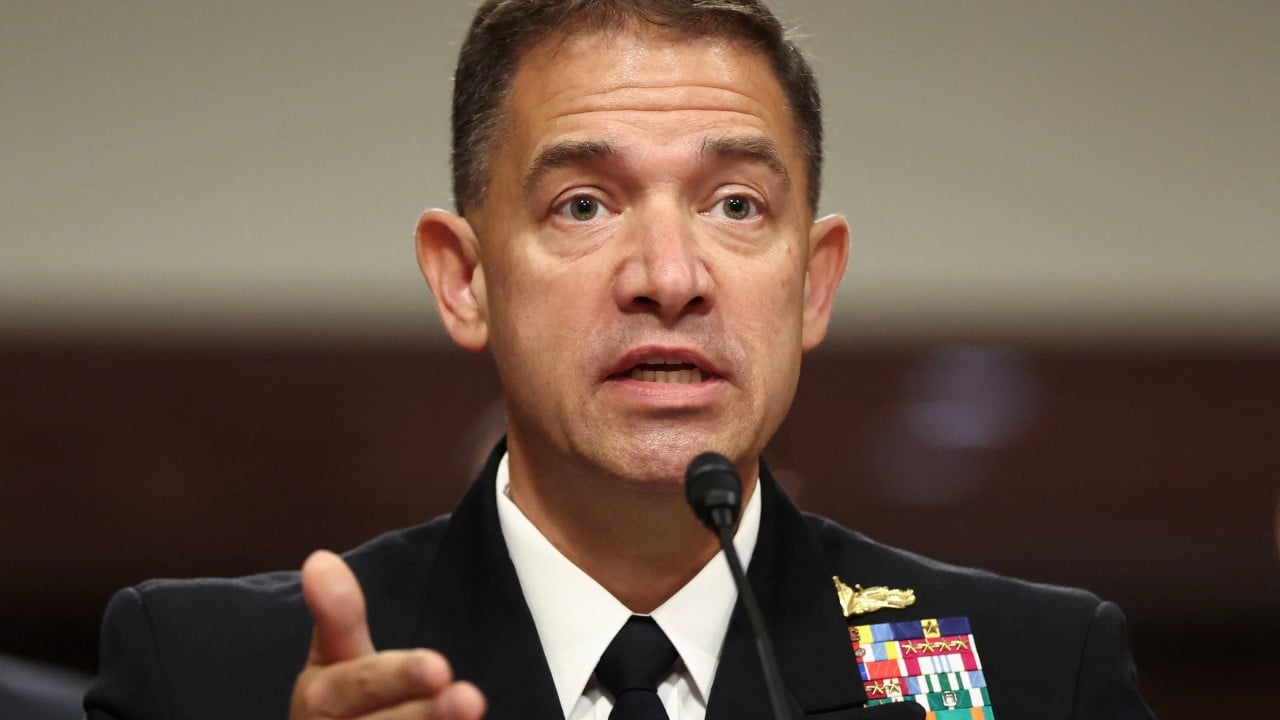
    A US military commander has again sidestepped responsibility for an attack on a school in Iran that resulted in 155 fatalities. Admiral Brad Cooper stated that the school's location on an active missile base complicates the ongoing investigation. Despite reports from The New York Times and CNN suggesting US involvement with a Tomahawk cruise missile, the US has not officially acknowledged culpability. AI

    US again avoids taking responsibility for Iran school attack that killed 155