PulseAugur / Brief
EN
LIVE 05:46:55

Brief

last 24h
[9/9] 221 sources

Multi-source AI news clustered, deduplicated, and scored 0–100 across authority, cluster strength, headline signal, and time decay.

  1. NVIDIA and Google Cloud Empower the Next Wave of AI Builders

    NVIDIA and Google Cloud are expanding their joint developer community, aiming to empower over 100,000 builders with AI tools and learning resources. The initiative focuses on leveraging NVIDIA's AI platform within Google Cloud, offering new learning paths for JAX and inference optimization. Developers can now utilize models like Google DeepMind's Gemma and NVIDIA's Nemotron on Google Cloud infrastructure, including specialized VMs powered by NVIDIA Blackwell GPUs. The partnership also emphasizes responsible AI development through collaboration on technologies like Google DeepMind's SynthID for watermarking AI-generated content. AI
    NVIDIA and Google Cloud Empower the Next Wave of AI Builders

    IMPACT Expands access to AI development tools and infrastructure, potentially accelerating innovation and adoption of AI technologies.

  2. Why AI Security Infrastructure is Now a CMO Priority

    OpenAI is enhancing AI content provenance with new tools like Content Credentials and SynthID. These advancements aim to increase transparency and trust in AI-generated media. The company is developing a verification tool to help users identify AI-created content, contributing to a safer AI ecosystem. AI

    Why AI Security Infrastructure is Now a CMO Priority

    IMPACT Enhances trust and transparency in AI-generated content, potentially impacting media verification and authenticity.

  3. Remove AI Watermarks

    A new open-source tool, `remove-ai-watermarks`, has been released to strip visible and invisible watermarks from AI-generated images. The tool targets watermarks and metadata embedded by major AI image generators including Google Gemini, DALL-E, Stable Diffusion, and Midjourney. It employs techniques like reverse alpha blending for visible logos and diffusion-based regeneration for imperceptible watermarks, alongside metadata stripping and an 'analog humanizer' to bypass AI detection. AI

    Remove AI Watermarks

    IMPACT Enables users to bypass AI detection and "Made with AI" labels on social platforms, potentially impacting content authenticity and platform policies.

  4. Google has expanded SynthID verification to Search, letting users check whether content was AI-generated. The move addresses growing concerns about AI-generated

    Google has integrated its SynthID watermarking technology into Google Search, allowing users to identify AI-generated content. This feature aims to combat the increasing prevalence of synthetic media within search results. The expansion of SynthID to Search is a direct response to user concerns about the authenticity of information. AI

    Google has expanded SynthID verification to Search, letting users check whether content was AI-generated. The move addresses growing concerns about AI-generated

    IMPACT Enhances user trust in search results by providing tools to identify AI-generated content.

  5. Google is trying to make deepfake detection more accessible for everyone https://www. theverge.com/tech/933424/googl e-synthid-c2pa-content-credentials-expansio

    Google has introduced SynthID, a tool designed to embed invisible watermarks into AI-generated images, making them traceable. This technology aims to combat the spread of deepfakes by providing a way to verify the authenticity of digital content. The initiative is part of a broader effort to enhance content credibility and support creators in the evolving digital landscape. AI

    IMPACT Enhances AI content traceability and combats misinformation by embedding invisible watermarks in synthetic media.

  6. The AI Video Race Is Moving Beyond Pretty Clips

    Google has introduced Gemini Omni Flash, a new AI model that accepts diverse inputs like text, photos, and video to generate short video clips with audio. This marks a shift from simple text-to-video generation towards AI acting as a video production assistant, capable of modifying existing media and engaging in conversational guidance for results. The model is integrated into Google's Gemini app, Flow, and YouTube Shorts, with plans for longer video formats beyond the current 10-second limit. Google is also enhancing its AI video capabilities with Veo 3.1 for high-fidelity generation and implementing safety features like SynthID watermarks. AI

    The AI Video Race Is Moving Beyond Pretty Clips

    IMPACT Signals a shift in AI video tools from simple clip generation to comprehensive production assistants, potentially streamlining complex video workflows for creators and businesses.

  7. Find out more ↓ https://t.co/QX1u9Sv3os

    Google DeepMind is expanding its SynthID watermarking technology for AI-generated content to more partners. The company is also integrating new AI detection features into its Gemini app and Google Search. These updates aim to provide users with more tools to identify AI-generated material. AI

    IMPACT Enhances transparency and trust in AI-generated content across Google's ecosystem.

  8. Ask YouTube compiles video answers to your questions

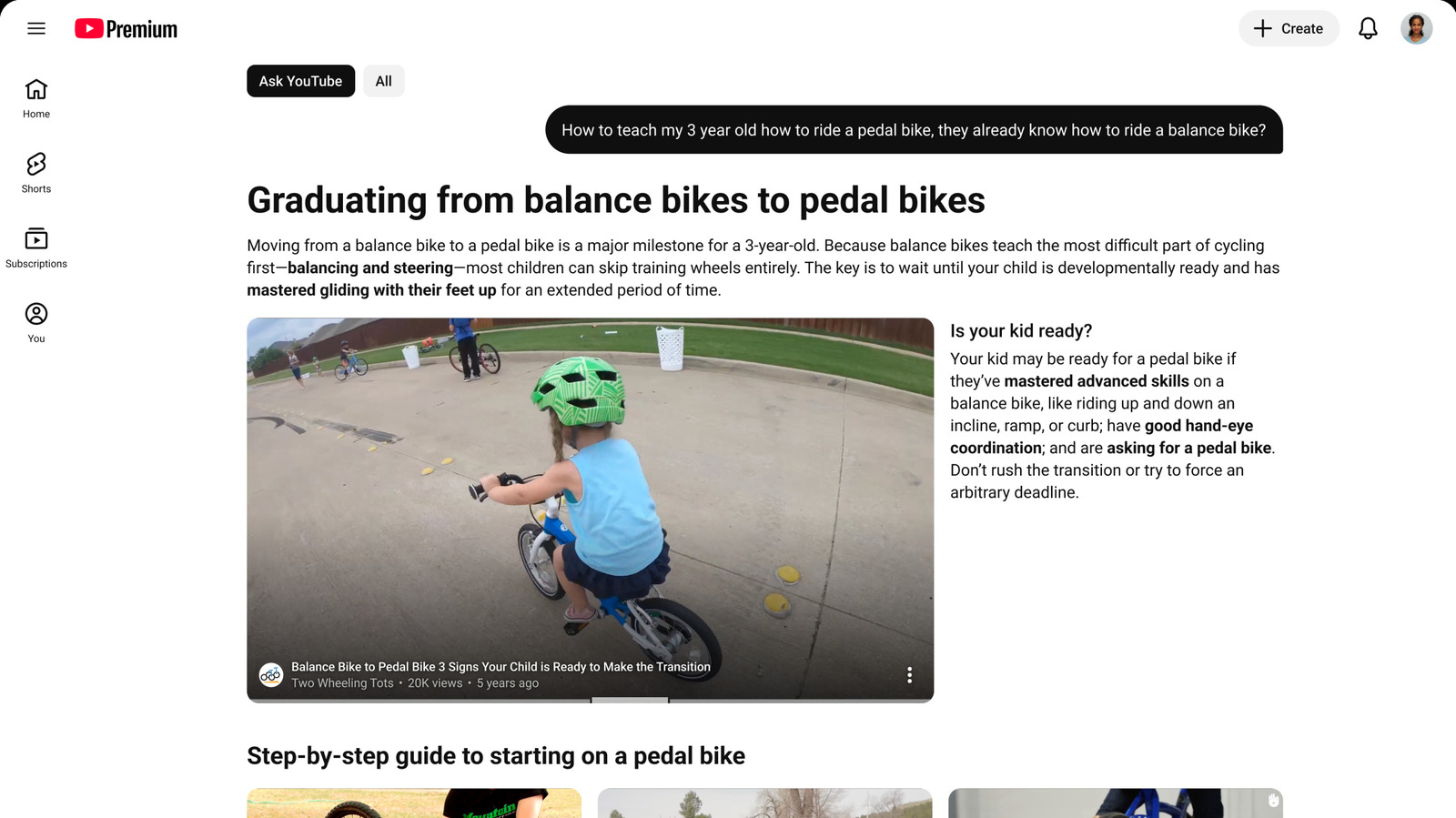
    Google has unveiled Gemini Omni, a new multimodal AI model capable of generating and editing video from diverse inputs like text, images, and audio. This advanced model, which understands physics and real-world knowledge, is being integrated into the Gemini app, YouTube Shorts, and the Flow creative studio. Additionally, Google is enhancing its YouTube platform with an AI-powered conversational search feature called 'Ask YouTube,' which compiles video answers to user queries and offers follow-up questions for refined results. AI

    Ask YouTube compiles video answers to your questions

    IMPACT Sets new benchmarks for multimodal AI, enabling complex video creation and editing directly from diverse inputs.

  9. We’re adding new ways for people to identify AI-generated images and understand where they came from.

    OpenAI is enhancing the traceability of AI-generated images by incorporating new identification methods. Beyond C2PA Content Credentials, images will now include a SynthID watermark. A public verification tool will also be available to help users determine if an image was created using AI. AI

    IMPACT Improves transparency and trust in AI-generated media, aiding content creators and consumers.