PulseAugur / Brief
EN
LIVE 11:41:26

Brief

last 24h
[5/5] 224 sources

Multi-source AI news clustered, deduplicated, and scored 0–100 across authority, cluster strength, headline signal, and time decay.

  1. 36Kr Exclusive | Core material costs reduced to one-fifth of imported materials, electrochromic technology manufacturer receives funding, in-car grade production line under construction

    Zhongke Dianmo, a developer of electrochromic materials, has secured tens of millions of yuan in a Pre-A funding round led by Xi'an Longding Investment. The company's technology offers significant cost reductions, with core materials priced at one-fifth of international equivalents, while also providing superior UV and IR blocking capabilities and faster response times compared to existing solutions. This funding will accelerate the construction of their automotive-grade production line, core material R&D, and market expansion, with large-scale automotive production anticipated by 2027. AI
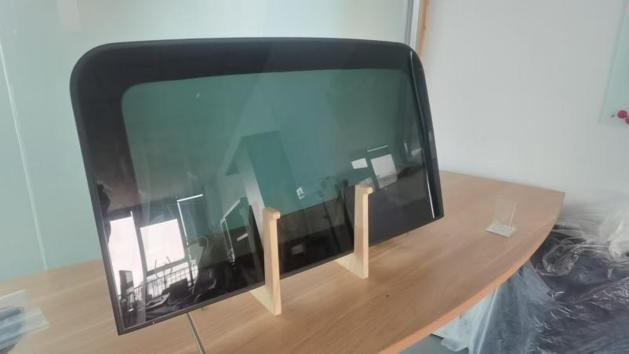
    36Kr Exclusive | Core material costs reduced to one-fifth of imported materials, electrochromic technology manufacturer receives funding, in-car grade production line under construction

    IMPACT This development could accelerate the adoption of smart glass in vehicles, enhancing user experience and energy efficiency.

  2. Beyond Rigid Geometries: The Spline-Pullback Metric for Universal Diffeomorphic SPD Representation Learning

    Researchers have introduced the Spline-Pullback Metric (SPM) to enhance the representation learning capabilities of Symmetric Positive Definite (SPD) matrices in deep learning. Unlike previous methods that used fixed geometries, SPM offers a universal geometric approximation by parameterizing global diffeomorphisms with a rank-invariant B-spline. This approach theoretically subsumes existing pullback metrics and enables localized non-linear spectral modeling while preventing rank-swapping discontinuities and gradient instabilities. SPM has demonstrated state-of-the-art performance on three datasets using various deep learning architectures. AI

    Beyond Rigid Geometries: The Spline-Pullback Metric for Universal Diffeomorphic SPD Representation Learning

    IMPACT Introduces a novel geometric approach for SPD matrix representation learning, potentially improving performance in downstream tasks.

  3. [Linkpost] Interpreting Language Model Parameters

    Researchers have introduced adVersarial Parameter Decomposition (VPD), an improved method for interpreting language model parameters. This new technique builds upon previous work like Stochastic Parameter Decomposition (SPD) and Attribution-based Parameter Decomposition (APD). VPD demonstrates the ability to decompose attention layers, a historically challenging area for interpretability methods, and constructs attribution graphs to visualize model behavior. AI

    [Linkpost] Interpreting Language Model Parameters

    IMPACT Introduces a new method for understanding internal model workings, potentially improving interpretability and trust in LLMs.

  4. An Artifact-based Agent Framework for Adaptive and Reproducible Medical Image Processing

    Researchers have developed a new framework called SPD to improve the accuracy of medical image segmentation using foundation models like SAM. SPD addresses the issue of noisy and imprecise prompts, which are common in clinical settings, by learning anatomical priors and using context from adjacent slices to refine guidance. This approach aims to make foundation models more reliable for clinical diagnosis and monitoring by mimicking expert reasoning and ensuring local anatomical coherence. Experiments on MRI and CT data show SPD outperforms existing methods and supervised baselines. AI

    An Artifact-based Agent Framework for Adaptive and Reproducible Medical Image Processing

    IMPACT Enhances the reliability of foundation models for medical image analysis, potentially improving clinical diagnosis and monitoring.