PulseAugur / Brief
EN
LIVE 03:32:17

Brief

last 24h
[4/4] 224 sources

Multi-source AI news clustered, deduplicated, and scored 0–100 across authority, cluster strength, headline signal, and time decay.

  1. Verge Labs’ # AI model solves patient data problems for # neurology # clinical trial | STAT Verge Genomics is pivoting, after the clinical trial of its # ALS dr

    Verge Labs, formerly Verge Genomics, has developed an AI model aimed at improving patient data analysis for neurological clinical trials. This pivot follows the unsuccessful clinical trial of their ALS drug. The new AI model is designed to address patient stratification challenges within neurology research. AI

    IMPACT This AI model could streamline patient selection and data analysis in neurological clinical trials, potentially accelerating research and drug development.
  2. STaT: Resolving Shape Distortion in Non-Stationary Time Series via Tri-Modal Synergy

    Researchers have introduced STaT, a novel multimodal architecture designed to improve time series forecasting in non-stationary environments. STaT integrates symbolic, temporal, and textual modalities to better capture structural patterns and macroscopic trends, addressing the issue of overly smooth forecasts from existing methods. Evaluations on eight benchmarks show STaT enhances magnitude indicators by up to 8.9% and reduces shape distortion by up to 8.5%. AI

    IMPACT Introduces a new architecture to improve accuracy and reduce shape distortion in time series forecasting.

  3. Patients are getting used to being recorded at the doctor's office. But are doctors comfortable with patients recording them? Katie Palmer addresses several asp

    New applications are emerging to assist patients in documenting their medical appointments. This trend raises questions about physician comfort levels with being recorded by patients, a practice that is becoming more common. The development highlights a growing intersection of patient advocacy and technology in healthcare settings. AI

    IMPACT These tools could improve patient recall and adherence, but also introduce new dynamics in the doctor-patient relationship regarding privacy and consent.

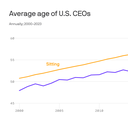
  4. American CEOs are getting older

    The average age of American CEOs has risen to 61, an increase from approximately 51 two decades ago, according to a new working paper. This trend is more pronounced in smaller, privately held companies, while larger corporations tend to promote from within. Researchers suggest that older leaders may be better at navigating economic uncertainty, though they might also manage slower-growing businesses with less radical innovation. AI

    American CEOs are getting older