PulseAugur / Brief
EN
LIVE 21:56:36

Brief

last 24h
[10/10] 221 sources

Multi-source AI news clustered, deduplicated, and scored 0–100 across authority, cluster strength, headline signal, and time decay.

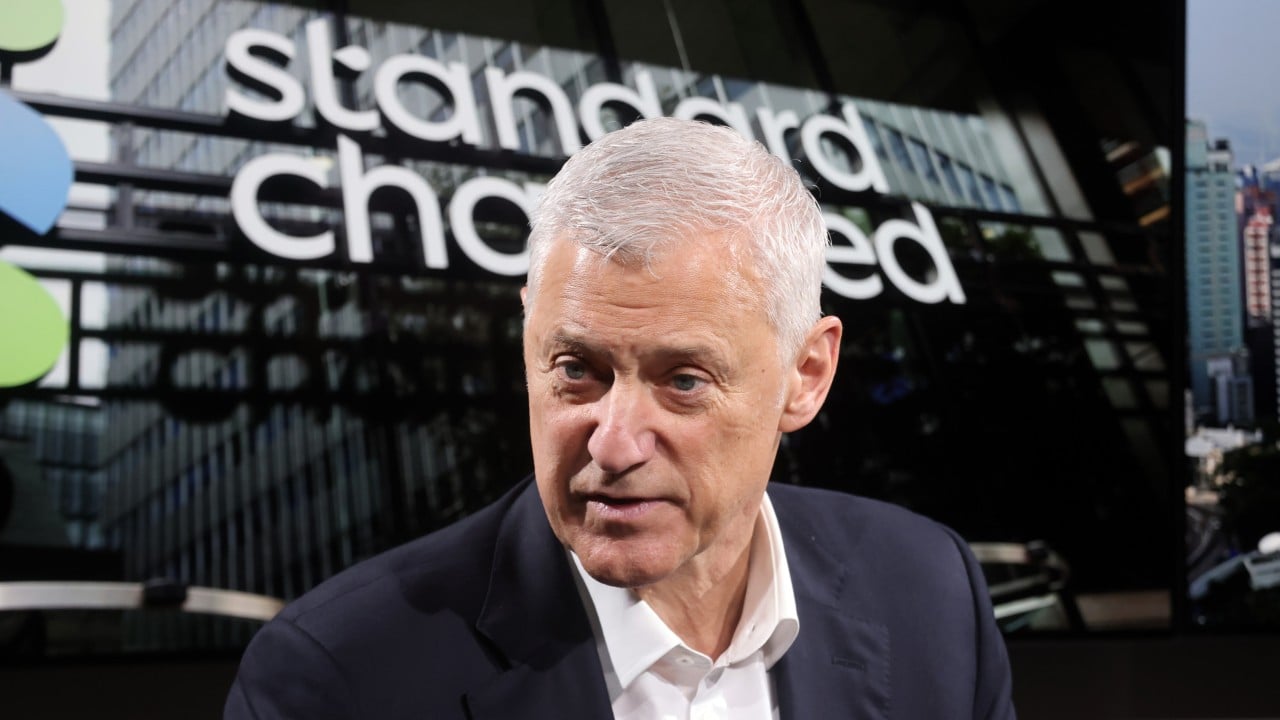
  1. ‘I am sorry’: Standard Chartered CEO Bill Winters apologises for comments over job cuts

    Standard Chartered CEO Bill Winters has apologized for remarks he made about job cuts and the role of AI in replacing staff. Winters referred to some employees as "lower-value human capital" while announcing plans to cut 15% of back-office roles by 2030. He expressed regret for his choice of words, which caused upset among colleagues, and stated his commitment to supporting staff through the industry's rapid changes. AI
    ‘I am sorry’: Standard Chartered CEO Bill Winters apologises for comments over job cuts

    IMPACT Highlights the sensitive communication challenges companies face when discussing AI-driven workforce changes.
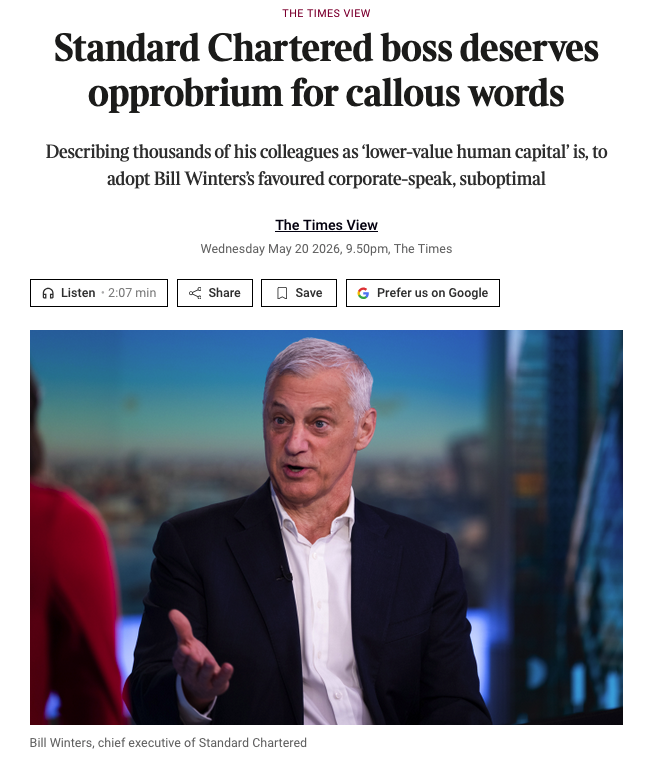
  2. ‘Lower Value Human Capital’ While The Times’ editorials rarely enthuse me, this Shite (referring to Winters not the editorial) captures it all. Just in case any

    The Times published an editorial criticizing Standard Chartered CEO Bill Winters for his remarks about "lower value human capital." The editorial suggests Winters' comments were callous and out of touch, implying a disregard for employees. This commentary highlights a perceived disconnect between corporate leadership and the workforce, particularly in the context of AI's impact on jobs. AI

    ‘Lower Value Human Capital’ While The Times’ editorials rarely enthuse me, this Shite (referring to Winters not the editorial) captures it all. Just in case any

    IMPACT Commentary on corporate attitudes towards human capital in the age of AI.

  3. “lower-value human capital” When CEO’s are just repeating and amplifying the AI brochure that they got on the big tech mega yacht boat trips… # ai # StanChart #

    Standard Chartered CEO Bill Winters stated that AI will not lead to significant job cuts, aiming to reassure employees. He acknowledged that AI will change roles and potentially reduce the need for certain types of labor, but emphasized that the bank is focused on upskilling its workforce. Winters also mentioned that the bank is exploring AI for efficiency gains and to improve customer service. AI

    “lower-value human capital” When CEO’s are just repeating and amplifying the AI brochure that they got on the big tech mega yacht boat trips… # ai # StanChart #

    IMPACT Reassures employees about AI's impact on job security, suggesting a focus on workforce adaptation rather than mass layoffs.

  4. As the world retreats from US Treasuries, will the sell-off deepen?

    Global investors are reducing their holdings of US Treasuries, with China notably trimming its exposure. This trend is driven by rising inflation, which has pushed Treasury yields to historic highs not seen since 2007. While some nations like Japan have decreased their stakes, others such as Britain and Ireland have slightly increased theirs, indicating a complex and cautious global capital flow. AI

    As the world retreats from US Treasuries, will the sell-off deepen?
  5. When Capital Aggregation Distorts Markets: The Case For Structural Reform Through Tokenization

    The current financial system, characterized by massive capital aggregation in the hands of a few institutional investors like BlackRock and Vanguard, distorts market competition and governance. These firms hold significant stakes across competing companies, and the rise of passive investing means capital flows are dictated by index inclusion rather than fundamental value. The author proposes tokenization as a solution, enabling fractional ownership without pooling and allowing investors to retain direct claims on assets, thereby reforming market structures. AI

    When Capital Aggregation Distorts Markets: The Case For Structural Reform Through Tokenization
  6. Standard Chartered plans to cut over 7,000 jobs in the next four years, accelerating AI adoption

    Standard Chartered announced plans to eliminate over 7,000 corporate roles by 2030, representing about 15% of its corporate functions staff. The bank's CEO, Bill Winters, stated that the move is driven by the adoption of artificial intelligence and automation, aiming to replace what he termed 'lower-value human capital' with financial and investment capital. This decision has sparked debate and criticism, particularly regarding the CEO's phrasing, leading to an apology from Winters for the upset caused, though he maintained the necessity of adapting to technological change. AI

    IMPACT Accelerates the trend of AI-driven job displacement in the financial sector, prompting debate on the ethical implications of automation.

  7. Standard Chartered CEO walks back comment about 'lower-value human capital'

    Standard Chartered CEO Bill Winters has retracted his statement suggesting that AI could replace "lower-value human capital." He clarified that his intention was to discuss the potential for AI to augment human capabilities and improve efficiency within the banking sector, rather than to advocate for job displacement. AI

    IMPACT This incident highlights the ongoing discussion and sensitivity around AI's potential impact on employment within traditional industries.

  8. ‘AI washing’: firms are scrambling to rebrand themselves as tech-focused

    Public relations professionals report that numerous UK companies are attempting to rebrand themselves as AI specialists, even when their operations involve basic automation rather than advanced artificial intelligence. This trend, termed 'AI washing,' involves exaggerating the use of AI to capitalize on the technology's popularity and secure media attention. Executives are reportedly frustrated by the pressure to pitch tenuous AI links, leading to a general skepticism among journalists towards such claims. AI

    ‘AI washing’: firms are scrambling to rebrand themselves as tech-focused

    IMPACT Companies are exaggerating AI use to appear cutting-edge, potentially misleading consumers and investors about their technological capabilities.

  9. 📰 StanChart To Cut Over 7,000 Jobs, Boost AI To Replace 'Lower-Value Human Capital' The London-headquartered lender Standard Chartered announced plans to cut mo

    Standard Chartered plans to eliminate over 7,000 jobs as part of its increased adoption of artificial intelligence. The bank intends to reduce roles primarily in back-office functions. Some affected employees may be transitioned to new positions within the company. AI

    📰 StanChart To Cut Over 7,000 Jobs, Boost AI To Replace 'Lower-Value Human Capital' The London-headquartered lender Standard Chartered announced plans to cut mo

    IMPACT Companies may leverage AI to optimize operations and reduce headcount, impacting the job market.

  10. StanChart CEO apologizes over ‘lower-value human capital’ comment CEOs from JPMorgan Chase, HSBC and Barclays added their takes to polarizing remarks by StanCha

    Standard Chartered CEO Bill Winters has apologized for referring to some employees as "lower-value human capital" while explaining the bank's increasing adoption of AI. This comment, made in the context of the bank's decision to cut 15% of its back-office staff, has drawn reactions from leaders at JPMorgan Chase, HSBC, and Barclays. The situation highlights a broader trend of AI-driven automation impacting routine functions within the financial sector, altering cost structures and productivity. AI

    IMPACT AI adoption in finance is leading to workforce restructuring and controversial employee classifications.