James Webb telescope spots supermassive black hole that formed before its galaxy
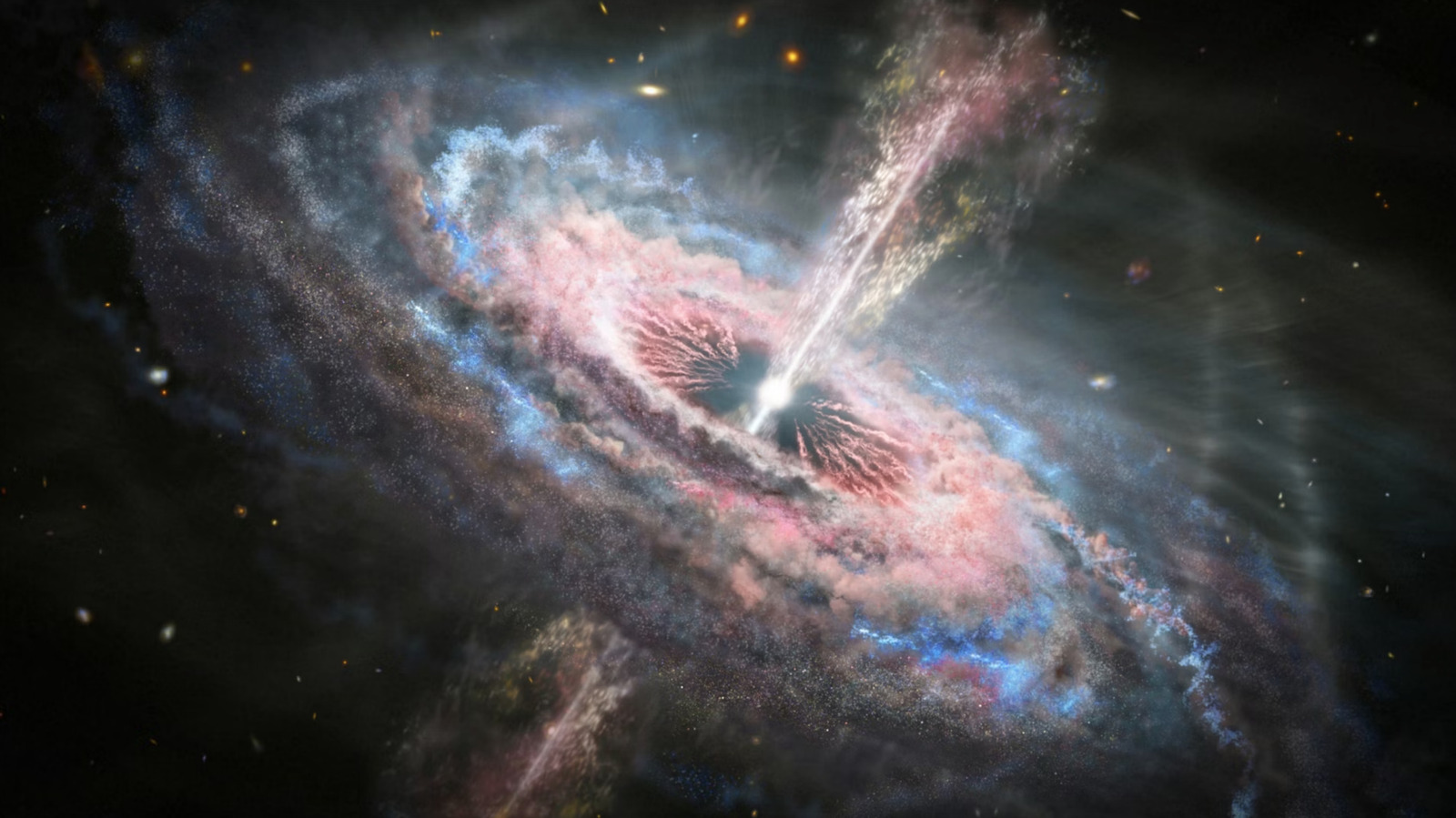
The James Webb Space Telescope has detected a supermassive black hole, designated Abell2744-QSO1, which appears to have formed within the first 700 million years after the Big Bang. This discovery challenges existing theories of black hole formation, suggesting they may not require a galaxy to form and grow. The black hole's mass was directly measured using the Keplerian rotation of its surrounding gas, indicating it is approximately 40 million times the mass of our sun and predates its host galaxy. AI
IMPACT Challenges established astrophysical models for black hole formation and growth, potentially requiring new theoretical frameworks.