PulseAugur / Brief
EN
LIVE 05:45:13

Brief

last 24h
[11/11] 221 sources

Multi-source AI news clustered, deduplicated, and scored 0–100 across authority, cluster strength, headline signal, and time decay.

  1. Huawei claims sanctions-busting breakthrough with 1.4nm-class chips by 2031, claims 55% higher transistor density — firm claims new LogicFolding chip architecture can bypass EUV restrictions, introduces 'Tau Scaling Law' to replace Moore's Law

    Huawei has announced a new chip architecture called 'LogicFolding' that aims to bypass US sanctions and achieve '1.4nm-class' transistor density by 2031. This new design, based on a 'Tau Scaling Law' that prioritizes signal speed over component size, allows for stacked logic circuits to increase transistor density by 55%. The technology is expected to debut in upcoming Kirin smartphone processors and later be applied to AI and data center chips, potentially offering alternatives to restricted foreign hardware. AI
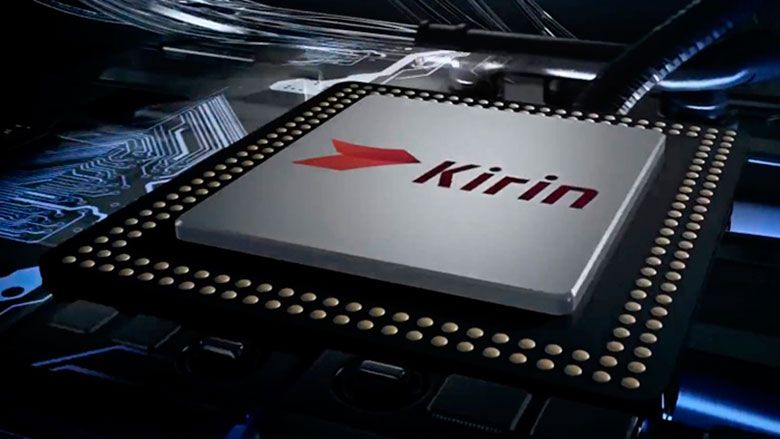
    Huawei claims sanctions-busting breakthrough with 1.4nm-class chips by 2031, claims 55% higher transistor density — firm claims new LogicFolding chip architecture can bypass EUV restrictions, introduces 'Tau Scaling Law' to replace Moore's Law

    IMPACT This development could provide China with domestic alternatives for AI and data center chips, potentially impacting global supply chains and competition.
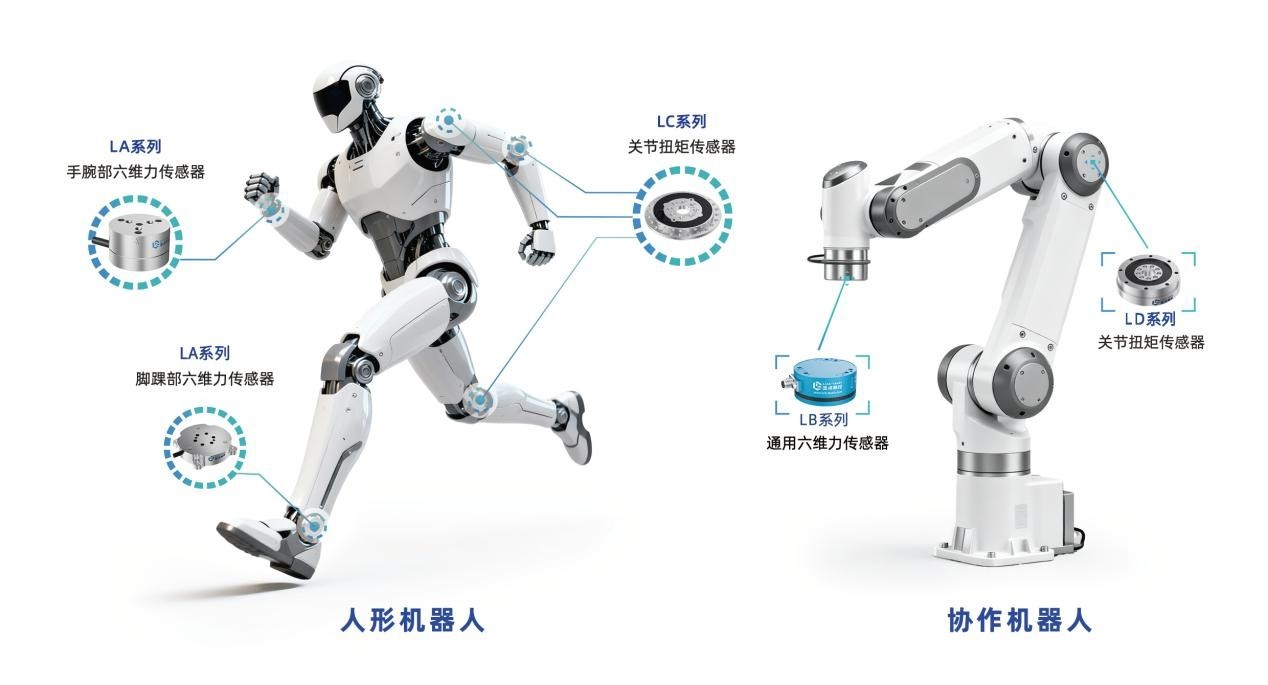
  2. Robot force sensor leader receives hundreds of millions in new financing, SAIC, SMIC, and others are early investors

    Blue Dot Touch Control, a leading provider of six-axis force sensors for robots, has secured hundreds of millions of RMB in its C++ funding round. The investment was led by SAIC Financial Holdings and Shangqi Capital, with participation from SMIC Juyuan, Zhengda Robotics, and Houwei Capital. This funding will accelerate new product development, enhance intelligent manufacturing capabilities, and support global market expansion. AI

    Robot force sensor leader receives hundreds of millions in new financing, SAIC, SMIC, and others are early investors

    IMPACT Accelerates the development and deployment of more sophisticated robotic systems by providing critical force-sensing components.

  3. SMIC: The matter of issuing shares to purchase 49% equity of SMIC Northern has obtained the approval and registration reply from the China Securities Regulatory Commission.

    SMIC has received approval from the China Securities Regulatory Commission (CSRC) to issue shares to acquire a 49% stake in SMIC Northern Integrated Circuit Manufacturing (Beijing) Co., Ltd. This approval is valid for 12 months and allows SMIC to proceed with the share issuance to five entities, including the National Integrated Circuit Industry Investment Fund. The move is part of SMIC's strategy to consolidate its ownership in key subsidiaries. AI

    IMPACT This acquisition could bolster SMIC's capacity in advanced semiconductor manufacturing, potentially impacting the supply chain for AI hardware.

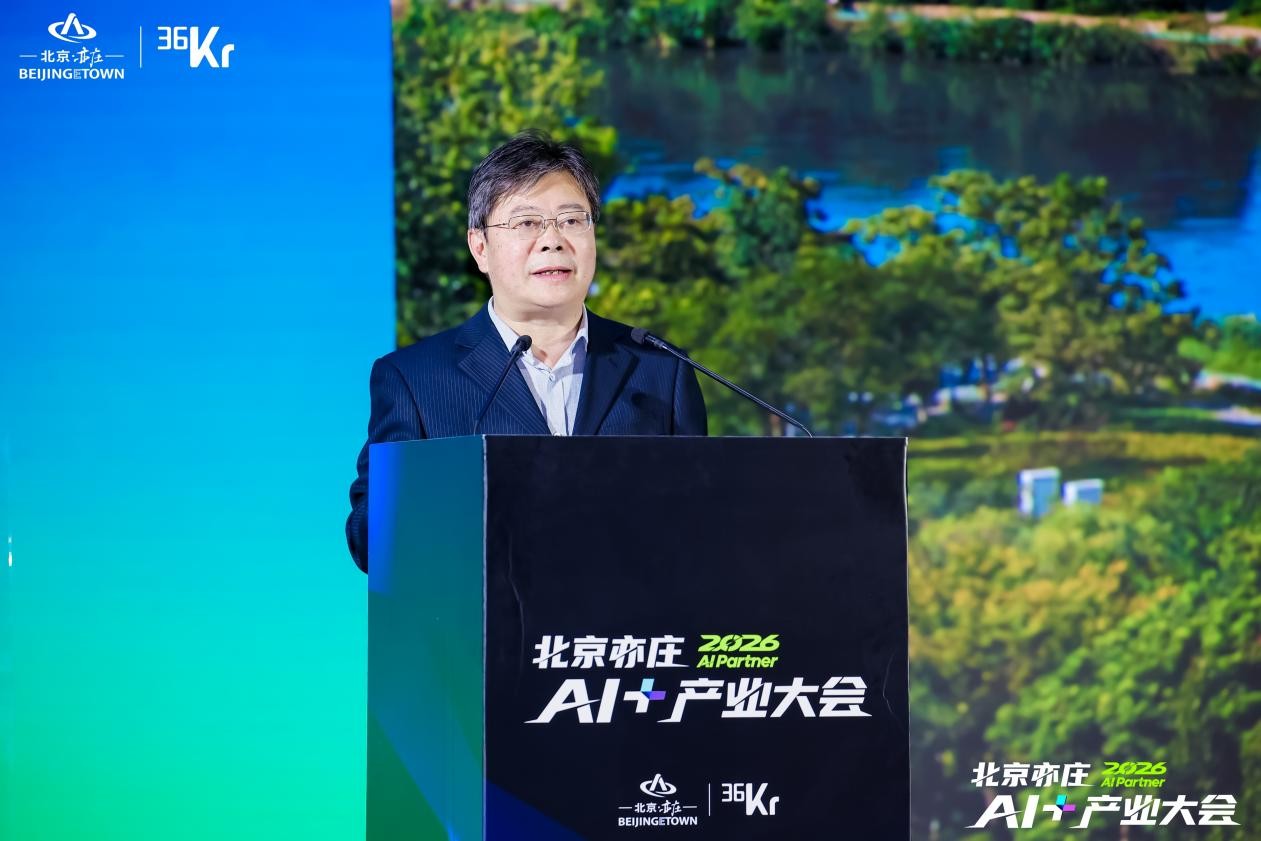
  4. Opening Speech: Building a "City of All-Domain Artificial Intelligence" | 2026 AI Partner Beijing Yizhuang AI+ Industry Conference

    Beijing's Yizhuang economic development zone is aiming to become a comprehensive AI city, focusing on practical applications across industries rather than just consumer-facing technologies. The area has already attracted over 600 AI companies and is developing a robust ecosystem that includes significant computing power, industry integration, and open urban scenarios for AI testing and deployment. Yizhuang offers substantial resources and incentives to foster AI innovation, with a goal to become a leading hub for AI technology, industry, and application by 2027. AI

    Opening Speech: Building a "City of All-Domain Artificial Intelligence" | 2026 AI Partner Beijing Yizhuang AI+ Industry Conference

    IMPACT Positions a major economic zone as a dedicated AI ecosystem, potentially accelerating industrial AI adoption and innovation.

  5. DeepSeek V4 on Huawei's Ascend 950: A Real Stress Test for China's AI Chip Ecosystem

    DeepSeek's V4 model has successfully validated inference on Huawei's Ascend 950 chip, marking a significant step for China's domestic AI hardware. This validation required substantial engineering effort, including rewriting numerous CUDA operators and extensive testing, to achieve performance parity with NVIDIA's offerings for inference workloads within China. The Ascend 950 features a unique dual-architecture design with high-bandwidth memory to address both compute-bound and memory-bound phases of LLM operations, though its widespread adoption is hindered by manufacturing capacity limitations. AI

    DeepSeek V4 on Huawei's Ascend 950: A Real Stress Test for China's AI Chip Ecosystem

    IMPACT Validates domestic AI hardware for inference, potentially reducing reliance on foreign suppliers within China.

  6. By the end of 2030, the resource utilization rate of domestic waste in cities nationwide will strive to exceed 76%.

    China aims to achieve a resource utilization rate of over 76% for urban domestic waste by the end of 2030, according to the Ministry of Housing and Urban-Rural Development. In financial news, major funds saw inflows into sectors like electronics and public utilities, with notable individual stock movements including significant net inflows for Cambricon, Huatian Technology, and SMIC. Separately, Google's CEO acknowledged the company's lag in coding capabilities. AI

    IMPACT Google CEO's admission of coding lag is a commentary on AI development.

  7. Russia's Sberbank wants Chinese chips for its GigaChat AI in the face of Western sanctions — faces a long wait behind ByteDance and Alibaba

    Russia's Sberbank is seeking Chinese-made processors to power its GigaChat AI model due to Western sanctions. Sberbank CEO German Gref indicated interest in Huawei's Ascend 950 chips, but faces significant competition from China's own tech giants like ByteDance and Alibaba. Huawei's production capacity is strained, with long lead times and massive existing orders, making it difficult for Sberbank to secure the necessary hardware. AI

    Russia's Sberbank wants Chinese chips for its GigaChat AI in the face of Western sanctions — faces a long wait behind ByteDance and Alibaba

    IMPACT Highlights the impact of sanctions and supply chain constraints on AI development for non-Western entities.

  8. SMIC founder and AMEC CEO urge Chinese fabs to test domestic chipmaking tools on active production lines — equipment makers post record revenue but falling margins

    SMIC founder Richard Chang and AMEC CEO Gerald Yin are urging Chinese semiconductor manufacturers to test domestic chipmaking equipment on their active production lines. This call comes as Chinese equipment vendors achieved record revenues in 2025, but are experiencing declining profit margins due to intense domestic price competition. While localization has advanced in mature-node tools, lithography remains a significant bottleneck with no immediate domestic solution, all under tightening U.S. export controls. AI

    SMIC founder and AMEC CEO urge Chinese fabs to test domestic chipmaking tools on active production lines — equipment makers post record revenue but falling margins

    IMPACT Accelerates domestic AI hardware development by pushing for wider adoption of Chinese semiconductor manufacturing tools.

  9. Central bank conducts 50 billion yuan 7-day reverse repurchase operation in open market

    The People's Bank of China conducted a 7-day reverse repurchase operation, injecting 153 billion yuan into the market at a rate of 1.40%. This operation's rate remained unchanged from previous instances. The stock market saw mixed performance, with the Hang Seng Index opening up 1.01% and the Hang Seng Tech Index rising 1.57%, led by semiconductor and software sectors, while other sectors experienced declines. AI

    IMPACT Monetary policy adjustments can influence overall market liquidity, indirectly affecting investment in technology sectors including AI.

  10. A-share three major indices collectively rose at midday break, communication equipment sector led the gains

    Chinese stock markets saw major indices rise, with the semiconductor and communication equipment sectors leading the gains. Specific companies like SMIC and China Star Optoelectronics experienced significant increases. The market also saw regulatory approval for several mergers and acquisitions, including those involving automotive and mining companies. Separately, there was a mention of Google's CEO acknowledging a lag in coding capabilities. AI

    IMPACT While the cluster mentions Google's CEO acknowledging coding lag, the primary focus is on financial markets and M&A, with minimal direct impact on AI operations.

  11. Half-day main funds increased positions in electronics stocks, sold off non-bank financial stocks

    Major capital inflows were directed towards the electronics sector in the morning trading session, with specific stocks like Cambricon, Huatian Technology, and SMIC seeing significant investment. Conversely, the power equipment and basic chemicals sectors experienced outflows. In broader market movements, major stock indices saw gains, with semiconductors and coal sectors leading the charge, while lithium battery electrolytes and oil & gas sectors declined. AI

    IMPACT Capital flows into AI-related companies like Cambricon and SMIC may indicate investor confidence in the semiconductor sector.