PulseAugur / Brief
EN
LIVE 15:02:29

Brief

last 24h
[2/2] 222 sources

Multi-source AI news clustered, deduplicated, and scored 0–100 across authority, cluster strength, headline signal, and time decay.

  1. SHERLOCK: Towards Dynamic Knowledge Adaptation in LLM-enhanced E-commerce Risk Management

    Researchers have developed SHERLOCK, a new framework designed to enhance e-commerce risk management by integrating Large Language Models (LLMs) with structured domain knowledge. The system addresses the limitations of LLMs in handling complex fraud patterns and sparse domain knowledge through a three-module approach. It constructs a knowledge base, employs a specialized retrieval-augmented generation strategy, and includes a self-evolving platform for continuous improvement. Initial tests at JD.com showed significant improvements in investigation efficiency and the system's ability to adapt to evolving adversarial tactics. AI

    IMPACT Introduces a novel framework for dynamic knowledge adaptation in LLMs, potentially improving AI applications in specialized domains like fraud detection.
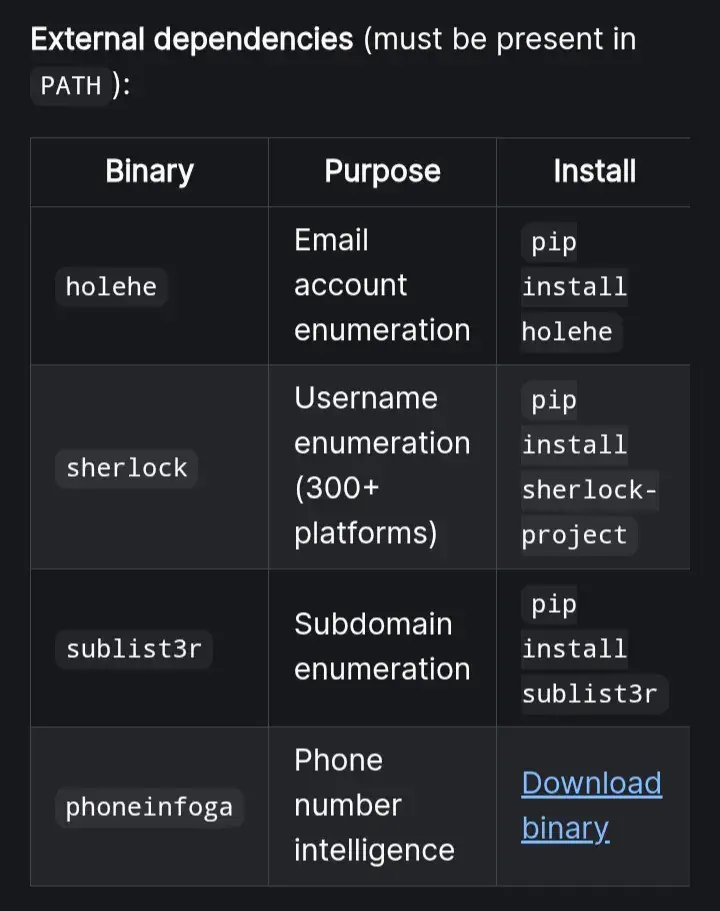
  2. OpenOSINT doesn't reinvent the wheel. It stands on the shoulders of the best open source tools already out there — holehe, sherlock, sublist3r, phoneinfoga — an

    OpenOSINT is a new open-source project that integrates existing OSINT tools like holehe, sherlock, sublist3r, and phoneinfoga. It aims to provide a unified interface for these tools, making them accessible through Claude's MCP (Multi-modal Conversational Processing) capabilities for autonomous use. AI

    OpenOSINT doesn't reinvent the wheel. It stands on the shoulders of the best open source tools already out there — holehe, sherlock, sublist3r, phoneinfoga — an

    IMPACT Provides a unified interface for OSINT tools, enabling autonomous use with conversational AI like Claude.