PulseAugur / Brief
EN
LIVE 05:52:15

Brief

last 24h
[9/9] 221 sources

Multi-source AI news clustered, deduplicated, and scored 0–100 across authority, cluster strength, headline signal, and time decay.

  1. From Chaos to Order: The Data Supply Revolution and Skill Structuring Practice of Embodied Intelligence | 2026AI Partner · Beijing Yizhuang AI+ Industry Conference

    The physical world presents unique data challenges for embodied AI, requiring a focus on quality over quantity, unlike large language models. Zhiyu Jishi has developed a five-layer data compilation pipeline to standardize and industrialize data for robots. This pipeline ensures high-quality data flows through an ecosystem involving hardware manufacturers, model developers, and industry partners, enabling the large-scale deployment of embodied AI. AI
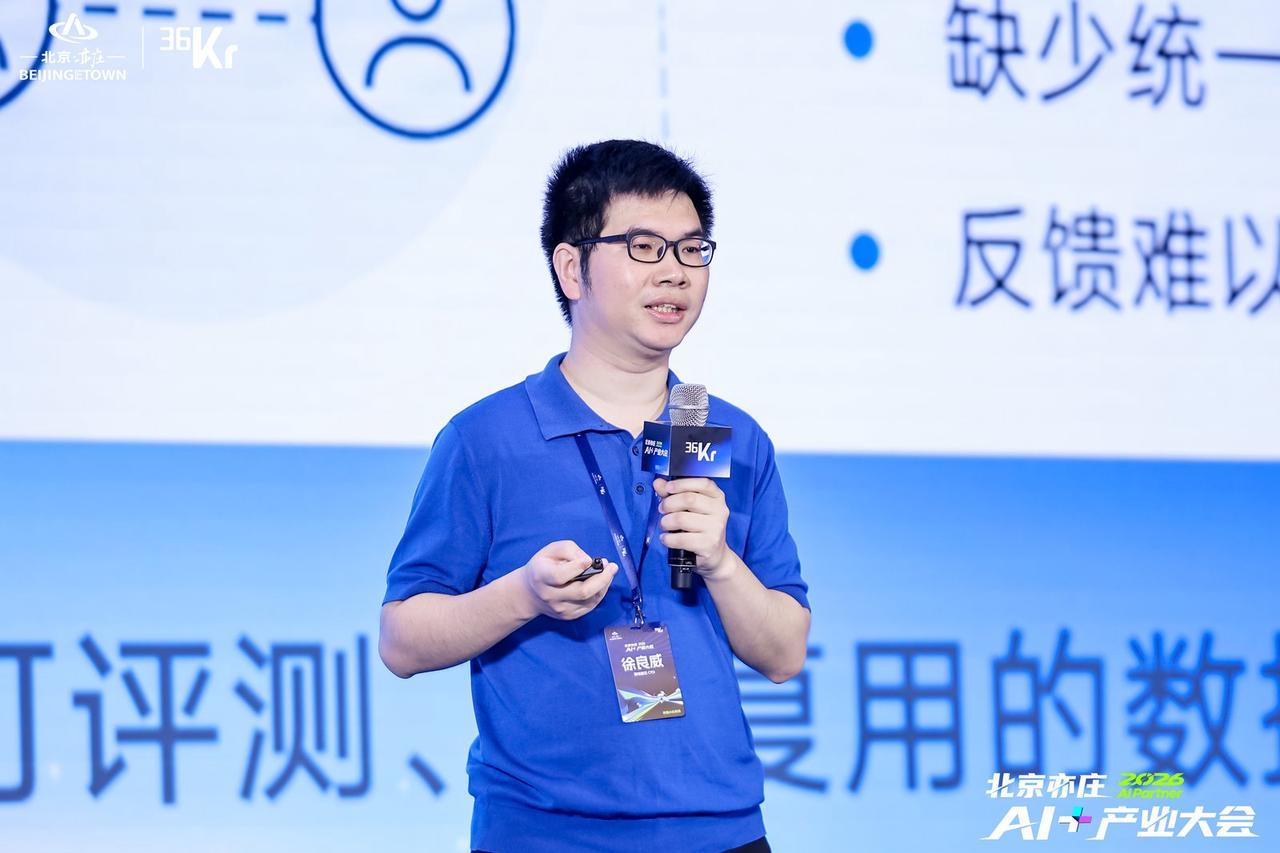
    From Chaos to Order: The Data Supply Revolution and Skill Structuring Practice of Embodied Intelligence | 2026AI Partner · Beijing Yizhuang AI+ Industry Conference

    IMPACT Establishes a framework for high-quality data collection and processing, crucial for the practical deployment and advancement of embodied AI systems.

  2. Faraday Future obtains $25M to ship 1,500 robots by year's end. Via @therobotreport #AI #ArtificialIntelligence 💻 🤖 🧠 #EVs #ElectricCars #ElectricVehicles #EV #

    Faraday Future has secured $25 million in funding to produce and deliver 1,500 robots by the end of the year. This funding is intended to support the manufacturing and shipment of these robots. The company is also involved in the electric vehicle sector. AI

    IMPACT Accelerates deployment of robotics, potentially impacting logistics and manufacturing sectors.

  3. Robots at MIT are learning new skills faster than before. This is a big step from robots that could only do fixed tasks. # Robotics , # MIT , # AI , # LifelongL

    Researchers at MIT have developed a new method for robots to learn physical tasks more efficiently, similar to how humans acquire new skills. By leveraging large language models (LLMs), these robots can bridge the gap between language instructions and physical actions, enabling them to adapt to new tasks without requiring complete retraining. This advancement moves beyond robots that were previously limited to performing only pre-programmed, fixed tasks. AI

    IMPACT Enables robots to acquire new physical skills more rapidly and adapt to novel tasks, potentially accelerating automation in dynamic environments.

  4. Figure AI had a livestream of their robots sorting packages 24/7 for 8 days straight. These aren't staged demos anymore.

    Figure AI has demonstrated its humanoid robots performing continuous package sorting for eight days straight, moving beyond staged demonstrations. This extended livestream showcased the robots' ability to operate reliably over a prolonged period. The company's progress suggests a significant step towards practical, real-world applications for humanoid robotics. AI

    Figure AI had a livestream of their robots sorting packages 24/7 for 8 days straight. These aren't staged demos anymore.

    IMPACT Demonstrates significant progress in reliable, long-duration operation for humanoid robots in practical tasks.

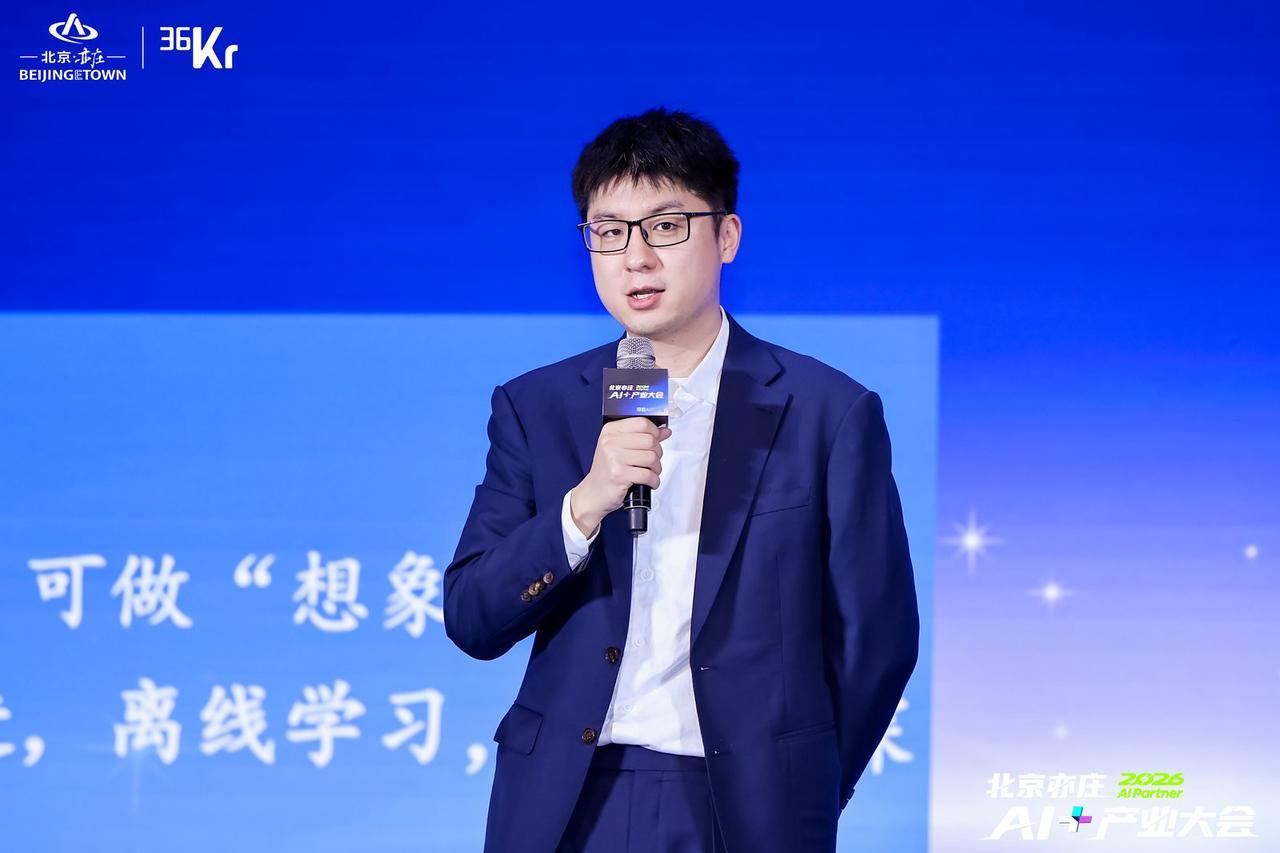
  5. City-level AI Services: From Pilot to Normalization, Real-world Combat and Large-scale Deployment of Robots | 2026AI Partner·Beijing Yizhuang AI+ Industry Conference

    Kuaiwei Technology is deploying robots in over 50 cities, focusing on practical applications like sanitation and delivery to generate data for evolving their embodied AI models. The company utilizes a "fight to fund fight" strategy, where operational robots gather real-world data to improve their World-Action Interactive Model (WAIM). This model enables robots to perform complex tasks in diverse urban environments, from street cleaning to last-mile delivery, with the goal of achieving large-scale deployment. AI

    City-level AI Services: From Pilot to Normalization, Real-world Combat and Large-scale Deployment of Robots | 2026AI Partner·Beijing Yizhuang AI+ Industry Conference

    IMPACT Accelerates the collection of real-world data for embodied AI, potentially speeding up the development and deployment of autonomous systems in urban environments.

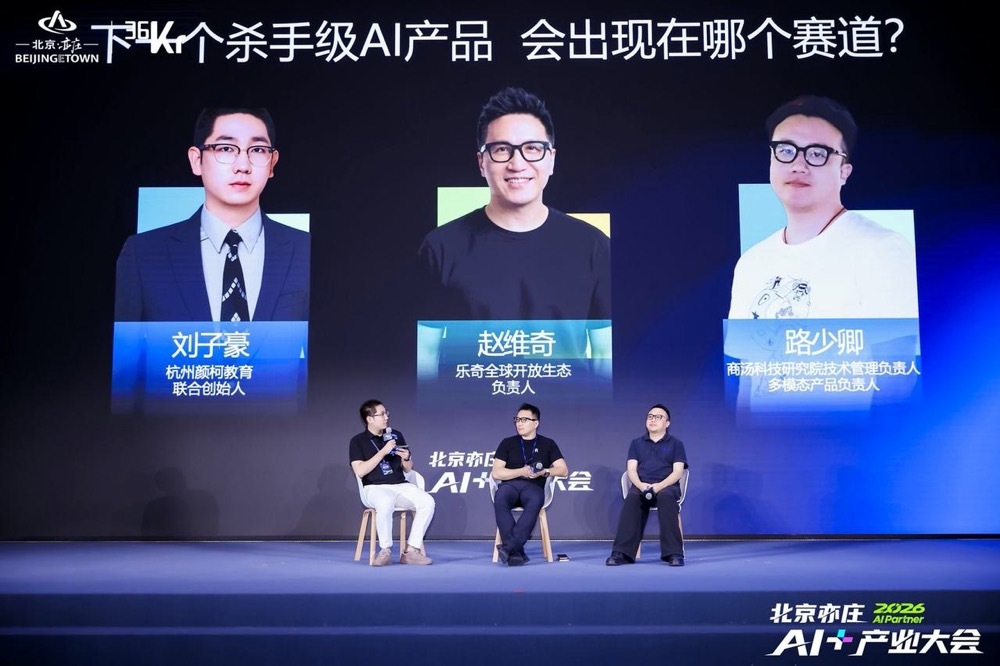
  6. Roundtable Dialogue: Which Track Will the Next Killer AI Product Appear On? | 2026AI Partner Beijing Yizhuang AI+ Industry Conference

    Industry leaders discussed the future of AI products, converging on the idea that truly impactful applications will go beyond simple model wrappers. The consensus is that the next generation of AI products will be long-term, connected to the physical world, and capable of closing interaction loops. This points towards a future where AI is integrated into wearable hardware like AI glasses or embodied in robots, acting as intelligent agents that assist users in real-world tasks. AI

    Roundtable Dialogue: Which Track Will the Next Killer AI Product Appear On? | 2026AI Partner Beijing Yizhuang AI+ Industry Conference

    IMPACT Experts predict future AI products will integrate deeply with the physical world via wearables and agents, moving beyond simple chatbots.

  7. 4D Radar Semantic Segmentation of People in Field Conditions Using Temporal Multi-View Networks

    Researchers have developed a new artificial neural network architecture called TMVA4D, designed for semantic segmentation using 4D radar data. This system is intended to improve the reliability of people detection for autonomous vehicles and robots, particularly in challenging environmental conditions where traditional sensors like cameras and lidars may fail. The TMVA4D models leverage CNN and ConvLSTM encoders to process 4D radar point clouds, including Doppler velocity, and have shown promising results in distinguishing people from background noise, even in low-visibility scenarios. AI

    IMPACT Enhances robot and autonomous vehicle perception in adverse conditions, potentially improving safety and operational uptime.

  8. Robots at Singapore’s AI zone to clean, patrol and deliver goods

    Singapore is positioning itself as a hub for "physical AI" by piloting various robots for tasks like cleaning, patrolling, and delivery. Companies such as Grab are testing autonomous vehicles to address labor shortages and improve last-mile logistics in the city-state. This initiative aims to integrate robots with human workers, enhancing data collection and operational efficiency. AI

    Robots at Singapore’s AI zone to clean, patrol and deliver goods

    IMPACT Accelerates the integration of robotics into urban logistics and services, addressing labor shortages and optimizing last-mile delivery.

  9. Autonomous Frontier-Based Exploration with VLM Guidance

    Researchers have developed a new method for autonomous robot exploration that uses Vision-Language Models (VLMs) for high-level decision-making. The VLM analyzes multimodal prompts, including maps and visual data of potential paths, to select the most promising exploration frontiers. This approach, tested in simulations across six environments, enhances map coverage by up to 24% compared to existing methods. The pipeline is designed to be lightweight, require no additional training, and be easily adaptable to robots with standard sensors and internet connectivity. AI

    IMPACT Enhances robot navigation and mapping capabilities, potentially leading to more efficient exploration in unknown environments.