PulseAugur / Brief
EN
LIVE 16:18:06

Brief

last 24h
[5/5] 224 sources

Multi-source AI news clustered, deduplicated, and scored 0–100 across authority, cluster strength, headline signal, and time decay.

  1. Will it take a ‘Chernobyl-scale disaster’ for us to regulate cyber weapons of mass destruction? | Stuart Russell

    Anthropic has published findings on recursive self-improvement (RSI) in AI, warning of potential loss of human control and suggesting a pause in frontier AI development. Concurrently, the White House has implemented export controls on Anthropic's new frontier models, Fable 5 and Mythos 5, banning foreign access and leading Anthropic to shut down the models. These events highlight growing concerns about AI capabilities, particularly in developing autonomous cyberattack systems, and underscore the urgent need for robust regulation, drawing parallels to safety standards in other high-risk industries. AI

    Will it take a ‘Chernobyl-scale disaster’ for us to regulate cyber weapons of mass destruction? | Stuart Russell

    IMPACT Heightened regulatory scrutiny and potential development pauses for frontier AI models due to safety concerns, particularly regarding autonomous cyberattack capabilities.

  2. I Built a Telegram Bot That Tells Me When My Stocks Are “Cheap” — Built on 50-Year-Old Math

    A developer has created a Telegram bot named Stocker that monitors stock market indicators to alert users when assets are potentially undervalued. The bot utilizes a combination of Bollinger Bands, Relative Strength Index (RSI), a Bandwidth Squeeze detector, and a 200-day Simple Moving Average (SMA) trend filter. These indicators, rooted in financial mathematics from the 1970s and 1980s, are designed to identify actionable changes in an asset's state rather than minor price fluctuations. The bot is configured to run on a personal computer without requiring servers or special permissions. AI

    I Built a Telegram Bot That Tells Me When My Stocks Are “Cheap” — Built on 50-Year-Old Math

    IMPACT Provides a practical example of how technical indicators can be automated for personal financial monitoring.

  3. 6thGrid-Net: Unified Remote Sensing Image Dehazing Based on Color Restoration and Edge-Preserving

    Researchers have developed SARU, a novel framework for remote sensing images that addresses the challenges of shadow detection and removal. Unlike previous methods that treated these as separate tasks, SARU integrates them into a cohesive two-stage process. This framework utilizes a dual-branch detection module to generate accurate shadow masks and a training-free algorithm to restore illumination, eliminating the need for paired training data. SARU also introduces new benchmark datasets, RSISD and SiSRB, and achieves state-of-the-art performance on existing and new benchmarks. AI

    6thGrid-Net: Unified Remote Sensing Image Dehazing Based on Color Restoration and Edge-Preserving

    IMPACT Improves remote sensing image analysis by unifying shadow detection and removal, potentially enhancing downstream applications like object detection.

  4. The Most Important Charts In The World

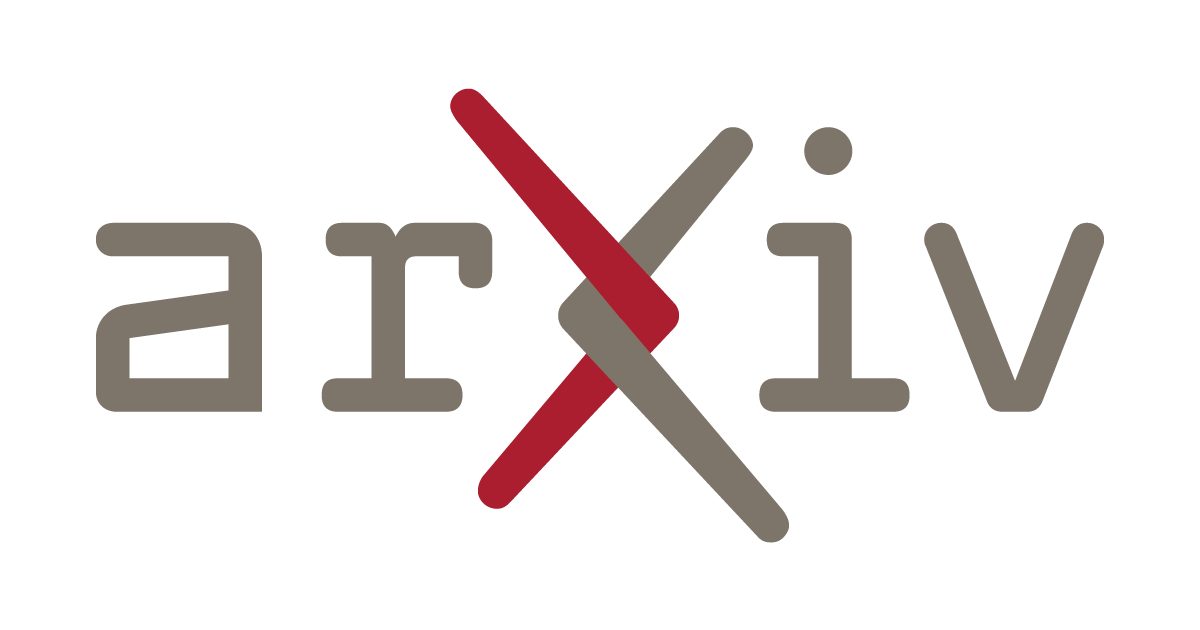
    Zvi Mowshowitz's article explores various significant charts, highlighting the METR graph which tracks AI model progress in software tasks. This graph suggests a potential for rapid capability advancement through Recursive Self-Improvement (RSI), leading to unpredictable future transformations. The piece also touches upon charts illustrating declining negative global trends and exponential growth in areas like energy and GDP, contrasting them with concerns like fertility crises. AI

    The Most Important Charts In The World

    IMPACT Discusses potential AI self-improvement and its unpredictable long-term consequences, prompting reflection on future trajectories.