PulseAugur / Brief
EN
LIVE 22:57:41

Brief

last 24h
[9/9] 221 sources

Multi-source AI news clustered, deduplicated, and scored 0–100 across authority, cluster strength, headline signal, and time decay.

  1. I ran AI agent harnesses on a Raspberry Pi so I would not destroy my laptop.

    The author experimented with running AI agent frameworks on a Raspberry Pi to avoid overwhelming their personal laptop. This setup allowed for testing various tools like Claude Code, OpenClaw, Hermes, and Obsidian in a resource-constrained environment. The experience provided insights into the practicalities of deploying and managing AI agents with limited computational power. AI
    I ran AI agent harnesses on a Raspberry Pi so I would not destroy my laptop.

    IMPACT Demonstrates practical application of AI agents in low-resource environments, offering insights for developers working with constrained hardware.

  2. Is Qwen3.6 current king for local agentic use?

    A user on Reddit's r/LocalLLaMA community is seeking feedback on the performance of the Qwen3.6 35B A3B model for local agentic tasks. They report that Qwen3.6 performs exceptionally well, outperforming models like Gemma4 and GLM 4.7 Flash in terms of avoiding loops and producing accurate tool calls. The user is looking for alternative Mixture-of-Experts (MoE) models of similar size that might offer comparable or superior performance for applications like Hermes Agent and Pi. AI

    IMPACT Highlights user experiences with local LLMs, guiding others on model selection for agentic tasks.

  3. Qwen 3.6 & llama.cpp Push Local Inference Limits on Consumer GPUs

    The open-weight model Qwen 3.6, in its 35 billion parameter version, has achieved an impressive 110 tokens per second inference speed on consumer GPUs with 12GB of VRAM. This performance was enabled by a specialized variant of llama.cpp, referred to as ik_llama.cpp, and specific quantization techniques. Additionally, a 27 billion parameter version of Qwen 3.6 has been successfully deployed locally using llama.cpp's server configuration, providing a practical example for self-hosted AI applications. AI

    IMPACT Accelerates the accessibility and practicality of running powerful LLMs on local hardware, reducing reliance on cloud services.

  4. Quoting Armin Ronacher

    Armin Ronacher criticizes the current trend of AI-generated issue reports, which often lack clarity and accuracy due to poor prompting. He advocates for issue submissions that strictly adhere to a human-observed format: detailing the command run, expected outcome, actual outcome, and exact errors. This approach aims to cut through the noise and provide actionable information for developers. AI

    IMPACT AI-generated content is creating noise and hindering effective communication in software development.

  5. Homey Pro Prices Spiking Next Month Due To RAMmageddon Crisis

    Athom, the brand behind the Homey smart home hub, is increasing prices for its Homey Pro and Homey Pro mini devices starting June 1st. This price adjustment is attributed to a global shortage and subsequent cost increase of RAM and eMMC storage components, a phenomenon dubbed "RAMmageddon." The company's supplier, Raspberry Pi, has also passed on higher costs for the compute modules used in the hubs. While the Homey Pro will see a $50 increase in both the US and Europe, the Pro mini will also experience a similar hike in its respective markets. Athom assures customers that other products in their ecosystem, such as the Homey Bridge and Self-Hosted Server, will not be affected by these price changes as they do not rely on the same memory-intensive hardware. AI

    Homey Pro Prices Spiking Next Month Due To RAMmageddon Crisis

    IMPACT Minimal direct impact on AI operators; reflects broader component cost pressures affecting consumer electronics.

  6. Learning to Train* an AI Model

    A user shared their experience fine-tuning a language model on fictional data and running it on a Raspberry Pi. Another user is seeking help from the OpenAI community to gather answers for training an AI module for a cinematography application, providing links to Google Forms for directors like Darren Aronofsky and Christopher Nolan. AI

    Learning to Train* an AI Model

    IMPACT Explores practical applications of AI training, from personal projects on limited hardware to data collection for specialized applications.

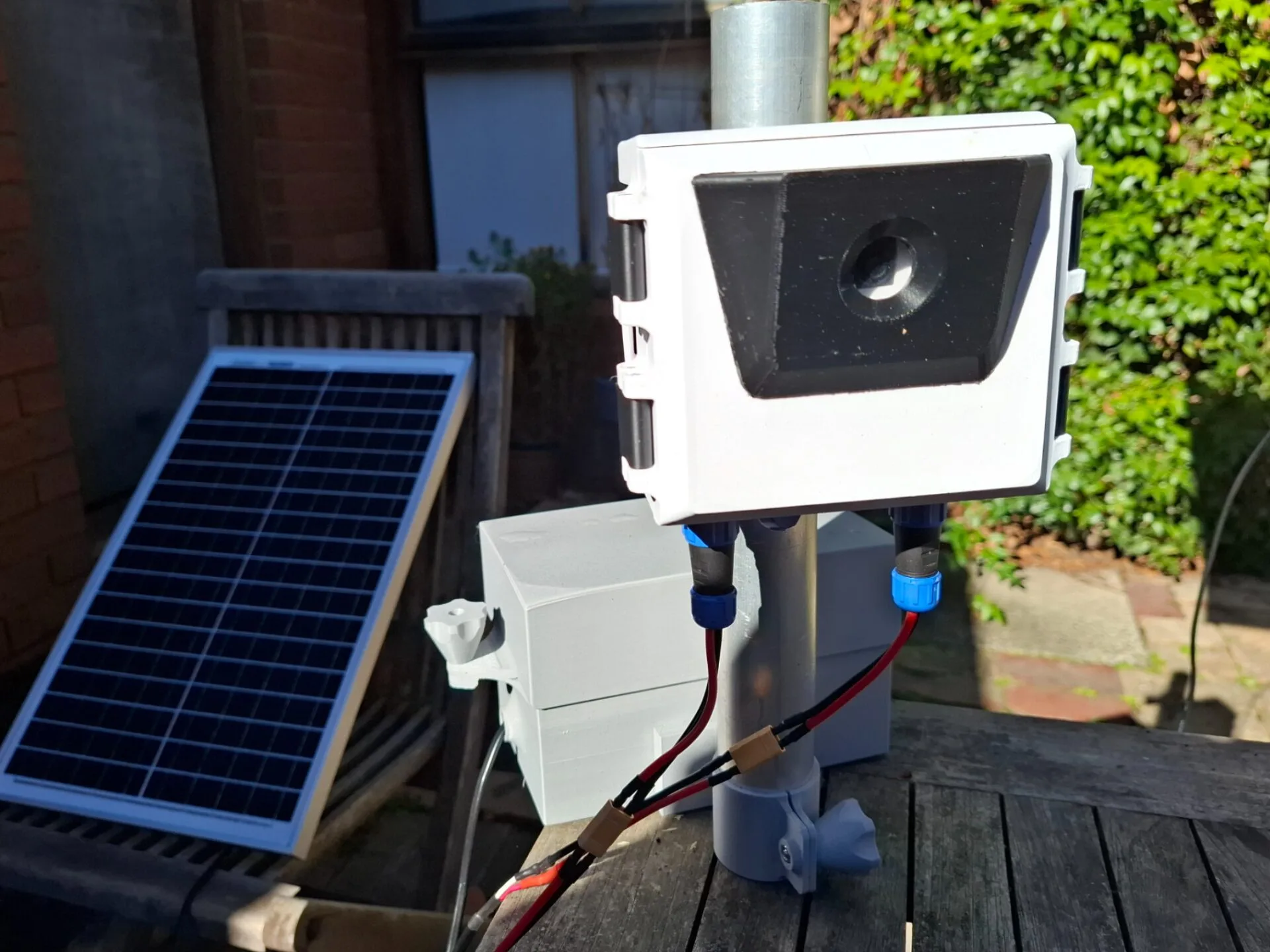
  7. Self-made Raspberry Pi camera that automatically identifies 52 species of wild birds with AI, no battery depletion with solar panel https:// fed.brid.gy/r/https://fabscene.com/new/make/luke-ditria-raspberry-pi-ai-camera-bird-solar-imx500-pvp-pi/?utm_

    An engineer has developed an AI-powered camera system using a Raspberry Pi and a specialized AI camera to automatically identify and photograph wild birds in Australia. This system, designed for continuous operation, is powered by a custom solar charging HAT called "PVP Pi" which manages a large lithium iron phosphate battery pack. The software, including a model capable of recognizing 52 bird species, is open-sourced on GitHub. AI

    Self-made Raspberry Pi camera that automatically identifies 52 species of wild birds with AI, no battery depletion with solar panel https:// fed.brid.gy/r/https://fabscene.com/new/make/luke-ditria-raspberry-pi-ai-camera-bird-solar-imx500-pvp-pi/?utm_

    IMPACT Enables continuous, automated wildlife monitoring with AI, potentially inspiring similar low-power, off-grid AI applications.

  8. SulphurAI/Sulphur-2-base

    SulphurAI has released its Sulphur-2-base model, a diffusion model designed for image generation. The model is available on Hugging Face and provides instructions for integration with various popular libraries and tools. These include Diffusers, llama-cpp-python, llama.cpp, Ollama, Unsloth Studio, Pi, and Hermes Agent, facilitating its use in local applications and cloud environments. AI

    IMPACT Enables developers to integrate a new image generation model into various applications and workflows.

  9. Jiunsong/supergemma4-26b-uncensored-gguf-v2

    The Jiunsong/supergemma4-26b-uncensored-gguf-v2 model is now available for use with various popular AI libraries and applications. These include llama-cpp-python, llama.cpp, vLLM, Ollama, Unsloth Studio, and Pi. Detailed instructions and code snippets are provided for integrating the model into local applications and servers, enabling users to run inference directly or via OpenAI-compatible APIs. AI

    IMPACT Facilitates broader adoption and experimentation with the Jiunsong/supergemma4-26b-uncensored-gguf-v2 model across different platforms.