PulseAugur / Brief
EN
LIVE 06:29:39

Brief

last 24h
[2/2] 224 sources

Multi-source AI news clustered, deduplicated, and scored 0–100 across authority, cluster strength, headline signal, and time decay.

  1. Does preservation make sense before we know how to revive?

    Aurelia Song advocates for the practice of whole-body human preservation for future revival, arguing that the ability to revive is not a prerequisite for effective preservation. She draws a parallel to the San Diego Frozen Zoo, founded by Kurt Benirschke, which successfully preserved animal cells using liquid nitrogen decades ago with only basic knowledge of genetics. Song posits that current scientific understanding is sufficient to begin preserving humans, emphasizing that the knowledge required for preservation is often less than that needed for revival. AI
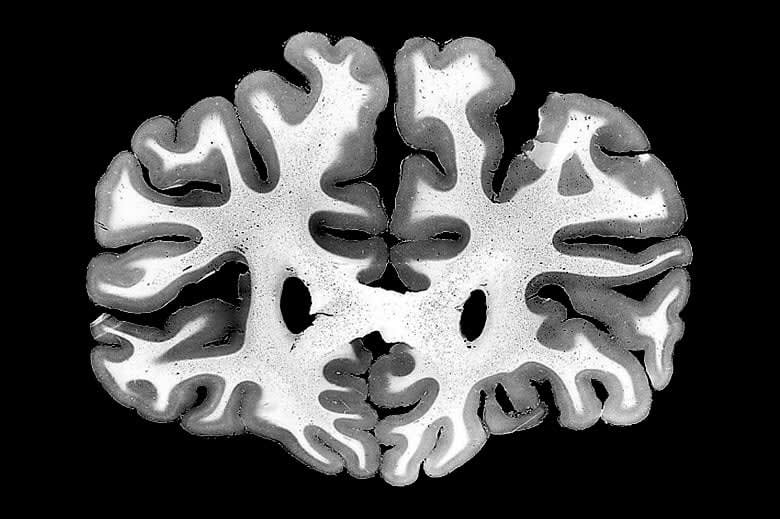
    Does preservation make sense before we know how to revive?
  2. Calibrated Principal Component Regression

    Researchers have introduced Calibrated Principal Component Regression (CPCR), a novel method designed to improve statistical inference in generalized linear models, particularly within overparameterized scenarios. CPCR addresses the truncation bias inherent in standard Principal Component Regression by learning a low-variance prior in the principal component subspace and then calibrating the model in the original feature space. Theoretical analysis and empirical results indicate that CPCR outperforms traditional PCR by effectively managing truncation bias and enhancing prediction accuracy across various overparameterized problems. AI

    Calibrated Principal Component Regression

    IMPACT Introduces a new statistical method that may improve model performance in overparameterized settings.