PulseAugur / Brief
EN
LIVE 22:57:45

Brief

last 24h
[22/22] 221 sources

Multi-source AI news clustered, deduplicated, and scored 0–100 across authority, cluster strength, headline signal, and time decay.

  1. I built an open-source LLM eval framework as a BCA student — hallucination detection, red-teaming, regression tracking

    A BCA student has developed an open-source framework to evaluate Large Language Models (LLMs), addressing the challenge of ensuring AI product performance. The framework includes a 27-test suite for accuracy, safety, and hallucination detection, utilizing a three-tier scoring system. It also features automated adversarial prompt generation for red-teaming and regression tracking across model versions, all presented through a live dashboard. AI

    I built an open-source LLM eval framework as a BCA student — hallucination detection, red-teaming, regression tracking

    IMPACT Provides a free, open-source tool for developers to monitor and improve LLM performance, potentially accelerating AI product development.
  2. Stop Spinning Up Separate Vector DBs: Multi-Tenant Spring AI with Pgvector Metadata Filtering

    This article proposes a multi-tenant solution for Spring AI applications using Pgvector, a PostgreSQL extension for vector embeddings. It advocates for logical tenant isolation through metadata filtering within a shared Pgvector store, rather than provisioning separate databases per tenant. The approach leverages Spring Security to inject tenant context into Spring AI's filter expressions, ensuring secure data segregation and improved performance by indexing metadata fields. AI

    IMPACT Provides a practical solution for securely scaling RAG applications by enabling multi-tenancy with existing database infrastructure.

  3. 3 MCP servers I actually use daily (and how to set them up)

    The Model Context Protocol (MCP) allows Claude Desktop to interact with local and remote data sources. Three specific MCP servers are highlighted for daily use: a filesystem server for reading project files, a GitHub server for code reviews and repository browsing, and a PostgreSQL server for direct database queries. Setting up these servers is a quick process involving installation via the `mcp-hub` CLI and a configuration restart of Claude Desktop, though users are cautioned about the filesystem server's potential access. AI

    IMPACT Enables developers to integrate local and remote data sources with AI assistants, streamlining workflows for tasks like code review and data analysis.

  4. I built a self-hosted RAG system for Journalism — What Production Retrieval Taught Me

    A developer built Atlas, a self-hosted Retrieval-Augmented Generation (RAG) system tailored for journalism, utilizing local models and PostgreSQL with pgvector. The system ingests RSS feeds, embeds content, and provides features like grounded Q&A, claim-level fact-checking, and story brief generation. Key lessons learned include the necessity of hybrid search combining vector and full-text search for news corpora, and the significant performance gains from batch embedding over individual article embedding. AI

    IMPACT Highlights the practical challenges and solutions in deploying RAG for specialized domains like journalism, emphasizing hybrid search and efficient embedding strategies.

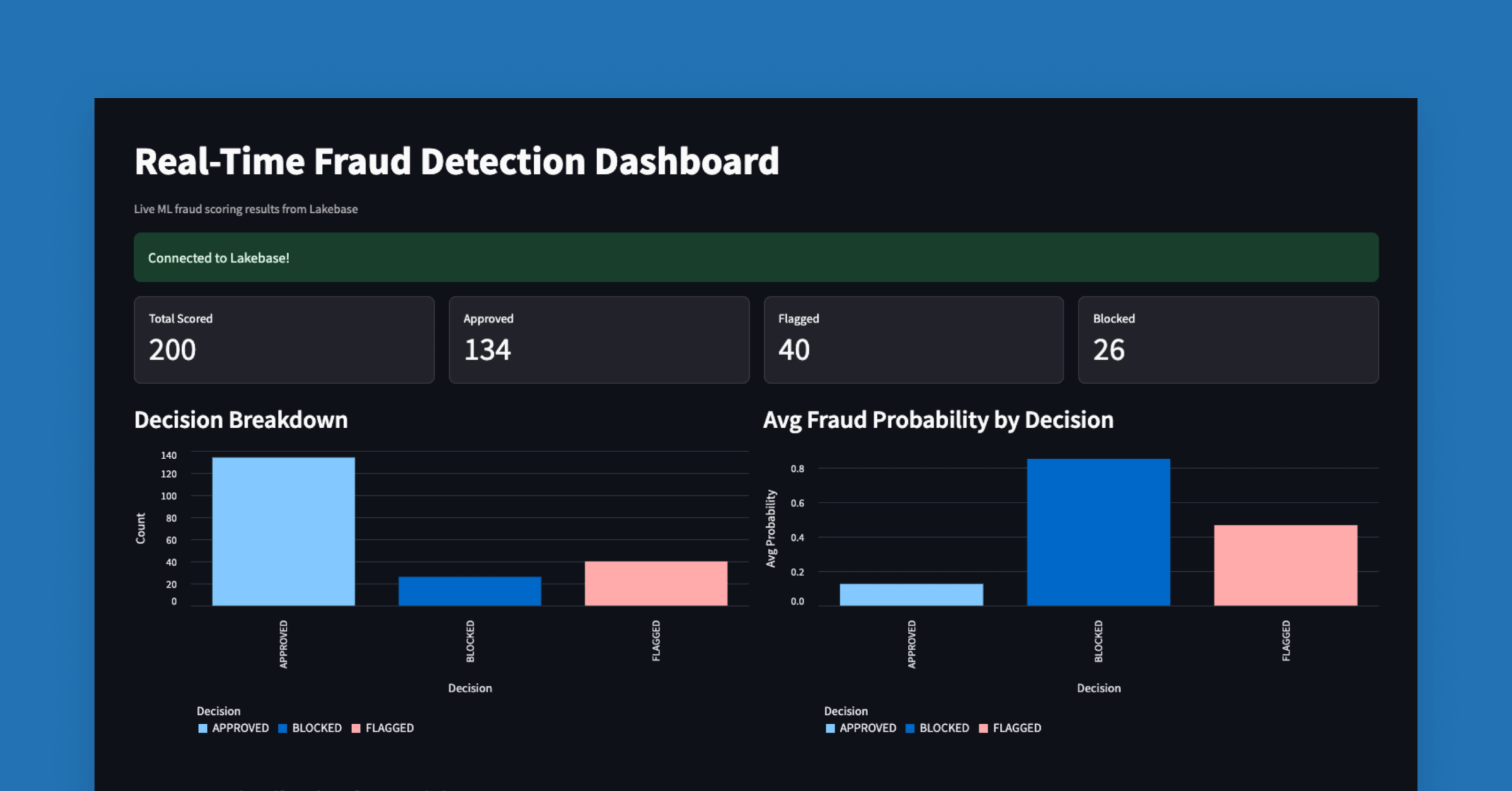
  5. How to Build Real-Time Fraud Detection using Spark Real-Time Mode and Lakebase

    Databricks has introduced a new solution accelerator for real-time fraud detection, addressing the challenge of blocking fraudulent transactions within the critical sub-second window. The system leverages Spark Real-Time Mode (RTM) for sub-300ms stream processing and Lakebase, a managed PostgreSQL database, to create an end-to-end workflow. This approach aims to simplify fraud detection by unifying data processing, ML model execution, and monitoring on a single platform, thereby reducing operational complexity and protecting revenue. AI

    How to Build Real-Time Fraud Detection using Spark Real-Time Mode and Lakebase

    IMPACT Enables faster, more efficient fraud detection by integrating ML models into real-time transaction processing.

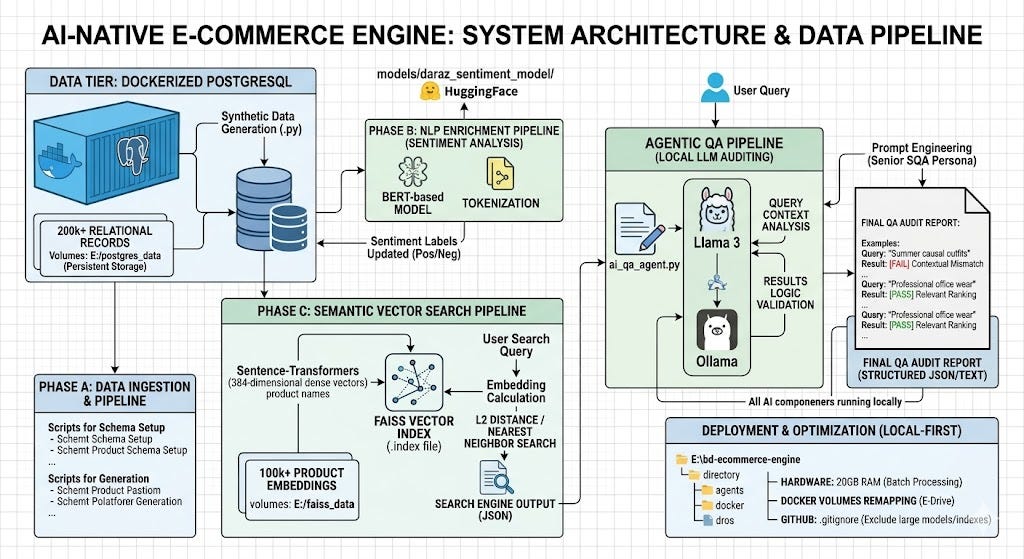
  6. I Built a Production-Grade AI Search Engine on a 20GB Laptop (No Cloud Required)

    An individual developed a production-grade AI-powered e-commerce search engine that operates entirely on a consumer laptop with 20GB of RAM, eliminating the need for cloud services. This system addresses the limitations of traditional keyword-based search by integrating NLP sentiment analysis and semantic vector search. It utilizes a Llama 3 8B model for autonomous auditing of search results, demonstrating that advanced AI capabilities can be achieved without substantial hardware or cloud infrastructure. AI

    I Built a Production-Grade AI Search Engine on a 20GB Laptop (No Cloud Required)

    IMPACT Demonstrates feasibility of advanced AI search on consumer hardware, potentially lowering barriers for localized AI applications.

  7. Explore vector-powered Postgres for AI with Gleb Otochkin at PG DATA 2026 on June 4! In “Vector data in Postgres: Size, TOAST, Filters and Performance,” Gleb di

    Gleb Otochkin will present on vector data in PostgreSQL at the PG DATA 2026 conference on June 4th. His talk, "Vector data in Postgres: Size, TOAST, Filters and Performance," will focus on how PostgreSQL manages vector data for AI applications. The presentation aims to provide insights into performance tuning and data engineering for AI-driven databases. AI

    Explore vector-powered Postgres for AI with Gleb Otochkin at PG DATA 2026 on June 4! In “Vector data in Postgres: Size, TOAST, Filters and Performance,” Gleb di

    IMPACT Details how a popular database system handles vector data, crucial for AI applications and vector search.

  8. Most developers overcomplicate AI agents. My production stack 👇 🔀 LangGraph — agent flow control 🔍 RAG + Pinecone — searches your docs 🐍 FastMCP — runs Python c

    A developer shared their simplified AI agent stack, highlighting LangGraph for flow control, RAG with Pinecone for document search, FastMCP for Python code execution, and PostgreSQL for memory. This open-source project is available on GitHub and can be customized for specific needs. AI

    IMPACT Provides a streamlined approach to building AI agents, potentially reducing complexity for developers.

  9. Your Tech Stack Has an AI Problem: How to Audit and Fix It in 2026

    In 2026, the definition of a "boring" tech stack is evolving to include AI integration tools. Developers need to audit their current systems for AI readiness across data, compute, integration, and observability layers. This involves targeted changes, such as implementing vector databases or using pgvector for semantic search, to ensure efficient AI adoption. AI

    Your Tech Stack Has an AI Problem: How to Audit and Fix It in 2026

    IMPACT Developers must adapt their tech stacks to integrate AI tools effectively, focusing on data, compute, and integration layers for future product development.

  10. Upstash for Redis vs Supabase vs Neon: Which One Fits Vibe Coding Workflows in 2026?

    This article compares Upstash for Redis, Supabase, and Neon, clarifying their distinct roles in modern application development, particularly for "vibe coding" workflows that leverage AI assistants. Upstash offers serverless Redis for caching and rate limiting, functioning as a complementary layer rather than a direct competitor to databases. Neon is presented as a standalone serverless PostgreSQL database optimized for instant branching and scalability. Supabase, built on PostgreSQL, provides a comprehensive backend-as-a-service platform including authentication, storage, real-time capabilities, and edge functions, making it a full-stack solution. AI

    Upstash for Redis vs Supabase vs Neon: Which One Fits Vibe Coding Workflows in 2026?

    IMPACT Clarifies the distinct use cases of backend tools for developers building AI-assisted applications.

  11. We Connected an LLM to a 12-Year-Old Codebase. Here's What Broke.

    Integrating LLMs into existing, complex software systems presents significant challenges beyond simple API calls. A key issue is managing the probabilistic and network-dependent nature of LLMs, which can cause system instability if treated as deterministic, in-process functions, leading to failures like extended checkout times. Furthermore, the quality of data fed into LLMs is crucial; historical data with inconsistencies and drift can lead to inaccurate outputs, turning AI integration into a data cleaning project. Finally, the cost of LLM usage can escalate rapidly without proper telemetry, necessitating the implementation of a gateway service to handle timeouts, fallbacks, and cost monitoring. AI

    IMPACT Provides practical guidance on integrating LLMs into legacy systems, highlighting common pitfalls and architectural patterns for reliable and cost-effective deployment.

  12. PostgreSQL backup tool gets some backup of its own after sole maintainer sounds alarm

    Several companies, including AWS, Percona, Supabase, pgEdge, and Tiger Data, have pledged financial support for the PostgreSQL backup tool pgBackRest. This comes after the tool's sole maintainer raised concerns about the project's sustainability. The initiative aims to ensure the continued development and maintenance of the critical open-source database utility. AI

    PostgreSQL backup tool gets some backup of its own after sole maintainer sounds alarm

    IMPACT Ensures the continued availability of a critical open-source database tool, indirectly supporting AI infrastructure that relies on robust data management.

  13. PostgreSQL MCP: Let Claude query your databases in plain English

    PostgreSQL MCP is a new tool that allows users to query their PostgreSQL databases using natural language through AI models like Claude. The server automatically translates plain English requests into SQL, executes them safely, and returns formatted results within the AI chat interface. Key features include read-only mode, connection pooling, sandboxed execution, and schema introspection, enabling use cases like debugging data issues, generating reports, and exploring unfamiliar database schemas. AI

    IMPACT Enables users to interact with databases using natural language, potentially streamlining data analysis and report generation.

  14. dbt vs SQLMesh: An Honest Comparison on a Self-Hosted Lakehouse

    A technical comparison details the challenges and solutions encountered when running dbt and SQLMesh simultaneously on a self-hosted lakehouse environment. The author outlines a specific stack including PostgreSQL, SeaweedFS, Nessie, Trino, and Dremio, highlighting hardware constraints. A key blocker was Trino's inability to create views with native Nessie catalogs, which was overcome by utilizing Nessie's Iceberg REST catalog endpoint. AI

    dbt vs SQLMesh: An Honest Comparison on a Self-Hosted Lakehouse

    IMPACT Niche tooling improvement; minimal industry-wide impact.

  15. A Case for Agentic Tuning: From Documentation to Action in PostgreSQL

    Researchers have developed a new method called PerfEvolve that uses AI agents to tune PostgreSQL performance, moving beyond static documentation. This approach equips agents with skills to verify versions, profile workloads, and optimize multiple parameters simultaneously. In tests using TPC-C and TPC-H benchmarks, PerfEvolve demonstrated a performance improvement of up to 35.2% over existing documentation-driven tuning methods. AI

    A Case for Agentic Tuning: From Documentation to Action in PostgreSQL

    IMPACT This agentic tuning approach could significantly improve database performance and reduce manual tuning efforts for administrators.

  16. Production begins where vibe coding ends. At first, it looked like a typical AI success story. In a couple of evenings, the LLM helped turn Google Shee

    An LLM significantly accelerated the initial development of a personal finance application, transforming a Google Sheet into a functional app within evenings. However, the project's complexity grew substantially with the addition of a backend, cross-device synchronization, mobile UX, AI recommendations, and robust testing infrastructure. This highlights that while AI can drastically speed up prototyping, the transition to a production-ready application involves extensive engineering beyond the initial demo. AI

    IMPACT Illustrates the gap between AI-assisted prototyping and full-scale production readiness.

  17. Build an AI voice agent for customer support that can look up orders

    AssemblyAI has released a tutorial for building an AI voice agent capable of handling customer support tasks like order lookups and account verification. The agent utilizes AssemblyAI's Voice Agent API, which integrates speech-to-text, LLM reasoning, and text-to-speech on a single WebSocket connection to provide a seamless customer experience. Separately, a developer documented a process for training a support AI using real customer service chat logs, employing Retrieval-Augmented Generation (RAG) with a vector store and hybrid search to extract knowledge from historical conversations. AI

    IMPACT Provides practical examples of deploying AI for customer support and knowledge retrieval, showcasing specific tools and techniques.

  18. Need Help Choosing a Harness for Qwen 3.6 27B

    A user on Reddit's r/LocalLLaMA subreddit is seeking recommendations for an open-source harness to manage multiple local AI agents. They are currently using Qwen 3.5/3.6 27B models on a Windows 10 machine with an RTX 3090 Ti and 96GB RAM, with LM Studio as their server. The user needs a tool that can easily spawn sub-agents, manage their system prompts and tools, and provide a dashboard to monitor all agent outputs, including their thought processes and tool usage. They also want to integrate a prefill mechanism to pass context from smaller agents to the main agent before message processing. AI

    IMPACT Niche tooling improvement; minimal industry-wide impact.

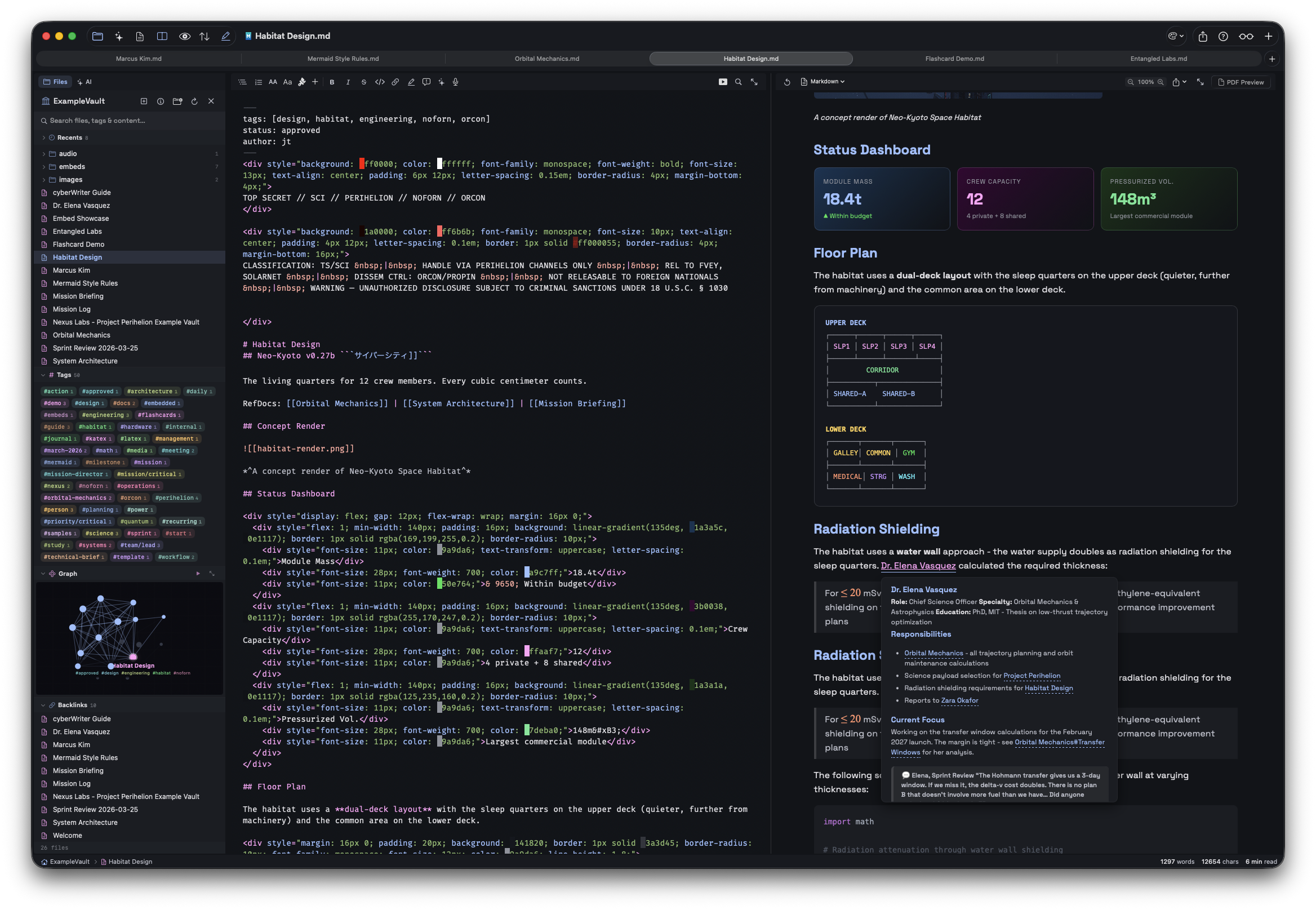
  19. Show HN: CyberWriter – a .md editor built on Apple's (barely-used) on-device AI

    Two open-source projects aim to provide better interfaces for on-device AI, specifically Apple's Foundation Models. CyberWriter is a native macOS Markdown editor that integrates AI for writing assistance and knowledge base querying. Perspective Intelligence Web offers a browser-based chat interface accessible from any device, connecting to Apple's on-device AI running on a Mac. AI

    Show HN: CyberWriter – a .md editor built on Apple's (barely-used) on-device AI

    IMPACT These projects offer new ways for users to interact with on-device AI, potentially increasing its adoption and utility.

  20. Replit's All-new Database Editor

    Replit has introduced a new Database Editor feature, designed to simplify database management for app developers. This tool provides a spreadsheet-like interface for interacting with Postgres databases, making it accessible even for users with no prior coding experience. The feature aims to streamline data manipulation for various applications, from games to startup waitlists, by offering instant updates and powerful filtering capabilities. AI

    Replit's All-new Database Editor

    IMPACT Simplifies database management for app developers, potentially accelerating development workflows.

  21. Company Spotlight: Techjays

    Replit has launched a PostgreSQL database integration, allowing developers to provision and use relational databases within seconds. This feature, powered by Neon, offers 10GB of storage and dedicated resources, with plans for more flexible options in the future. Software development company Techjays has already integrated Replit Core, including its AI capabilities and database support, to accelerate client prototyping and improve developer productivity by up to 30%. AI

    Company Spotlight: Techjays

    IMPACT Enhances developer workflows by integrating AI coding assistance and rapid database provisioning.

  22. Get Replit Famous

    Replit has launched a new "Following" feed feature to enhance community interaction and content discovery on its platform. This feature allows users to follow creators and see their latest work, likes, and followed users in a dedicated feed. The backend utilizes PostgreSQL triggers to track user actions, while the frontend employs rate-limiting and grouped event cards to manage feed content and prevent clutter. AI

    Get Replit Famous

    IMPACT Enhances social features on a coding platform, potentially increasing user engagement and creator monetization opportunities.