PulseAugur / Brief
EN
LIVE 21:40:59

Brief

last 24h
[9/9] 221 sources

Multi-source AI news clustered, deduplicated, and scored 0–100 across authority, cluster strength, headline signal, and time decay.

  1. How I stopped Composer from drifting on big spec-driven features

    A user on Reddit shared a method to prevent AI code generation tools like Cursor's Composer from deviating from project specifications. The technique involves meticulously organizing project plans and documentation on disk, ensuring the AI agent always refers to these up-to-date files. This approach helps maintain alignment during long development cycles, especially when switching between different AI models. AI

    IMPACT Provides a practical technique for developers to improve the reliability of AI code generation tools in complex projects.

  2. "from from from from from from"

    A user of the AI-powered code editor Cursor reported an issue where the Opus model began repeatedly outputting the word "from." This behavior occurred during a coding session and required the user to screenshot the anomaly. The user noted this was the first time they had encountered such a problem with the model after two years of using Cursor. AI

    "from from from from from from"

    IMPACT A bug in an AI coding assistant could disrupt developer workflows and necessitate troubleshooting.

  3. Codec-Robust Attacks on Audio LLMs

    Researchers have developed a novel adversarial attack called CodecAttack that bypasses compression defenses in audio large language models (LLMs). Unlike previous methods that directly perturbed audio waveforms, CodecAttack optimizes perturbations within a neural audio codec's latent space. This technique proved highly effective, achieving an average 85.5% attack success rate on Opus compression and demonstrating transferability to other codecs like MP3 and AAC-LC. AI

    IMPACT Demonstrates that lossy compression is not a reliable defense against adversarial audio, posing a practical threat to deployed audio LLM systems.

  4. Slowing the AI token burn: Part 2

    The AI industry is facing a new challenge where engineers are incentivized to maximize token consumption, a practice dubbed "Tokenmaxxing," rather than focusing on the quality of their output. This trend, highlighted by NVIDIA CEO Jensen Huang and observed at Meta, suggests that token usage is becoming a proxy for productivity. However, critics argue this approach leads to waste and a lack of meaningful evaluation, proposing a "Slop Index" that relies on human judgment to assess AI output quality. AI

    Slowing the AI token burn: Part 2

    IMPACT This discussion highlights a potential shift in AI development towards prioritizing token consumption over output quality, which could impact efficiency and innovation.

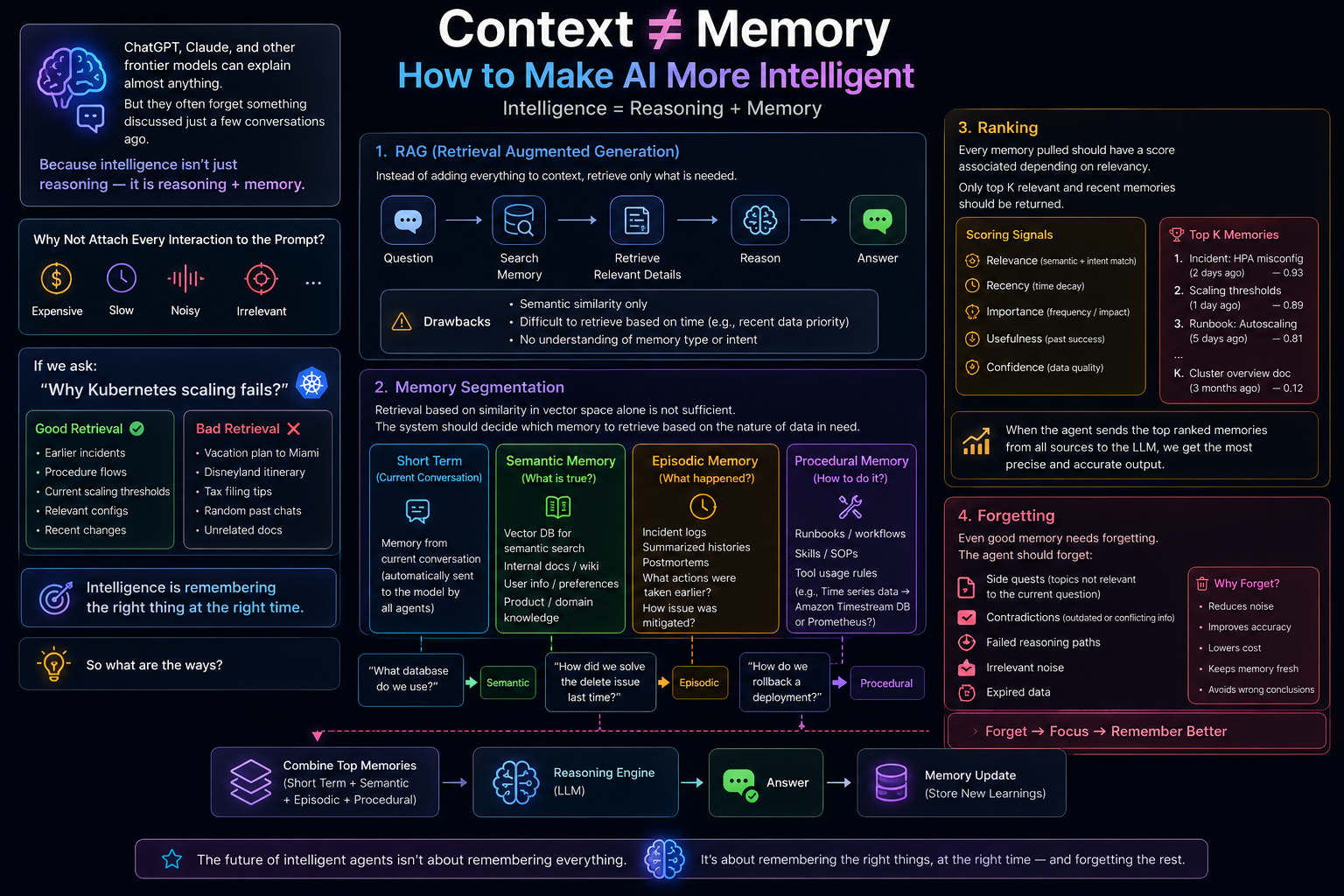
  5. Context ≠Memory → Why 1M+ Context Windows Won’t Fix Dumb AI

    The Model Context Protocol (MCP) is enabling AI agents to interact with local and remote systems, allowing them to perform actions like reading files, searching code, and managing data. Developers are creating MCP servers for various applications, from personal fitness trackers to financial analysis tools, which can then be integrated with AI clients such as Claude Desktop, Cursor, and Codex. This protocol facilitates direct interaction with tools and data, moving beyond simple text generation to enable agents to execute tasks and access information in a grounded manner. AI

    Context ≠Memory → Why 1M+ Context Windows Won’t Fix Dumb AI

    IMPACT Enables AI agents to perform grounded actions and access real-time data, moving beyond text generation to task execution.

  6. Ben's Builds #3 - an email app

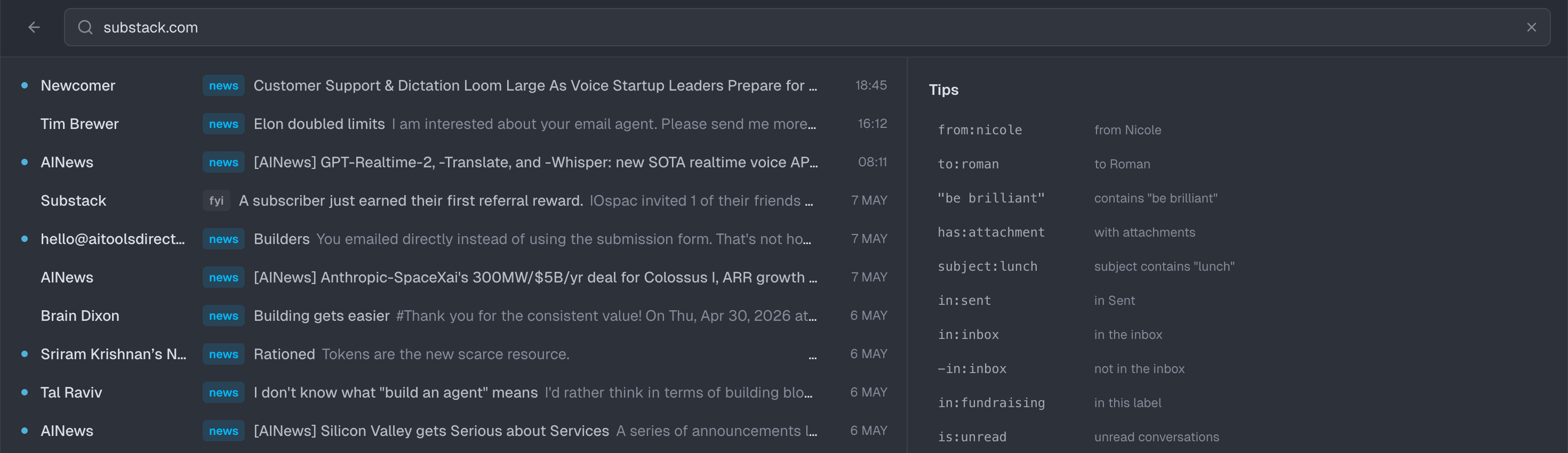
    A developer built a custom email client for macOS, aiming for a streamlined experience similar to Superhuman but with more control over features. The app, initially developed with Codex and later refined using Factory, utilizes Gmail's API for core functions like labeling and filtering. Key features include a split inbox, rules, a command palette, and an undo-send option, with a focus on performance improvements to eliminate lag by optimizing API calls and implementing background data refreshing. AI

    Ben's Builds #3 - an email app

    IMPACT This custom email client showcases how AI tools can be used to build personalized productivity software.

  7. Big lab leaks

    Anthropic has released new features for its Claude AI, including Claude Cowork for general availability and Claude for Word in beta, alongside enhanced coding capabilities. OpenAI has introduced new compute plans for its models, offering significantly more processing power at higher price points. Meanwhile, the AI development tool Cursor has received praise for its Composer 2.5 model, which users report is faster and more accurate than Anthropic's Opus and Sonnet models for coding tasks. AI

    Big lab leaks

    IMPACT New features from Anthropic and OpenAI, alongside performance improvements in Cursor, signal ongoing advancements in AI accessibility and capability for developers and enterprises.

  8. 94% of My Claude Code Tokens Went to the Wrong Model. So I Stopped Paying Opus to Do Haiku's Job.

    Developers are finding that Anthropic's Claude Code, particularly the Opus model, is consuming more tokens than expected, leading to unexpected costs and reduced efficiency. Users report that hidden system overhead and context compaction are significantly inflating token usage beyond what is visible in the /context command. This has prompted discussions about the cost-effectiveness of Claude's tiered models, with some users suggesting that cheaper alternatives or better auditing tools are needed to manage token debt and maintain model performance. AI

    94% of My Claude Code Tokens Went to the Wrong Model. So I Stopped Paying Opus to Do Haiku's Job.

    IMPACT Developers are seeking more transparent and cost-effective AI coding tools, potentially influencing future product development and pricing strategies.

  9. Introducing system audio

    Replit has introduced system audio integration for its online programming environment, allowing users to experience sound from their projects. This feature, which is opt-in due to resource costs, enables audio output from applications running within Replit. The system works by using a custom Rust-based proxy that captures audio from PulseAudio, transcodes it, and embeds it within the VNC protocol for playback in the browser. AI

    IMPACT Enables richer multimedia experiences for users developing applications within Replit.