PulseAugur / Brief
EN
LIVE 20:42:26

Brief

last 24h
[50/57] 221 sources

Multi-source AI news clustered, deduplicated, and scored 0–100 across authority, cluster strength, headline signal, and time decay.

  1. Llama 4: Meta's Latest — Scout, Maverick, and the MoE Revolution

    Meta has released Llama 4 in April 2025, featuring a new Mixture of Experts (MoE) architecture. Two variants, Scout and Maverick, are available, with Scout serving as a balanced default and Maverick offering broader knowledge for specialized tasks. Both models leverage MoE to activate approximately 17 billion parameters per token, enabling high performance comparable to much larger models while remaining runnable on consumer hardware. AI

    IMPACT Sets a new standard for locally runnable large models, potentially accelerating adoption of advanced AI capabilities on consumer hardware.


  2. Kwipu, a fully-local MCP server that turns your Obsidian/Markdown notes into a queryable knowledge graph (runs on Ollama)

    Kwipu is a new local MCP server designed to transform Obsidian and Markdown notes into a queryable knowledge graph. This tool integrates with Ollama, enabling users to leverage local large language models for their personal knowledge management. The project aims to provide a private and efficient way to organize and access information stored in notes. AI

    Kwipu, a fully-local MCP server that turns your Obsidian/Markdown notes into a queryable knowledge graph (runs on Ollama)

    IMPACT Enhances personal knowledge management by enabling local LLM-powered querying of user notes.

  3. 35B LLM auf nur 6GB VRAM? So geht's lokal! URL https://www. youtube.com/watch?v=WrSZ7_KIGjs # ollama # ram # gpu # KI # ai # ubuntu # linux

    A YouTube video demonstrates how to run a 35 billion parameter large language model on a system with only 6GB of VRAM. The tutorial focuses on local execution using tools like Ollama on Ubuntu Linux. AI

    IMPACT Enables running large language models on consumer-grade hardware, lowering the barrier to entry for local AI experimentation.

  4. Tabular PDF Information Extraction with Local LLMs and Layout-Aware Parsing: A Reliability Evaluation

    Researchers evaluated three methods for extracting information from tabular PDF documents, using academic course registration forms as a case study. The strategies included using only large language models (LLMs), a hybrid approach combining deterministic methods with LLMs, and a pipeline using Camelot with an LLM fallback. Experiments showed that the hybrid approach improved efficiency for metadata extraction, while the Camelot pipeline with LLM fallback achieved the highest accuracy and computational efficiency, performing extraction in under a second per document. AI

    IMPACT Demonstrates efficient and accurate methods for extracting structured data from complex PDF documents, potentially aiding research and data processing in computationally constrained environments.

  5. DeepSeek-R1: The $0 o1 Alternative You Can Run Right Now

    DeepSeek has released DeepSeek-R1, an open-source model designed to rival OpenAI's o1 in reasoning capabilities. Available under the MIT license, this model can be run locally on a single GPU, offering enhanced privacy and cost savings compared to API-based services. The model comes in various sizes, with the 14B and 32B versions recommended for most users, offering different VRAM requirements and performance levels. AI

    IMPACT Provides a powerful, privacy-preserving, and cost-effective alternative for advanced reasoning tasks, potentially accelerating local AI deployment.

  6. One AI Can’t Really Disagree With Itself. So I Wired Up a Council of 18

    A developer has adapted an existing multi-agent AI framework, "Council of High Intelligence," to work with the Gemini CLI. This enhanced system allows for a council of 18 AI agents, each representing a historical thinker, to deliberate on a problem. A key new feature is the ability for each agent to run on a different underlying AI model, ensuring genuine disagreement rather than simulated conflict. AI

    One AI Can’t Really Disagree With Itself. So I Wired Up a Council of 18

    IMPACT Enables more robust AI-driven decision-making by simulating genuine disagreement between diverse AI models.

  7. Gemma4 Apex GGUF, Ollama Context Optimization, & Llama3 Benchmarks

    Recent advancements in local LLM deployment include a new Apex quantization for Gemma4 that achieves high token rates with a large context window, and a workflow reducing Ollama's prompt context by nearly 90% using Memgraph. Additionally, benchmarks indicate that smaller models like TinyLlama and Llama3.2:3b struggle with boolean logic tasks, scoring around 50% accuracy. AI

    IMPACT Optimizations for local LLMs improve accessibility and efficiency for developers running complex AI tasks on consumer hardware.

  8. Local RAG: Chat With Your Documents (Open Source, Private)

    This article introduces Retrieval-Augmented Generation (RAG) as a method for enhancing Large Language Models (LLMs) by allowing them to access and cite information from user-provided documents. It details three open-source, private options for implementing RAG: Open WebUI, AnythingLLM, and a manual approach using LangChain. These tools enable users to upload various file types, such as PDFs and code, and then query their content with local LLMs without sending data externally. AI

    IMPACT Enables users to privately query their own documents with local LLMs, enhancing data privacy and customizability.

  9. I Added a /recovery Endpoint to My LLM Proxy So Agents Never Lose Progress Mid-Task

    A new Go-based LLM proxy called Trooper has introduced a novel recovery endpoint designed to prevent agents from losing progress during multi-agent workflows. Unlike traditional proxies that simply retry requests or fall back to other providers, Trooper tracks completed steps in real-time. When a failure occurs, its `/recovery/{session_id}` endpoint provides orchestration layers with a list of completed tasks and the exact step to resume from, thereby avoiding redundant work. AI

    IMPACT Enhances the reliability of multi-agent AI systems by preventing data loss during task execution.

  10. llama.cpp Native Tools, Qwen GGUF Models, and Local Multimodal Audio Tools

    The llama.cpp project has integrated native tools, including shell command execution and file editing, directly into its server, enabling local large language models to perform actions and automate tasks. This advancement facilitates the creation of more capable autonomous agents that can operate entirely on local hardware. Additionally, a new 35-billion parameter Qwen model, Qwen3.6-35B-A3B, has been released in the GGUF format, optimized for efficient local inference on consumer hardware. AI

    IMPACT Enhances local AI agent capabilities and accessibility of large open-weight models on consumer hardware.

  11. Your Team Is Paying $3,600 a Year for ChatGPT. Here’s How to Replace It for $75/Month.

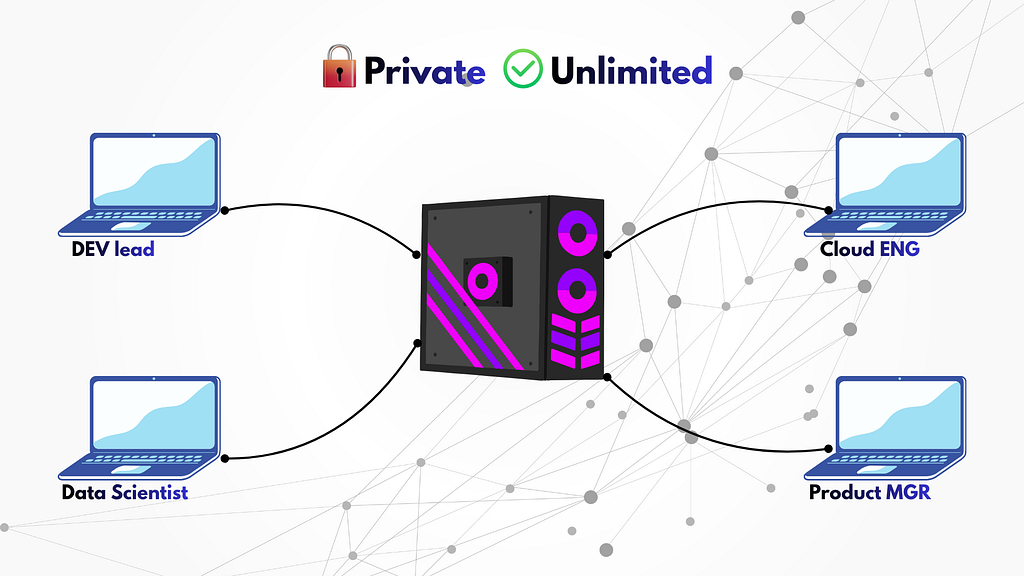
    Teams can significantly reduce their AI costs by self-hosting an AI server instead of paying for services like ChatGPT Team. This approach offers unlimited usage and enhanced data privacy by keeping all prompts and data on the company's own network. The setup involves open-source tools like Ollama for model running, Open WebUI for a ChatGPT-like interface, Qdrant for document search, and Tailscale for secure remote access, with hardware requirements centered around a GPU with 24GB of VRAM. AI

    Your Team Is Paying $3,600 a Year for ChatGPT. Here’s How to Replace It for $75/Month.

    IMPACT Enables teams to reduce AI operational costs and enhance data privacy by self-hosting models.

  12. Local LLMs: Bytedance Lance 3B Multimodal, llama.cpp MTP, Ollama Client

    ByteDance has released Lance, a new 3-billion parameter open-source multimodal model designed to run on consumer GPUs. This model can process both images and text, aiming to make advanced AI capabilities more accessible. Concurrently, the popular inference engine llama.cpp has received significant performance enhancements through Multi-Threaded Pipelining (MTP), which boosts local inference speeds. Additionally, a new open-source chat client called Horizon has been launched, offering cross-platform support for interacting with local models via Ollama, as well as cloud-based AI services. AI

    Local LLMs: Bytedance Lance 3B Multimodal, llama.cpp MTP, Ollama Client

    IMPACT Advances in lightweight multimodal models and inference engine optimizations will accelerate the development and deployment of local AI applications.

  13. Qwen 3.6 & 2.5: The Most Versatile Local Models

    Alibaba Cloud's Qwen models are highlighted as versatile open-source options in mid-2026, offering a range of sizes from 0.5B to 72B parameters. Qwen 3.6 and 2.5 boast impressive features like a 262K context window, strong tool-calling capabilities, and an Apache 2.0 license for commercial use. The models are easily accessible via Ollama, with specific recommendations based on available VRAM, and are presented as competitive local alternatives to models like GPT-4o and DeepSeek-R1, particularly for tasks requiring long context or function calling. AI

    IMPACT Provides powerful, locally runnable open-source models with long context capabilities, reducing reliance on cloud APIs for certain tasks.

  14. The Complete Guide to Running LLMs Locally in 2026: From Ollama to Production

    This guide details how to run advanced large language models locally on personal hardware in 2026, bypassing expensive API costs. It emphasizes that VRAM is the primary hardware bottleneck, not raw compute power, and suggests specific GPU configurations for different budgets. The guide recommends using Ollama as the standard tool for managing local LLMs and highlights several Chinese models, such as Qwen 2.5 and DeepSeek-R1, for their strong performance relative to their size. AI

    IMPACT Enables cost-effective local LLM deployment, democratizing access to advanced AI capabilities.

  15. Run Hermes Agent on Any Model — Free, Local, and Cost-Routed

    Nous Research has released Hermes Agent, an open-source AI agent designed for continuous learning and broad platform integration. Hermes features a persistent memory, autonomous skill creation, and multi-platform support across messaging apps and terminals. It can be configured to use various LLM providers, including OpenAI, Anthropic, and Ollama, through a universal proxy like Lynkr. AI

    IMPACT Enables greater flexibility and cost-efficiency for AI agent users by decoupling tools from specific LLM providers.

  16. Running LLMs locally (Ollama + Gemma 4) changes how you design AI systems — from “what can the model do?” to “what can realistically run in the real world?” Local inference is becoming a key skill for builders, not just an option. #LLM #Ollama #Gemma4

    Running large language models locally is becoming an essential skill for developers, shifting the focus from a model's capabilities to its practical deployment constraints. Tools like Ollama and models such as Gemma 4 enable developers to build and test AI applications without relying on external APIs. This approach democratizes AI development, allowing for more experimentation and integration into personal projects. AI

    Running LLMs locally (Ollama + Gemma 4) changes how you design AI systems — from “what can the model do?” to “what can realistically run in the real world?”

Local inference is becoming a key skill for builders, not just an option.

#LLM #Ollama #Gemma4

    IMPACT Enables developers to build and test AI applications locally, reducing reliance on cloud APIs and fostering experimentation.

  17. From Problems to Patterns: Generative AI in .Net (C#)

    A new book titled "From Problems to Patterns: Generative AI in .Net (C#)" aims to equip .NET developers with the skills to build and deploy production-ready AI solutions. It focuses on the Microsoft AI stack, including Microsoft.Extensions.AI, Microsoft.Agents.AI, and Model Context Protocol, offering practical guidance and 37 runnable code examples. The book covers essential topics like multi-provider routing, robust RAG pipelines, maintainable autonomous agents, and secure deployment of AI tools. AI

    From Problems to Patterns: Generative AI in .Net (C#)

    IMPACT Empowers .NET developers to build and deploy production-grade AI applications, reducing reliance on Python-centric tools.

  18. Building Sakhi: Hindi Voice-to-Form for India's ASHA Workers, Solo in Six Weeks

    A developer built Sakhi, a Hindi voice-to-form application for India's community health workers, in six weeks. The system addresses challenges with unreliable cloud speech-to-text and intermittent connectivity in rural areas. Sakhi offers two modes: a workstation setup using Whisper and Gemma for voice transcription and data extraction, and an offline on-device mode on Android for text-based form filling and danger sign detection. AI

    Building Sakhi: Hindi Voice-to-Form for India's ASHA Workers, Solo in Six Weeks

    IMPACT Demonstrates practical application of LLMs and STT for underserved regions, potentially improving healthcare access and data collection.

  19. Gemma 4 on 16GB RAM: What Actually Works for Structured AI Workflows

    A recent test explored the capabilities of Google's Gemma 4 models for structured AI workflows, specifically focusing on their ability to generate interactive UI layouts. The experiment found that even smaller Gemma 4 variants, when run locally on a 16GB RAM machine, performed better than expected for tasks like creating sales dashboards and forms. While larger Gemma 4 models showed improved consistency, the primary constraint for complex UI generation remained memory limitations. AI

    Gemma 4 on 16GB RAM: What Actually Works for Structured AI Workflows

    IMPACT Demonstrates that smaller, locally runnable models can produce usable UI code, potentially lowering barriers for prototyping.

  20. Open WebUI: Your Local ChatGPT

    Open WebUI is a new self-hosted interface designed to provide a ChatGPT-like experience for local large language models. It offers features such as document chat via RAG, image generation integration, voice input, and multi-user support. The tool is easily installable via Docker or pip and connects to Ollama, ensuring user data remains on their local machine. AI

    Open WebUI: Your Local ChatGPT

    IMPACT Provides a user-friendly interface for local LLM deployments, enhancing accessibility for RAG and other advanced features.

  21. I fully automated product registration using Hermes + Claude + Ollama

    An individual has developed an automated system for product registration on an e-commerce platform called AIxEC. This system utilizes AI agents, including Claude and Ollama, to autonomously select product genres, fetch product candidates, score them, and register high-scoring items. The entire process, from scheduling to execution and even initial setup, is handled by AI, with human input limited to defining the overall intent and strategy. AI

    IMPACT Demonstrates how AI agents can be orchestrated to fully automate business processes like e-commerce product registration.

  22. Morph: AST-Level Refactoring Where the LLM Describes Intent, Not Code

    Morph is a new tool that uses LLMs to perform code refactoring by generating structured plans of operations rather than direct code changes. This approach allows for better reviewability and safety, as reviewers can understand the intended changes quickly and the system validates operations against the codebase's dependency graph before execution. Morph includes automatic rollback capabilities if tests fail after a transformation, ensuring the codebase remains in a stable state. AI

    Morph: AST-Level Refactoring Where the LLM Describes Intent, Not Code

    IMPACT Enhances code refactoring safety and reviewability by leveraging LLMs for intent declaration rather than direct code generation.

  23. The File Modification Boundary We Found After 12 ForgeFlow Projects

    After completing 12 projects using the ForgeFlow system, the developers identified a critical file modification boundary. Tasks involving the creation of new files were consistently successful, but attempts to modify existing code resulted in a deadlock loop. This pattern persisted across multiple runs and backend configurations, suggesting a limitation in how the system handles iterative code changes. The team concluded that restructuring tasks to minimize modifications to existing files was a more practical solution than attempting to force the system to overcome this limitation. AI

    IMPACT Identifies a potential limitation in current LLM-based coding assistants when modifying existing codebases, suggesting a need for task restructuring.

  24. I just built a Discord bot powered by a local AI model. No API keys. No cloud. Runs entirely on your machine. https:// medium.com/p/e3e43703d95d # Discord # Pyt

    A developer has created a Discord bot that operates entirely on their local machine, utilizing a local AI model. This setup eliminates the need for external API keys or cloud services, ensuring all processing is done client-side. The project highlights the growing capability of running sophisticated AI applications without relying on third-party infrastructure. AI

    I just built a Discord bot powered by a local AI model. No API keys. No cloud. Runs entirely on your machine. https:// medium.com/p/e3e43703d95d # Discord # Pyt

    IMPACT Enables more private and cost-effective AI applications by running models locally, reducing reliance on cloud APIs.

  25. How to slash AI Debugging Costs by 95% Using Local LLMs and Intelligent Routing

    A new backend architecture has been developed to significantly reduce the costs associated with debugging AI-related issues in CI/CD pipelines. This system employs a tiered approach, first using local LLMs like Llama 3 or Mistral to isolate error chunks from large log files, thereby avoiding expensive cloud API calls. If the error is complex, it is then escalated to a premium cloud API via Groq for further analysis, ensuring both cost-efficiency and data privacy. AI

    IMPACT Enables significant cost reduction and improved efficiency for AI-powered debugging in software development pipelines.

  26. Precision RAG: Fixing Citations & Hallucinations for Stronger Developer OKRs

    A developer detailed a sophisticated Parent-Child RAG pipeline on GitHub, which, despite its advanced components like hybrid vector stores and LangGraph, suffered from inaccurate citations and hallucinations. The core issue identified was a misalignment between the retrieval units (child chunks), generation units (parent documents), and citation units, leading to incorrect page references. The proposed solution involves pre-capturing granular page references from child chunks and associating them with the expanded parent documents used for generation to ensure citation accuracy. AI

    Precision RAG: Fixing Citations & Hallucinations for Stronger Developer OKRs

    IMPACT Addresses a common challenge in RAG systems, improving the reliability of AI-generated citations and reducing hallucinations.

  27. I Built a Private AI Assistant That Queries My Git History and Project Management Data — Using Only Local LLMs

    A developer built a private AI assistant to query their project management and Git history data using only local LLMs. The system leverages a Text-to-SQL approach, translating natural language questions into SQL queries executed against a local SQLite database. This method ensures all data remains on the user's machine, prioritizing privacy and avoiding cloud-based APIs. The assistant uses Ollama to run models like Qwen2.5-coder locally, with a system prompt that includes the database schema, sample values, and few-shot examples to guide the LLM in generating accurate SQL queries and summarizing results. AI

    IMPACT Enables developers to build custom, private AI tools for managing structured data, reducing reliance on cloud services.

  28. Returning from a trip almost always means finding yourself with an unmanageable amount of photos. In the case of Lisbon, the problem wasn't so much archiving the boxes

    A developer created an AI tool to automatically select the best photos from a trip, addressing the challenge of curating a large number of images into a shareable album. The application uses PhotoPrism to access image thumbnails and Ollama to run AI models. Initially, the AI focused on aesthetic scoring, but this led to monotonous selections. The tool was improved to cluster images based on semantic similarity, ensuring variety in the final album by selecting top photos from different clusters. AI

    IMPACT Automates photo curation, potentially improving user experience for managing large image libraries.

  29. One command to install the entire AI design stack. Ollama + Hermes Agent + DeepSeek V4 Pro. Here's how to set it up: https:// youtu.be/lQHyLYXlunI # AI # design

    A user has shared instructions for a one-command installation of an AI design stack. This stack includes Ollama, Hermes Agent, and DeepSeek V4 Pro, with a YouTube video tutorial provided for setup. The setup aims to streamline the process of deploying these AI tools for design purposes. AI

    One command to install the entire AI design stack. Ollama + Hermes Agent + DeepSeek V4 Pro. Here's how to set it up: https:// youtu.be/lQHyLYXlunI # AI # design

    IMPACT Simplifies deployment of AI tools for design workflows.

  30. AI Has No Memory. So I Built One For It.

    AI models do not possess inherent memory; instead, they rely on the application to provide the full conversation history with each new message. This entire context is re-processed by the model to generate a response, creating the illusion of continuous memory. The size of this context window, measured in tokens, dictates how much of the past conversation the AI can consider before it begins to 'forget' earlier parts. AI

    AI Has No Memory. So I Built One For It.

    IMPACT Explains the fundamental mechanism behind AI chatbot 'memory', clarifying how context windows function and impact conversational continuity.

  31. Important reminder for anyone running local LLMs with Ollama — security matters just as much as performance. Local deployments still need proper isolation, authentication, and network controls to avoid unintended exposure. #AI #Ollama #LLM #Security #Dev

    Running large language models locally with Ollama requires robust security measures, including proper isolation, authentication, and network controls. These precautions are essential to prevent unintended exposure of sensitive data or system vulnerabilities. The article emphasizes that local LLM deployments are not exempt from the security considerations typically applied to cloud-based systems. AI

    Important reminder for anyone running local LLMs with Ollama — security matters just as much as performance.

Local deployments still need proper isolation, authentication, and network controls to avoid unintended exposure.

#AI #Ollama #LLM #Security #Dev

    IMPACT Local LLM users should implement security best practices to protect their systems and data from potential exposure.

  32. CVE-2026-7482: A critical Ollama flaw risks memory exposure for 300,000 AI servers, potentially leaking API keys and private data. # Cybersecurity # AI https://

    A critical vulnerability, CVE-2026-7482, has been identified in Ollama, a popular tool for running large language models locally. This flaw could potentially expose sensitive information such as API keys and private data from up to 300,000 AI servers. The vulnerability poses a significant cybersecurity risk, highlighting the need for prompt patching and security vigilance within the AI infrastructure. AI

    CVE-2026-7482: A critical Ollama flaw risks memory exposure for 300,000 AI servers, potentially leaking API keys and private data. # Cybersecurity # AI https://

    IMPACT This vulnerability could compromise sensitive data on numerous AI servers, necessitating immediate security updates for users of Ollama.

  33. I read the 33-comment Reddit fight about Google Spark vs OpenClaw and the real debate is way weirder

    A Reddit discussion reveals that the competition between Google Spark and OpenClaw is not about which AI model is smarter, but rather about control over user workflows. Google Spark leverages its ecosystem of cloud services like Gmail and Docs for convenience, while OpenClaw focuses on providing users with control through local model support, inspectable memory stored in Markdown files, and the ability to integrate with custom stacks. The debate highlights a fundamental trade-off for users: convenience versus control, and the associated costs of cloud subscriptions versus hardware investments for running AI agents. AI

    I read the 33-comment Reddit fight about Google Spark vs OpenClaw and the real debate is way weirder

    IMPACT Highlights the trade-offs between convenience and control in AI agent development, influencing user choices and infrastructure investments.

  34. 267 tok/s local inference on RTX 5090 – llama.cpp MTP + Qwen3-35B-A3B MoE

    Recent developments in local LLM inference focus on optimizing performance and VRAM usage for models like Qwen 3.6 and 3.5. One approach involves detailed backend comparisons for Qwen 3.6 27B on consumer GPUs, identifying optimal quantization and processing settings for high token counts. Another key technique is quantizing the Multi-token Prediction (MTP) KV cache, which significantly reduces VRAM demands for Qwen models without sacrificing quality. Additionally, a new local-first UI called MemoTree has been developed to improve context management for Ollama users, offering a branching chat interface. AI

    267 tok/s local inference on RTX 5090 – llama.cpp MTP + Qwen3-35B-A3B MoE

    IMPACT Optimizations for local LLM inference, particularly for Qwen models, enable more powerful AI capabilities on consumer hardware.
  35. I Asked Ollama, Cohere, and Claude the Same Question About My Data. Only One Didn’t Lie.

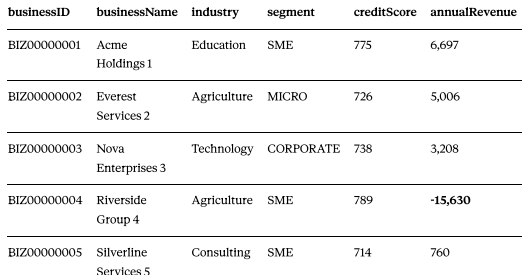
    A user tested three Retrieval-Augmented Generation (RAG) systems—Ollama, Cohere, and Claude—to see how they handled a credit bureau dataset. The user found that only Claude provided accurate information about its data handling, while Ollama and Cohere were less transparent or potentially misleading. This highlights the importance of clear data privacy and usage policies when interacting with AI models. AI

    I Asked Ollama, Cohere, and Claude the Same Question About My Data. Only One Didn’t Lie.

    IMPACT Highlights the need for transparency in AI data handling and the varying capabilities of RAG systems.

  36. How to Use Claude Code with Ollama for Free (+ 5 Powerful Cloud Models You Need to Try)

    Developers can now use Anthropic's Claude Code agent with open-source models via Ollama, eliminating API costs. This setup redirects Claude Code's requests to locally run or Ollama's free cloud-tier models, preserving the familiar terminal interface. This approach makes Claude Code's advanced features, such as file editing and tool calling, accessible for free, which is particularly beneficial for indie developers and learners who found the original API costs prohibitive. AI

    How to Use Claude Code with Ollama for Free (+ 5 Powerful Cloud Models You Need to Try)

    IMPACT Enables free use of advanced coding agent features, lowering barriers for developers and potentially increasing adoption of agentic workflows.

  37. LM Studio Adds MTP Speculative Decoding; Qwen 3.6 GGUF Quants, Ollama Insights

    LM Studio has updated to version 0.4.14 Build 2 (Beta), integrating MTP Speculative Decoding to accelerate local large language model inference. This feature allows for faster text generation by predicting multiple tokens simultaneously, making local AI interactions more fluid. Additionally, new GGUF quantizations for the Qwen 3.6 35B model have been released, with benchmarks comparing MTP and NTP performance across various hardware, providing users with data to optimize their local LLM deployments. AI

    LM Studio Adds MTP Speculative Decoding; Qwen 3.6 GGUF Quants, Ollama Insights

    IMPACT Enhances local LLM inference speed and accessibility for users running models on their own hardware.

  38. GraphRAG on Consumer Hardware: Benchmarking Local LLMs for Healthcare EHR Schema Retrieval

    A new paper evaluates the feasibility of using GraphRAG with locally deployed open-source LLMs on consumer hardware for healthcare EHR schema retrieval. The study benchmarks models like Llama 3.1, Mistral, Qwen 2.5, and Phi-4-mini, revealing significant performance differences in knowledge graph construction, query latency, and answer quality. Results indicate that models around 7B parameters are necessary for reliable structured output, and local retrieval offers advantages in latency and factual grounding over global summarization. AI

    GraphRAG on Consumer Hardware: Benchmarking Local LLMs for Healthcare EHR Schema Retrieval

    IMPACT Demonstrates the viability of local LLMs for sensitive data tasks, potentially reducing cloud costs and improving privacy for healthcare applications.

  39. Unload All llama.cpp Router Models Without Restarting

    The llama.cpp router mode allows local LLM operators to manage multiple models, offering performance and control similar to services like Ollama. While it supports loading and unloading individual models, there isn't a direct API endpoint to unload all models simultaneously. Users can achieve this by first querying the router for all loaded models and then programmatically sending individual unload requests for each, a method that provides explicit control and avoids restarting the entire inference service. AI

    Unload All llama.cpp Router Models Without Restarting

    IMPACT Enables more efficient VRAM management for local LLM deployments, improving usability for self-hosted models.

  40. Why I Built My Own AI Project Management Assistant – and What I Learned

    Two developers describe building custom AI assistants to streamline project management tasks, particularly report generation and data visualization from tools like Jira. One project, AtlasMind, uses a multi-backend architecture with a self-correcting JQL loop to translate natural language queries into Jira reports and charts, running on Oracle Cloud Infrastructure. The other project focuses on a secure, on-premise, CPU-only agent using Ollama and Gemma 4 to process developer reports, normalize data, and generate accomplishment lists while prioritizing data privacy for enterprise clients. AI

    Why I Built My Own AI Project Management Assistant – and What I Learned

    IMPACT Custom AI tools can automate repetitive project management tasks, improving efficiency and data handling for organizations.

  41. Crucible - local open source application for dataset handling

    Crucible is a new, open-source, local application designed for managing datasets used in diffusion models. It runs entirely on user hardware, avoiding cloud dependencies and subscriptions. The tool offers features like batch captioning with local ML models, image scoring for quality and style, ML upscaling, and dataset versioning with snapshots. AI

    Crucible - local open source application for dataset handling

    IMPACT Provides a local, open-source tool for managing diffusion model datasets, enhancing user control and workflow efficiency.

  42. qwen2.5-coder is too slow for Claude Code on a Mac. Here's the fix.

    A user has detailed how to run Claude Code offline on a Mac by pointing it to a local LLM via Ollama, enabling coding sessions without an internet connection. This setup is particularly useful for flights or areas with unreliable Wi-Fi, offering privacy and cost benefits over cloud-based models. The user also shared a more complex project that evolved into a multi-agent system controlled by voice commands, capable of breaking down tasks, recruiting sub-agents, and performing reviews, though it still faces challenges with speaker verification and over-planning. AI

    qwen2.5-coder is too slow for Claude Code on a Mac. Here's the fix.

    IMPACT Enables offline use of AI coding assistants and explores multi-agent voice control, offering flexibility and new interaction paradigms.

  43. Hot To Run LLMs Locally

    This series of guides provides comprehensive instructions for setting up and running large language models (LLMs) locally on Linux systems. It details hardware and software prerequisites, recommends using llama.cpp for its balance of performance and ease of use, and covers model selection, quantization, and API integration. The guides also include steps for setting up systemd services for 24/7 operation, monitoring performance, and optimizing for various hardware constraints. AI

    IMPACT Enables developers to run and experiment with LLMs locally, reducing reliance on cloud services and facilitating custom application development.

  44. Choosing an abliterated version of Gemma 4 31B and 26B-A4B

    New developments in local LLM inference are enhancing performance on consumer hardware. The BeeLlama v0.2.0 release, utilizing a DFlash update, significantly boosts token generation speeds for models like Qwen and Gemma on GPUs such as the RTX 3090, offering up to a 5x speedup. Additionally, ByteShape quantizations are improving Qwen model performance on laptops with limited VRAM, providing a notable speed increase. These advancements aim to make larger, more capable open-weight models practical for everyday local use. AI
    IMPACT Enhances local LLM inference performance, making larger models more accessible on consumer hardware.

  45. Qwen3.6 MTP and API / Connections

    Unsloth has released version v0.1.405-beta, introducing significant performance enhancements and new features. The update includes up to 2x faster GGUF inference through MTP speculative decoding and adds API calling support for services like OpenAI and Anthropic, enabling features such as web search and code execution. Additionally, Unsloth now offers experimental MLX inference for Mac users and improved support for non-English languages, alongside various security and UI/UX improvements. AI

    Qwen3.6 MTP and API / Connections

    IMPACT Accelerates local LLM inference and integration capabilities for developers.

  46. Building RAG Systems: A Complete Guide

    Retrieval-Augmented Generation (RAG) systems are a crucial technique for enhancing Large Language Models (LLMs) by allowing them to access and utilize external, up-to-date information. RAG addresses LLM limitations such as knowledge cutoffs and context window limits by retrieving relevant data before generating a response. This approach is distinct from fine-tuning, which modifies the model's behavior rather than its knowledge base. Building a RAG system involves two main pipelines: an ingestion pipeline for preparing and storing data, and a retrieval pipeline that fetches context for each user query. AI

    Building RAG Systems: A Complete Guide

    IMPACT Enables LLMs to provide more accurate, up-to-date, and domain-specific answers by integrating external knowledge bases.

  47. v0.25.0-rc0: ci: speed up release builds (#15982)

    Ollama has released version 0.25.0-rc0, which includes optimizations to speed up the build process for releases. These changes are also expected to provide a minor speed improvement for local developer builds. The update focuses on improving the efficiency of continuous integration steps. AI

    v0.25.0-rc0: ci: speed up release builds (#15982)

    IMPACT Minor improvements to the build process for an open-source AI model deployment tool.

  48. v0.30.0-rc16

    Ollama has released multiple pre-release versions of its software, including v0.30.0-rc24, v0.30.0-rc22, and v0.30.0-rc18, all marked as version bumps. Earlier releases in this series, such as v0.30.0-rc21, focused on improving Windows exit error logs, while v0.30.0-rc20 addressed cache misses in ROCm builds. Other updates included fixes for CI and linting, as well as tuning batch sizes for performance. AI

    v0.30.0-rc16

    IMPACT Ongoing development and bug fixes for the Ollama local LLM runner.

  49. Not All That Is Fluent Is Factual: Investigating Hallucinations of Large Language Models in Academic Writing

    A new study published on arXiv investigated the hallucination tendencies of four popular LLMs—ChatGPT, Grok, Gemini, and Copilot—when used for academic writing. The research introduced a "Hallucination Index" (HI) and found that Grok and Copilot performed better in reference generation but struggled with abstract prompts, while Gemini and ChatGPT showed better tone control but higher factual hallucination risks. The study concluded that hallucination behavior is influenced by task type and prompting conditions, not solely by model architecture. Separately, Gary Marcus highlighted multiple studies indicating that current LLMs are unreliable for medical advice, often providing inaccurate or fabricated information with high confidence, and should not be used for unsupervised clinical decision-making. AI

    Not All That Is Fluent Is Factual: Investigating Hallucinations of Large Language Models in Academic Writing

    IMPACT LLM hallucinations in academic and medical contexts pose risks of misinformation and unreliable decision-making, highlighting the need for caution and further research.

  50. Thinking about running AI models like Llama 3, Qwen, or Mistral on your own computer? Two of the best local AI tools in 2026 are Ollama and LM Studio. Both tool

    Creators are increasingly adopting local AI solutions in 2026, moving away from cloud-based services for benefits like unlimited usage, enhanced privacy, faster workflows, and lower long-term costs. Tools such as Ollama, LM Studio, and Open-WebUI are making it easier for beginners to run powerful open-source models like Llama 3, Qwen, and Mistral directly on their personal computers. This shift offers users full control over their data and content creation processes, with some even developing portable AI solutions that run entirely offline from a USB stick. AI

    Thinking about running AI models like Llama 3, Qwen, or Mistral on your own computer? Two of the best local AI tools in 2026 are Ollama and LM Studio. Both tool

    IMPACT Accelerates adoption of personal AI infrastructure, offering cost-effective and private alternatives to cloud-based LLM services.