PulseAugur / Brief
EN
LIVE 22:32:24

Brief

last 24h
[11/11] 221 sources

Multi-source AI news clustered, deduplicated, and scored 0–100 across authority, cluster strength, headline signal, and time decay.

  1. mcp-probe v1.5.0: Doctor checks for MCP CI readiness

    The developer tool mcp-probe has released version 1.5.0, introducing a new 'doctor' command. This command performs preflight checks on a repository to ensure it is correctly configured for running MCP readiness checks within a Continuous Integration (CI) environment. It verifies Node.js runtime, the existence and validity of configuration files, sidecar files, and GitHub Actions workflows that invoke mcp-probe, aiming to catch setup errors early. AI

    IMPACT Improves developer tooling for AI infrastructure, potentially streamlining CI/CD pipelines for AI agents.

  2. An npm Package for AI Agent Orchestration Just Shipped With Its Front Door Unlocked. Here's What the CVE Actually Reveals.

    A critical security vulnerability, CVE-2026-46701, has been discovered in the Network-AI npm package, an orchestration layer for AI agents. The flaw allows any web page to silently invoke all 22 exposed MCP tools, including those that can arbitrarily change configurations, spawn new agents, corrupt shared state, or revoke legitimate agent tokens. This vulnerability, rated High with Low attack complexity and no privileges required, stems from a default empty secret and permissive CORS settings in the local MCP server. AI

    IMPACT This vulnerability highlights the growing security risks in the AI agent orchestration ecosystem, potentially impacting tools that integrate with Network-AI.

  3. I made a local-first MCP tutorial repo with node-llama-cpp and a custom agent loop

    A new tutorial repository, "MCP from Scratch," has been released, offering a step-by-step guide to understanding the Model Context Protocol (MCP). The project focuses on building an MCP server using plain Node.js and integrates local inference with GGUF models. It culminates in a custom agent loop that utilizes MCP tools, with an optional LangChain example provided. AI

    IMPACT Provides a learning resource for developers to understand and implement local AI agent loops using the Model Context Protocol.

  4. Building a Claude Code plugin with zero npm dependencies

    A developer has created a Claude Code plugin called seo-survival-kit that generates SEO outreach PDFs by integrating data from multiple APIs and rendering it using headless Chrome. To enhance security, the plugin was built without any npm dependencies, minimizing the potential for supply-chain attacks. This was achieved by utilizing raw Node.js modules and directly invoking Chrome via command-line flags instead of relying on libraries like Puppeteer. The developer also implemented robust security measures, including strict path validation and Content Security Policy, to prevent malicious code execution. AI

    IMPACT Demonstrates a secure and efficient method for building AI tool integrations, potentially influencing future plugin development practices.

  5. I built a version manager for llama.cpp using nothing but vibe coding.

    A developer created a version manager for the llama.cpp project, inspired by Node.js's nvm tool. This new tool, named 'lvm', allows users to easily install, switch between, and manage different versions of llama.cpp, simplifying the update process for those who frequently use the software. The project was developed using Go and is available on GitHub for community contributions. AI

    IMPACT Simplifies workflow for developers using llama.cpp, potentially accelerating experimentation with new model versions.

  6. From Node.js to Go: Rebuilding an MCP Server for Production

    A developer rebuilt a Node.js MCP server in Go to address architectural limitations, including unreliable process management and tight coupling to a single search provider. The new Go version offers improved stability, easier extensibility for multiple search engines, and robust caching. Separately, a new SEO tool for developers, compatible with various IDEs and AI assistants, has been released. This tool acts as an executor, guiding users through complex SEO decisions and ensuring adherence to current search engine policies. AI

    From Node.js to Go: Rebuilding an MCP Server for Production

    IMPACT New SEO tool enhances developer workflows and adherence to AI-driven search engine policies.

  7. Add an agent to your workflow. Remove one. Nothing else changes. There is no orchestration layer to update, because there is no orchestration layer. Each agent

    Forge CMS offers a self-hosted, open-source content management system built with Go, emphasizing simplicity and reliability. It compiles to a single binary, eliminating dependencies like Node.js and lock files, which simplifies deployment and maintenance. The system is designed to integrate AI agents seamlessly into workflows without requiring complex orchestration layers, as agents communicate through content state rather than direct interaction. AI

    IMPACT Simplifies AI agent integration into web development workflows.

  8. We Connected an LLM to a 12-Year-Old Codebase. Here's What Broke.

    Integrating LLMs into existing, complex software systems presents significant challenges beyond simple API calls. A key issue is managing the probabilistic and network-dependent nature of LLMs, which can cause system instability if treated as deterministic, in-process functions, leading to failures like extended checkout times. Furthermore, the quality of data fed into LLMs is crucial; historical data with inconsistencies and drift can lead to inaccurate outputs, turning AI integration into a data cleaning project. Finally, the cost of LLM usage can escalate rapidly without proper telemetry, necessitating the implementation of a gateway service to handle timeouts, fallbacks, and cost monitoring. AI

    IMPACT Provides practical guidance on integrating LLMs into legacy systems, highlighting common pitfalls and architectural patterns for reliable and cost-effective deployment.

  9. Build Your Own Livestreaming Service with api.video

    Replit and api.video have partnered to offer a tutorial on building a custom livestreaming service. The guide utilizes api.video's APIs and SDKs, which provide tools for video uploading, encoding, delivery, and analytics. Developers can create their own livestreaming platforms or embed video players with customizable branding, and the tutorial specifically demonstrates using Replit's in-browser IDE with Node.js and React. AI

    Build Your Own Livestreaming Service with api.video

    IMPACT Enables developers to build custom livestreaming solutions, potentially increasing adoption of video-centric applications.

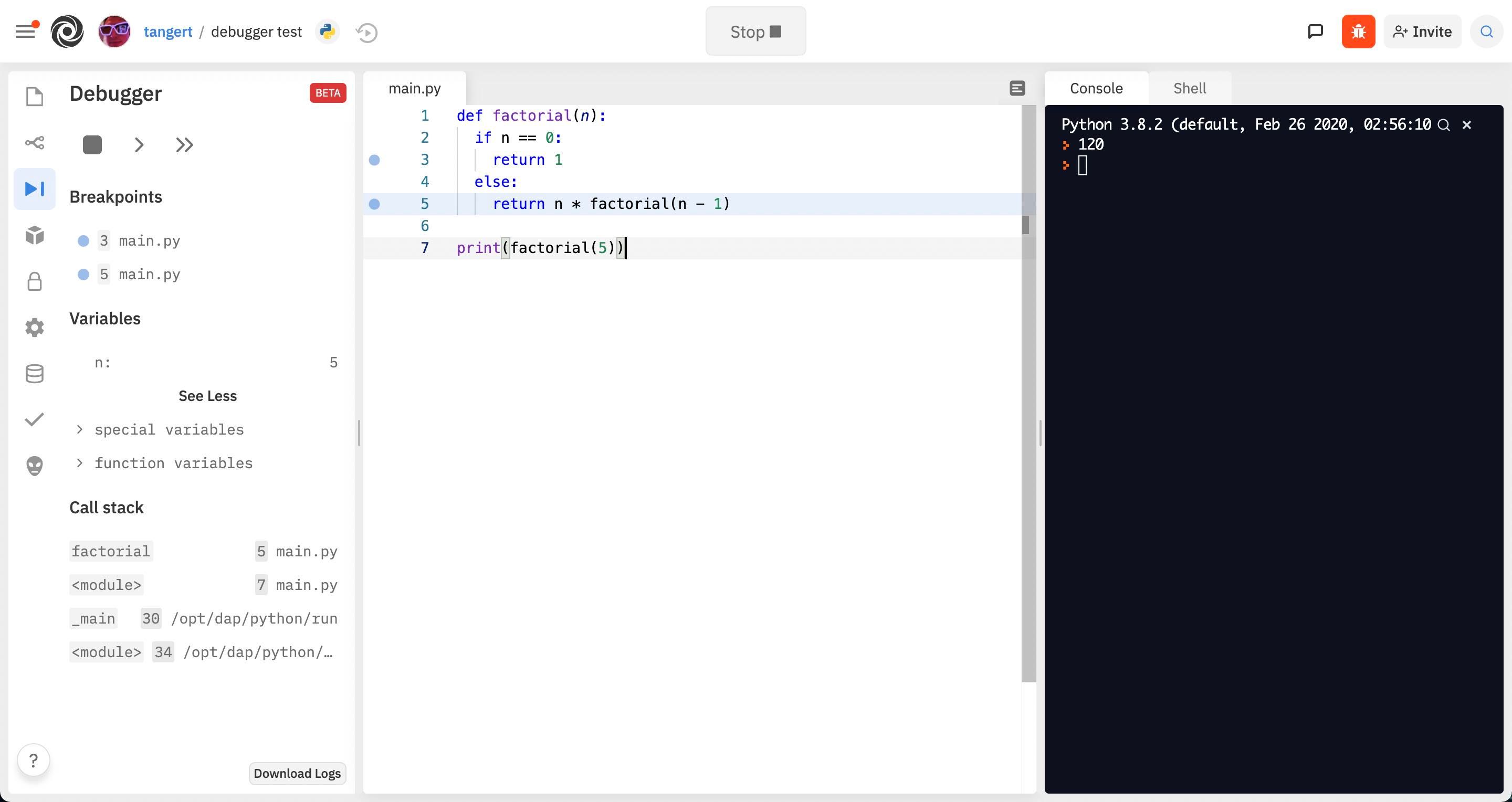
  10. Multiplayer Debugging Experience for Python, Node.js, Java, and C/C++

    Replit has launched a multiplayer-first interactive debugger for C, C++, Node.js, Python, and Java, allowing multiple users to collaborate on code comprehension and debugging in real-time. This new feature eliminates the need for traditional print statement debugging by enabling users to pause execution, inspect variables, and share debugging states. Additionally, Replit has introduced an open beta for Node.js package support, enabling developers to easily integrate third-party libraries into their projects. AI

    Multiplayer Debugging Experience for Python, Node.js, Java, and C/C++

    IMPACT Enhances developer productivity and collaboration on coding platforms.