PulseAugur / Brief
EN
LIVE 23:04:59

Brief

last 24h
[16/16] 221 sources

Multi-source AI news clustered, deduplicated, and scored 0–100 across authority, cluster strength, headline signal, and time decay.

  1. I made a pack of 10 .cursorrules files for the most popular stacks — here's why it matters

    A user has created a set of 10 `.cursorrules` files designed to improve the code generation capabilities of the Cursor IDE. These files provide detailed instructions for generating code that aligns with specific technology stacks, coding patterns, and user preferences. The user is sharing one of these rule packs, which is tailored for Next.js, TypeScript, and Tailwind CSS, for free, covering aspects like component conventions, validation, and anti-patterns. AI

    IMPACT Enhances developer productivity by enabling more tailored AI-assisted code generation within the Cursor IDE.

  2. I built an open-source LLM eval framework as a BCA student — hallucination detection, red-teaming, regression tracking

    A BCA student has developed an open-source framework to evaluate Large Language Models (LLMs), addressing the challenge of ensuring AI product performance. The framework includes a 27-test suite for accuracy, safety, and hallucination detection, utilizing a three-tier scoring system. It also features automated adversarial prompt generation for red-teaming and regression tracking across model versions, all presented through a live dashboard. AI

    I built an open-source LLM eval framework as a BCA student — hallucination detection, red-teaming, regression tracking

    IMPACT Provides a free, open-source tool for developers to monitor and improve LLM performance, potentially accelerating AI product development.

  3. WebMCP and the Browser AI Layer: What Next.js Devs Need to Know

    A new proposal called WebMCP aims to enable AI agents to communicate directly with web applications and data sources within the browser. This browser-native protocol would allow web pages to act as MCP clients, bypassing traditional backend API routes. While still a proposal, its adoption could shift security responsibilities from Next.js API routes to the MCP server itself, requiring explicit validation and authentication at the server boundary. AI

    IMPACT WebMCP could streamline AI agent integration in web applications by enabling direct browser-based communication, shifting security focus to the server boundary.

  4. 5 Vercel Edge Config A/B Tests That Lifted My Shopify CTR

    A developer shares five A/B testing strategies for Shopify storefronts using Vercel Edge Config. These tests, implemented with minimal code changes, focus on elements like hero copy, geo-targeted free shipping, sticky call-to-action buttons, price display formats, and disabling flaky widgets. The author reports significant lifts in click-through rates, checkout intent, and add-to-cart actions, emphasizing the speed and efficiency of Edge Config for real-time adjustments without full site rebuilds. AI

    IMPACT Enables rapid, real-time optimization of e-commerce storefronts without code rebuilds, directly impacting conversion rates and user experience.

  5. What’s the best tech stack for AI app development?

    Developing AI applications requires a specialized tech stack that differs from traditional web development due to the non-deterministic nature of LLMs. Python and JavaScript/TypeScript are recommended for AI workflows as they align better with how models are trained, leading to more predictable outcomes. Stacks built on less common ecosystems like Flutter or Swift can introduce friction and errors because models struggle to understand their project structures and build systems. AI

    What’s the best tech stack for AI app development?

    IMPACT Guides developers on selecting appropriate tech stacks to optimize AI application performance and development efficiency.

  6. Why I Standardized on Phosphor Icons Across 15 Repos (And Cut 60% of Icon Bundle Size)

    The author standardized on Phosphor Icons across 15 repositories to resolve visual inconsistencies and reduce bundle size. Previously, the studio used five different icon systems, leading to a fragmented user experience and large file sizes, with one app's icon bundle reaching 84KB. By migrating to Phosphor, which offers six distinct weights within a single design family, the author achieved a unified visual identity and significantly improved performance, reducing the icon bundle size to 18KB. AI

    IMPACT Minimal impact on AI operators; this is a web development optimization tip.

  7. tutorial #09: My Company Name Was Leaking from a Public URL

    A developer discovered their company name and real name were exposed in plain text via a public URL due to an old, unremoved route in their Next.js application. The vulnerability had existed for over three weeks before being found by chance. The developer fixed the issue by replacing the exposed route with a 404 stub and plans to implement a pre-deploy script using grep to prevent similar leaks in the future. AI

    IMPACT Niche tooling improvement; minimal industry-wide impact.

  8. View Transitions API: 5 Patterns I Use Across RAXXO Sites in 2026

    The View Transitions API allows developers to create smooth visual transitions between different states or pages within web applications. This API enables features like animated content swaps and shared element morphing, enhancing the user experience by making interfaces feel more polished and expensive. With widespread browser support, developers can implement these transitions with minimal JavaScript, leveraging the browser's compositor for efficient animations. AI

    IMPACT Minimal direct impact on AI operators; focuses on web development tooling.

  9. Forge is headless. One URL returns HTML to browsers, JSON to your frontend framework, and AI-optimised output to agents. No extra endpoints. No glue code. Conte

    Forge CMS has launched a new headless content management system designed for modern web development and AI integration. It uses a single URL to serve content in various formats, including HTML for browsers, JSON for frontend frameworks like React or Next.js, and AI-optimized output for agents. This approach eliminates the need for separate endpoints or glue code, allowing developers to use their preferred frontend technologies while ensuring seamless content delivery across different platforms. AI

    Forge is headless. One URL returns HTML to browsers, JSON to your frontend framework, and AI-optimised output to agents. No extra endpoints. No glue code. Conte

    IMPACT Provides developers with a flexible way to serve AI-optimized content, potentially streamlining AI agent integration with web applications.

  10. Show HN: CyberWriter – a .md editor built on Apple's (barely-used) on-device AI

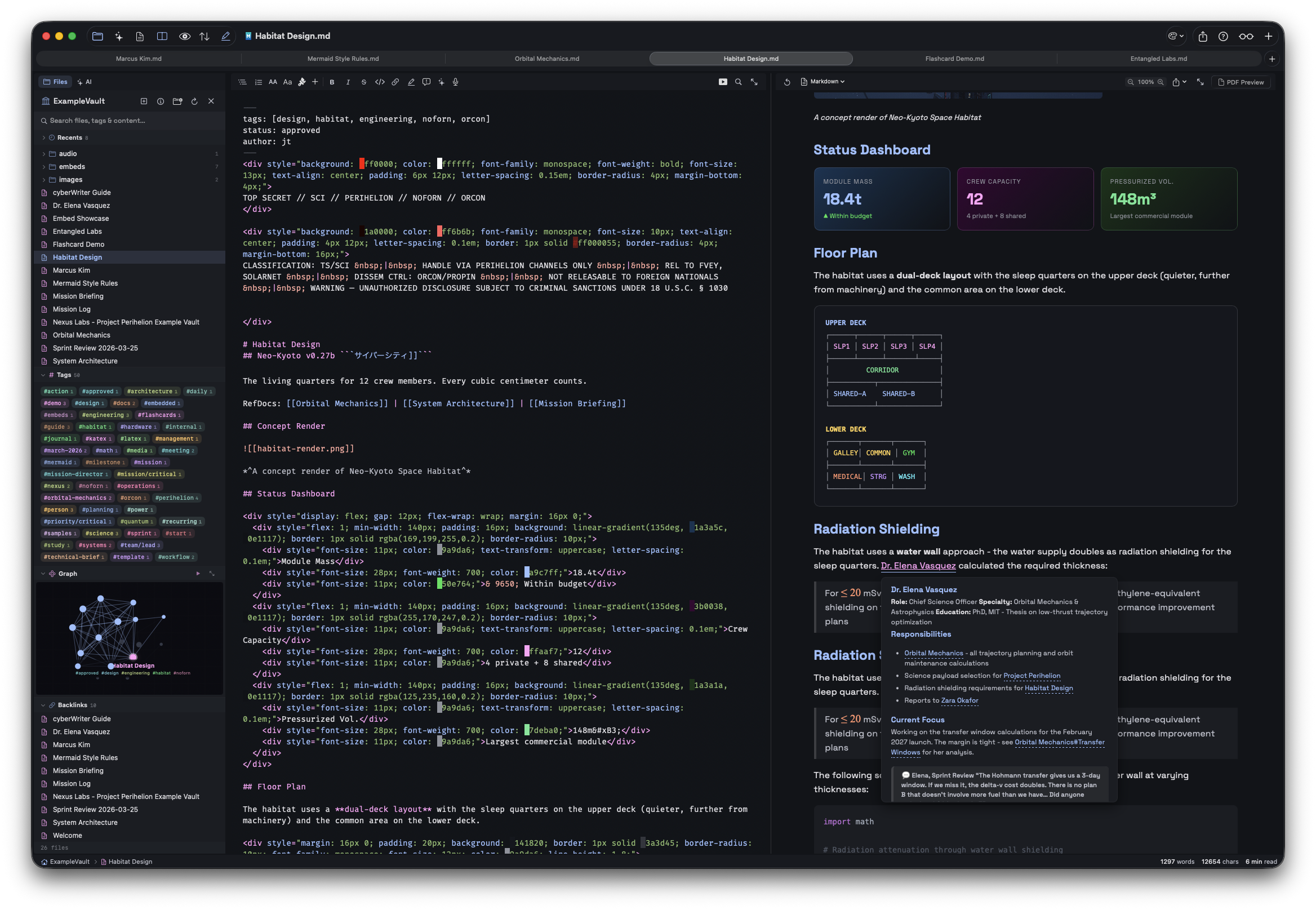
    Two open-source projects aim to provide better interfaces for on-device AI, specifically Apple's Foundation Models. CyberWriter is a native macOS Markdown editor that integrates AI for writing assistance and knowledge base querying. Perspective Intelligence Web offers a browser-based chat interface accessible from any device, connecting to Apple's on-device AI running on a Mac. AI

    Show HN: CyberWriter – a .md editor built on Apple's (barely-used) on-device AI

    IMPACT These projects offer new ways for users to interact with on-device AI, potentially increasing its adoption and utility.

  11. Critical Security Vulnerability in React Server Components

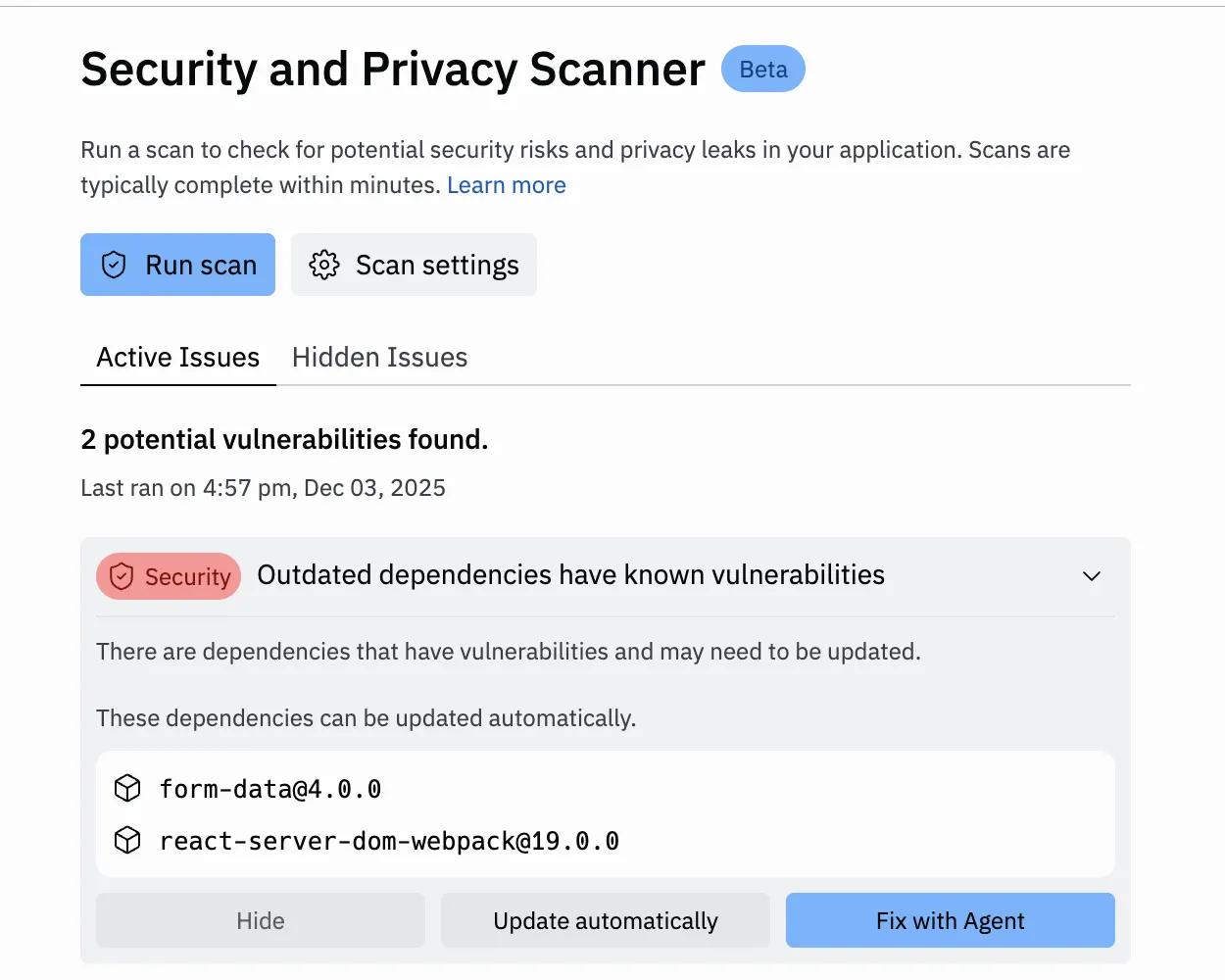
    A critical security vulnerability has been disclosed affecting React Server Components, impacting specific versions of React and Vercel's Next.js framework. The vulnerability could lead to issues such as middleware bypass, denial of service, and server-side request forgery. Replit has implemented mitigations for its deployments and is notifying affected users, while recommending immediate upgrades to patched versions of Next.js and React dependencies. AI

    Critical Security Vulnerability in React Server Components

    IMPACT Security vulnerability in React Server Components could impact AI development tools and platforms that rely on these components.

  12. Openv0: The Open-Source, AI-Driven Generative UI Component Framework

    Replit has launched openv0, an open-source framework for generating UI components using generative AI. Developers can describe the interface they want, and openv0 will produce code for frameworks like React and Svelte, utilizing libraries such as NextUI and Shadcn. This tool aims to streamline the front-end development process by automating component creation and iteration, reducing manual workload for designers and engineers. The framework leverages both OpenAI's models for code generation and Replit's ModelFarm for design tasks, with a public demo available and the ability for users to fork and host their own versions. AI

    Openv0: The Open-Source, AI-Driven Generative UI Component Framework

    IMPACT Accelerates front-end development by automating UI component creation and iteration.

  13. We Built a Search Engine

    Replit has launched a new, powerful search engine designed to help users find content within its platform in under 30 seconds. The engine indexes a wide range of items, including Repls, templates, code, users, and community content. This initiative addresses a significant user pain point, as 80% of users previously abandoned the search function due to its ineffectiveness. Replit built the search engine using Elasticsearch for indexing and Apache Spark for data pipelines, with plans to expand code search capabilities to all files in every Repl. AI

    We Built a Search Engine

    IMPACT Improves discoverability of code and community content, potentially aiding AI development and learning.

  14. Build a Speech-to-Text App with AssemblyAI on Replit

    This article details how to build a speech-to-text application using AssemblyAI's API and the Replit development platform. It guides users through setting up a Next.js project with React and Tailwind CSS, and then integrating AssemblyAI for audio transcription. The tutorial emphasizes AssemblyAI's capabilities beyond basic transcription, such as speaker detection, summarization, and custom vocabulary support, while also noting its free tier for development purposes. AI

    Build a Speech-to-Text App with AssemblyAI on Replit

    IMPACT Enables developers to easily integrate advanced speech-to-text capabilities into their applications.

  15. React Framework Preboot

    Replit has introduced a new feature called "preboot" to significantly speed up the startup time for React framework development environments. Previously, users had to manually initiate the server, leading to delays. The new preboot system leverages Replit's existing container pooling infrastructure to ensure that a container is already running and listening on a port when a user accesses a React framework repl, allowing the IDE to attach instantly. AI

    IMPACT Speeds up development workflows for AI-adjacent applications built with React frameworks.

  16. Repl.it ❤️ React

    Replit has launched a public beta for building and deploying full-stack React applications directly on its platform. This new feature aims to simplify the development process for React frameworks like Next.js, offering a zero-configuration environment with real-time deployment. The initiative is part of Replit's effort to give back to the React community and make it easier for new developers, particularly from underserved backgrounds, to engage with the ecosystem. AI

    IMPACT Simplifies full-stack React development, potentially lowering barriers for new developers.