PulseAugur / Brief
EN
LIVE 09:38:47

Brief

last 24h
[18/18] 221 sources

Multi-source AI news clustered, deduplicated, and scored 0–100 across authority, cluster strength, headline signal, and time decay.

  1. SpaceX Faces A Crucial Launch Test Ahead Of Its IPO

    SpaceX is preparing for a critical Starship test flight as the company moves towards its IPO, with the rocket's success being essential for its future growth strategies. The company has invested over $15 billion in Starship, which is needed for launching next-generation satellites, orbital data centers, and NASA missions. Meanwhile, researchers at McGill University have developed a novel material using curved origami structures that can transition between flexible and rigid states, with potential applications in emergency shelters and space structures. Separately, Sam Altman's longevity startup, Retro Biosciences, has secured new funding at a $1.8 billion valuation to advance its research aimed at extending human lifespan. AI

    SpaceX Faces A Crucial Launch Test Ahead Of Its IPO

    IMPACT SpaceX's Starship is crucial for orbital data centers and AI compute, while Retro Biosciences uses AI for longevity research.

  2. Why Russians Are In Despair Over Truck-Busting ’Martian’ Drones

    Ukraine is deploying new "Martian" drones that are causing significant disruption to Russian supply lines. These drones, reportedly utilizing advanced visual navigation and AI-enabled targeting, can evade electronic warfare and GPS jamming. Their sophisticated communication systems and high reliability make them extremely difficult for Russian forces to detect or counter, leading to increased despair among Russian military bloggers. AI

    Why Russians Are In Despair Over Truck-Busting ’Martian’ Drones

    IMPACT Advanced AI-driven navigation and targeting in new drones significantly disrupt military logistics and challenge existing countermeasures.

  3. Scientists Warn The Sun Could Be About To Produce A ‘Superflare’

    Scientists have developed a new probabilistic forecasting system for extreme solar flares, known as "S-class" superflares, which are capable of causing widespread technological disruptions. This system, utilizing machine learning and analysis of historical solar activity, identifies specific time windows and regions on the sun where these powerful eruptions are more likely to occur. The research suggests a heightened risk for such an event between mid-2025 and mid-2026, potentially providing one to two years of advance warning for space weather operators. AI

    Scientists Warn The Sun Could Be About To Produce A ‘Superflare’

    IMPACT New machine learning-based forecasting system offers potential for early warning of disruptive solar events.

  4. Former NASA Robotics Chief: America is building the wrong kind of robots — and China knows it

    A former NASA robotics chief argues that the United States is focusing on the wrong aspects of humanoid robot development, prioritizing impressive demonstrations over practical, scalable deployment. While U.S. robots excel in controlled environments, they struggle with real-world tasks and adaptability, unlike human workers who can fluidly switch between duties. The author suggests that current federal policies and investment structures, which reward discovery over deployment, hinder the adoption of these robots by mid-sized manufacturers and advocates for a shift towards incentivizing widespread implementation. AI

    Former NASA Robotics Chief: America is building the wrong kind of robots — and China knows it

    IMPACT US manufacturers may lag in adopting adaptable robots, impacting industrial competitiveness and efficiency.

  5. NASA shares Psyche spacecraft's photos of Mars

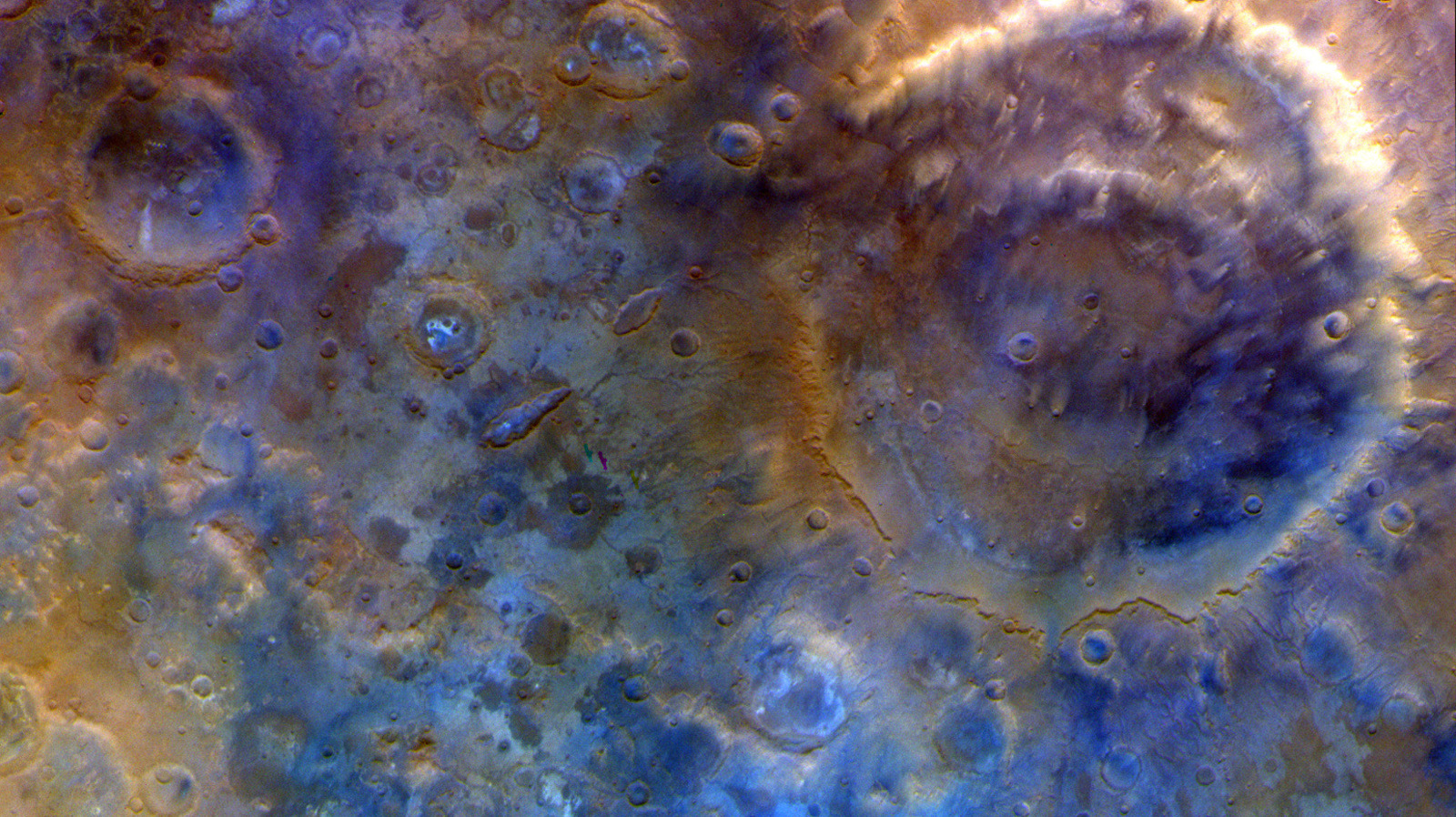
    NASA has released new images captured by its Psyche spacecraft during a flyby of Mars. The spacecraft used the Martian gravity assist to adjust its trajectory on its journey to the metallic asteroid 16 Psyche. The photos showcase features like the Huygens double-ring crater and the planet's icy southern pole, with enhanced colors to highlight compositional differences. AI

    NASA shares Psyche spacecraft's photos of Mars
  6. NASA is opening up bids for who will run the Jet Propulsion Laboratory

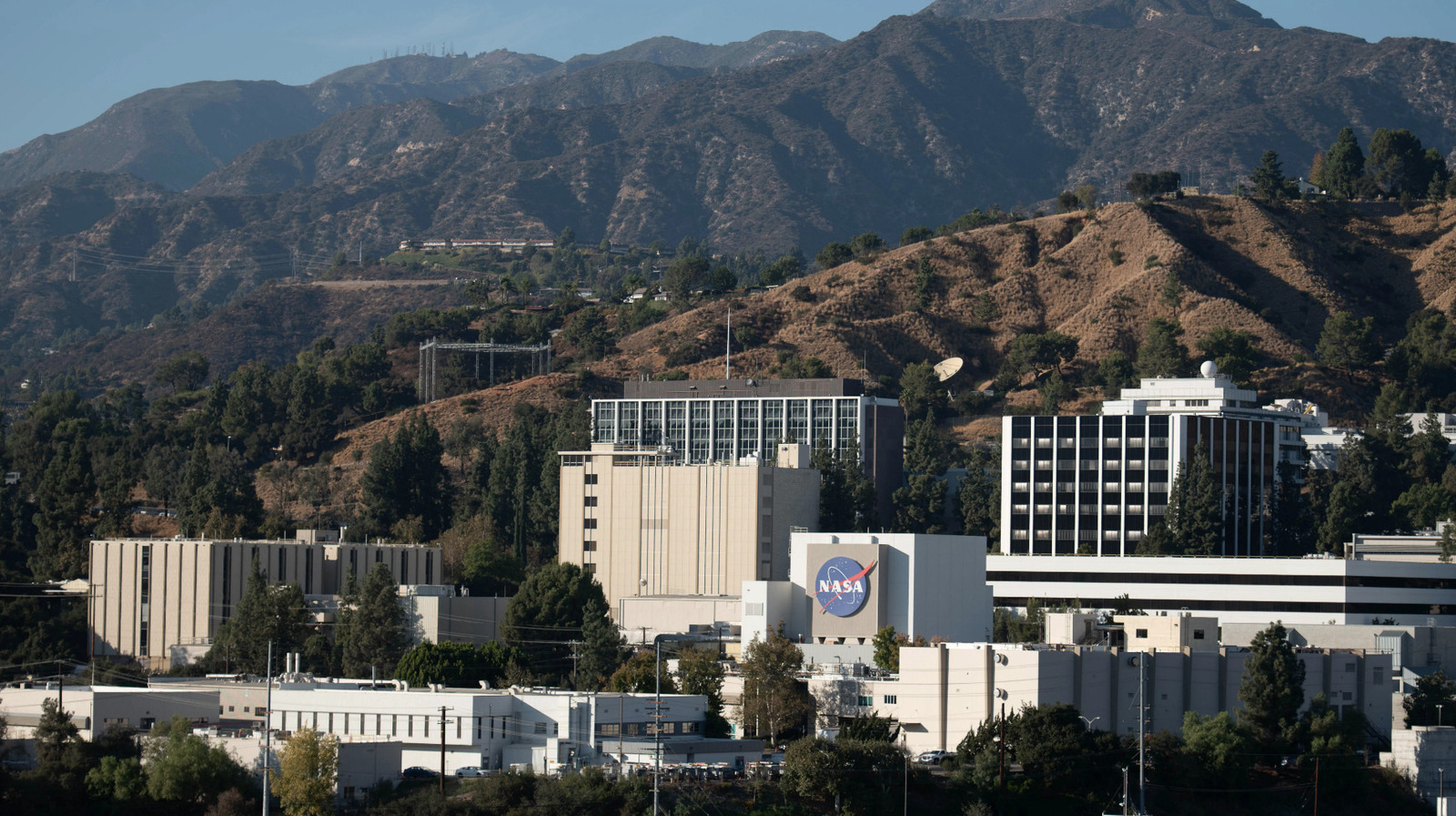
    NASA is initiating a competitive bidding process to determine who will manage the Jet Propulsion Laboratory (JPL) after its contract with Caltech concludes in 2028. This move, unprecedented since JPL's founding in 1936, aims to explore potential benefits from alternative management approaches, including enhanced performance, innovation, and efficiency. The agency is seeking responses from interested parties, considering the growth of the space economy and potential for a competitive market, with the contract valued at an estimated $30 billion. AI

    NASA is opening up bids for who will run the Jet Propulsion Laboratory
  7. China hails latest breakthrough on space solar power technology

    Chinese researchers have advanced their space-based solar power technology by successfully demonstrating the ability to beam energy to multiple moving targets simultaneously. A ground verification platform at Xidian University transmitted 1,180 watts across 100 meters, and a drone received 143 watts while flying at 30 km/h. This system achieved a 20.8% overall wireless power transmission efficiency, a significant step towards powering future space infrastructure. AI

    China hails latest breakthrough on space solar power technology
  8. Webb Telescope Detects Cloudy Mornings And Clear Nights On Alien World

    Astronomers utilizing the James Webb Space Telescope have observed a distinct weather pattern on the exoplanet WASP-94A b, a gas giant located 689 light-years away. The telescope's observations revealed that mineral clouds form on the planet's cooler night side and dissipate under intense daytime heat, leading to cloudy mornings and clearer evenings. This discovery provides unprecedented insight into the atmospheric dynamics of exoplanets and may significantly alter future research methods in the field. AI

    Webb Telescope Detects Cloudy Mornings And Clear Nights On Alien World

    IMPACT Provides new methods for studying exoplanet atmospheres, potentially accelerating discovery.

  9. A new, cosmic episode of my podcast "What the Fox says" is now available! Today's edition was dominated by extraterrestrial topics, but there was also hard...

    The latest episode of the "What the Fox says" podcast covers a range of topics, from recent discoveries by the James Webb Space Telescope concerning supermassive black holes to advancements in NASA's advanced plasma propulsion system and Blue Origin's cryogenic technologies aimed at facilitating space travel. The episode also delves into geopolitical and technological issues, including Russia's Razvet satellite constellation as a Starlink competitor and Mistral AI's call for European AI sovereignty. Additionally, it explores the potential for technological "deskilling" due to over-reliance on AI and automation, and discusses innovations like the European Digital Identity Wallet, zero-knowledge proofs, a large vanadium energy storage facility, and a new non-hormonal male contraceptive. AI

    IMPACT Explores the potential for technological 'deskilling' due to over-reliance on AI and automation.

  10. 📰 Pentagon Releases Second Batch of UFO Videos, First-Hand Testimony The Pentagon released a second batch of UAP files, including 50 videos and documents showin

    The Pentagon has released a second collection of Unidentified Aerial Phenomena (UAP) files. This new batch includes approximately 50 videos and supporting documents. The released materials reportedly show unexplained objects observed over regions such as the Middle East, Syria, and Iran, and also feature in NASA recordings. AI

  11. 📰 NASA Expects Chinese Crewed Mission Around the Moon In 2027 NASA Administrator Jared Isaacman says he expects China to fly taikonauts around the moon in 2027,

    NASA Administrator Jared Isaacman anticipates China will launch a crewed mission to orbit the Moon in 2027. This development is expected to intensify the perceived space race between China and the United States. The announcement highlights the growing ambitions and capabilities of China's space program. AI

  12. What Is ‘Dusking?’ Namibia Named Best Place To Watch Day Turn To Night

    A new travel trend called 'dusking,' which involves quietly observing the transition from day to night, is gaining popularity as a counter-movement to hyper-curated social media travel aesthetics. This trend emphasizes mindfulness and a connection with nature. A 'Global Dusking Index' study identified Namibia as the top destination for experiencing dusking, due to its exceptional atmospheric conditions for sunsets, surpassing more conventionally popular locations like the Maldives. AI

    What Is ‘Dusking?’ Namibia Named Best Place To Watch Day Turn To Night
  13. SpaceX will be worth trillions, but the space station that made it possible is worth even more — if we don’t squander it

    The International Space Station (ISS), a project costing approximately $250 billion, has served as a crucial platform for SpaceX's early development and the broader space industry. Despite its immense scientific and technological contributions, the current barter-based economic model of the ISS traps trillions of dollars in latent value, including intellectual property and data, which cannot be easily traded or reinvested. To unlock this value, a new financial bridge is needed to convert orbital commodities like power and crew time into liquid, tradable assets, enabling a more robust space economy. AI

    SpaceX will be worth trillions, but the space station that made it possible is worth even more — if we don’t squander it
  14. What is red light therapy?: Our experts break down the new wellness trend

    Red light therapy, a wellness trend that emerged in the 1990s from NASA's experiments with LED technology for growing plants in space, is gaining attention for its potential to aid in hair regrowth, improve acne, and accelerate muscle recovery. The therapy works by exposing the skin to specific wavelengths of light, which stimulates cellular energy production. Different wavelengths target various depths of tissue, with shorter wavelengths benefiting skin surface concerns and longer wavelengths reaching deeper to affect muscles and joints. AI

    What is red light therapy?: Our experts break down the new wellness trend
  15. SpaceX’s next-gen rocket is the key to its sky-high valuation, early investor says: ‘Starship also enables all kinds of frontier markets’

    SpaceX successfully conducted the first test flight of its upgraded Starship V3, which experienced some engine failures but achieved most of its objectives. The V3, taller and more powerful than previous versions, deployed mock Starlink satellites and gathered crucial data on its heat shield and maneuvering capabilities. This test flight is a significant step towards SpaceX's goals of lunar missions, Mars colonization, and its potential IPO. AI

    SpaceX’s next-gen rocket is the key to its sky-high valuation, early investor says: ‘Starship also enables all kinds of frontier markets’

    IMPACT Enables new orbital infrastructure and deep space missions, potentially unlocking new markets and accelerating space exploration.

  16. SpectralEarth-FM: Bringing Hyperspectral Imagery into Multimodal Earth Observation Pretraining

    Researchers have developed SpectralEarth-FM, a new foundation model designed to process and fuse hyperspectral imagery with other Earth observation data like multispectral, radar, and temperature readings. This model utilizes a hierarchical transformer architecture that can handle varying spectral dimensions and integrates a cross-sensor fusion module. To train SpectralEarth-FM, a large dataset called SpectralEarth-MM was curated, containing over 40TB of co-located data from multiple satellite sensors, enabling state-of-the-art results on downstream tasks. AI

    SpectralEarth-FM: Bringing Hyperspectral Imagery into Multimodal Earth Observation Pretraining

    IMPACT Advances hyperspectral data processing and fusion, enabling more comprehensive Earth observation analysis.

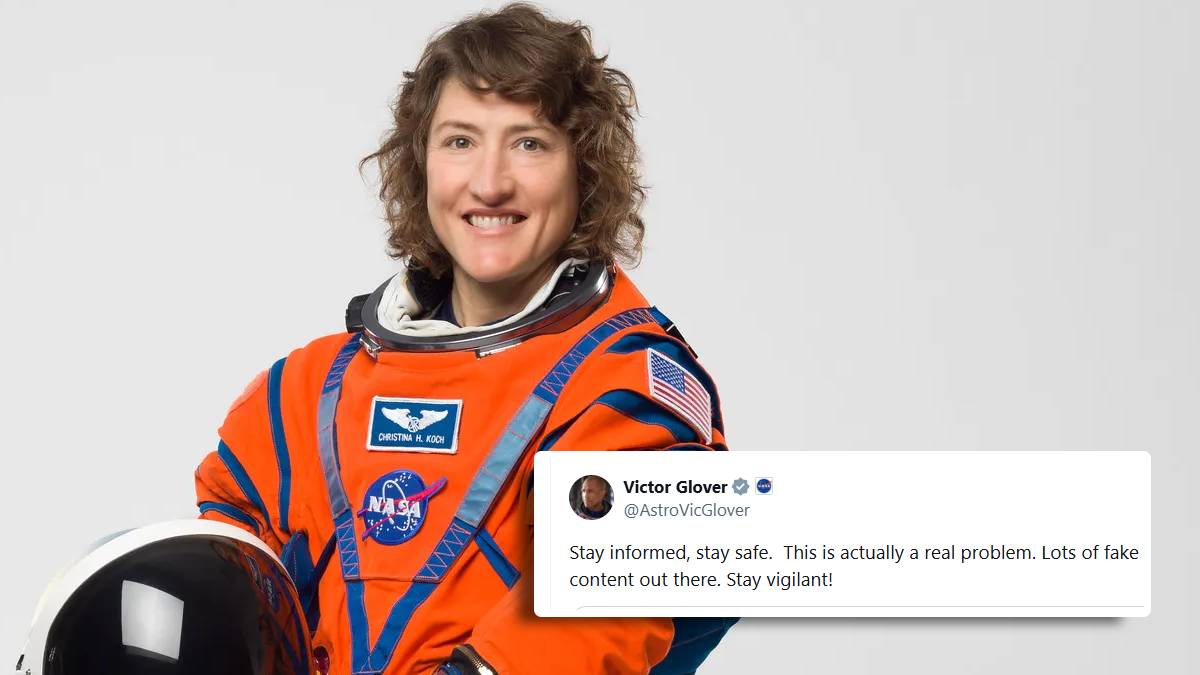
  17. Artemis II Astronaut Christina Koch Slams Deepfake Homecoming Video After Lunar Flyby; Orion Crew Victor Glover Reacts https:// fed.brid.gy/r/https://in.masha b

    Astronaut Christina Koch has spoken out against an AI-generated deepfake video that falsely depicted her homecoming after the Artemis II mission. The video, which circulated online shortly after her return to Earth, was condemned by Koch, who noted that children were depicted in the fabricated footage. Her crewmate Victor Glover also highlighted the growing problem of fake content, urging the public to remain vigilant. AI

    Artemis II Astronaut Christina Koch Slams Deepfake Homecoming Video After Lunar Flyby; Orion Crew Victor Glover Reacts https:// fed.brid.gy/r/https://in.masha b

    IMPACT Highlights the growing problem of AI-generated misinformation and its impact on public figures and trust.

  18. Biggest Sunspots In Years Turn Toward Earth — Expect Northern Lights

    The European Space Agency's Solar Orbiter spacecraft has detected a large sunspot region on the far side of the sun, which is expected to turn towards Earth around May 22nd. This region has already produced several solar flares and coronal mass ejections, raising the possibility of geomagnetic storms. NASA's Perseverance rover on Mars also captured images of this sunspot, highlighting its significant size and activity. AI

    Biggest Sunspots In Years Turn Toward Earth — Expect Northern Lights