PulseAugur / Brief
EN
LIVE 23:48:07

Brief

last 24h
[25/25] 221 sources

Multi-source AI news clustered, deduplicated, and scored 0–100 across authority, cluster strength, headline signal, and time decay.

  1. How to use multiple character loras at once and avoid character blending

    A user on Reddit's r/StableDiffusion subreddit is seeking advice on how to effectively use multiple character LoRAs (Low-Rank Adaptation) simultaneously without them blending or affecting unrelated generations. The user has trained LoRAs for two distinct mascots but is encountering issues where one LoRA's style bleeds into generations even when its trigger word isn't used, and when multiple LoRAs are applied, they merge undesirably, corrupting the desired output. They are exploring potential solutions like regional LoRAs or a two-pass inpainting process, but are looking for more efficient or straightforward methods. AI

    How to use multiple character loras at once and avoid character blending

    IMPACT Users are seeking methods to improve control over AI image generation tools when using multiple custom character models.
  2. NP-LoRA: Null Space Projection for Subject-Style LoRA Fusion

    Researchers have developed NP-LoRA, a novel framework for fusing subject and style representations in generative models without retraining. This method addresses issues arising from overlapping subspaces in independently trained LoRAs, which can degrade generation quality. NP-LoRA utilizes a projection operator to modulate interactions between these subspaces, specifically projecting content LoRAs onto the null space of style LoRAs to minimize interference while preserving essential information. The framework offers a continuous interpolation between linear merging and hard projection, demonstrating improved content-style composition in experiments. AI

    IMPACT Introduces a novel method for more balanced content-style composition in generative models without retraining.

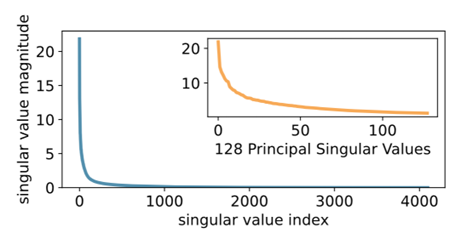
  3. Why Does LoRA Work So Well?

    This article delves into the effectiveness of Low-Rank Adaptation (LoRA) in fine-tuning large language models. It explores the underlying linear algebra principles that contribute to LoRA's success. The explanation aims to provide a deeper understanding of why this technique is so efficient for adapting pre-trained models. AI

    Why Does LoRA Work So Well?

    IMPACT Explains a key technique for efficient model adaptation, potentially improving developer workflows.

  4. Character loras - the search for perfect balance

    Users are encountering difficulties when attempting to combine multiple character LoRAs in Stable Diffusion, with the AI often blending the distinct characters into a single, indistinct entity. Despite employing techniques like the "BREAK" keyword, achieving a clear separation of concepts for multiple characters in a single image appears to be a significant challenge. The community is seeking advice and practical solutions for this issue. AI

    IMPACT Users are finding it difficult to combine multiple character LoRAs in Stable Diffusion, indicating a current limitation in the tool's ability to manage distinct concepts.

  5. Train an AI today, despite bugs, and level up fast. # ai # coding # streaming

    LoRA (Low-Rank Adaptation) offers a method for efficiently updating AI models by saving only small changes rather than entire copies. This technique allows for faster training and iteration, enabling developers to improve AI systems even with existing bugs. AI

    IMPACT LoRA's efficiency in model updates could accelerate AI development and deployment by reducing computational overhead.

  6. I shipped a windows desktop app for running local LLMs with a button that turns your "no thats wrong" into actual LoRA training data

    A new Windows desktop application called SEELS has been released, designed for running local Large Language Models (LLMs). Its core feature allows users to correct model responses and use these corrections to train custom LoRA adapters, effectively personalizing the LLM. The app also includes features like voice mode with local STT/TTS, a hardware dashboard, and supports GGUF models, with advanced features planned for future tiers. AI

    IMPACT Enables users to fine-tune local LLMs without complex setups, potentially increasing adoption of personalized AI agents.

  7. CP-MoE: Consistency-Preserving Mixture-of-Experts for Continual Learning

    Two new research papers propose novel approaches to continual learning in large language and vision-language models, aiming to mitigate catastrophic forgetting. CP-MoE introduces a transient expert to guide updates and preserve knowledge, while MoRAM utilizes fine-grained rank-1 adapters as memory units to enable content-addressable retrieval. Both methods demonstrate improved performance on benchmarks, offering better trade-offs between plasticity and stability compared to existing Mixture-of-Experts techniques. AI

    IMPACT These papers introduce novel techniques for continual learning, potentially improving the ability of large models to adapt to new information without forgetting previous knowledge.

  8. SMoA: Spectrum Modulation Adapter for Parameter-Efficient Fine-Tuning

    Researchers have introduced SMoA, a novel Spectrum Modulation Adapter designed to enhance parameter-efficient fine-tuning (PEFT) for large language models. Unlike traditional methods like Low-Rank Adaptation (LoRA) which face limitations in representational capacity with decreasing rank, SMoA aims to broaden the spectrum of adaptable updates within a smaller parameter budget. By partitioning layers into spectral blocks and applying modulated low-rank branches, SMoA demonstrates improved performance over existing LoRA-style baselines on various tasks. AI

    SMoA: Spectrum Modulation Adapter for Parameter-Efficient Fine-Tuning

    IMPACT Introduces a more efficient method for adapting large language models, potentially reducing computational costs for fine-tuning.

  9. Anima Testing Results

    A user on Reddit has shared their initial testing results for Anima, a new image generation model, noting that its primary benefits are currently theoretical. While Anima generates images quickly and shows promise for learning more complex details than its predecessor Illustrious, it suffers from imprecision and difficulty adhering to prompts. The model's tagging system also creates issues when mixing different types of LoRAs, leading to degraded outputs and a struggle to achieve desired artistic styles. AI

    IMPACT Provides user insights into a new image generation model's capabilities and limitations, informing potential users and developers.

  10. SHINE: A Scalable In-Context Hypernetwork for Mapping Context to LoRA in a Single Pass

    Researchers have developed SHINE, a novel hypernetwork designed to efficiently adapt large language models (LLMs) to new contexts. By leveraging the LLM's existing parameters and employing architectural innovations, SHINE can generate high-quality LoRA adapters in a single pass, effectively transferring contextual knowledge into the model's parameters without traditional fine-tuning. This approach significantly reduces computational costs and time compared to supervised fine-tuning methods, demonstrating strong performance on complex question-answering tasks and showing potential for scalability. AI

    IMPACT This new method could significantly reduce the cost and time required to adapt LLMs for specific tasks, potentially accelerating their deployment in diverse applications.

  11. SeqLoRA: Bilevel Orthogonal Adaptation for Continual Multi-Concept Generation

    Researchers have developed SeqLoRA, a novel framework for parameter-efficient fine-tuning of text-to-image diffusion models. This method addresses the challenge of composing multiple custom concepts by employing bilevel optimization to jointly train LoRA factors, thereby minimizing representation interference. SeqLoRA demonstrates improved identity preservation and scalability for generating images with up to 101 concepts, outperforming existing modular approaches. AI

    IMPACT Improves the ability to generate complex images by composing multiple concepts, potentially enhancing creative tools and personalization.

  12. Qwen 3.7 🤖, Cursor Composer 2.5 👨‍💻, Anthropic acquires Stainless 🛠️

    Qwen has released version 3.7 of its language model, which features a specific circuit for political censorship that can be modified without losing factual knowledge. NVIDIA's Cosmos Predict 2.5 model can now be fine-tuned for robot video generation using efficient LoRA/DoRA methods. Additionally, the new HRM-Text model offers a more accessible and cost-effective approach to pre-training foundation models. AI

    Qwen 3.7 🤖, Cursor Composer 2.5 👨‍💻, Anthropic acquires Stainless 🛠️

    IMPACT New model releases and fine-tuning techniques offer improved control and accessibility for AI development.

  13. Do you notice that variety collapses when training Style LoRAs on modern models like Qwen and Flux Klein? What's worked for you?

    A user on Reddit is seeking advice regarding a specific issue encountered when training style LoRAs on newer image generation models like Qwen-Image and Flux Klein. The problem is a collapse in compositional variety, where generated images maintain similar layouts and subject positioning despite variations in color and detail. The user has experimented extensively with inference-side techniques and training configurations but has not found a definitive solution, particularly for flow-matching architectures that commit to composition early in the denoising process. They are looking for community insights on dataset structure, captioning strategies, or training configurations that could improve variety, and are also open to paid contract work for this production application. AI

    IMPACT Users training custom models are encountering challenges with compositional variety, impacting the flexibility of generated outputs.

  14. AR1-ZO: Topology-Aware Rank-1 Zeroth-Order Queries for High-Rank LoRA Fine-Tuning

    Researchers have developed AR1-ZO, a novel method for fine-tuning large language models using Zeroth-Order optimization and Low-Rank Adaptation (LoRA). This technique addresses the challenge of effectively increasing LoRA rank without compromising the signal-to-noise ratio in ZO queries. AR1-ZO achieves this by querying alternating rank-1 atoms with topology-aware scaling, which restores a rank-invariant active signal without requiring additional bases or forward passes. Experiments on OPT and Qwen3 models demonstrate that AR1-ZO enables high-rank LoRA fine-tuning to be effective within standard ZO query budgets. AI

    AR1-ZO: Topology-Aware Rank-1 Zeroth-Order Queries for High-Rank LoRA Fine-Tuning

    IMPACT Enables more efficient and effective fine-tuning of large language models by improving Zeroth-Order optimization techniques with LoRA.

  15. Is there a limit to what an editing LoRA could do?

    A user on Reddit's r/StableDiffusion is inquiring about the potential limitations of LoRA (Low-Rank Adaptation) models in image editing tasks. They specifically ask if a LoRA can be trained to transfer character likeness and facial expressions across different art styles, or to generate novel point-of-view shots between characters. The user recalls a previous unsuccessful attempt with a similar LoRA and wonders if the failure was due to model limitations or an insufficient dataset size. AI

    Is there a limit to what an editing LoRA could do?

    IMPACT Users are exploring the boundaries of LoRA models for advanced image editing tasks.

  16. I Thought Fine-Tuning LLMs Needed Expensive GPUs. I Was Wrong.

    Developers can fine-tune large language models like TinyLlama on consumer hardware with as little as 3 GB of GPU memory using techniques such as QLoRA and NF4 quantization. This process involves training only a small fraction of the model's parameters, significantly reducing computational requirements. The process can be complex, with challenges arising from debugging, prompt formatting, and dependency management, but offers a path for solo developers to build sophisticated AI applications. AI

    I Thought Fine-Tuning LLMs Needed Expensive GPUs. I Was Wrong.

    IMPACT Enables solo developers and smaller teams to fine-tune advanced LLMs, democratizing AI development and deployment.

  17. I fine-tuned an LLM to be C-3PO to test which training data format works best for persona injection [P]

    A machine learning enthusiast fine-tuned a large language model to emulate the character C-3PO to investigate the effectiveness of different training data formats for persona injection. The experiment tested three formats: chat demonstrations, first-person statements, and synthetic Wikipedia-style documents, using 500 examples for each with the same model and LoRA configuration. Results indicated that first-person statements led to superior generalization, while the synthetic document model exhibited a peculiar disconnect between knowing C-3PO's traits and expressing them consistently. AI

    I fine-tuned an LLM to be C-3PO to test which training data format works best for persona injection [P]

    IMPACT Demonstrates a method for improving LLM persona consistency, potentially aiding in more believable character emulation.

  18. Can I use any SDXL lora on Big Lust checkpoint?

    A user new to AI image generation is seeking guidance on compatibility between different components. They are specifically asking if Stable Diffusion XL (SDXL) LoRAs (Low-Rank Adaptations) can be used with the "Big Lust" checkpoint, and if LoRAs designed for cartoon styles can be applied to realistic image generation. AI

  19. Wan2.2 LoRAs and identity consistency

    A user on Reddit is seeking advice on how to maintain facial identity consistency in AI-generated videos using Stable Diffusion's Wan2.2 model. They are experiencing identity drift and are exploring the effectiveness of training a character LoRA for Wan2.2. The user is also asking for guidance on what constitutes a good set of training images for strong facial identity and what cosine similarity metric to aim for to avoid identity drift. AI

  20. The not so anime Anima

    A Reddit user shared a collection of AI-generated images that deviate from the typical anime style often seen in Stable Diffusion previews. The user created these images using a LoRA model, aiming for a different aesthetic and finding enjoyment in the process. While some images were generated directly with short prompts and a specific sampler, one image required minor refinement and upscaling due to artifacts from the img2img process. AI

    The not so anime Anima

    IMPACT Niche tooling improvement; minimal industry-wide impact.

  21. Beyond Parameter Aggregation: Semantic Consensus for Federated Fine-Tuning of LLMs

    Researchers are developing new methods for efficient large language model (LLM) alignment and fine-tuning. One approach, P2D, uses task-sensitive attention heads to guide data selection and parameter pruning, achieving significant speedups and performance gains. Another area of research focuses on federated fine-tuning, where models are trained collaboratively across multiple clients without sharing raw data. New frameworks like ShaPO address robustness in safety alignment by controlling optimization geometry, while others explore behavior-based consensus and contamination-aware techniques for federated LoRA fine-tuning. AI

    Beyond Parameter Aggregation: Semantic Consensus for Federated Fine-Tuning of LLMs

    IMPACT These papers introduce novel techniques for more efficient and robust LLM training and alignment, potentially reducing computational costs and improving model safety.

  22. SDXL Lora Training in 2026 is Dead???

    Users are reporting significant difficulties in training LoRAs for SDXL models, with existing tools like Kohya and OneTrainer failing due to version conflicts and errors. The Reddit community is seeking a simple, updated, and lightweight SDXL LoRA trainer that is compatible with hardware like 12GB NVIDIA cards. Many users are experiencing frustration with the complexity and instability of current training setups. AI

  23. Decomposing Evolutionary Mixture-of-LoRA Architectures: The Routing Lever, the Lifecycle Penalty, and a Substrate-Conditional Boundary

    Researchers have developed a method to decompose evolutionary mixture-of-LoRA architectures into three key components: a router rewrite, a per-domain evaluation scope, and a lifecycle mechanism. Their experiments on a ~150M-parameter substrate indicate that the router rewrite is responsible for the majority of performance improvements, specifically a +0.0426 nat balanced log-PPL gain. The lifecycle mechanism, however, was found to be a net detriment to performance, and the evaluation scope showed no significant impact at the seed resolution. AI

    IMPACT This research offers a new framework for understanding and optimizing complex AI model architectures, potentially leading to more efficient and performant systems.

  24. cocktail peanut (@cocktailpeanut) released Phosphene with LoRA support and CivitAI integration just one day after launch. Users can now try applying Retro anime LoRA, demonstrating the project's rapid development. However, for existing users...

    The open-source AI video generation tool Phosphene has rapidly updated with LoRA support and CivitAI integration, allowing users to apply custom LoRA models like Retro anime LoRA. Additionally, tips have emerged for running Phosphene and LTX-2.3 on Macs with as little as 16GB of RAM, enabling video generation on M1 Max chips within minutes. AI

    cocktail peanut (@cocktailpeanut) released Phosphene with LoRA support and CivitAI integration just one day after launch. Users can now try applying Retro anime LoRA, demonstrating the project's rapid development. However, for existing users...

    IMPACT Enables more accessible local AI video generation on consumer hardware, potentially lowering the barrier to entry for creators.

  25. The Annotated Diffusion Model

    Apple's research paper explores the mechanisms behind compositional generalization in conditional diffusion models, specifically focusing on how they handle combinations of conditions not seen during training. The study validates that models exhibiting local conditional scores are better at generalizing, and that enforcing this locality can improve performance. Separately, Hugging Face has released several blog posts detailing various methods for fine-tuning and optimizing Stable Diffusion models, including techniques like DDPO, LoRA, and optimizations for Intel CPUs, as well as instruction-tuning and Japanese language support. AI

    The Annotated Diffusion Model

    IMPACT Research into diffusion model generalization and practical fine-tuning methods advance core AI capabilities and accessibility.