PulseAugur / Brief
EN
LIVE 23:36:57

Brief

last 24h
[7/7] 221 sources

Multi-source AI news clustered, deduplicated, and scored 0–100 across authority, cluster strength, headline signal, and time decay.

  1. An npm Package for AI Agent Orchestration Just Shipped With Its Front Door Unlocked. Here's What the CVE Actually Reveals.

    A critical security vulnerability, CVE-2026-46701, has been discovered in the Network-AI npm package, an orchestration layer for AI agents. The flaw allows any web page to silently invoke all 22 exposed MCP tools, including those that can arbitrarily change configurations, spawn new agents, corrupt shared state, or revoke legitimate agent tokens. This vulnerability, rated High with Low attack complexity and no privileges required, stems from a default empty secret and permissive CORS settings in the local MCP server. AI

    IMPACT This vulnerability highlights the growing security risks in the AI agent orchestration ecosystem, potentially impacting tools that integrate with Network-AI.

  2. Best AI Agent Security & Guardrails Tools in 2026: LLM Guard vs NeMo vs Guardrails AI

    The AI landscape is rapidly evolving with autonomous agents, necessitating robust security measures. This guide compares five leading tools designed to protect LLM applications from threats like prompt injection, data leakage, and toxic outputs. Tools such as LLM Guard, NeMo Guardrails, and Guardrails AI offer comprehensive solutions for input/output sanitization, complex conversational policies, and structured data validation, respectively. Specialized tools like Vigil and Rebuff focus on advanced prompt injection detection through multi-strategy analysis and adaptive learning. AI

    IMPACT Provides developers with a comparative overview of essential tools for securing AI agents against common vulnerabilities.

  3. What’s the best tech stack for AI app development?

    Developing AI applications requires a specialized tech stack that differs from traditional web development due to the non-deterministic nature of LLMs. Python and JavaScript/TypeScript are recommended for AI workflows as they align better with how models are trained, leading to more predictable outcomes. Stacks built on less common ecosystems like Flutter or Swift can introduce friction and errors because models struggle to understand their project structures and build systems. AI

    What’s the best tech stack for AI app development?

    IMPACT Guides developers on selecting appropriate tech stacks to optimize AI application performance and development efficiency.

  4. Vector RAG vs LLM-Compiled Wiki: A Preregistered Comparison on a Small Multi-Domain Research

    A new research paper compares Vector Retrieval-Augmented Generation (RAG) against an LLM-compiled wiki for answering questions over a small corpus of 24 research papers. While the wiki excelled at synthesizing information across multiple documents, RAG performed better on single-fact lookups and overall groundedness. Exploratory analyses revealed the wiki offered stronger claim-level citation support, but a modified RAG approach could match the wiki's cross-paper synthesis capabilities at a lower cost. The study concludes that effective research synthesis involves distinct capabilities like evidence organization, citation accuracy, and cost-efficiency, with no single architecture excelling in all areas. AI

    Vector RAG vs LLM-Compiled Wiki: A Preregistered Comparison on a Small Multi-Domain Research

    IMPACT Compares RAG and LLM-compiled wikis for research synthesis, highlighting trade-offs in cost, accuracy, and synthesis capabilities.

  5. Building RAG Systems: A Complete Guide

    Retrieval-Augmented Generation (RAG) systems are a crucial technique for enhancing Large Language Models (LLMs) by allowing them to access and utilize external, up-to-date information. RAG addresses LLM limitations such as knowledge cutoffs and context window limits by retrieving relevant data before generating a response. This approach is distinct from fine-tuning, which modifies the model's behavior rather than its knowledge base. Building a RAG system involves two main pipelines: an ingestion pipeline for preparing and storing data, and a retrieval pipeline that fetches context for each user query. AI

    Building RAG Systems: A Complete Guide

    IMPACT Enables LLMs to provide more accurate, up-to-date, and domain-specific answers by integrating external knowledge bases.

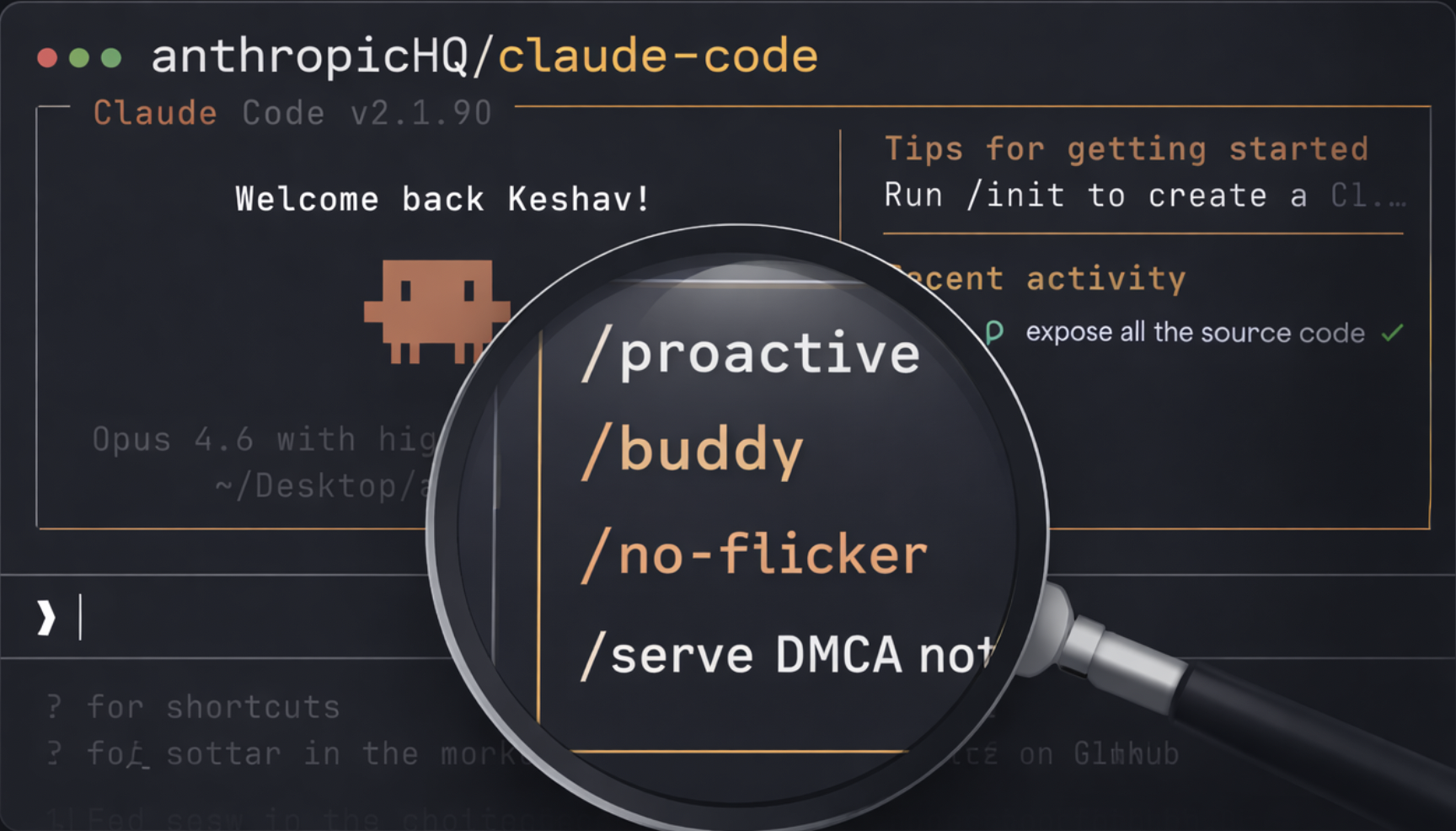
  6. Inside the leaked Claude Code files

    Anthropic's Claude Code tool experienced a significant leak of its source code, revealing internal architecture, prompts, and unreleased features. This leak has spurred community efforts to port the code to other languages and create alternative tools, despite Anthropic's DMCA takedown notices. The incident also highlights the growing difficulty in distinguishing genuine AI product launches from April Fools' pranks. AI

    Inside the leaked Claude Code files

    IMPACT Community-driven tools and alternative implementations emerge from leaked source code, offering new ways to interact with and extend AI agent capabilities.

  7. 9 AI Templates and Playgrounds for Your Business

    Replit has launched a suite of AI-powered templates designed to streamline developer onboarding and accelerate the creation of AI-driven applications. These templates, available for various programming languages and frameworks, simplify complex setups for tools like vector databases and large language models. Notable examples include templates for Qdrant vector search, comparing Gemini and GPT-4, building AI support agents with OpenAI, and transcribing meetings using OpenAI Whisper. AI

    9 AI Templates and Playgrounds for Your Business

    IMPACT Accelerates AI development by providing pre-built templates for common tasks and models.