PulseAugur / Brief
EN
LIVE 03:11:40

Brief

last 24h
[20/20] 221 sources

Multi-source AI news clustered, deduplicated, and scored 0–100 across authority, cluster strength, headline signal, and time decay.

  1. Yeah, that's because they're not guardrails. AI guardrails stripped from Meta and Google models in minutes https://www. ft.com/content/5630ed79-a263-4 1ed-9a1a-

    Researchers demonstrated that safety guardrails on Meta's Llama 3 and Google's Gemma models can be bypassed within minutes. By using specific prompts, they were able to elicit harmful or inappropriate responses from the models, indicating significant vulnerabilities in their safety mechanisms. This highlights the ongoing challenge of ensuring robust AI safety, even with prominent models from major tech companies. AI

    IMPACT Highlights ongoing challenges in AI safety and the ease with which current models can be prompted to produce harmful content.

  2. We prevented our agents going rogue at runtime.

    A developer details how they built a more reliable AI agent for enterprise compliance by implementing strict JSON schema enforcement for all outputs. This method prevents the agent from generating freeform text and instead forces it to populate specific fields, enabling programmatic guardrails and UI alerts. The system also incorporates historical data grounding via the Hindsight library to combat hallucinations and uses a routing mechanism to direct sensitive queries to more powerful, steered models. AI

    We prevented our agents going rogue at runtime.

    IMPACT Developers can build more trustworthy AI agents for enterprise use by enforcing structured outputs and grounding models in historical data.

  3. Gemma4 Apex GGUF, Ollama Context Optimization, & Llama3 Benchmarks

    Recent advancements in local LLM deployment include a new Apex quantization for Gemma4 that achieves high token rates with a large context window, and a workflow reducing Ollama's prompt context by nearly 90% using Memgraph. Additionally, benchmarks indicate that smaller models like TinyLlama and Llama3.2:3b struggle with boolean logic tasks, scoring around 50% accuracy. AI

    IMPACT Optimizations for local LLMs improve accessibility and efficiency for developers running complex AI tasks on consumer hardware.

  4. WebLLM: Run AI Models Directly in Your Browser with WebGPU!

    WebLLM is a new project that enables large language models to run directly within web browsers using WebGPU for hardware acceleration. This client-side execution enhances user privacy and reduces server costs by keeping all AI computations on the user's device. Developers can leverage familiar OpenAI API calls with various open-source models like Llama 3 and Phi 3, with features such as streaming and JSON mode. AI

    WebLLM: Run AI Models Directly in Your Browser with WebGPU!

    IMPACT Enables private, cost-effective AI integration directly into web applications without server reliance.

  5. The Complete Guide to Running LLMs Locally in 2026: From Ollama to Production

    This guide details how to run advanced large language models locally on personal hardware in 2026, bypassing expensive API costs. It emphasizes that VRAM is the primary hardware bottleneck, not raw compute power, and suggests specific GPU configurations for different budgets. The guide recommends using Ollama as the standard tool for managing local LLMs and highlights several Chinese models, such as Qwen 2.5 and DeepSeek-R1, for their strong performance relative to their size. AI

    IMPACT Enables cost-effective local LLM deployment, democratizing access to advanced AI capabilities.

  6. Zero-Idle Local LLMs: Running Llama 3 in AWS Lambda Containers

    A new approach allows running open-source LLMs like Llama 3 directly within AWS Lambda containers, bypassing traditional API providers for specific tasks. This method leverages model quantization and increased Lambda container limits to enable self-hosting of LLMs on serverless CPUs. While not universally cheaper than managed APIs, it offers significant cost savings and enhanced privacy for high-volume, low-reasoning workloads. AI

    Zero-Idle Local LLMs: Running Llama 3 in AWS Lambda Containers

    IMPACT Enables cost-effective, private LLM inference for high-volume, low-reasoning tasks, potentially shifting workloads from API providers to self-hosted solutions.

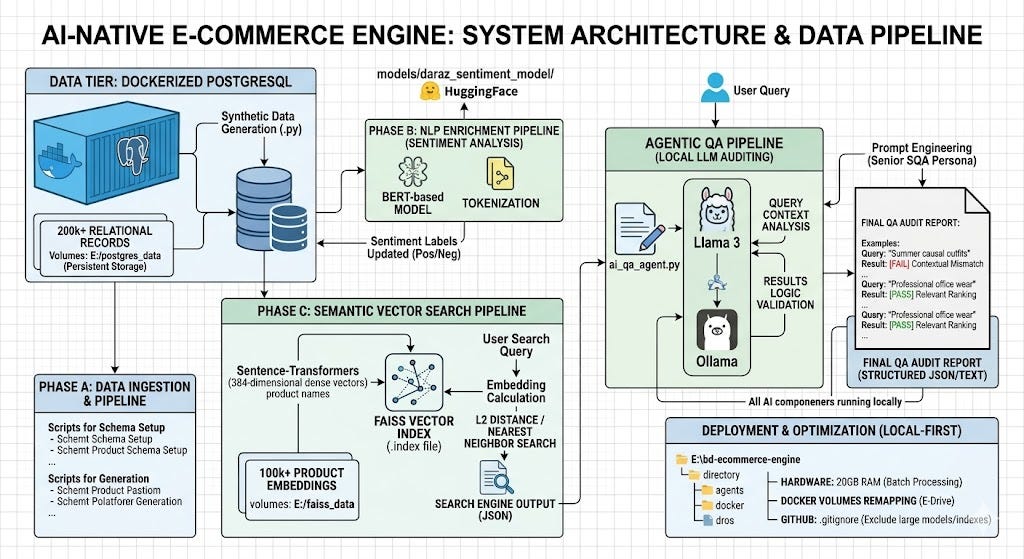
  7. I Built a Production-Grade AI Search Engine on a 20GB Laptop (No Cloud Required)

    An individual developed a production-grade AI-powered e-commerce search engine that operates entirely on a consumer laptop with 20GB of RAM, eliminating the need for cloud services. This system addresses the limitations of traditional keyword-based search by integrating NLP sentiment analysis and semantic vector search. It utilizes a Llama 3 8B model for autonomous auditing of search results, demonstrating that advanced AI capabilities can be achieved without substantial hardware or cloud infrastructure. AI

    I Built a Production-Grade AI Search Engine on a 20GB Laptop (No Cloud Required)

    IMPACT Demonstrates feasibility of advanced AI search on consumer hardware, potentially lowering barriers for localized AI applications.

  8. How to slash AI Debugging Costs by 95% Using Local LLMs and Intelligent Routing

    A new backend architecture has been developed to significantly reduce the costs associated with debugging AI-related issues in CI/CD pipelines. This system employs a tiered approach, first using local LLMs like Llama 3 or Mistral to isolate error chunks from large log files, thereby avoiding expensive cloud API calls. If the error is complex, it is then escalated to a premium cloud API via Groq for further analysis, ensuring both cost-efficiency and data privacy. AI

    IMPACT Enables significant cost reduction and improved efficiency for AI-powered debugging in software development pipelines.

  9. Local LLMs in Production: Squeezing Qwen to Match Claude

    A developer details their experience optimizing local LLMs for production use, aiming to replicate the performance of cloud-based models like Claude 3.5 Sonnet. They found that certain Qwen models, while powerful, exhibited an unhelpful "thinking out loud" behavior that hindered their specific use case of generating clean JSON. After experimenting with different Qwen versions and prompt engineering techniques, they settled on Qwen2.5-32B-Instruct-fp8, which offered significantly faster response times compared to Claude 3.5 Sonnet for routine tasks. AI

    Local LLMs in Production: Squeezing Qwen to Match Claude

    IMPACT Demonstrates techniques for improving local LLM performance and reducing reliance on costly cloud APIs for routine tasks.

  10. moomoo Community https://www.yayafa.com/2804090/ # AgenticAi # AI # ArtificialGeneralIntelligence # ArtificialIntelligence # Futubull # hk # moo # NVIDIA # P

    IBM has expanded its AI offerings by integrating Meta's Llama 3 model into its watsonx platform. This move allows users to leverage Llama 3's capabilities within IBM's enterprise AI solutions. The integration aims to enhance IBM's AI product suite and provide more advanced tools for businesses. AI

    moomoo Community https://www.yayafa.com/2804090/ # AgenticAi # AI # ArtificialGeneralIntelligence # ArtificialIntelligence # Futubull # hk # moo # NVIDIA # P

    IMPACT Enhances enterprise AI capabilities by bringing a powerful open-source model to a commercial platform.

  11. How to Connect Local LLMs to Live Web Data Using Token-Efficient JSON and Markdown

    Developers can improve local LLM performance by converting raw HTML web data into token-efficient formats like Markdown or JSON before feeding it into the model. This process bypasses the inefficiencies of raw HTML, which can exhaust context windows and slow down inference. By using specialized extraction APIs, developers can ensure cleaner, more structured data reaches models such as Llama 3 or Mistral, reducing hallucinations and accelerating processing. AI

    How to Connect Local LLMs to Live Web Data Using Token-Efficient JSON and Markdown

    IMPACT Enables more efficient use of local LLMs by reducing token consumption and inference latency when processing web data.

  12. Enterprise LLM Wars 2026: GPT-4o vs Claude 3.5 vs Llama 3 Decoded

    The enterprise landscape for large language models is heating up with predictions for 2026. Key players like OpenAI's GPT-4o, Anthropic's Claude 3.5, and Meta's Llama 3 are positioned as major contenders. This competitive environment is driving innovation and pushing the boundaries of what AI can achieve in business applications. AI

    Enterprise LLM Wars 2026: GPT-4o vs Claude 3.5 vs Llama 3 Decoded

    IMPACT Predicts intense competition among leading LLMs, driving enterprise adoption and innovation in AI capabilities.

  13. Michal Valko: I teach machines how to learn. Artificial intelligence knows how, but humans must know why. Computer scientist Michal Valko has been dedicated to artificial intelligence for over 30 years.

    Michal Valko, a computer scientist with over 30 years of experience in artificial intelligence, has worked with major tech companies like Intel, Meta, and Google DeepMind. He specializes in designing autonomous algorithms for deep reinforcement learning and self-supervised learning, aiming to create energy-efficient modular models and automate scientific discovery. Valko believes AI will become a common skill rather than a competitive advantage, prompting a re-evaluation of human value in an AI-driven world. AI

    Michal Valko: I teach machines how to learn. Artificial intelligence knows how, but humans must know why. Computer scientist Michal Valko has been dedicated to artificial intelligence for over 30 years.

    IMPACT Expert insights on the future role of AI and human value, and the development of energy-efficient models.

  14. Easier to Judge than to Find: Predicting In-Context Learning Success for Demonstration Selection

    Researchers have developed a new framework called DiSP to improve the efficiency of in-context learning (ICL) in large language models. DiSP addresses the challenge of selecting optimal demonstrations for prompts, which is computationally expensive. The framework stratifies queries by difficulty, uses random trials to estimate success rates, and trains a lightweight router to predict query difficulty. This approach allows for faster, more accurate demonstration selection compared to existing methods, achieving significant speedups and accuracy improvements on classification tasks with models like Llama 3 and Qwen 2.5. AI

    Easier to Judge than to Find: Predicting In-Context Learning Success for Demonstration Selection

    IMPACT Improves efficiency of in-context learning, potentially reducing computational costs for LLM applications.

  15. Base Models Look Human To AI Detectors

    A new research paper reveals that base AI models, unlike their instruction-tuned counterparts, are often misclassified as human by popular AI text detectors like GPTZero and Pangram. The study proposes a method called Humanization by Iterative Paraphrasing (HIP) to fine-tune base models into paraphrasers, which can then iteratively refine generated text to evade detection. This technique, tested on Llama-3 and Qwen-3 models across various sizes, demonstrates improved detector evasion while preserving semantic meaning, suggesting current detectors may be tracking instruction-tuning artifacts rather than inherent machine-generated text qualities. AI

    Base Models Look Human To AI Detectors

    IMPACT New methods for evading AI text detection could impact academic integrity and content authenticity verification.

  16. TORQ: Two-Level Orthogonal Rotation for MXFP4 Quantization

    Researchers have developed TORQ, a new framework for quantizing Large Language Models (LLMs) using the MXFP4 format. This method addresses accuracy degradation issues by analyzing and correcting imbalances in activation quantization. TORQ employs a two-level orthogonal rotation strategy to optimize the activation space, significantly improving LLM accuracy with 4-bit floating-point quantization. AI

    TORQ: Two-Level Orthogonal Rotation for MXFP4 Quantization

    IMPACT Improves LLM efficiency and accuracy by enabling better low-bit quantization, potentially reducing inference costs.

  17. Hot To Run LLMs Locally

    This series of guides provides comprehensive instructions for setting up and running large language models (LLMs) locally on Linux systems. It details hardware and software prerequisites, recommends using llama.cpp for its balance of performance and ease of use, and covers model selection, quantization, and API integration. The guides also include steps for setting up systemd services for 24/7 operation, monitoring performance, and optimizing for various hardware constraints. AI

    IMPACT Enables developers to run and experiment with LLMs locally, reducing reliance on cloud services and facilitating custom application development.

  18. ChunkFT: Byte-Streamed Optimization for Memory-Efficient Full Fine-Tuning

    Researchers have developed ChunkFT, a new framework designed to make full-parameter fine-tuning of large language models more memory-efficient. This method allows for gradient computation on dynamic subsets of model parameters, reducing the need for extensive GPU memory. Experiments with Llama 3 models demonstrated significant memory savings, enabling fine-tuning on consumer-grade hardware, and achieved performance comparable to or exceeding traditional full fine-tuning methods on various downstream tasks. AI

    IMPACT Enables full fine-tuning of large models on more accessible hardware, potentially democratizing advanced model customization.

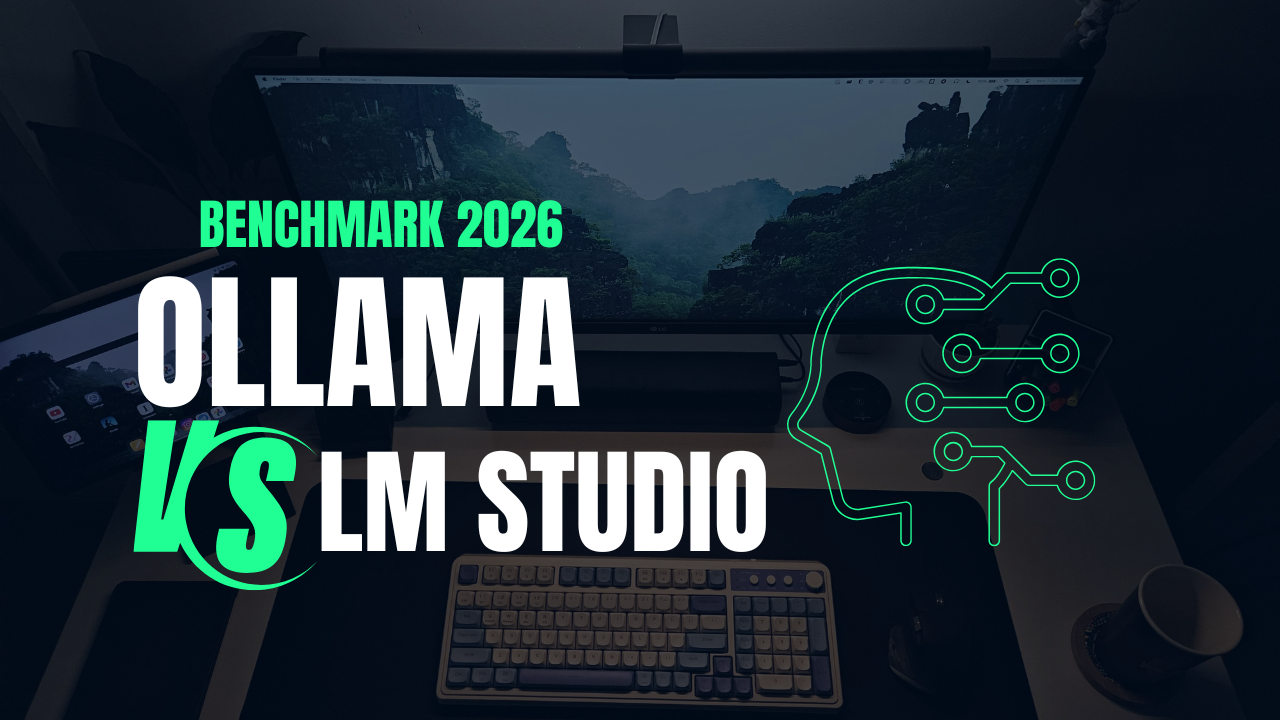
  19. Thinking about running AI models like Llama 3, Qwen, or Mistral on your own computer? Two of the best local AI tools in 2026 are Ollama and LM Studio. Both tool

    Creators are increasingly adopting local AI solutions in 2026, moving away from cloud-based services for benefits like unlimited usage, enhanced privacy, faster workflows, and lower long-term costs. Tools such as Ollama, LM Studio, and Open-WebUI are making it easier for beginners to run powerful open-source models like Llama 3, Qwen, and Mistral directly on their personal computers. This shift offers users full control over their data and content creation processes, with some even developing portable AI solutions that run entirely offline from a USB stick. AI

    Thinking about running AI models like Llama 3, Qwen, or Mistral on your own computer? Two of the best local AI tools in 2026 are Ollama and LM Studio. Both tool

    IMPACT Accelerates adoption of personal AI infrastructure, offering cost-effective and private alternatives to cloud-based LLM services.

  20. The Frontier is Open

    Together AI argues that the future of AI development lies in open-source models, challenging the notion that proprietary labs are the sole drivers of innovation. The company highlights that open-source platforms offer greater flexibility and cost-efficiency, crucial for the widespread adoption of AI applications. They point to recent advancements in open-source models like Llama 3, Deepseek R1, and Qwen3 as evidence that the frontier of AI is increasingly being shaped by collaborative, open development. AI

    IMPACT Argues that open-source models will increasingly define the AI frontier, offering cost and flexibility advantages over proprietary solutions.