PulseAugur / Brief
EN
LIVE 23:04:07

Brief

last 24h
[18/18] 221 sources

Multi-source AI news clustered, deduplicated, and scored 0–100 across authority, cluster strength, headline signal, and time decay.

  1. We Benchmarked the Most Popular Code Search Tools. We Beat All of Them.

    A new code search tool called knowing has outperformed established competitors like CodeGraph, GitNexus, and Gortex in benchmarks. Knowing utilizes a novel approach involving random walks on a content-addressed call graph, which prioritizes structural relevance over simple keyword matching. This method resulted in significantly higher precision, faster query times, and more efficient agent integration compared to other tools, effectively eliminating nearly all irrelevant results. AI

    IMPACT Sets a new standard for code retrieval precision and speed, potentially improving developer productivity and AI agent efficiency.
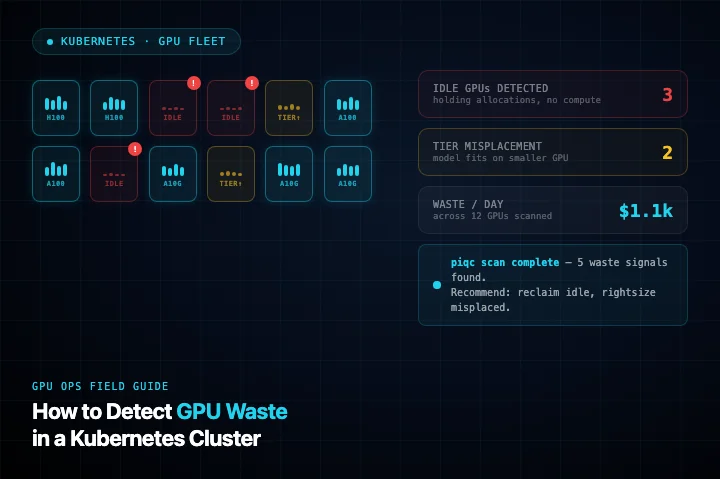
  2. How to Detect GPU Waste in a Kubernetes Cluster

    This article discusses how to identify and address GPU waste within Kubernetes clusters, a problem that often goes unnoticed due to seemingly healthy utilization metrics. It highlights that inefficient GPU usage can occur even when overall cluster utilization appears normal. The piece aims to provide methods for detecting these hidden inefficiencies. AI

    How to Detect GPU Waste in a Kubernetes Cluster

    IMPACT Provides guidance for optimizing AI/ML infrastructure costs and efficiency.

  3. Enterprise AI Agent Foundation Can Be Built On-Premises or In The Cloud. Kubernetes Deployment To Bare Metal Also Possible. Nutanix .NEXT 2026 [PR] - Publickey https://www.yayafa.com/2807948/ #AgenticAi #AI #ArtificialGeneralIn

    Nutanix is enabling enterprises to build AI agent platforms on-premises or in the cloud. This includes the capability to deploy Kubernetes on bare-metal infrastructure. The announcement was made at Nutanix .NEXT 2026. AI

    Enterprise AI Agent Foundation Can Be Built On-Premises or In The Cloud. Kubernetes Deployment To Bare Metal Also Possible. Nutanix .NEXT 2026 [PR] - Publickey https://www.yayafa.com/2807948/ #AgenticAi #AI #ArtificialGeneralIn

    IMPACT Enables enterprises to deploy and manage AI agent infrastructure on their own terms, potentially accelerating adoption of AI-driven automation.

  4. Stop Running LLM Workloads on Vanilla Kubernetes

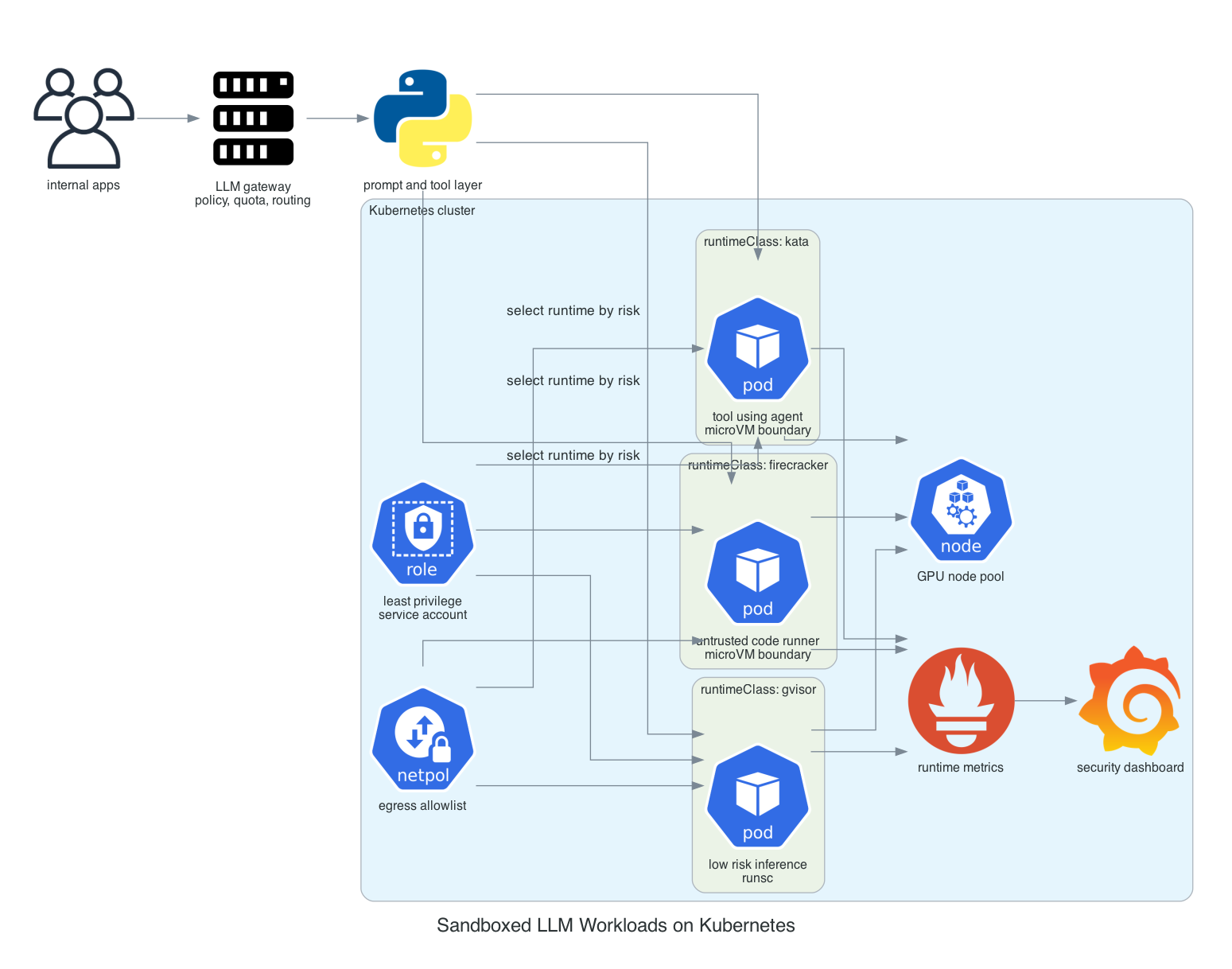
    Running large language model (LLM) workloads on standard Kubernetes presents significant security risks due to insufficient isolation. While Kubernetes excels at orchestration, it lacks the necessary containment for LLM agents that can execute code and interact with external systems. To address this, developers can leverage Kubernetes' RuntimeClass feature with options like gVisor or Kata to create stronger isolation boundaries for these dynamic workloads. AI

    Stop Running LLM Workloads on Vanilla Kubernetes

    IMPACT Highlights the need for specialized infrastructure to securely run advanced AI workloads, impacting how AI agents are deployed and managed.

  5. Ray is Joining The PyTorch Foundation

    Anyscale announced that its open-source distributed computing framework, Ray, is joining the PyTorch Foundation, which is part of the Linux Foundation. Ray has experienced significant growth, with downloads increasing nearly tenfold in the past year and powering AI workloads for numerous companies including xAI, Netflix, and JPMorgan. This move aims to foster a stronger open-source community around Ray to meet the evolving demands of AI infrastructure. AI

    Ray is Joining The PyTorch Foundation

    IMPACT Accelerates the development of open-source AI infrastructure by consolidating community efforts under a major foundation.

  6. Announcing General Availability of Together Instant Clusters, offering ready to use, self

    Together AI has launched Together Instant Clusters, a new service providing readily available, self-service GPU clusters for AI development and deployment. This offering aims to simplify the complex process of setting up multi-node GPU infrastructure, allowing users to provision clusters with hundreds of GPUs in minutes via API, CLI, or console. The service includes pre-configured components for distributed training and inference, supporting NVIDIA's latest GPU architectures and high-performance networking solutions. AI

    Announcing General Availability of Together Instant Clusters, offering ready to use, self

    IMPACT Simplifies GPU cluster provisioning, enabling faster experimentation and deployment for AI workloads.

  7. How I Built a Production-Grade Object Detection System That Scales Itself

    The author details the construction of a scalable, production-ready object detection system. This system integrates YOLOv8 for inference, Kafka for real-time data streaming, Kubernetes for automatic scaling, and MLflow for tracking experiments. The approach outlines a comprehensive MLOps pipeline designed for efficient real-time computer vision tasks. AI

    IMPACT Details a practical MLOps architecture for deploying and scaling computer vision models in production.

  8. Building a Production Fraud Inference Platform: Dynamic Batching, Kubernetes, and Canary…

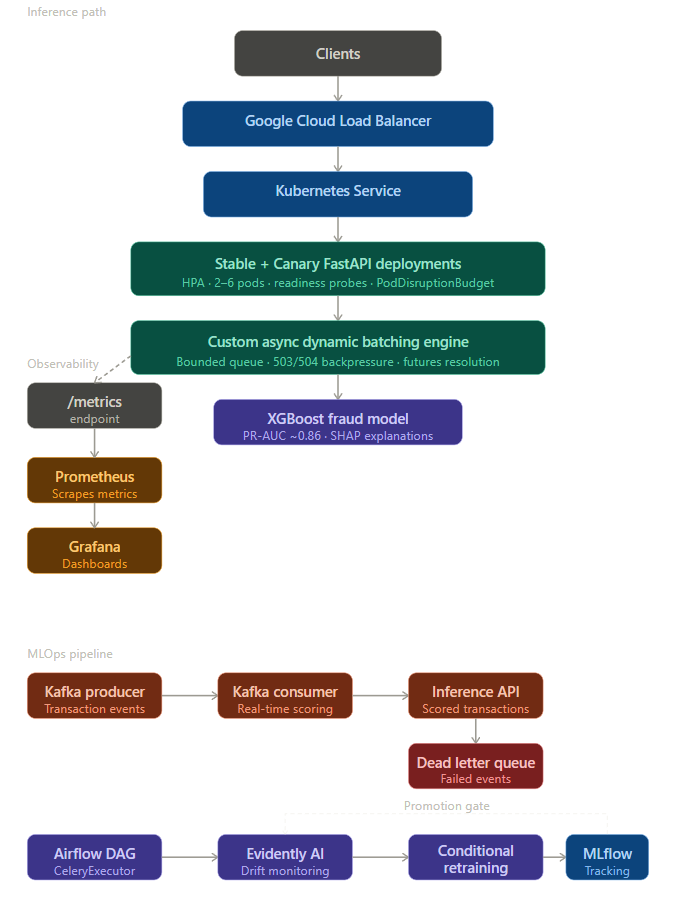
    This article details the construction of a production-ready fraud inference platform, emphasizing MLOps best practices. It covers key technical components such as dynamic batching for efficient processing, Kubernetes for container orchestration, and canary deployments to ensure smooth rollouts of new model versions. The focus is on creating a robust and scalable system for real-time fraud detection. AI

    Building a Production Fraud Inference Platform: Dynamic Batching, Kubernetes, and Canary…

    IMPACT Provides a technical blueprint for deploying ML models in production, relevant for MLOps engineers and teams building real-time inference systems.

  9. Giving Agents Computers — Ivan Burazin, Daytona

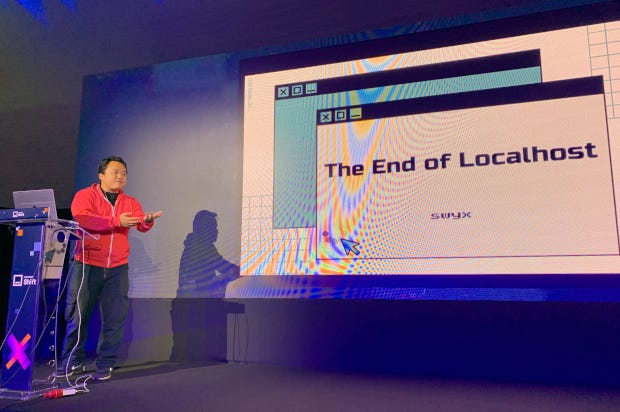
    Daytona, an AI infrastructure company, is experiencing rapid growth by providing composable computers for AI agents. CEO Ivan Burazin explains that agents require more than simple code execution, needing stateful, fast, and flexible computing environments. The company has seen a significant increase in usage, with one customer running nearly 850,000 sandboxes daily and AI workloads like reinforcement learning and evaluations now comprising about 50% of their usage. AI

    Giving Agents Computers — Ivan Burazin, Daytona

    IMPACT Daytona's focus on providing dedicated, composable computing environments for AI agents could accelerate agent development and deployment.

  10. 🧠 Agyn is an open-source Kubernetes runtime designed to run AI agents as containerized workloads. The project provides infrastructure for deploying and managing

    Agyn is a new open-source Kubernetes runtime specifically built for deploying and managing AI agents. It allows these agents to function as containerized workloads, leveraging standard Kubernetes orchestration tools for scalable deployment. AI

    🧠 Agyn is an open-source Kubernetes runtime designed to run AI agents as containerized workloads. The project provides infrastructure for deploying and managing

    IMPACT Provides a new open-source tool for developers to manage and scale AI agents within existing Kubernetes infrastructure.

  11. The Request Is the Wrong Unit of Scale for LLMs on Kubernetes

    The traditional web application scaling model, which relies on request counts, is insufficient for serving large language models (LLMs). LLM workloads vary significantly in complexity based on the number of input and output tokens, not just the number of HTTP requests. This distinction is crucial because input tokens impact the time to first token, while output tokens affect the overall processing time and system capacity, leading to potential performance issues even when request metrics appear stable. AI

    The Request Is the Wrong Unit of Scale for LLMs on Kubernetes

    IMPACT Highlights the need for new scaling metrics beyond request counts for efficient LLM deployment.

  12. Notebooks for the Whole Team: Deploy JupyterHub on Kubernetes in Minutes

    This article provides a guide for deploying JupyterHub on Kubernetes, aiming to centralize data science environments and eliminate the chaos of individual laptops. It offers a streamlined approach that avoids the need for users to learn complex tools like Helm. AI

    Notebooks for the Whole Team: Deploy JupyterHub on Kubernetes in Minutes

    IMPACT Simplifies MLOps infrastructure for data science teams, enabling more efficient collaboration and deployment of machine learning models.

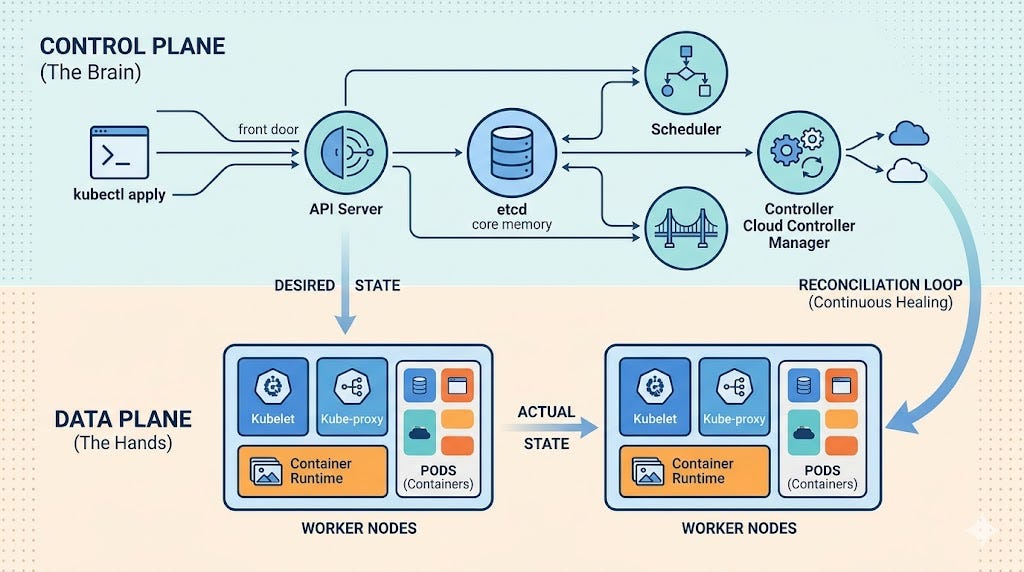
  13. Kubernetes Without the Buzzwords: Control Plane vs. Data Plane

    This article clarifies the distinction between Kubernetes' control plane and data plane, explaining their respective roles in managing containerized applications. The control plane handles cluster operations like scheduling and API requests, while the data plane executes the actual application workloads. Understanding this separation is crucial for effective MLOps and managing complex cloud-native environments. AI

    Kubernetes Without the Buzzwords: Control Plane vs. Data Plane

    IMPACT Clarifies fundamental infrastructure concepts relevant to deploying and managing AI/ML workloads.

  14. SepsisAI Orchestrator: A Containerized and Scalable Platform for Deploying AI Models and Real-Time Monitoring in Early Sepsis Detection

    Researchers have developed an open-source platform called SepsisAI Orchestrator to streamline the deployment of AI models for early sepsis detection in clinical settings. The platform addresses challenges like data heterogeneity and the gap between research prototypes and hospital environments. It integrates data preprocessing, a LightGBM classifier served via APIs, and a clinical dashboard, all orchestrated using Docker and Kubernetes. Performance testing revealed a specific optimal replica count for host CPUs to minimize latency and avoid request failures, a finding not previously quantified for clinical AI inference. AI

    IMPACT Provides a scalable infrastructure solution to bridge the gap between AI model development and real-world clinical application for sepsis detection.

  15. Microsoft Just Framed MCP as Part of the Open Agentic Stack. Here's What That Actually Means.

    Microsoft has framed the Model Context Protocol (MCP) as a foundational element within its Open Agentic Stack, signaling a strategic shift towards open protocols and agent infrastructure. This move acknowledges the need for standardized interoperability and portable infrastructure primitives for AI agents, akin to Kubernetes for containers. Developers are increasingly leveraging MCP beyond simple tool calling to build complex multi-agent systems, secure gateways, and cross-platform orchestration, indicating its growing importance as an infrastructure layer for scalable agentic AI. AI

    IMPACT Positions MCP as a key interoperability layer, potentially accelerating enterprise adoption of standardized agentic AI systems.

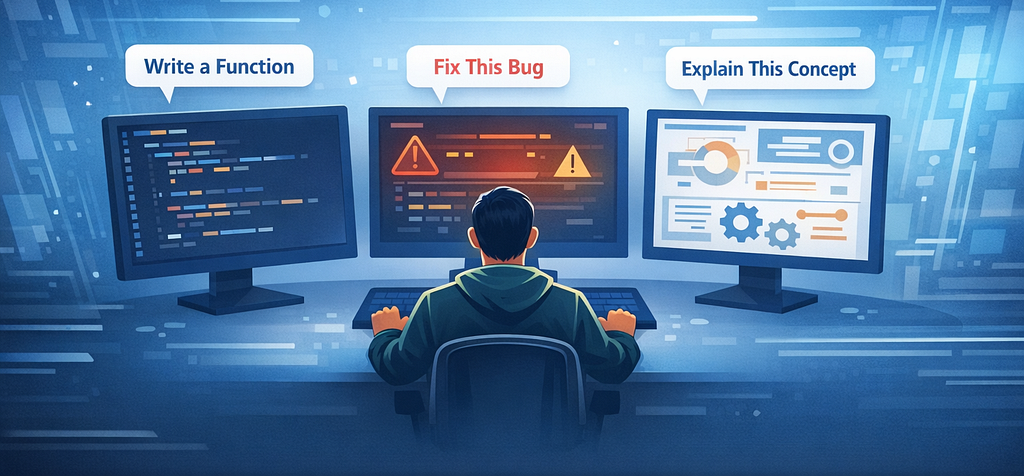
  16. The 3 Prompt Types Every SW Engineer Uses Daily: How to Make Them Better

    A recent article argues against the practice of pasting lengthy, AI-generated responses into conversations, likening it to a "slop grenade" that disrupts natural communication. The author suggests that when seeking human judgment, users should receive concise, direct answers rather than extensive AI-generated essays. This approach, they contend, preserves the conversational medium and respects the recipient's time and engagement. AI

    The 3 Prompt Types Every SW Engineer Uses Daily: How to Make Them Better

    IMPACT Discourages the uncritical use of AI-generated content in conversational contexts, promoting more concise and human-centric communication.

  17. Slonk: Slurm on Kubernetes for ML Research at Character.ai

    Character.ai has developed an internal system called Slonk, which integrates the traditional SLURM scheduler with Kubernetes for managing GPU research clusters. This system aims to provide researchers with the familiar user experience of SLURM, including features like fair queues and gang scheduling, while leveraging Kubernetes for operational benefits such as orchestration, health checks, and autoscaling. Slonk treats SLURM nodes as Kubernetes pods, allowing for efficient resource sharing and management across heterogeneous clusters and clouds. AI

    Slonk: Slurm on Kubernetes for ML Research at Character.ai

    IMPACT Enables more efficient and productive GPU cluster management for ML researchers by combining familiar HPC tools with modern orchestration.

  18. AI Demand Surges as Billions in Compute Remain Locked

    Major technology companies are collectively planning to spend approximately $700 billion on AI infrastructure in 2026, a significant increase from previous years. Despite this massive investment, a recent report indicates that GPU, CPU, and memory utilization in enterprise Kubernetes clusters remains surprisingly low, averaging around 5% for GPUs and 8% for CPUs. This discrepancy highlights potential inefficiencies and readiness challenges in deploying AI at scale, with many organizations still in the early stages of experimentation and piloting. AI

    AI Demand Surges as Billions in Compute Remain Locked

    IMPACT Massive AI infrastructure spending by Big Tech may face scrutiny due to low utilization, potentially shifting focus to efficiency and ROI.