PulseAugur / Brief
EN
LIVE 21:10:42

Brief

last 24h
[10/10] 221 sources

Multi-source AI news clustered, deduplicated, and scored 0–100 across authority, cluster strength, headline signal, and time decay.

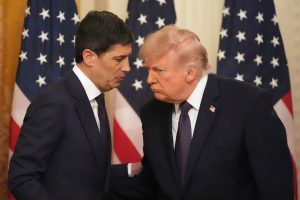
  1. Trump on new Fed Chair Kevin Warsh: ‘Do your own thing’ but don’t lose your way like Jerome Powell did

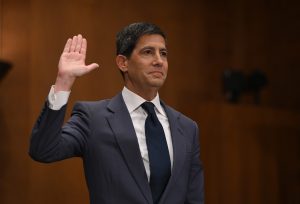
    President Donald Trump has sworn in Kevin Warsh as the new Federal Reserve chair, emphasizing his desire for Warsh to stimulate the economy while also stressing the importance of the Fed's independence. Trump criticized his predecessor, Jerome Powell, for being too hesitant to lower interest rates and expressed confidence that Warsh would prioritize economic growth. Warsh, in turn, pledged to lead a reform-oriented Federal Reserve and believes AI-driven productivity gains can foster growth without increasing inflation, though some Fed officials remain skeptical. AI
    Trump on new Fed Chair Kevin Warsh: ‘Do your own thing’ but don’t lose your way like Jerome Powell did

    IMPACT New Fed Chair Warsh believes AI productivity gains can boost the economy without inflation, potentially influencing interest rate policy.

  2. Warsh takes US Fed’s helm with inflation dilemma already unfolding

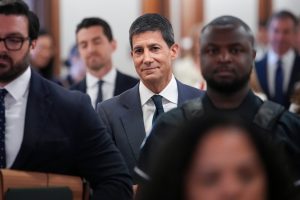
    Kevin Warsh has been sworn in as the new leader of the US Federal Reserve, taking the helm at a critical juncture for monetary policy. He faces immediate challenges including an economy influenced by the AI boom, alongside potential shocks from oil prices and tariffs. Warsh has pledged to lead a reform-oriented Fed, learning from past experiences and moving beyond static frameworks. AI

    Warsh takes US Fed’s helm with inflation dilemma already unfolding

    IMPACT The new Federal Reserve leader must navigate an economy being reshaped by the AI boom, impacting workers, companies, and consumers.

  3. US bond yields break through 5% defense line, global bond markets see sell-off storm again

    Global bond markets are experiencing a sell-off, with the 30-year US Treasury yield surpassing 5% for the first time since 2007. This surge is occurring just before Kevin Warsh is set to take over as the new Federal Reserve Chair on May 22nd. The market anticipates that controlling inflation will be the Fed's top priority, significantly limiting any immediate interest rate cuts and increasing the likelihood of a rate hike this year. AI

  4. Wall Street has pretty much written off the idea of a Fed rate cut at Kevin Warsh’s first meeting

    Economist Tyler Cowen suggests that the primary societal impact of AI will be a redistribution of status rather than a widespread job loss. He posits that elite professionals, such as lawyers and consultants, may be the biggest losers as their specialized knowledge becomes less valuable. Conversely, individuals adept at initiative and adapting to AI technologies, including those in developing nations, are poised to benefit. AI

    Wall Street has pretty much written off the idea of a Fed rate cut at Kevin Warsh’s first meeting

    IMPACT Discusses the potential societal impact of AI, focusing on status redistribution among professionals.

  5. The 30-year Treasury yield just hit a level it hasn’t seen since before the Great Recession. Do the bond vigilantes ride again?

    The 30-year Treasury yield has surged to its highest point since before the Great Recession, reaching 5.198%. While some analysts dismiss the idea of "bond vigilantes" influencing this rise, others point to significant uncertainty about future inflation as a primary driver. Geopolitical events like the Strait of Hormuz closure and concerns over potential Federal Reserve policy under Kevin Warsh are also contributing factors to investor apprehension. AI

    The 30-year Treasury yield just hit a level it hasn’t seen since before the Great Recession. Do the bond vigilantes ride again?
  6. Nomura expects the Federal Reserve to keep interest rates unchanged this year

    Nomura Securities now anticipates the Federal Reserve will maintain its interest rates throughout 2026, citing rising inflation and a decreased willingness among Fed officials to lower rates. The firm's analysis suggests that the incoming Fed Chair, Kevin Warsh, may wish to ease monetary policy but faces challenges in convincing the FOMC majority. Separately, Zhejiang Shibao stated on an investor platform that it has no current plans to expand into new industries such as optical modules, data leasing, or AI. AI

    IMPACT Minimal direct impact on AI operators; focuses on macroeconomic forecasts and a company's lack of AI expansion plans.

  7. Battles to shrink the Federal Reserve's balance sheet begin

    Incoming Federal Reserve chair Kevin Warsh faces immediate challenges in his stated goal of shrinking the central bank's substantial balance sheet. The Fed's assets, which ballooned to nearly $9 trillion at their peak, have been a key tool for economic stabilization and stimulus, particularly since the 2008 financial crisis. While Warsh views the large balance sheet as having caused harm and prefers direct rate cuts for broader benefit, reducing it could lead to higher borrowing costs and potential market instability if not managed carefully. AI

    Battles to shrink the Federal Reserve's balance sheet begin
  8. U.S. debt is the ‘elephant in the room’ amid bond market rout as Fed-fueled interest costs could drive even larger deficits, analysts warn

    Analysts at Bank of America are warning that deteriorating U.S. fiscal health is becoming a significant factor in the current bond market selloff, alongside inflation concerns. They note that rising interest costs on the national debt could lead to substantially larger deficits over the next decade. This situation is exacerbated by the bond vigilantes, who are protesting large deficits by selling bonds and driving up yields, with long-term yields reaching levels not seen since the 2008 financial crisis. AI

    U.S. debt is the ‘elephant in the room’ amid bond market rout as Fed-fueled interest costs could drive even larger deficits, analysts warn
  9. ‘I almost fell out of my chair’: Fed stalwart Claudia Sahm fears Kevin Warsh’s policies could undo 20 years of policy progress

    Former Federal Reserve economist Claudia Sahm expressed strong concern over Kevin Warsh's potential policies, particularly his stated skepticism towards forward guidance. Sahm, known for her recession indicator, believes Warsh's views could dismantle two decades of progress in the Fed's communication and transparency efforts. She argued that abandoning forward guidance and the dot plot would reduce accountability and make the Fed appear more political. AI

    ‘I almost fell out of my chair’: Fed stalwart Claudia Sahm fears Kevin Warsh’s policies could undo 20 years of policy progress
  10. Most Fed officials see rate hikes if inflation stays high, minutes show

    A majority of Federal Reserve officials indicated a willingness to raise interest rates if inflation persists above the 2% target, according to minutes from the April policy meeting. This sentiment suggests a potential shift towards tighter monetary policy, influenced by factors like the Iran war and rising energy prices. Meanwhile, Fed Chair Jerome Powell announced he will remain a governor for an undetermined period, citing concerns about political interference and the Fed's independence, a move that deviates from modern tradition and denies President Trump an immediate board vacancy. AI

    Most Fed officials see rate hikes if inflation stays high, minutes show

    IMPACT Potential for tighter monetary policy could impact tech sector investment and AI development funding.