PulseAugur / Brief
EN
LIVE 14:05:42

Brief

last 24h
[2/2] 221 sources

Multi-source AI news clustered, deduplicated, and scored 0–100 across authority, cluster strength, headline signal, and time decay.

  1. ‘We’ve given them the short end of the stick’: Business school dean says AI could eliminate many jobs for young people—even as they lead innovation

    A business school dean warns that artificial intelligence, primarily deployed for efficiency, could eliminate many entry-level jobs, hindering young people's career progression. Despite young innovators creating new forms of meaning and progress outside traditional structures, society has not adequately prepared them for this AI-driven transition. Experts suggest that young people may need to seek opportunities in innovative startups and focus on deep problem-solving rather than rapid ideation to find success in the evolving job market. AI

    ‘We’ve given them the short end of the stick’: Business school dean says AI could eliminate many jobs for young people—even as they lead innovation

    IMPACT AI's efficiency focus may eliminate entry-level roles, requiring young innovators to adapt their job search and problem-solving strategies.
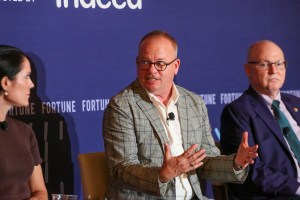
  2. Accenture exec says the consulting giant is hiring more entry-level workers out of college compared to last year

    Accenture plans to increase its hiring of entry-level employees this year, contrasting with some other companies that have reduced graduate recruitment. The consulting firm believes that recent graduates, who have grown up with AI tools like ChatGPT, will be valuable assets to the company. Accenture's global chief diversity officer, Beck Bailey, stated that while AI will transform roles, new jobs will emerge as others become obsolete, emphasizing that the current period is a transitional phase requiring adaptation and experimentation. AI

    Accenture exec says the consulting giant is hiring more entry-level workers out of college compared to last year

    IMPACT Companies are adapting hiring strategies to integrate AI-savvy graduates, suggesting a shift in workforce composition and skill requirements.