PulseAugur / Brief
EN
LIVE 10:54:54

Brief

last 24h
[8/8] 221 sources

Multi-source AI news clustered, deduplicated, and scored 0–100 across authority, cluster strength, headline signal, and time decay.

  1. Ray is Joining The PyTorch Foundation

    Anyscale announced that its open-source distributed computing framework, Ray, is joining the PyTorch Foundation, which is part of the Linux Foundation. Ray has experienced significant growth, with downloads increasing nearly tenfold in the past year and powering AI workloads for numerous companies including xAI, Netflix, and JPMorgan. This move aims to foster a stronger open-source community around Ray to meet the evolving demands of AI infrastructure. AI
    Ray is Joining The PyTorch Foundation

    IMPACT Accelerates the development of open-source AI infrastructure by consolidating community efforts under a major foundation.

  2. Your Company’s AI Is Getting Smarter. But Whose Intelligence Is It Building?

    Companies are inadvertently transferring sensitive institutional knowledge to third-party AI platforms through routine employee use, creating significant privacy risks. This data leakage, exemplified by incidents at Samsung, stems from a lack of privacy controls in AI systems, allowing providers to observe all interactions. Consequently, businesses are hesitant to use AI for high-value strategic tasks, limiting its impact to incremental productivity gains rather than transformative change. AI

    Your Company’s AI Is Getting Smarter. But Whose Intelligence Is It Building?

    IMPACT Highlights how current AI platform designs limit enterprise adoption for strategic use cases due to data privacy concerns.

  3. ⚖️ Trump slows AI, but JPMorgan and Codex accelerate: between politics and the market, the race for artificial intelligence waits for no one. #AI #Fintech

    While Donald Trump's administration has reportedly slowed down certain AI initiatives, major financial players like JPMorgan and Codex are accelerating their efforts. This dynamic highlights the ongoing tension between political regulation and market-driven advancement in the artificial intelligence race. AI

    IMPACT Highlights the push-and-pull between regulatory actions and market investment in AI development.

  4. JPMorgan Investment Bank Executive: Hong Kong and Mainland China IPO Activity Expected to Increase Significantly

    JPMorgan's global co-head of investment banking, Kevin Foley, anticipates a strong year for IPOs, with Hong Kong and mainland China expected to lead the growth. Key sectors driving this trend include AI, robotics, and healthcare. Separately, China's enterprise credit index rose in April, indicating a continued positive trend in business creditworthiness, with the financial, energy, education, manufacturing, and utilities sectors showing the highest credit levels. AI

    IMPACT JPMorgan's outlook suggests AI is a key driver for future IPOs, indicating its growing importance in capital markets.

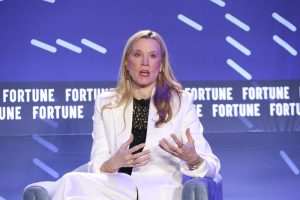
  5. PepsiCo CPO says their ‘secret sauce’ to hiring top talent is that they all have hustle—And are agile and curious in the AI era

    PepsiCo's Chief People Officer, Becky Schmitt, emphasizes that the company's hiring strategy prioritizes core human skills like hustle, curiosity, and problem-solving, even as AI automates technical tasks. While embracing AI for efficiency and innovation, PepsiCo believes that human ingenuity, augmented by technology, will drive future advancements. The company aims to make jobs safer and more productive through a human-centric approach to AI implementation, ensuring worker adoption and understanding. AI

    PepsiCo CPO says their ‘secret sauce’ to hiring top talent is that they all have hustle—And are agile and curious in the AI era

    IMPACT Highlights the growing importance of human soft skills alongside AI adoption in corporate hiring strategies.

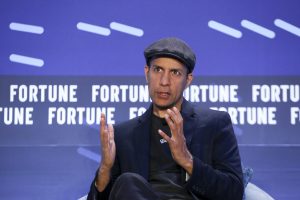
  6. While other tech CEOs warn of mass job losses, Glean’s chief says AI will never replace a single worker

    Arvind Jain, CEO of Glean, believes AI will augment rather than replace human workers, citing his company's experience with large enterprises. He argues that AI tools, while increasingly capable, are still assistants that enable higher quality work rather than eliminating roles. This perspective contrasts with other CEOs like Dario Amodei of Anthropic and Jamie Dimon of JPMorgan, who have expressed concerns about AI leading to significant job losses. AI

    While other tech CEOs warn of mass job losses, Glean’s chief says AI will never replace a single worker

    IMPACT Contrasting views on AI's impact on employment, with one CEO arguing for augmentation over replacement.

  7. JPMorgan CEO Jamie Dimon shared strategies for lowering bond yields with AI, geopolitical risk analysis, and 'Mamdani' digital strategy at the Shanghai summit. ESG

    JPMorgan CEO Jamie Dimon discussed AI's role in financial strategies at a Shanghai summit. He highlighted AI's potential in reducing bond yields, analyzing geopolitical risks, and implementing digital strategies. Dimon also noted a focus on AI-supported investments aligned with ESG principles. AI

    JPMorgan CEO Jamie Dimon shared strategies for lowering bond yields with AI, geopolitical risk analysis, and 'Mamdani' digital strategy at the Shanghai summit. ESG

    IMPACT Discusses potential applications of AI in financial strategies and investments, including bond yield reduction and risk analysis.

  8. The $150 Trillion Question—What Is AI’s Value In Asset Management

    Billionaire Ken Griffin, CEO of Citadel, has publicly reversed his stance on AI, moving from dismissing it as "garbage" to acknowledging its profound societal impact. Griffin shared that he experienced a moment of depression after witnessing AI agents complete complex financial research tasks in hours that previously took weeks for teams with advanced degrees. This shift highlights AI's potential to drastically reorganize industries like asset management, moving beyond automating simple tasks to redesigning entire workflows. AI

    The $150 Trillion Question—What Is AI’s Value In Asset Management

    IMPACT Highlights AI's potential to disrupt high-skill knowledge work and reorganize industries, prompting a need for continuous learning.