PulseAugur / Brief
EN
LIVE 22:22:35

Brief

last 24h
[10/10] 221 sources

Multi-source AI news clustered, deduplicated, and scored 0–100 across authority, cluster strength, headline signal, and time decay.

  1. Lenovo China's Infrastructure Business Achieved Double-Digit Growth Last Fiscal Year, Liu Jun Interprets Four Major Driving Forces Behind It

    Lenovo's China infrastructure business achieved double-digit growth in the past fiscal year, driven by innovation, advanced liquid cooling technology, a comprehensive product line, and a resilient supply chain. The company is focusing on providing secure, cost-effective, and precise token integration services for the burgeoning AI economy. Lenovo aims to shift from providing basic building blocks to offering comprehensive solutions, particularly for cloud service providers and enterprise/small and medium-sized businesses, to enhance computing and AI processing efficiency. AI

    Lenovo China's Infrastructure Business Achieved Double-Digit Growth Last Fiscal Year, Liu Jun Interprets Four Major Driving Forces Behind It

    IMPACT Lenovo's focus on AI token services and infrastructure upgrades signals a strategic pivot to capitalize on the growing AI economy.
  2. Lenovo Group's Q4 Revenue and Profit Hit New Highs, Delivering Best Fiscal Year in History

    Lenovo Group announced its fiscal year 2025/26 results, with Q4 revenue and net profit reaching record highs. The company's full-year revenue surpassed 500 billion RMB for the first time, driven by strong performance across its Intelligent Devices Group (IDG), Infrastructure Solutions Group (ISG), and Solutions and Services Group (SSG). AI-related revenue saw a significant surge, contributing substantially to the company's growth and indicating its strategic focus on AI as a core engine. AI

    IMPACT Lenovo's strong AI revenue growth and strategic focus on AI devices and infrastructure signal increasing enterprise and consumer adoption of AI technologies.

  3. IDC: China's tablet market shipments reached 8.11 million units in the first quarter, a year-on-year decrease of 4.8%

    China's tablet market experienced a 4.8% year-over-year decline in shipments during the first quarter, reaching 8.11 million units. IDC attributes this shift to a transition from policy-driven growth to a phase where product capability and genuine demand dictate market movement. This adjustment is seen as a necessary step towards market maturity, despite short-term shipment pressures. Separately, Comau has acquired Invent Smart, a Brazilian company specializing in AI-driven internal logistics and warehousing automation, to enhance its own logistics solutions. AI

    IMPACT Market analysis indicates a shift in consumer demand for hardware, while an AI-driven logistics acquisition signals integration of AI into industrial automation.

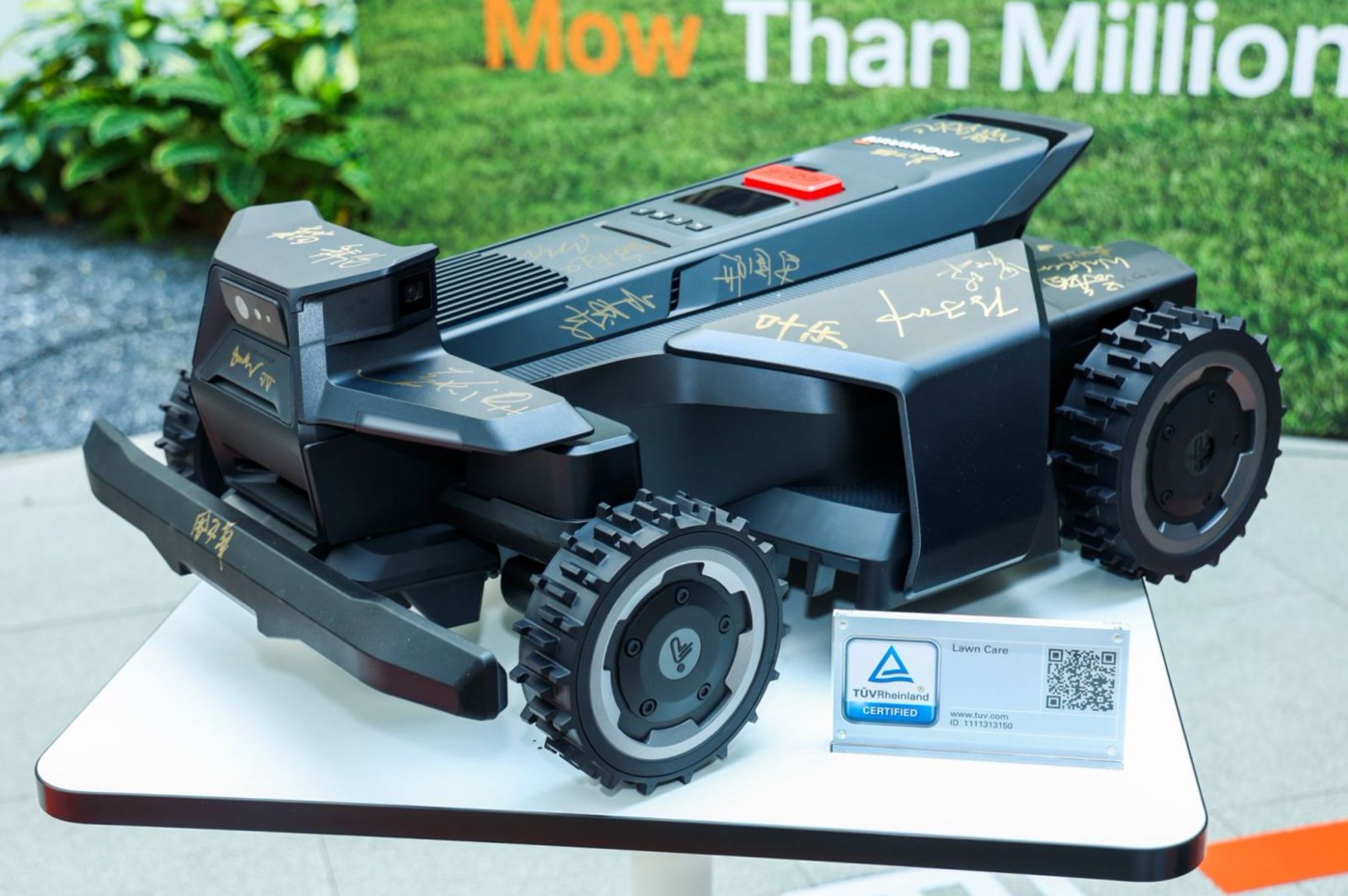
  4. After producing one million lawn mowing robots, Unilamont CEO decides to make himself 'unimportant' | Hard Tech Interview

    Wei Lan Continent, a company specializing in intelligent robotic lawnmowers, has surpassed one million units produced, signaling a significant revenue increase. CEO Ren Guanqiao is shifting focus from engineering to strategic leadership, aiming to build organizational capacity and reduce personal reliance. The company is navigating intense market competition by differentiating through product innovation, such as a new four-wheel-drive system designed to protect lawns, and adapting to regional user preferences in markets like the US and Europe. AI

    After producing one million lawn mowing robots, Unilamont CEO decides to make himself 'unimportant' | Hard Tech Interview

    IMPACT The company's focus on intelligent robotics and adapting to market needs highlights trends in specialized AI applications.

  5. 2026 Forbes China AI Technology Enterprises TOP 50 Released, Zhongguancun Kejin Selected

    The 2026 Forbes China AI Technology Companies TOP 50 list has been released, with Zhongguancun Kejin being recognized as the sole enterprise-level AI platform and application company. In other AI-related news, Nvidia is establishing a new R&D center in Singapore, its first in the city-state and second in the Asia-Pacific region. Additionally, the report highlights strategic partnerships and product launches, including a collaboration between DiGua Robot and Qianxun Intelligence for AI solutions and the release of the iMLite AI edge real-time decision engine by Pi Intelligence. AI

    IMPACT Highlights key players in China's AI landscape and expansion of AI R&D infrastructure in Asia, signaling continued investment and development in the sector.

  6. The Web Is About to Get a Second Door

    A new protocol called WebMCP is emerging to create a structured layer for AI agents to interact with websites, akin to ARIA for accessibility. This aims to enable AI assistants to directly query website capabilities and data, bypassing traditional browser-based searching. The protocol is being implemented by Vektor Memory, with proponents arguing it will become essential as AI agent traffic to websites is projected to grow exponentially. AI

    The Web Is About to Get a Second Door

    IMPACT WebMCP could fundamentally change how AI agents access and interact with web content, enabling more direct and efficient data retrieval.

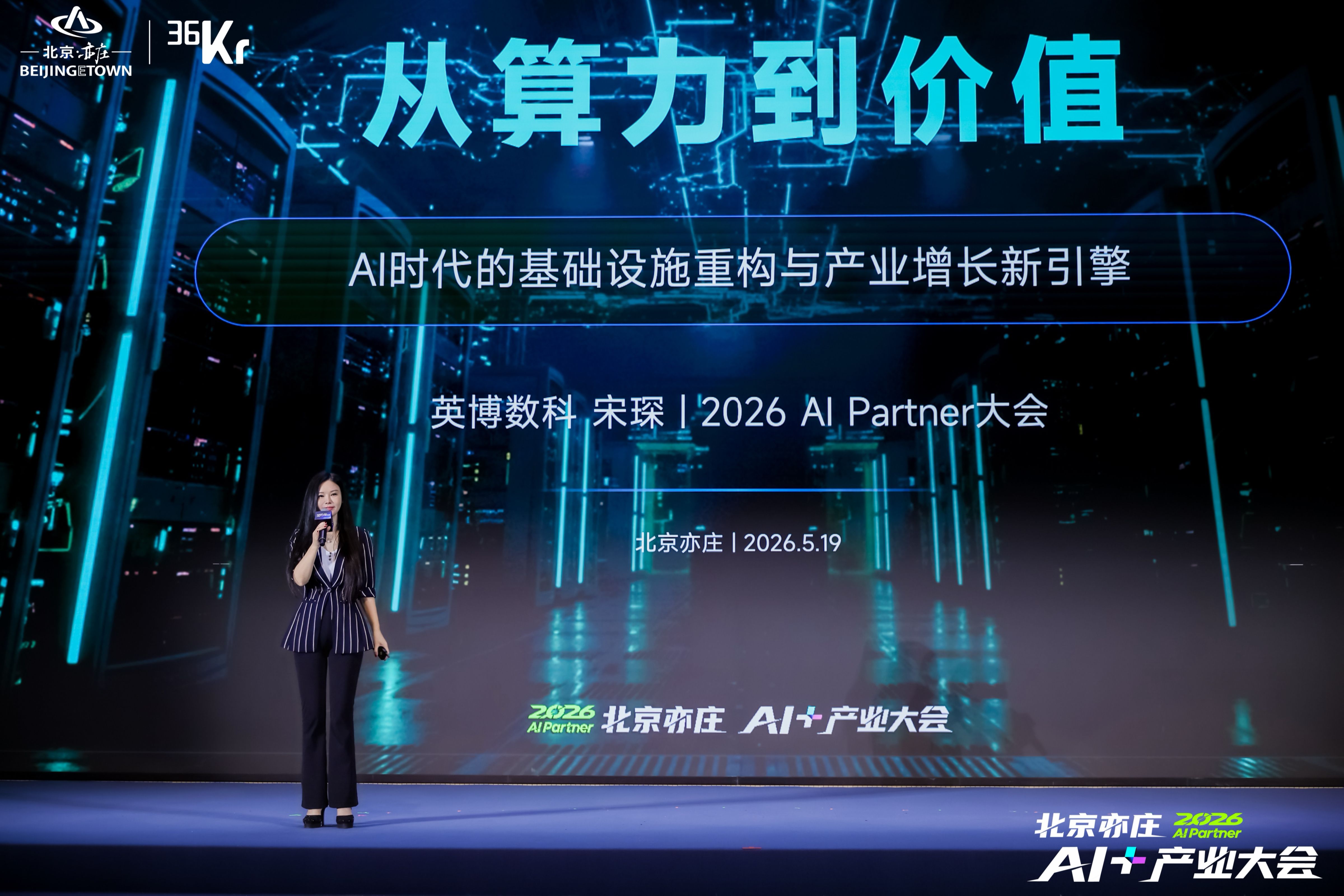
  7. From Computing Power to Value: Infrastructure Reconstruction and New Engine for Industrial Growth in the AI Era | 2026 AI Partner · Beijing Yizhuang AI+ Industry Conference

    The AI industry is shifting its focus from model parameters to computational efficiency, with "token economics" emerging as a new value unit. This transition is driving demand for "token factories" – intelligent computing centers optimized for inference, which is projected to consume significantly more power than training. Beijing Yingbo Digital Technology Co., Ltd. positions itself as a full-stack builder of these token factories, offering integrated solutions from planning to delivery and flexible billing models. AI

    From Computing Power to Value: Infrastructure Reconstruction and New Engine for Industrial Growth in the AI Era | 2026 AI Partner · Beijing Yizhuang AI+ Industry Conference

    IMPACT Highlights the shift towards inference optimization and the rise of token economics, impacting infrastructure providers and AI service pricing.

  8. AI is killing the cheap smartphone

    The era of increasingly powerful and affordable consumer electronics, particularly cheap smartphones, is ending due to a global memory shortage. AI's massive demand for memory has led to a reallocation of these components away from consumer devices and towards data centers. This shift is causing a significant price increase and a projected 13% drop in worldwide smartphone shipments, disproportionately affecting lower-cost models and potentially limiting internet access for developing regions. AI

    IMPACT Consumer electronics prices are rising due to AI's demand for memory, potentially limiting access to technology for lower-income populations.

  9. Samsung's Disappointing New Galaxy S26 Ultra Price Drop

    Samsung has reduced the price of its Galaxy S26 Ultra by $200, making it available starting at $1,099.99. However, this discount is less generous than the promotion offered for the previous Galaxy S25 Ultra, which saw a $230 price cut and included additional benefits like Samsung Care Plus. These trimmed deals and lower trade-in values are attributed to the ongoing memory chip crisis impacting Samsung's profit margins, with analysts predicting price stabilization may not occur until late 2027. AI

    Samsung's Disappointing New Galaxy S26 Ultra Price Drop

    IMPACT Minimal impact on AI operators; focuses on consumer electronics pricing influenced by component costs.

  10. AI Demand Surges as Billions in Compute Remain Locked

    Major technology companies are collectively planning to spend approximately $700 billion on AI infrastructure in 2026, a significant increase from previous years. Despite this massive investment, a recent report indicates that GPU, CPU, and memory utilization in enterprise Kubernetes clusters remains surprisingly low, averaging around 5% for GPUs and 8% for CPUs. This discrepancy highlights potential inefficiencies and readiness challenges in deploying AI at scale, with many organizations still in the early stages of experimentation and piloting. AI

    AI Demand Surges as Billions in Compute Remain Locked

    IMPACT Massive AI infrastructure spending by Big Tech may face scrutiny due to low utilization, potentially shifting focus to efficiency and ROI.