PulseAugur / Brief
EN
LIVE 00:47:46

Brief

last 24h
[5/5] 221 sources

Multi-source AI news clustered, deduplicated, and scored 0–100 across authority, cluster strength, headline signal, and time decay.

  1. Which RAG Works for You in Production?

    This article explores various Retrieval-Augmented Generation (RAG) strategies for production environments. It details naive RAG, advanced retrieval techniques, and specialized approaches like Flare-RAG and GraphRAG. The piece aims to guide readers in architecting their own RAG systems. AI
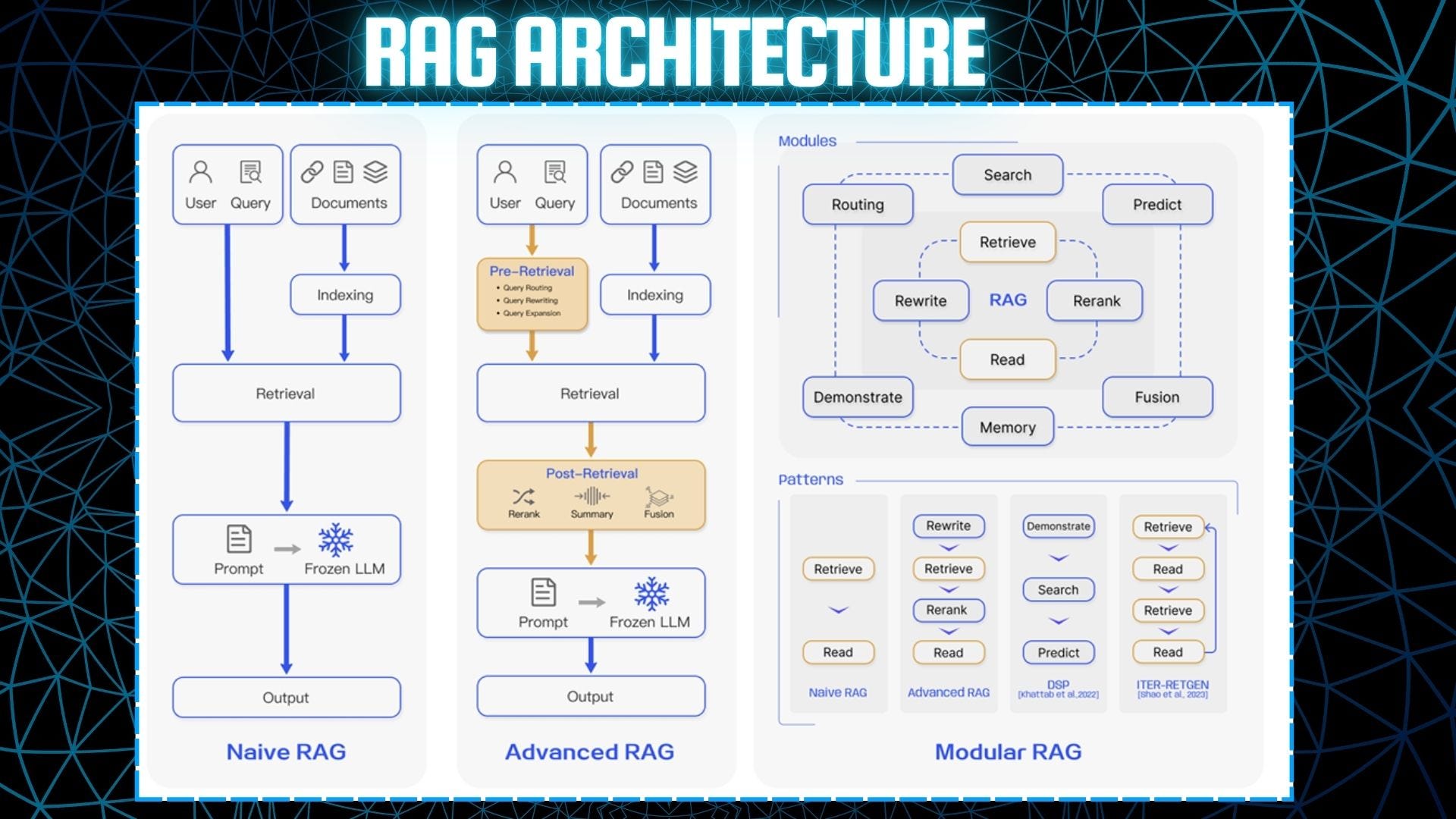
    Which RAG Works for You in Production?

    IMPACT Provides a technical overview of RAG architectures for AI practitioners.
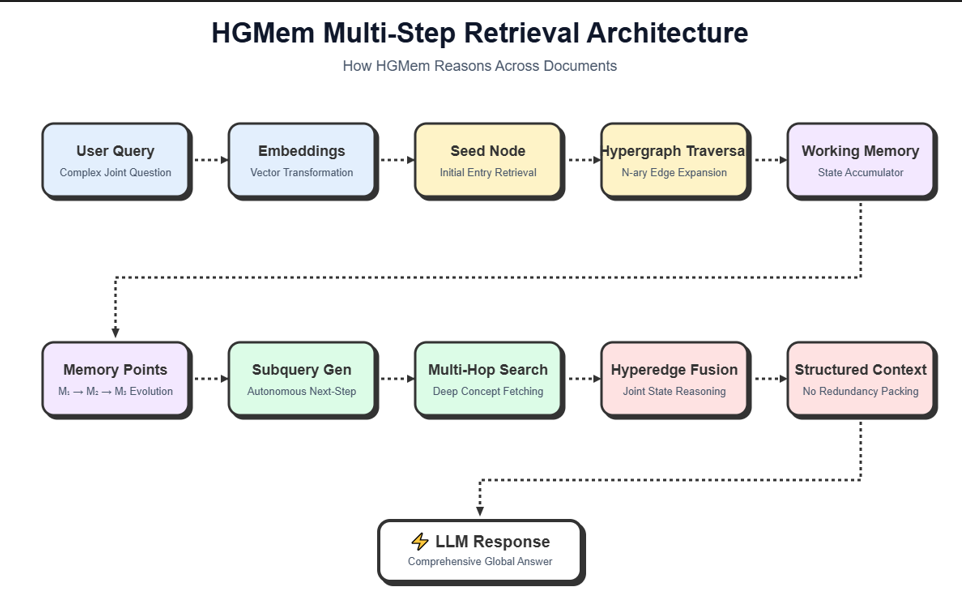
  2. I Built GraphRAG From Scratch — Then a December 2025 Paper Made It Look Basic

    A developer detailed their experience building a GraphRAG system, a method for enhancing retrieval-augmented generation (RAG) with graph data structures. They found their custom implementation was significantly surpassed by a recently published paper detailing a new architecture called HGMem. This new approach appears to address limitations in binary graph representations that their own system struggled with. AI

    I Built GraphRAG From Scratch — Then a December 2025 Paper Made It Look Basic

    IMPACT Introduces a novel architecture that significantly advances RAG capabilities, potentially setting a new standard for information retrieval in AI systems.

  3. Stop Using Raw Vector Search: Implement GraphRAG with Spring AI and Neo4j

    Developers can enhance AI retrieval systems by implementing GraphRAG, which combines vector search with graph database capabilities. This approach, demonstrated using Spring AI and Neo4j, addresses limitations of raw vector search by preserving relational context and generating structured queries. By integrating Neo4j as both a vector index and graph database, and using Spring AI's ChatClient for deterministic Cypher generation, developers can create more robust and less hallucination-prone AI applications. AI

    IMPACT Improves enterprise AI retrieval by preserving relational context and reducing hallucinations.

  4. Ex-GraphRAG: Interpretable Evidence Routing for Graph-Augmented LLMs

    Researchers have developed Ex-GraphRAG, a novel method for interpreting how Large Language Models (LLMs) use information from knowledge graphs. This new approach replaces the standard Graph Neural Network encoder with a Multivariate Graph Neural Additive Network, allowing for an exact decomposition of the model's output across individual nodes and features. Auditing evidence routing with Ex-GraphRAG revealed a disconnect between semantic importance and structural connectivity in retrieved subgraphs, indicating that nodes dominating the model's output are often structurally disconnected within the graph. AI

    IMPACT Provides a new auditable method for understanding how LLMs process graph-augmented information, aiding in debugging and improving retrieval strategies.

  5. GraphRAG on Consumer Hardware: Benchmarking Local LLMs for Healthcare EHR Schema Retrieval

    A new paper evaluates the feasibility of using GraphRAG with locally deployed open-source LLMs on consumer hardware for healthcare EHR schema retrieval. The study benchmarks models like Llama 3.1, Mistral, Qwen 2.5, and Phi-4-mini, revealing significant performance differences in knowledge graph construction, query latency, and answer quality. Results indicate that models around 7B parameters are necessary for reliable structured output, and local retrieval offers advantages in latency and factual grounding over global summarization. AI

    GraphRAG on Consumer Hardware: Benchmarking Local LLMs for Healthcare EHR Schema Retrieval

    IMPACT Demonstrates the viability of local LLMs for sensitive data tasks, potentially reducing cloud costs and improving privacy for healthcare applications.