PulseAugur / Brief
EN
LIVE 05:17:38

Brief

last 24h
[7/7] 221 sources

Multi-source AI news clustered, deduplicated, and scored 0–100 across authority, cluster strength, headline signal, and time decay.

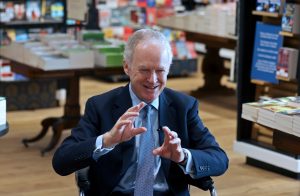
  1. Barnes & Noble CEO clarifies the bookseller’s stance on AI-written books after refusing to ban them: ‘This is a straightforward rejection of AI books’

    Barnes & Noble CEO James Daunt has clarified the company's stance on AI-generated books, stating they actively work to exclude such content from their catalog and stores. While not implementing an outright ban, Daunt emphasized that publishers must label AI-generated works, and Barnes & Noble will not knowingly stock them. This policy aims to avoid the complexities of defining and enforcing bans on AI content, placing the responsibility on publishers. AI
    Barnes & Noble CEO clarifies the bookseller’s stance on AI-written books after refusing to ban them: ‘This is a straightforward rejection of AI books’

    IMPACT Sets a precedent for how retailers will handle AI-generated content, potentially influencing publisher practices and consumer choices.

  2. The literary world isn’t prepared for AI

    The literary world is grappling with the increasing use of AI in creative writing, as evidenced by a recent scandal involving the Commonwealth Short Story Prize. One of the winning entries, "The Serpent in the Grove" by Jamir Nazir, exhibited characteristics commonly associated with AI-generated prose, leading to suspicions of plagiarism. Despite assurances from writers that no AI was used, the prize organizers are operating on trust due to the lack of reliable AI detection tools, highlighting a broader unpreparedness within the publishing industry to address this emerging challenge. AI

    The literary world isn’t prepared for AI

    IMPACT Highlights the literary world's unpreparedness for AI-generated content and the challenges in detection and trust.

  3. 📰 The literary world isn’t prepared for AI Since 2012, the British literary magazine Granta has published the regional winners of the annual Commonwealth Short

    The literary world is grappling with the implications of AI-generated content, as evidenced by a recent controversy surrounding the Commonwealth Short Story Prize. One of the winning entries was found to have been written by an AI, raising questions about authenticity and the future of creative writing. This incident highlights a broader unpreparedness within the literary community to address the growing presence and capabilities of AI in creative fields. AI

    IMPACT Raises questions about AI's role in creative industries and the preparedness of traditional fields to adapt to its capabilities.

  4. AI Fiascos ~ "... Granta were simply publishing the winner of the Commonwealth Short Story Prize, as selected by external judges. But we were a little underwhel

    Granta magazine used an AI chatbot, Claude, to assess the AI-generated content of a story submitted for a prize. The magazine received a vague response from Claude, which led them to largely dismiss the issue of AI authorship. This incident highlights the current limitations and unreliability of AI tools in nuanced editorial decisions. AI

    IMPACT AI tools currently struggle with nuanced tasks like authorship verification in creative writing.

  5. ‘Obvious markers of AI’: doubts raised over winner of short story prize

    A short story titled "The Serpent in the Grove," which won the Commonwealth Prize for the Caribbean region, is under scrutiny due to suspicions that it was authored by AI. Internet sleuths and literary critics pointed to stylistic tics and an AI detection platform's verdict as evidence, prompting the prize foundation and Granta magazine to investigate. However, both organizations have stated they cannot definitively confirm or deny AI authorship, with Granta's publisher noting that "perhaps we never will know." AI

    ‘Obvious markers of AI’: doubts raised over winner of short story prize

    IMPACT Raises questions about the integrity of creative competitions and the ability to detect AI-generated content in artistic works.

  6. Why China Loves Harvard Academics; the Granta AI Fiasco; Good-Bye Crazy City https://www. byteseu.com/2043849/ # AI # ArtificialIntelligence

    A controversy has emerged regarding Granta, a literary magazine, and its use of AI in selecting submissions. The magazine reportedly used an AI tool to filter through a large volume of entries, leading to accusations of devaluing human curation and artistic judgment. This incident has sparked debate about the role of AI in creative fields and the potential for such tools to overlook nuanced or unconventional work. AI

    Why China Loves Harvard Academics; the Granta AI Fiasco; Good-Bye Crazy City https://www. byteseu.com/2043849/ # AI # ArtificialIntelligence

    IMPACT Minimal impact on AI operators; highlights concerns about AI in creative curation.

  7. Literary Prizewinners Are Facing AI Allegations. It Feels Like the New Normal

    The prestigious Commonwealth Short Story Prize is facing scrutiny after several of its 2026 regional winners were accused of using generative AI to write their submissions. One story, "The Serpent in the Grove" by Jamir Nazir, was flagged by AI detection tools and criticized for its stylistic tells, prompting an investigation by the Commonwealth Foundation. This incident has ignited a debate within the literary community about authorship, creative integrity, and the reliability of AI detection in contests. AI

    Literary Prizewinners Are Facing AI Allegations. It Feels Like the New Normal

    IMPACT Raises questions about creative integrity and the detection of AI-generated content in artistic fields.