PulseAugur / Brief
EN
LIVE 21:06:29

Brief

last 24h
[4/4] 221 sources

Multi-source AI news clustered, deduplicated, and scored 0–100 across authority, cluster strength, headline signal, and time decay.

  1. Why LLM debugging fails on fragmented repository context

    A developer has created a terminal-native tool called `grab` to address the challenge of debugging large code repositories with LLMs. The tool facilitates iterative context extraction by allowing users to search, extract, and accumulate relevant code snippets, preserving architectural continuity. This approach aims to prevent LLMs from hallucinating code due to fragmented or missing repository context, enabling more accurate and efficient debugging. AI

    IMPACT This tool addresses a specific pain point in LLM usage for developers, potentially improving efficiency in code-related tasks.
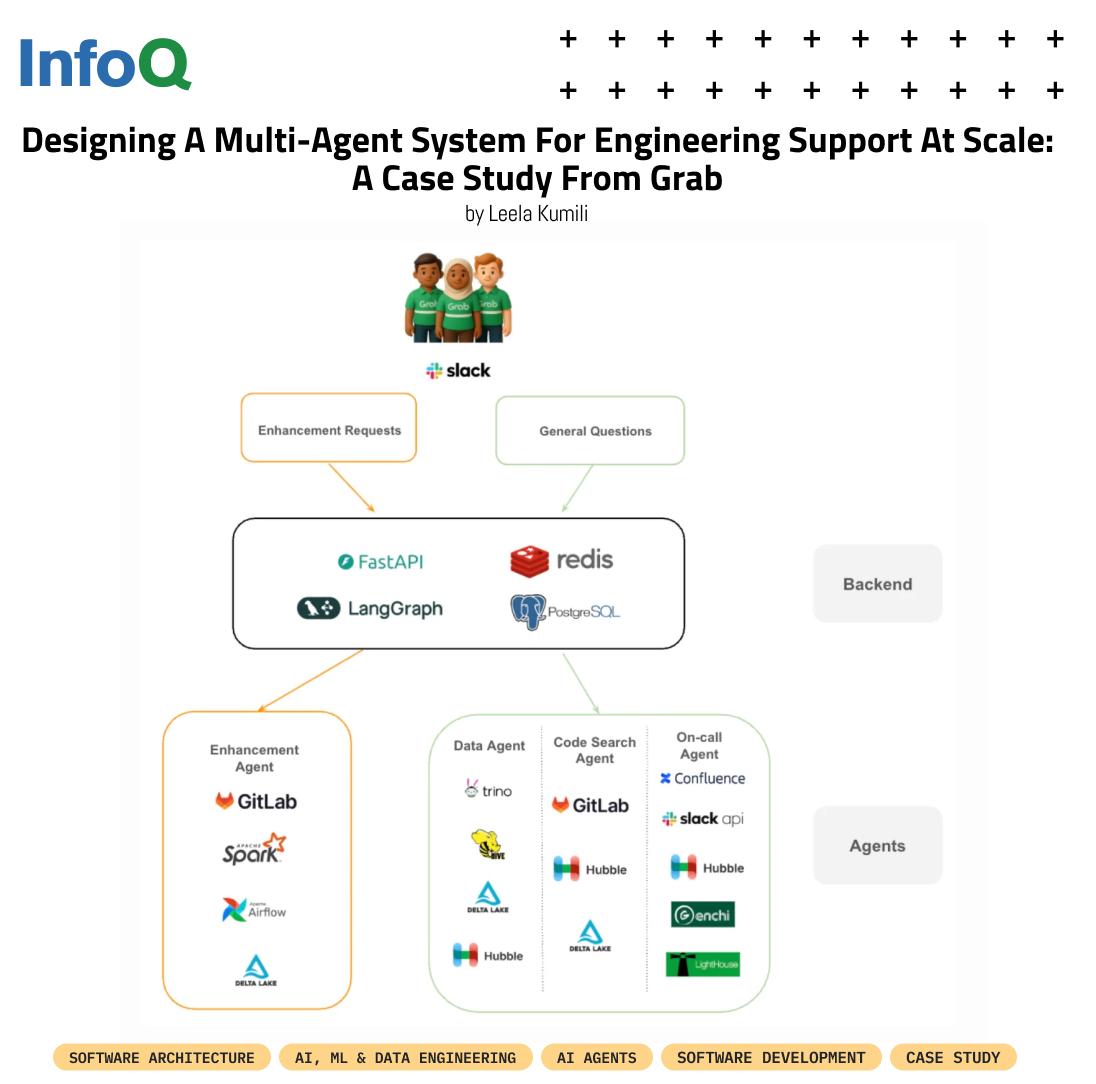

  2. # CaseStudy - # Grab ’s Central Data Team built a multi-agent AI system to automate repetitive engineering support tasks across its data warehouse platform. The

    Grab's Central Data Team developed a multi-agent AI system to streamline engineering support for their data warehouse. This initiative successfully reduced operational burdens and sped up issue resolution. Consequently, engineers can now dedicate more time to enhancing the platform rather than addressing immediate problems. AI

    # CaseStudy - # Grab ’s Central Data Team built a multi-agent AI system to automate repetitive engineering support tasks across its data warehouse platform. The

    IMPACT Automates repetitive engineering tasks, freeing up developer time for platform improvements.

  3. How Grab’s CTO sees the superapp’s push into physical AI and automated driving—and why he uses his competitors’ robots in the office

    Grab's CTO, Suthen Paradatheth, discussed the company's expanding use of AI and automation, including a new robot delivery service launching in Singapore. Grab is integrating over 1,000 AI models across its platforms, guided by a philosophy of "AI first, with heart." The company also developed its own mapping service, GrabMaps, to better serve the specific needs of its drivers in Southeast Asia. AI

    How Grab’s CTO sees the superapp’s push into physical AI and automated driving—and why he uses his competitors’ robots in the office

    IMPACT Grab's AI integration and robot delivery initiatives highlight the practical application of AI in logistics and services within emerging markets.

  4. Robots at Singapore’s AI zone to clean, patrol and deliver goods

    Singapore is positioning itself as a hub for "physical AI" by piloting various robots for tasks like cleaning, patrolling, and delivery. Companies such as Grab are testing autonomous vehicles to address labor shortages and improve last-mile logistics in the city-state. This initiative aims to integrate robots with human workers, enhancing data collection and operational efficiency. AI

    Robots at Singapore’s AI zone to clean, patrol and deliver goods

    IMPACT Accelerates the integration of robotics into urban logistics and services, addressing labor shortages and optimizing last-mile delivery.