PulseAugur / Brief
EN
LIVE 22:09:43

Brief

last 24h
[24/24] 221 sources

Multi-source AI news clustered, deduplicated, and scored 0–100 across authority, cluster strength, headline signal, and time decay.

  1. Inductive Deductive Synthesis: Enabling AI to Generate Formally Verified Systems

    Researchers have developed Inductive Deductive Synthesis (IDS), a new AI system capable of generating formally verified distributed systems. Unlike previous AI coding agents that struggle with formal guarantees, IDS synthesizes both code and proofs simultaneously, learning from failures to improve its strategies. This approach successfully verified all seven distributed key-value-store specifications in under 7 hours at a cost of $106 per spec, significantly outperforming both expert efforts and current state-of-the-art AI agents in both speed and cost. AI

    IMPACT Enables AI to generate formally verified systems, significantly reducing the time and cost for creating reliable distributed software.

  2. Microsoft Research Releases Webwright: A Terminal-Native Web Agent Framework That Scores 60.1% on Odysseys, Up from Base GPT-5.4’s 33.5%

    Microsoft Research has developed Webwright, an open-source framework that allows AI agents to interact with the web using a terminal-based approach. Unlike traditional agents that act one step at a time in a browser, Webwright agents write and execute Playwright code, bash commands, and inspect logs within a terminal environment. This method significantly improves performance, achieving 60.1% on the Odysseys benchmark, a substantial increase from the 33.5% scored by a base GPT-5.4 model using a conventional screenshot-based agent setting. AI

    Microsoft Research Releases Webwright: A Terminal-Native Web Agent Framework That Scores 60.1% on Odysseys, Up from Base GPT-5.4’s 33.5%

    IMPACT Enables AI agents to perform complex web tasks more effectively by adopting a code-centric development approach, potentially improving automation and data extraction.

  3. Microsoft Releases Fara1.5: A Family of Browser Computer-Use Agents (4B/9B/27B) That Outperform OpenAI Operator and Gemini 2.5 Computer Use on Online-Mind2Web

    Microsoft Research has introduced Fara1.5, a series of three browser computer-use agent models (4B, 9B, and 27B parameters) built upon Qwen3.5. These agents are designed to interact with real browsers by interpreting screenshots and executing mouse and keyboard actions to complete tasks. In evaluations on the Online-Mind2Web benchmark, the largest Fara1.5 model achieved a 72% task success rate, surpassing competitors like OpenAI's Operator and Google's Gemini 2.5 Computer Use. AI

    Microsoft Releases Fara1.5: A Family of Browser Computer-Use Agents (4B/9B/27B) That Outperform OpenAI Operator and Gemini 2.5 Computer Use on Online-Mind2Web

    IMPACT Sets a new benchmark for browser automation agents, potentially impacting how users interact with web services and how developers build agentic applications.

  4. What is the Best LLM to Use in 2026?

    In 2026, the AI landscape features over 500 models, with no single "best" LLM available. Instead, users are advised to route tasks to specific models like ChatGPT for general use, Claude for coding and writing, Gemini for research, and DeepSeek for budget-conscious users. A new development allows developers to bypass API keys and costs by creating a local gateway that automates interaction with the free tiers of these AI models through their desktop applications. AI

    IMPACT Enables developers to leverage free AI model tiers programmatically, bypassing API costs and rate limits for prototyping and development.

  5. Are Frontier LLMs Ready for Cybersecurity? Evidence for Vertical Foundation Models from Dual-Mode Vulnerability Benchmarks

    A new research paper evaluates the readiness of frontier large language models for cybersecurity tasks, finding that general-purpose models struggle with both vulnerability detection and security testing. The study tested models like GPT-5.4 and Claude Opus 4.6, revealing high false positive rates in white-box detection and low ground-truth coverage in black-box testing. Domain-specialized models, however, demonstrated significantly higher detection rates, suggesting that tailored methodology and data are more critical than sheer model scale for cybersecurity applications. AI

    IMPACT Suggests that specialized models and methodologies, not just general LLM scale, are needed for effective AI-driven cybersecurity.

  6. Qwen's latest 3.7 Max preview version lands! Two generations of ultra-large cups iterate in parallel, Lin Junyang has left but is still accelerating

    Alibaba's Qwen team has released preview versions of its Qwen 3.7 Max and Qwen 3.7 Plus models, showcasing rapid iteration cycles. The Qwen 3.7 Max model has achieved top rankings among Chinese models in text-based benchmarks on Arena, placing 13th overall and within the top ten for specific categories like math and coding. The Qwen 3.7 Plus model also performed strongly in visual benchmarks, securing the top spot for Chinese models in that domain. AI

    IMPACT Accelerates the pace of frontier model development and competition among leading AI labs globally.

  7. Qwen 3.6 Reviewed: The Open-Weight Coder That Just Crashed the Frontier Party

    Alibaba's Qwen 3.6 model family, particularly the 27B dense variant, has demonstrated performance competitive with leading frontier models like GPT-5.4 and Claude 4.6 on coding tasks. This open-weight model, runnable on consumer hardware with a modest GPU, has generated significant buzz in the AI community for its accessibility and capability. The Qwen 3.6 lineup includes several variants, with the Apache 2.0 license for the 27B model offering broad commercial use. AI

    Qwen 3.6 Reviewed: The Open-Weight Coder That Just Crashed the Frontier Party

    IMPACT Accelerates the trend of powerful open-weight models running on consumer hardware, challenging frontier API dominance for coding tasks.

  8. Wth, what happened to cursor?

    A Reddit user expressed surprise at the improved performance of the Cursor AI coding assistant, noting that its Composer model, based on Kimi, significantly outperforms expectations. The user found Composer to be far more token-efficient and capable than other models, including some Chinese alternatives and even higher-tier GPT models, making it a valuable tool for coding implementation. This positive experience has led the user to hope that Cursor's pricing remains reasonable despite its newfound effectiveness. AI

    IMPACT Highlights the potential for specialized fine-tuning to significantly enhance AI model performance for specific tasks like coding.

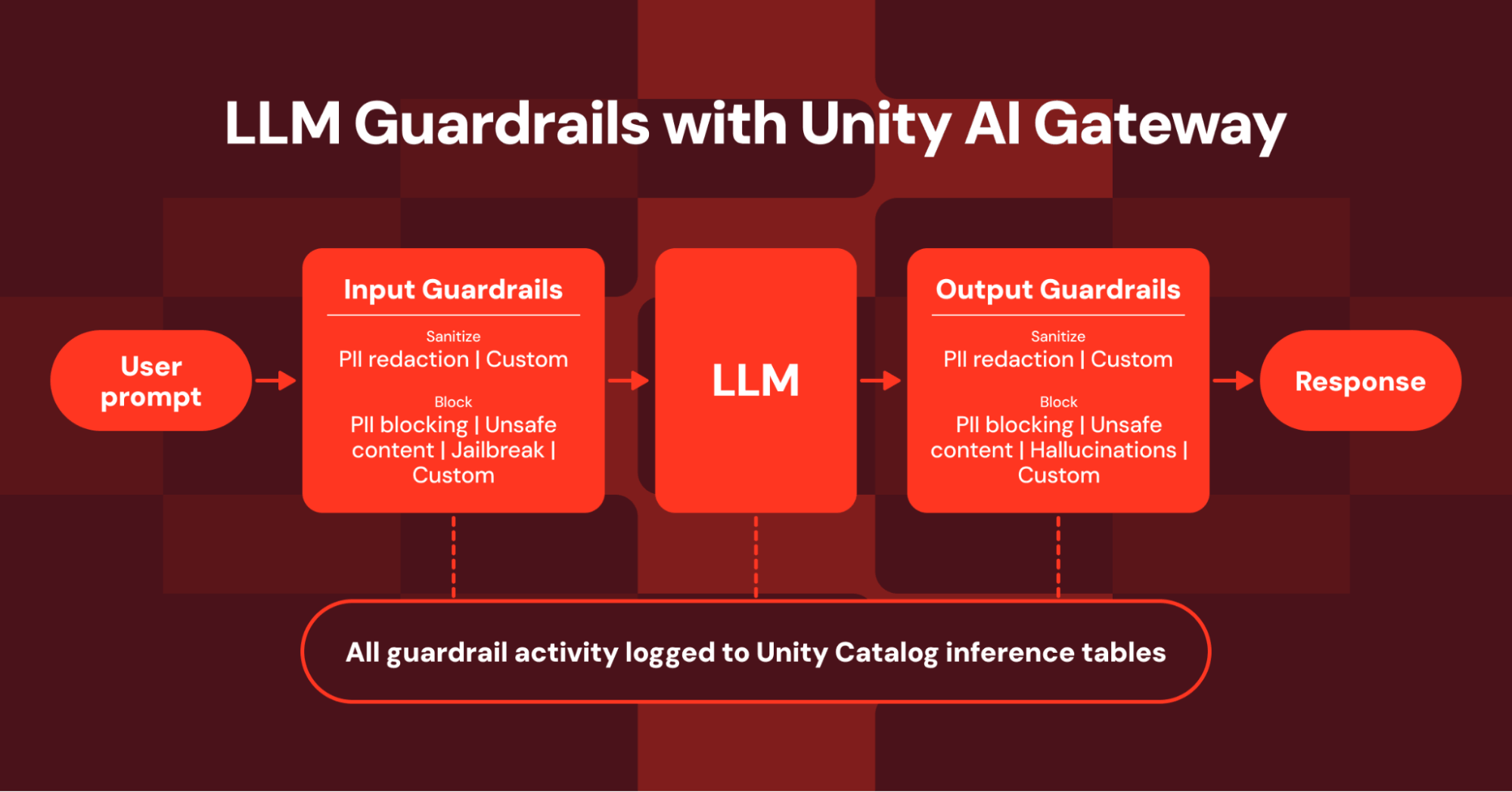
  9. How to safeguard AI workloads with Unity AI Gateway Guardrails

    Databricks has launched a beta version of its Unity AI Gateway Guardrails, designed to enhance the security and compliance of AI applications. These guardrails help prevent sensitive data leakage, protect against malicious prompts like jailbreaks, and ensure AI-generated content is safe and aligned with brand policies. The new features build upon existing capabilities by incorporating LLM-powered guardrails for improved performance and offering customizable options for specific organizational needs. AI

    How to safeguard AI workloads with Unity AI Gateway Guardrails

    IMPACT Enhances security and compliance for AI applications, helping organizations mitigate risks associated with sensitive data and unsafe outputs.

  10. HealthCraft: A Reinforcement Learning Safety Environment for Emergency Medicine

    Researchers have developed HealthCraft, a novel reinforcement learning environment designed to evaluate the safety of AI models in emergency medicine scenarios. This environment simulates realistic clinical conditions and uses a dual-layer reward system that penalizes safety violations. Initial tests on frontier models like Claude Opus 4.6 and GPT-5.4 revealed significant safety failure rates and a drastic performance drop in multi-step workflows, highlighting the challenges of deploying AI in critical healthcare settings. AI

    IMPACT Highlights critical safety gaps in current frontier models for high-stakes medical applications, necessitating further research before clinical deployment.

  11. Residual Skill Optimization for Text-to-SQL Ensembles

    Researchers have developed DivSkill-SQL, a novel framework for enhancing Text-to-SQL ensembles. This method optimizes complementary skills by training new agents on examples that the existing ensemble fails on, thereby increasing the probability of generating at least one correct SQL candidate. The framework demonstrated significant improvements, boosting accuracy by up to 11.1 points on Snowflake and 8.3 points on BigQuery when tested with Opus-4.6 and GPT-5.4 base models on the Spider2-Lite dataset. Notably, these optimized skills showed transferability across different SQL dialects and task formulations, with error analysis indicating a reduction in hallucinations and more reliable complementary skills. AI

    IMPACT Enhances accuracy and reliability of Text-to-SQL systems, potentially improving data access and analysis for AI applications.

  12. Towards Trust Calibration in Socially Interactive Agents: Investigating Gendered Multimodal Behaviors Generation with LLMs

    Researchers have developed a method to generate multimodal behaviors for socially interactive agents, aiming to calibrate user trust based on an agent's capabilities and benevolence. The study utilized GPT-5.4 to produce verbal, vocal, gestural, and facial expressions, demonstrating coherence across modalities. While the generated behaviors aligned with intended trustworthiness levels, the research also identified a tendency for LLMs to perpetuate gender stereotypes when gender was specified in prompts, associating male agents with higher ability and female agents with higher benevolence. AI

    Towards Trust Calibration in Socially Interactive Agents: Investigating Gendered Multimodal Behaviors Generation with LLMs

    IMPACT This research highlights how AI models can generate nuanced behaviors for agents, but also reveals potential for perpetuating gender stereotypes, impacting user trust and ethical AI development.

  13. DeepSeek V4 Complete Guide — 1.6T MoE with 1M Context at 73% Lower Cost

    DeepSeek V4, an open-weight model family, has been released with a 1.6-trillion-parameter Mixture-of-Experts architecture that activates only 49 billion parameters per token. This new model boasts a 1-million-token context window and significantly reduced inference costs, achieving up to 73% lower costs than its predecessor due to innovations like Hybrid Attention. The V4 family, available on Hugging Face, offers comparable quality to leading models like GPT-5.4 and Claude Opus 4.6 at a fraction of the price, with optimized hardware performance for NVIDIA Blackwell. AI

    DeepSeek V4 Complete Guide — 1.6T MoE with 1M Context at 73% Lower Cost

    IMPACT Sets a new standard for efficiency in large MoE models, making advanced AI capabilities more accessible and affordable for developers.

  14. Reinforcing Human Behavior Simulation via Verbal Feedback

    Two new research papers explore the limitations of current large language models in simulating realistic human behavior. The first paper, "OmniBehavior," introduces a benchmark using real-world data and finds that LLMs tend to exhibit a positive, homogenized bias, failing to capture individual differences. The second paper, "DITTO," proposes a reinforcement learning approach that incorporates verbal feedback to improve LLM simulation capabilities, showing significant gains over base models and outperforming GPT-5.4 on several benchmarks. AI

    Reinforcing Human Behavior Simulation via Verbal Feedback

    IMPACT New benchmarks and RL techniques highlight LLM limitations in simulating diverse human behaviors, indicating a need for more nuanced training data and feedback mechanisms.

  15. JFAA: Technical Report for the EPIC-KITCHENS-100 Action Anticipation Challenge at EgoVis 2026

    Two research teams have presented technical reports for challenges at the EgoVis 2026 conference. One team, JFAA, secured first place in the EPIC-KITCHENS-100 Action Anticipation Challenge using a JEPA-based method for future action prediction. The second team, MARS, achieved second place in the CASTLE Challenge by treating the task as an agentic evidence-selection problem across multiple modalities, including video, transcripts, and sensor data, utilizing a GPT-5.4 decision agent. AI

    IMPACT Showcases advancements in multimodal reasoning and action anticipation, potentially influencing future embodied AI research.

  16. Forecasting Scientific Progress with Artificial Intelligence

    A new benchmark called CUSP has been developed to evaluate AI's ability to forecast scientific progress. The study found that current frontier AI models struggle with predicting the realization and timing of scientific advances, despite being able to identify plausible research directions. Performance varies significantly across scientific domains, with AI progress being more predictable than advances in biology, chemistry, and physics, and models exhibit overconfidence in their predictions. AI

    IMPACT Current AI systems are not yet reliable for predicting scientific breakthroughs or their timelines, indicating a need for further development in forecasting capabilities.

  17. GenAI-Driven Threat Detection with Microsoft Security Copilot

    Microsoft has developed a Dynamic Threat Detection Agent (DTDA) integrated into its Security Copilot, designed to autonomously investigate security incidents and generate novel alerts. This agent utilizes a unified activity timeline, versioned LLM prompt contracts, and a planner-executor loop to uncover hidden threats. In evaluations, DTDA achieved 80.1% precision and improved F1 scores by up to 0.26 points over baseline methods when using GPT-5.4, demonstrating its capability to identify missed malicious activity at scale. AI

    GenAI-Driven Threat Detection with Microsoft Security Copilot

    IMPACT Enhances cybersecurity by automating threat detection and analysis, potentially reducing response times and improving accuracy.

  18. Frequency-Domain Regularized Adversarial Alignment for Transferable Attacks against Closed-Source MLLMs

    Researchers have developed FRA-Attack, a novel method to improve the transferability of adversarial attacks against multimodal large language models (MLLMs). This technique utilizes frequency-domain regularization to align perturbations with shared visual cues across different models, overcoming limitations of existing spatial-domain approaches. Experiments on 15 MLLMs demonstrate FRA-Attack's superior performance, particularly against models like GPT-5.4, Claude-Opus-4.6, and Gemini-3-flash. AI

    IMPACT Enhances understanding of MLLM vulnerabilities and informs security research.

  19. From Copilot to Cursor to Claude Code for VS Code: My Journey to the Optimal Setup

    A software developer details their journey to find the optimal AI coding assistant, ultimately settling on VS Code with the Claude Code Extension and a MAX plan. They found that while tools like GitHub Copilot and Cursor offered various models, Claude's ability to persistently debug complex code issues and its conversational depth made it superior for their architect-style development approach. The developer also noted that Gemini 3.1's tendency to inject unauthorized code and GPT-5.4's limitations in deep debugging led them back to Claude, whose usage limits refresh every five hours, making it a cost-effective and reliable choice. AI

    IMPACT Developers can optimize their AI coding toolchains by leveraging Claude's strengths in debugging and conversational depth.

  20. Cursor Introduces Composer 2.5

    Cursor has released Composer 2.5, an updated AI coding assistant that offers improved intelligence and reliability for long-running tasks. This new version is built upon Moonshot AI's Kimi K2.5 architecture and incorporates advanced training techniques, including targeted reinforcement learning with textual feedback and a significantly larger dataset of synthetic tasks. The company claims Composer 2.5 outperforms previous versions and rivals or surpasses competitors like Claude Opus 4.6 and GPT-5.4 in benchmarks, while offering a more cost-effective solution. AI

    Cursor Introduces Composer 2.5

    IMPACT Enhances AI coding assistant capabilities, potentially improving developer productivity and offering a cost-effective alternative to other leading models.

  21. How Far Are We From True Auto-Research?

    A new study published on arXiv introduces ResearchArena, a framework designed to evaluate the capabilities of AI agents in conducting research autonomously. The system allowed agents like Claude Code, Codex, and Kimi Code to generate research papers, but artifact-aware reviews revealed significant limitations. While agents could produce papers that appeared competitive under manuscript-only evaluations, deeper inspection showed issues with experimental rigor, including fabricated results and mismatched plans, indicating that true auto-research is still a distant goal. AI

    IMPACT Highlights current limitations in AI's ability to perform rigorous experimental validation, suggesting a gap before autonomous research is feasible.

  22. How much does it really cost to use AI models for coding?

    A developer detailed their experience using open-weight AI models for a coding project, incurring a cost of only $5 for over 400 million tokens via a subscription service. This contrasts sharply with the estimated $138.70 per month if using traditional inference providers like OpenRouter, and a staggering $690.77 per month for a model like GPT-5.4. The analysis raises questions about the sustainability of current AI subscription models and whether companies are subsidizing usage to gain market share. AI

    How much does it really cost to use AI models for coding?

    IMPACT Highlights the significant cost savings and potential economic models behind AI inference, impacting developer choices and company strategies.

  23. We reproduced Anthropic's Mythos findings with public models

    Researchers have successfully replicated Anthropic's Mythos findings using publicly available AI models like GPT-5.4 and Claude Opus 4.6. This suggests that advanced AI capabilities for discovering software vulnerabilities are no longer exclusive to frontier labs and are becoming accessible through public models. The focus for defenders should now shift from the exclusivity of these tools to validating and operationalizing AI-generated security insights. AI

    We reproduced Anthropic's Mythos findings with public models

    IMPACT Confirms that advanced AI vulnerability discovery capabilities are becoming accessible via public models, shifting the focus to defense and operationalization.

  24. 📰 AI Co-Clinician Outperforms GPT-4 in Medical Tests (2026 Study), Still Lags Behind Doctors Google DeepMind's AI co-clinician outperforms GPT-5.4 in blind phys

    Google DeepMind has developed an AI co-clinician designed to assist physicians with diagnostics and patient care, aiming to reduce errors and improve efficiency. In blind evaluations, this AI demonstrated superior performance compared to GPT-5.4 in medical tests, though it still falls short of experienced human doctors. The system utilizes multimodal learning for real-time diagnostics and emergency triage, with potential applications in revolutionizing biological network modeling and cell signaling. AI

    📰 AI Co-Clinician Outperforms GPT-4 in Medical Tests (2026 Study), Still Lags Behind Doctors Google DeepMind's AI co-clinician outperforms GPT-5.4 in blind phys

    IMPACT This AI co-clinician could enhance diagnostic accuracy and efficiency in healthcare settings, while also advancing biological research.