PulseAugur / Brief
EN
LIVE 07:30:10

Brief

last 24h
[25/25] 221 sources

Multi-source AI news clustered, deduplicated, and scored 0–100 across authority, cluster strength, headline signal, and time decay.

  1. Understanding LangChain, LangGraph, RAG, and MCP

    Multiple dev.to articles detail how to build AI agents using LangGraph, a workflow system from LangChain. The posts provide templates for common agent patterns, including Retrieval-Augmented Generation (RAG) for document querying, multi-tool agents that can plan and execute tasks, and human-in-the-loop workflows requiring user review. These templates illustrate LangGraph's architecture with nodes, edges, and state management for creating complex, stateful AI applications. AI
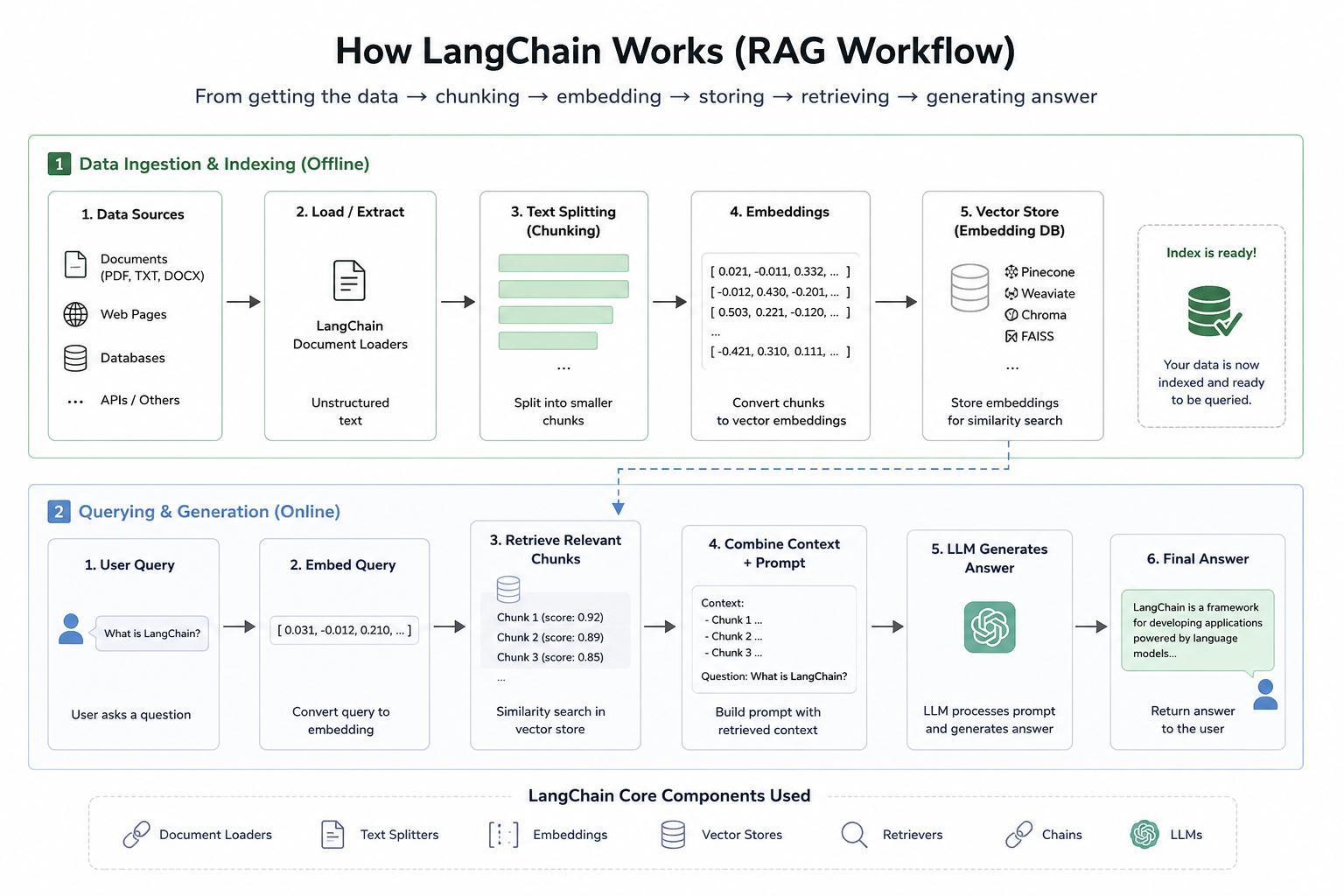
    Understanding LangChain, LangGraph, RAG, and MCP

    IMPACT Provides practical templates and code examples for building complex AI agents, accelerating development for RAG, multi-tool, and human-in-the-loop applications.

  2. The Complete Guide to Running LLMs Locally in 2026: From Ollama to Production

    This guide details how to run advanced large language models locally on personal hardware in 2026, bypassing expensive API costs. It emphasizes that VRAM is the primary hardware bottleneck, not raw compute power, and suggests specific GPU configurations for different budgets. The guide recommends using Ollama as the standard tool for managing local LLMs and highlights several Chinese models, such as Qwen 2.5 and DeepSeek-R1, for their strong performance relative to their size. AI

    IMPACT Enables cost-effective local LLM deployment, democratizing access to advanced AI capabilities.

  3. Specialization Beats Scale: A Strategic Variable Most AI Procurement Decisions Overlook

    A specialized 3-billion-parameter AI model has outperformed leading commercial frontier APIs in structured OCR tasks, demonstrating that domain-specific fine-tuning can surpass sheer model scale. This specialized model was also significantly cheaper to operate, challenging the long-held procurement strategy of defaulting to the largest available models. The findings suggest that for specific enterprise applications, tailored smaller models offer a more cost-effective and higher-performing solution than general-purpose large models. AI

    IMPACT Specialized models can offer superior performance and cost-efficiency for specific enterprise tasks, challenging the dominance of large frontier models.

  4. New CiteVQA study reveals leading AI models, including GPT-4, often provide correct answers but fail to reliably cite their sources, raising concerns

    A new study from CiteVQA indicates that leading AI models, including GPT-4, frequently provide correct answers but struggle to reliably cite their sources. This inability to attribute information accurately raises concerns about the trustworthiness and verifiability of AI-generated content. The research highlights a critical gap in current AI capabilities, particularly in applications requiring factual accuracy and source transparency. AI

    IMPACT Highlights a critical gap in AI's ability to provide verifiable information, impacting trust and reliability in AI-generated content.

  5. AI Has No Memory. So I Built One For It.

    AI models do not possess inherent memory; instead, they rely on the application to provide the full conversation history with each new message. This entire context is re-processed by the model to generate a response, creating the illusion of continuous memory. The size of this context window, measured in tokens, dictates how much of the past conversation the AI can consider before it begins to 'forget' earlier parts. AI

    AI Has No Memory. So I Built One For It.

    IMPACT Explains the fundamental mechanism behind AI chatbot 'memory', clarifying how context windows function and impact conversational continuity.

  6. The Forgotten Pioneer: The Legendary Four Open-Source Models That First Topped the Chatbot Arena

    Four early open-source models—Vicuna-13B, Guanaco-33B, Vicuna-33B, and WizardLM-70B—briefly dominated the Chatbot Arena, outperforming early commercial offerings. Vicuna-13B, trained for $300, pioneered the use of ChatGPT conversation data for fine-tuning and indirectly led to the creation of the Chatbot Arena platform. Guanaco-33B demonstrated the power of QLoRA for efficient fine-tuning on consumer hardware, a technique that revolutionized open-source model development. WizardLM-70B, developed by Microsoft, introduced the Evol-Instruct method for generating complex training data, though its successor, WizardLM-2, was mysteriously removed from public access shortly after its release. AI

    The Forgotten Pioneer: The Legendary Four Open-Source Models That First Topped the Chatbot Arena

    IMPACT These early open-source models pioneered efficient training and data generation techniques, paving the way for today's advanced LLMs.

  7. DeepSeek’s New AI Is A Game Changer

    DeepSeek has released a new AI model that reportedly outperforms leading models like GPT-4 on several benchmarks. The model, named DeepSeek-V2, demonstrates significant advancements in reasoning and coding capabilities. This release positions DeepSeek as a major competitor in the frontier AI model space. AI

    DeepSeek’s New AI Is A Game Changer

    IMPACT Sets new SOTA on coding and reasoning benchmarks, challenging existing frontier models.

  8. How My Career Evolved Like an AI (LLM Architectures )System

    An individual's career progression is likened to the evolution of Large Language Model (LLM) architectures. The early career, akin to encoder-only models like BERT, focuses on absorbing and representing knowledge. The mid-career phase, mirroring decoder-only models such as GPT, emphasizes generating outputs and solving problems. Finally, the role of an AI Solution Architect aligns with encoder-decoder models like T5, requiring a continuous translation between business needs and technical solutions. AI

    How My Career Evolved Like an AI (LLM Architectures )System

    IMPACT Offers a novel perspective on understanding career development through the lens of AI architecture.

  9. Humanity's greatest hits: things we actually paused

    OpenAI has paused or significantly slowed down several projects, including its efforts to build a superintelligence and its work on developing a more advanced AI model than GPT-4. The company is also reportedly scaling back its AI safety research and has paused development on its long-term AI forecasting team. This strategic shift appears to be driven by a desire to focus on more immediate and impactful AI applications. AI

    Humanity's greatest hits: things we actually paused

    IMPACT OpenAI's strategic shift may impact the pace of frontier AI development and the focus of AI safety research.

  10. Security Document Classification with a Fine-Tuned Local Large Language Model: Benchmark Data and an Open-Source System

    Researchers have developed TorchSight, an open-source local system for classifying security documents using a fine-tuned Qwen 3.5 27B large language model. This system achieved 95.0% accuracy on a benchmark of 1,000 documents, significantly outperforming commercial models which scored between 75.4% and 79.9%. The fine-tuned local model demonstrates the capability to maintain data privacy while accurately identifying sensitive information across various security categories and subcategories. AI

    IMPACT Demonstrates that fine-tuned local LLMs can match or exceed commercial models for sensitive data classification, enabling better privacy.

  11. I Benchmarked 47 LLM Providers Against Real Queries - Here's What I Found 📊

    A developer benchmarked 47 LLM providers using real production queries, spending $3,200 and analyzing 12,847 requests over three months. The findings revealed significant discrepancies between marketing claims and actual performance, particularly in latency and cost-effectiveness for longer responses. The analysis highlighted that while premium models like GPT-4 are necessary for complex tasks, cheaper alternatives can suffice for simpler queries, leading to the development of an open-source router to optimize LLM usage. AI

    I Benchmarked 47 LLM Providers Against Real Queries - Here's What I Found 📊

    IMPACT Optimizes LLM usage by routing queries to the most cost-effective and performant models, saving significant operational expenses.

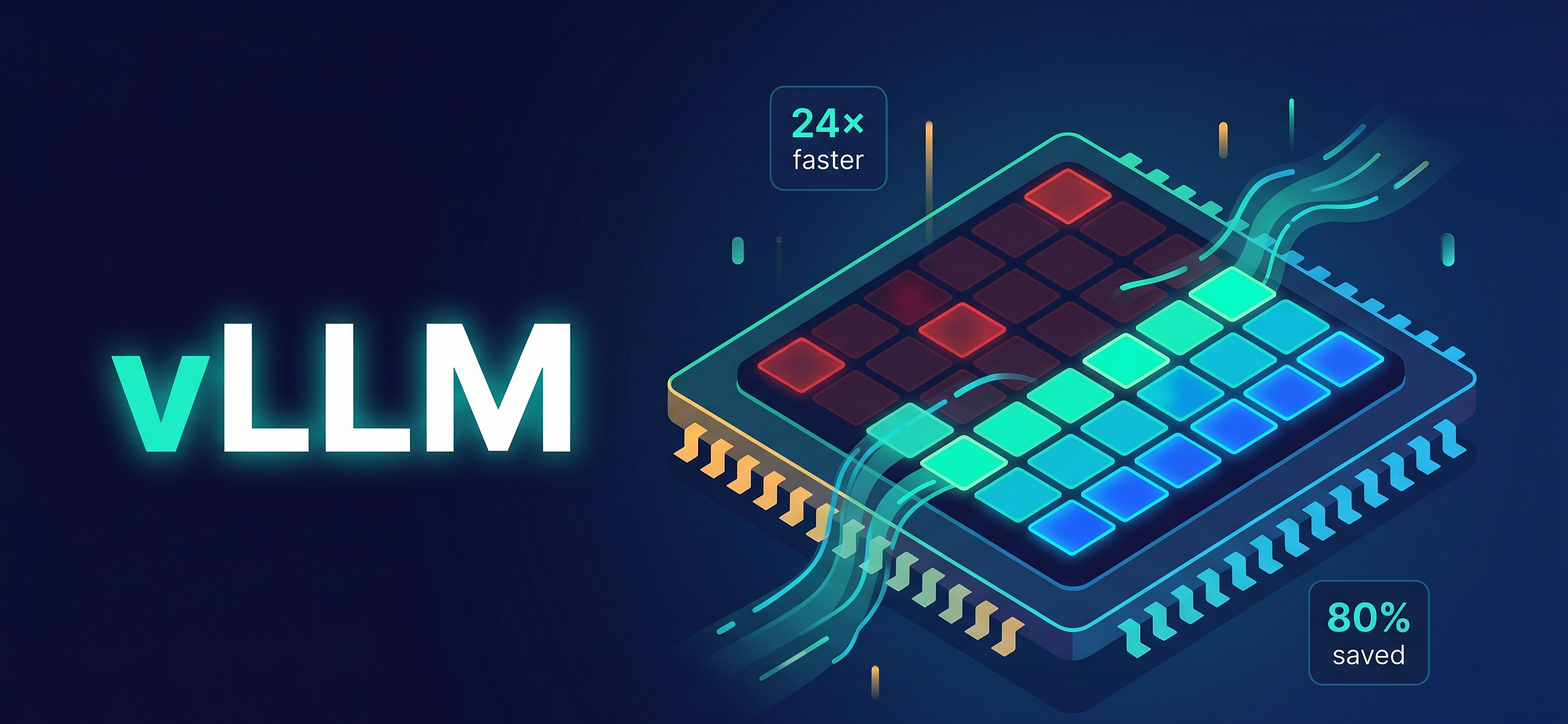
  12. Your LLM Server Is Wasting 80% of Its GPU Memory — Here’s How vLLM Fixes That

    Large language models (LLMs) face a significant bottleneck in serving efficiency due to the memory demands of KV cache, which stores intermediate attention calculations. This KV cache, essential for enabling faster responses and handling longer context windows, can consume up to 80% of GPU memory. Innovations like vLLM's PagedAttention, inspired by operating system memory management, are addressing this by optimizing KV cache storage and reducing memory fragmentation, leading to substantial improvements in inference throughput. AI

    Your LLM Server Is Wasting 80% of Its GPU Memory — Here’s How vLLM Fixes That

    IMPACT Optimizing KV cache and memory usage is crucial for reducing LLM serving costs and improving inference speed, enabling wider adoption of AI applications.

  13. PromptRad: Knowledge-Enhanced Multi-Label Prompt-Tuning for Low-Resource Radiology Report Labeling

    Researchers have developed PromptRad, a new method for labeling radiology reports in low-resource environments. This approach uses prompt-tuning and incorporates medical synonyms from the UMLS Metathesaurus to improve classification accuracy with minimal labeled data. Experiments show PromptRad outperforms traditional methods and even rivals GPT-4's performance on liver CT reports, particularly in handling complex negation patterns. AI

    PromptRad: Knowledge-Enhanced Multi-Label Prompt-Tuning for Low-Resource Radiology Report Labeling

    IMPACT Enables more accurate and efficient analysis of medical reports in data-scarce clinical settings.

  14. Findings of the Counter Turing Test: AI-Generated Text Detection

    Researchers have presented findings from the Counter Turing Test (CT2) for detecting AI-generated content, focusing on both images and text. The CT2 involved tasks to classify content as AI-generated or real, and to identify the specific model responsible. While AI-generated images were detected with high accuracy (F1 > 0.83), identifying the exact model proved more challenging (F1 ~0.5). For text, binary classification achieved near-perfect scores (F1 = 1.00), but model attribution was less successful (F1 ~0.95), indicating a need for improved detection and model fingerprinting techniques. AI

    Findings of the Counter Turing Test: AI-Generated Text Detection

    IMPACT Highlights the ongoing challenge of accurately attributing AI-generated content to specific models, crucial for combating misinformation.

  15. Lens: Rethinking Training Efficiency for Foundational Text-to-Image Models

    Researchers have introduced Lens, a 3.8B-parameter text-to-image model that achieves competitive performance with significantly less training compute than larger models, using dense caption datasets and efficient architecture. It generates high-resolution images quickly and supports multilingual prompts. Separately, a new framework called RankE has been developed for discrete text-to-image models, which jointly optimizes the generator and decoder to improve both alignment and image fidelity, addressing issues of latent covariate shift. AI

    IMPACT Lens demonstrates a path to more efficient training of large text-to-image models, while RankE offers a novel approach to improving the quality of discrete generation models.

  16. Day 1: I'm Done Writing Prompts by Hand — Meet DSPy

    Several articles discuss robust methods for handling Large Language Model (LLM) outputs in production environments, emphasizing the need for structured validation beyond simple JSON formatting. Techniques like Pydantic and JSON Schema are highlighted for enforcing data integrity, ensuring that LLM-generated data conforms to predefined structures before integration into downstream systems. The discussions also cover strategies for improving LLM efficiency and reliability, including caching layers to reduce API costs and declarative prompt programming with frameworks like DSPy to automate prompt optimization. AI

    IMPACT These articles provide practical guidance for developers building LLM-powered applications, focusing on improving reliability, reducing costs, and enhancing the integration of LLM outputs into production systems.

  17. Arm Steps Deeper into Silicon: Implications for the Semiconductor Value Chain

    Arm Holdings has announced its first complete production chip, the Arm AGI CPU, designed for AI data center workloads and manufactured by TSMC on a 3nm process. This move marks a significant shift for Arm, moving beyond its traditional IP licensing model to offer turnkey chip solutions, aiming to accelerate time-to-market and reduce costs for customers like Meta and OpenAI. The AGI CPU is expected to be available in the second half of 2026, positioning Arm to capture more value in the rapidly growing AI semiconductor market. AI

    Arm Steps Deeper into Silicon: Implications for the Semiconductor Value Chain

    IMPACT Arm's entry into full chip production with its AGI CPU could accelerate AI deployment by reducing time-to-market and development costs for major tech players.

  18. 📰 AI Co-Clinician Outperforms GPT-4 in Medical Tests (2026 Study), Still Lags Behind Doctors Google DeepMind's AI co-clinician outperforms GPT-5.4 in blind phys

    Google DeepMind has developed an AI co-clinician designed to assist physicians with diagnostics and patient care, aiming to reduce errors and improve efficiency. In blind evaluations, this AI demonstrated superior performance compared to GPT-5.4 in medical tests, though it still falls short of experienced human doctors. The system utilizes multimodal learning for real-time diagnostics and emergency triage, with potential applications in revolutionizing biological network modeling and cell signaling. AI

    📰 AI Co-Clinician Outperforms GPT-4 in Medical Tests (2026 Study), Still Lags Behind Doctors Google DeepMind's AI co-clinician outperforms GPT-5.4 in blind phys

    IMPACT This AI co-clinician could enhance diagnostic accuracy and efficiency in healthcare settings, while also advancing biological research.

  19. High-Risk AI Systems and the Problem of Identity in the European AI Act

    The integration of AI into e-commerce is fundamentally reshaping the retail landscape, moving beyond simple search to synthesized answers and personalized experiences. Brands risk losing customer narratives by failing to adapt to generative engine optimization and by implementing generic chatbots instead of conversational interfaces woven into the user journey. Furthermore, professionals must evolve into "AI-native humans" by intentionally directing AI, focusing on their unique human edge, and embracing self-motivation to remain relevant in a rapidly changing work environment. AI

    IMPACT Professionals must adapt to AI-driven workflows and e-commerce shifts to maintain relevance and competitive advantage.

  20. nvidia/Nemotron-Labs-Diffusion-14B

    NVIDIA has released the Nemotron-Labs Diffusion family of language models, available in 3B, 8B, and 14B parameter sizes. These models uniquely support autoregressive (AR), diffusion, and self-speculation decoding modes within a single architecture, offering significant speed-ups. By generating tokens in parallel blocks rather than sequentially, Nemotron-Labs Diffusion achieves up to 6.4x higher throughput than traditional AR models, while maintaining or improving accuracy. This breakthrough addresses the memory-bandwidth bottleneck inherent in AR models, making them more efficient for production deployments and agentic systems. AI

    IMPACT Accelerates AI inference by breaking the sequential token generation bottleneck, enabling more efficient and cost-effective production deployments.

  21. FlexDraft: Flexible Speculative Decoding via Attention Tuning and Bonus-Guided Calibration

    Two new research papers, Graft and FlexDraft, introduce advanced techniques for speculative decoding to accelerate large language model inference. Graft combines pruning and retrieval to fill gaps left by pruned branches, achieving significant speedups without training. FlexDraft employs attention tuning and bonus-guided calibration to adapt flexibly across different batch sizes, mitigating draft verification mismatches and improving throughput. These methods aim to overcome the latency-cost trap in LLM deployment by allowing high-quality responses at speeds closer to smaller models. AI

    FlexDraft: Flexible Speculative Decoding via Attention Tuning and Bonus-Guided Calibration

    IMPACT These advancements in speculative decoding could significantly reduce LLM inference latency and cost, enabling faster and more efficient deployment of AI applications.

  22. 9 AI Templates and Playgrounds for Your Business

    Replit has launched a suite of AI-powered templates designed to streamline developer onboarding and accelerate the creation of AI-driven applications. These templates, available for various programming languages and frameworks, simplify complex setups for tools like vector databases and large language models. Notable examples include templates for Qdrant vector search, comparing Gemini and GPT-4, building AI support agents with OpenAI, and transcribing meetings using OpenAI Whisper. AI

    9 AI Templates and Playgrounds for Your Business

    IMPACT Accelerates AI development by providing pre-built templates for common tasks and models.

  23. Replit + Weights & Biases: Building a RAG Bot

    Weights & Biases has developed an AI-powered assistant called WandBot to help users navigate its documentation and code examples. This retrieval-augmented generation (RAG) bot utilizes OpenAI's GPT-4 for its intelligence, combined with Cohere embeddings and a FAISS vector store for efficient information retrieval. WandBot is integrated with platforms like Discord, Slack, and ChatGPT, and is hosted on Replit for seamless deployment and scalability. AI

    Replit + Weights & Biases: Building a RAG Bot

    IMPACT Enhances developer productivity by providing instant, context-aware support for AI tools and documentation.

  24. Announcing Replit Core - The Essential Membership for Builders

    Replit has launched Replit Core, a new membership plan designed to offer an integrated developer experience. The plan includes advanced AI coding assistance powered by GPT-4, an upgraded cloud development environment with enhanced compute resources and security features, and one-click deployments with on-demand scaling. Additionally, Replit Core provides priority support, access to community events, and partner perks such as a Perplexity Pro subscription and Neon PostgreSQL integration. AI

    Announcing Replit Core - The Essential Membership for Builders

    IMPACT Enhances developer productivity with integrated AI coding assistance and provides robust cloud infrastructure for building and deploying applications.

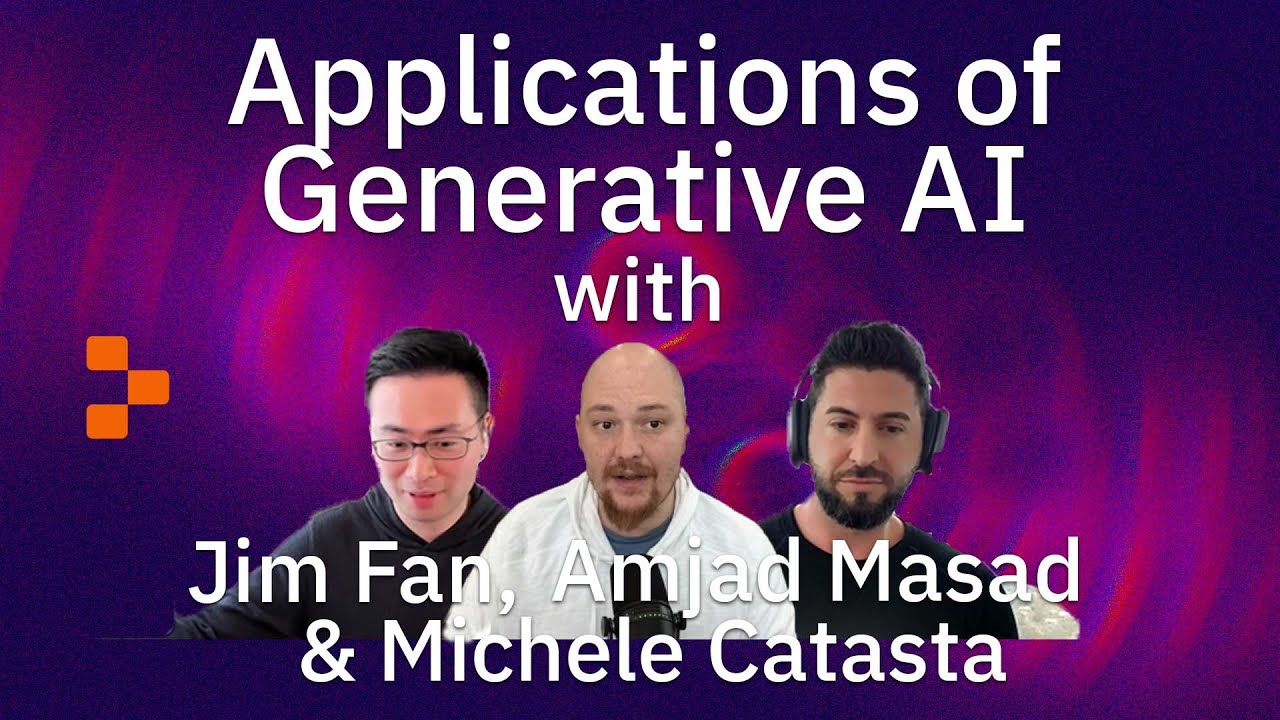
  25. Applications of Generative AI Webinar

    Replit hosted a webinar featuring NVIDIA AI researcher Jim Fan and Replit CEO Amjad Masad to discuss generative AI advancements. The conversation highlighted the growing importance of multi-modality in AI, enabling richer interactions with systems by incorporating images, video, and 3D data. They also touched upon the evolution of large language models, user experience improvements like ChatGPT's interface, and the increasing power of models beyond just parameter count. The discussion concluded with predictions about AI's future impact on coding and various industries, emphasizing Replit's own AI coding assistant, Ghostwriter. AI

    Applications of Generative AI Webinar

    IMPACT Discusses future trends in multi-modal AI and its impact on coding and various industries.